NextGeo starts seabed surveys for Terna's 2,100 MW HVDC link
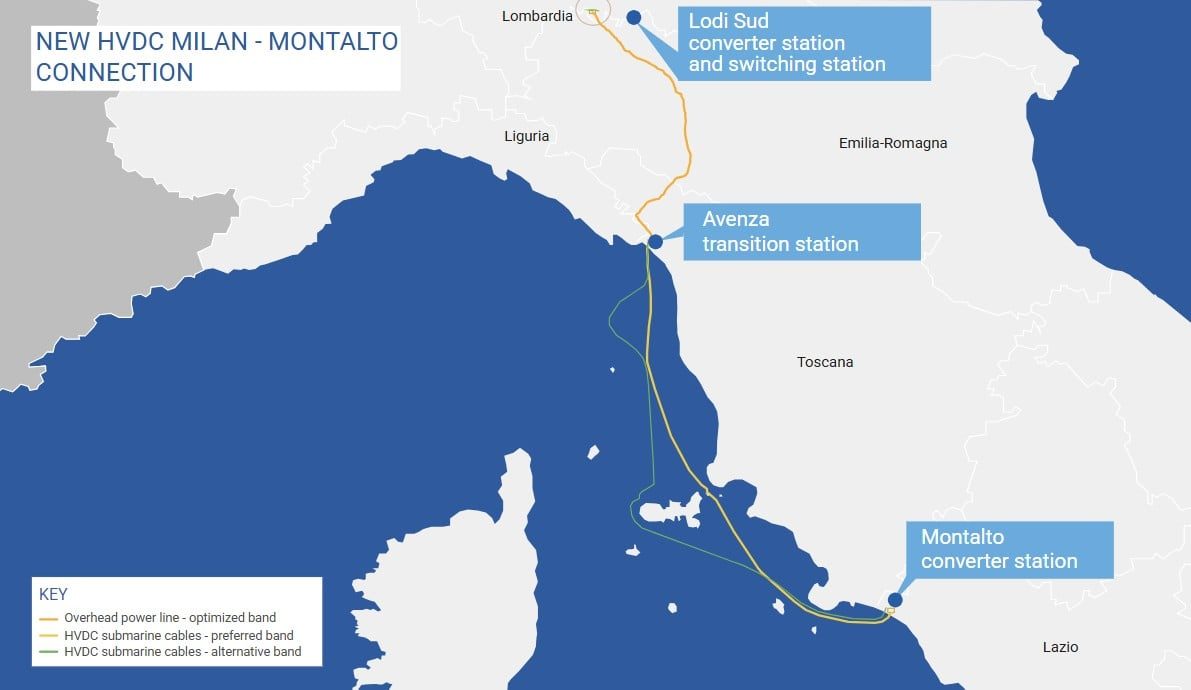
NextGeo has begun mapping the seabed for a 280km section of Terna's Milano-Montalto grid connection, signaling the start of physical execution on a major Italian infrastructure project.
NextGeo has commenced marine surveys for the 280-kilometer submarine section of the Milano-Montalto electricity connection, a strategic infrastructure project under Terna’s Hypergrid program.
The Italy-headquartered company will map the seabed route between Montalto di Castro and Massa. Its work involves collecting the geophysical, geotechnical and environmental data required to design and install the subsea cables.
The overall Milano-Montalto link entails an approximately 500-kilometer high-voltage direct current (HVDC) connection with a transmission capacity of 2,100 MW. The project is specifically aimed at strengthening Italy’s national grid.
For market participants, the initiation of these seabed surveys marks the transition from planning to physical execution. This represents a tangible step forward in Terna’s capital expenditure cycle for grid reinforcement.
The project’s routing strategy relies on utilizing existing infrastructure footprints. The submarine cable will begin at a new conversion station built on decommissioned industrial sites in Montalto di Castro, Viterbo. It will terminate near Avenza, Massa-Carrara, at an overhead-cable transition station constructed within the area of an existing Terna electrical substation.
For investors, utilizing these established sites signals a strategy to mitigate the land acquisition costs and permitting risks that frequently delay large-scale infrastructure developments.
Securing the survey contract provides immediate revenue visibility for NextGeo. Because comprehensive seabed mapping is a mandatory prerequisite for cable laying, NextGeo’s work sits directly on the critical path of the project timeline.
The 280-kilometer subsea stretch represents the most logistically complex segment of the 500-kilometer corridor. The use of HVDC technology for this specific section reflects the scale of the underwater infrastructure required.
Utility investors track the Hypergrid program as a key indicator of Terna’s infrastructure pipeline. The 2,100 MW connection will ultimately bolster national grid capacity, though the pace of the submarine installation will depend on the data gathered by NextGeo in the coming months.