Google's Decade Under Pichai Yields 11x Return Amid Capex Fears
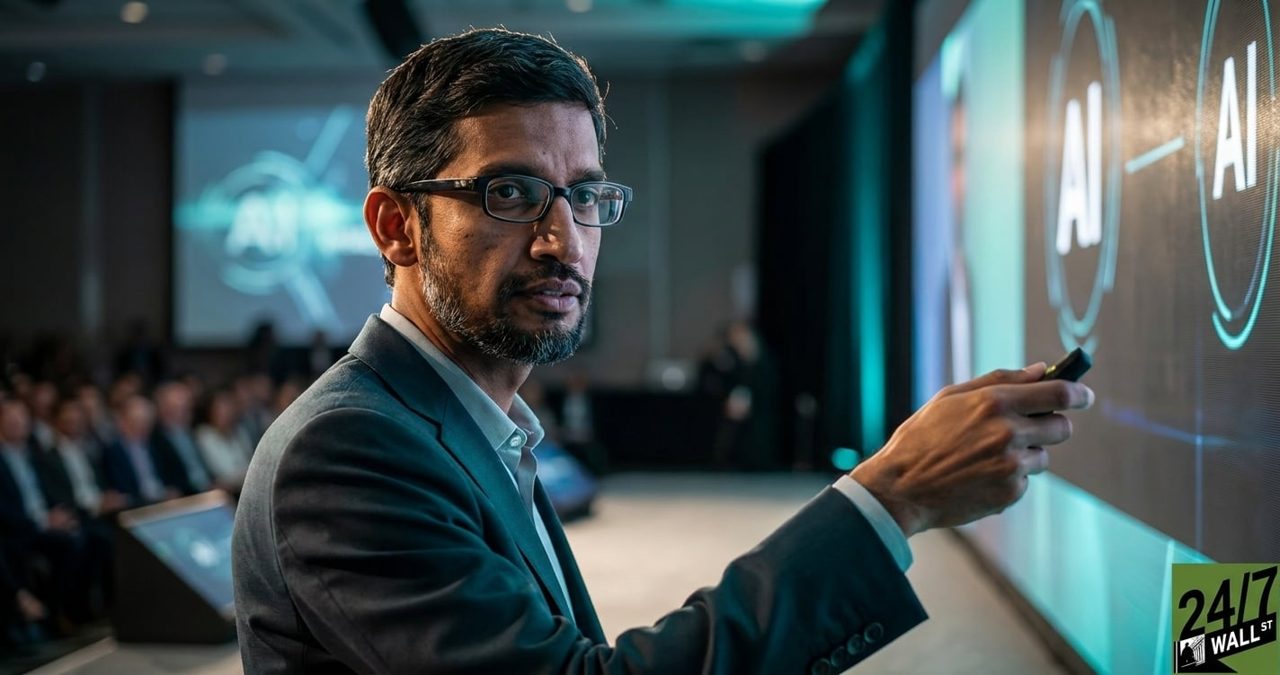
A decade of leadership by Sundar Pichai has turned a $10,000 investment in Alphabet into nearly $117,000, but a $180 billion capital spending plan is now squeezing free cash flow and raising succession questions.
Since Sundar Pichai took over as Google’s chief executive on August 10, 2015, the company has delivered an 11-fold return for shareholders. A $10,000 investment made on that specific date is now worth approximately $117,000. That performance easily outpaces the broader market, nearly tripling the 3.5 times return generated by the S&P 500 over the exact same period.
This decade-long tenure oversaw a controlled pivot from a pure search-and-advertising business into an AI-first platform. Weeks after Pichai’s initial appointment, Alphabet was created as a holding company, and he eventually assumed the parent CEO role from Larry Page on December 3, 2019. Under his direction, the Gemini app reached 750 million monthly active users, and Waymo scaled to over 500,000 fully autonomous rides per week.
Pichai also transformed peripheral projects into massive revenue engines. YouTube evolved into a business generating over $60 billion annually, while Google Cloud grew from a negligible line item into a segment now running at over $80 billion a year. In 2024, Alphabet initiated its first-ever dividend, marking a symbolic transition toward mature capital returns.
The stock currently trades at 25 times forward earnings, supported by an 82 percent earnings growth rate. However, realizing these returns required investor conviction. The shares spent much of 2025 trading below $200 before ripping higher to a 52-week high of $408.
Despite the historical compounding, Alphabet’s financial profile is now showing clear strain from its infrastructure buildout. The company is executing a capital spending plan totaling $180 billion to $190 billion for the current year. That unprecedented burden caused first-quarter free cash flow to plummet 46.63 percent year over year, falling to $10.12 billion.
These heavy capital demands arrive alongside tangible regulatory threats, including ongoing antitrust cases and a $3.5 billion fine from the European Union. Should the AI capex strategy continue to compress free cash flow, founder involvement from Page and Sergey Brin could intensify. A technical successor from the DeepMind or Cloud divisions remains conceivable, but investors should ignore leadership speculation unless the board formally signals a change.