Business groups target Pentagon buyback ban in defense bill
Dozens of business groups are lobbying to remove a Senate defense bill provision that would force Pentagon contractors to seek government approval for dividends and stock buybacks, warning it amounts to unprecedented federal control over corporate capital allocation.
A coalition of 41 business groups, including the U.S. Chamber of Commerce and the Business Roundtable, has urged Senate leaders to strip a provision from the annual defense policy bill that would ban Pentagon contractors from executing stock buybacks or paying dividends without federal approval.
Known as Section 815, the measure would bar the Defense Department from contracting with any company that distributes capital to shareholders unless the contractor secures a waiver tied to a "qualifying defense investment plan." The restriction is scheduled to take effect on June 15, 2027.
The language applies broadly to any entity doing business with the Pentagon, lacking explicit distinctions between prime weapons manufacturers and peripheral vendors like food suppliers. This breadth has triggered immediate alarm among corporate governance professionals.
"Section 815 would give the federal government an unprecedented role in companies' routine financial decisions," said Will Anderson, vice president of corporate governance at Business Roundtable. "The proposal is far-reaching and would create new uncertainty for companies across a wide range of industries at exactly the moment Congress should be removing barriers to participation in the defense industrial base, not creating new ones."
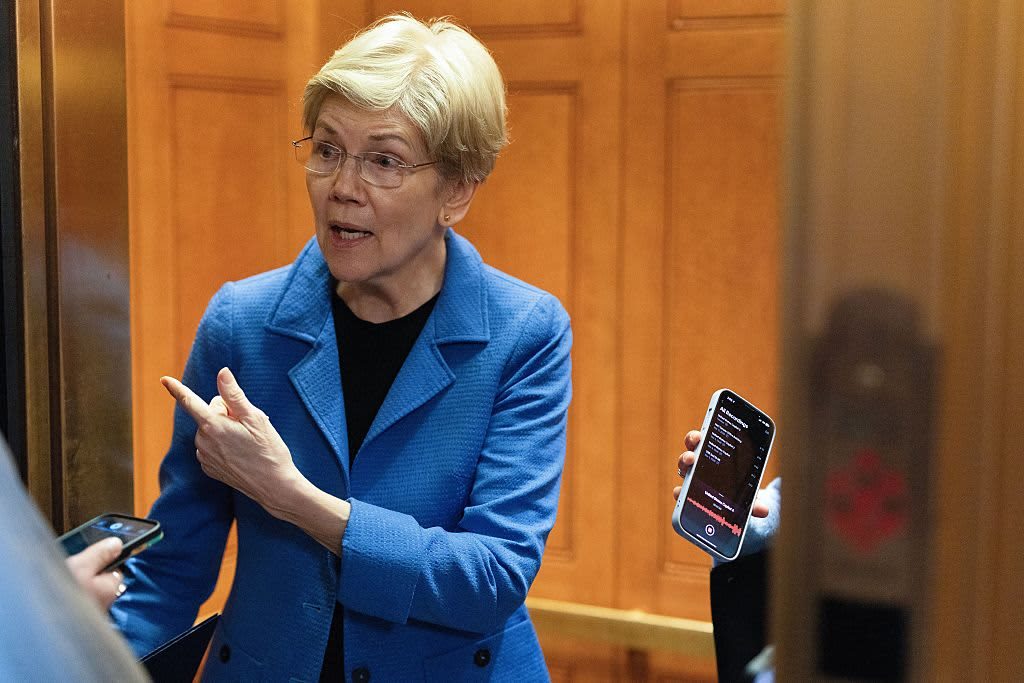
The provision, championed by Senator Elizabeth Warren and co-sponsored by Senators Josh Hawley and Mike Lee, builds on an executive order issued by President Donald Trump in January. Proponents argue it codifies a mechanism to penalize contractors that fail to meet military expectations while returning cash to shareholders.
"It is time to stop these contractors from putting Wall Street over our national security," Warren said. "Giant military contractors are cheating our government out of billions in taxpayer dollars and lining their executives' and shareholders' pockets instead of investing in our national defense."
Industry groups counter that restricting capital distributions does not automatically generate reinvestment. "By prohibiting dividends, share repurchases, and other capital distributions absent a government waiver, Section 815 would shift responsibility for ordinary capital allocation decisions from corporate leadership to Washington," the coalition wrote in its Tuesday letter. The groups added that such restrictions "do not create additional investment; it simply prevents capital from being allocated to its highest-value use."
Removing the provision faces steep legislative hurdles in the upper chamber. Section 815 cleared the Senate Armed Services Committee without a recorded vote, reflecting bipartisan backing. Striking it on the Senate floor would require an amendment to hit a 60-vote threshold, making passage highly unlikely.
The primary window for opponents lies in the upcoming reconciliation with the House of Representatives. The House version of the National Defense Authorization Act does not contain the buyback or dividend restrictions, and the chamber is currently stalled on the legislation.
Senator Mike Rounds, a Republican on the Armed Services Committee who has voiced discomfort with the measure, noted the House discrepancy could provide an opening. "That means there's a good possibility that it's either modified or changed," Rounds said. "I don't like it when politicians are telling business people how to build their businesses necessarily. Anytime you get into the middle of trying to tell businesses how to do business, I think you're going farther than you should."