CATL Zeng Leads Forbes China CEO List Amid AI, EV Boom
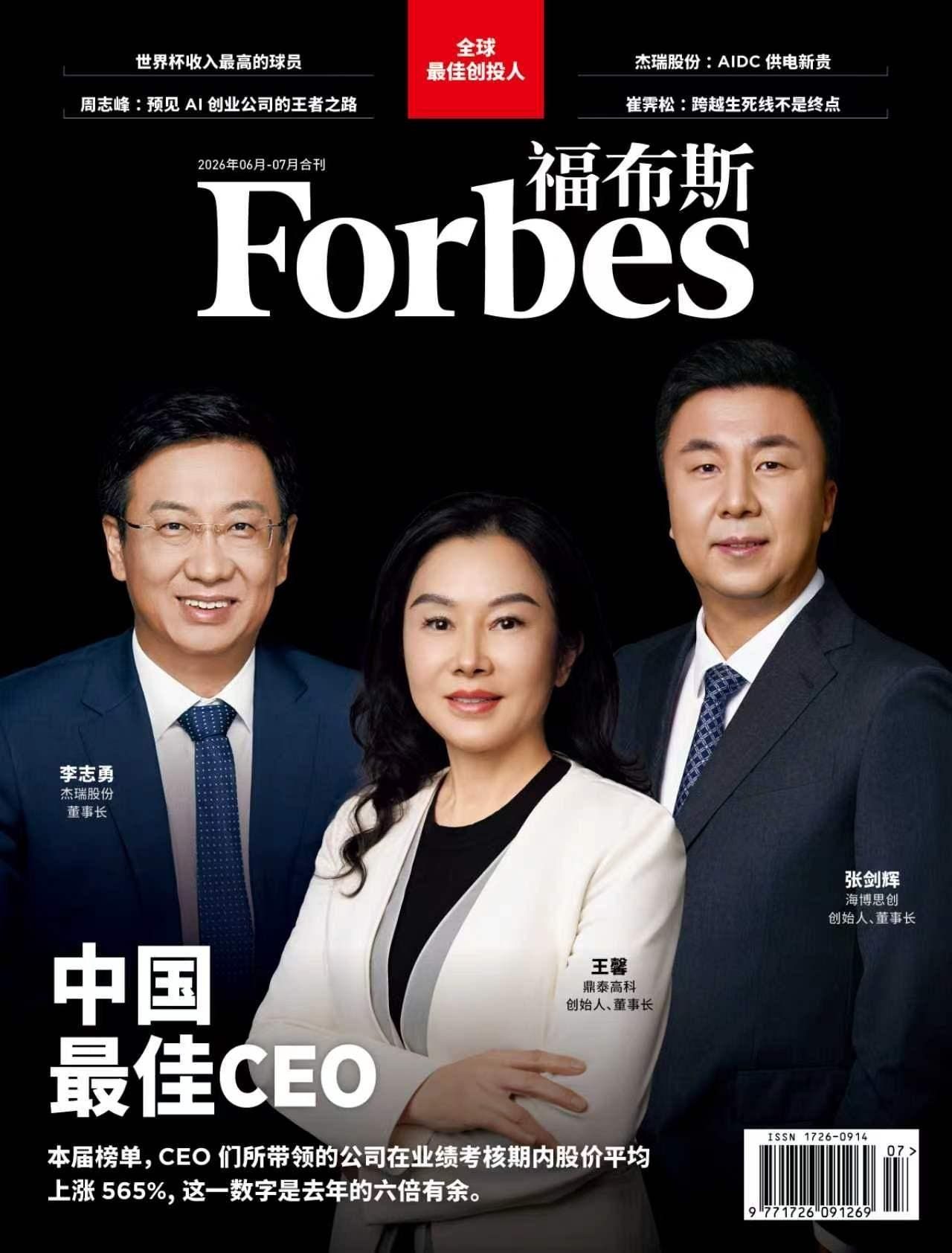
A new Forbes China CEO ranking dominated by battery and artificial intelligence executives highlights the vast wealth generated by the country's industrial upgrade.
Forbes China released its 2026 Best CEOs list, ranking corporate leaders based on share price performance, market value, revenue, profit growth, return on assets and return on equity. Robin Zeng, the head of battery manufacturer CATL, claimed the top position.
Zeng’s ascent reflects the sheer scale of China’s electric vehicle supply chain. CATL supplies major automakers including Tesla, BMW and Geely, riding a wave that has made China the world’s largest producer of electric vehicles. The executive’s estimated fortune now stands at $57 billion, and the company maintains a dual listing in Shenzhen and Hong Kong.
However, the broader composition of the top five offers a clearer signal of where Chinese equity markets are currently directing their capital. Behind Zeng, the ranking is dominated by executives building the physical infrastructure for artificial intelligence and high-speed data transmission.
Liu Sheng of Zhongji InnoLight secured the second spot after a six-fold surge in his company’s Shenzhen-traded shares over the past year, boosting his personal wealth to $6.1 billion. The Google-backed firm, founded in 2008, manufactures transceiver modules. He is followed by Chen Tianshi of chipmaker Cambricon Technologies in third place. Strong demand for Cambricon’s semiconductors, earning the company the "Nvidia of China" moniker, has propelled Chen’s net worth to $46 billion.
Huang Xiaolei, CEO of Eoptolink Technology, took fourth place. Like InnoLight, the Chengdu-based company produces optical modules critical to data centers and telecommunications networks. Rounding out the top five is Fang Hongbo of Midea, one of the world’s largest home appliance manufacturers. Midea’s shares have gained 15 percent over the past year, leaving Fang with an estimated $1.8 billion fortune.
For market participants, the ranking underscores a sharp valuation gap between China’s legacy consumer goods sector and its emerging AI ecosystem. While established industrial giants like Midea continue to deliver steady returns, it is the semiconductor and data transmission companies that are commanding the explosive stock price growth required to lead the Forbes metrics. Investors are effectively betting that the next phase of China’s corporate earnings will be driven not by the consumer, but by enterprise-level digital infrastructure.