Son says AI requires $5 trillion annual capex, dismisses bubble fears
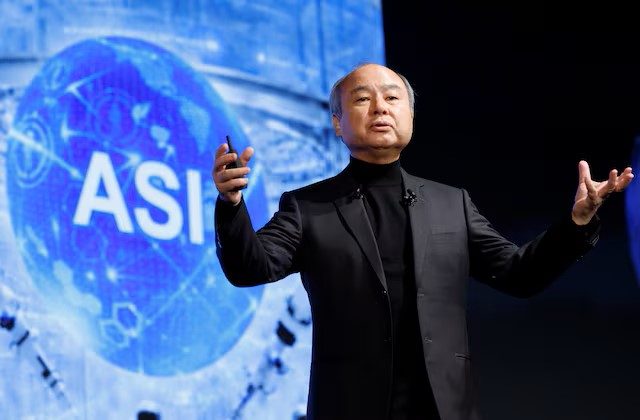
SoftBank CEO Masayoshi Son has called for $5 trillion in annual AI investment by 2040, framing the massive capital expenditure as necessary to capture a projected 20% share of global GDP.
SoftBank Group CEO Masayoshi Son has dismissed concerns of an artificial intelligence bubble, projecting that the industry will require $5 trillion in annual investment by 2040. Speaking at the company’s annual corporate conference in Tokyo on Tuesday, Son argued that the capital required to build out AI infrastructure will surpass any previous tech spending cycle.
“Asking if AI is a bubble is absurd. I don’t think people who ask that question know what AI is about,” he said. Son did not provide the methodology behind his $5 trillion, or 800 trillion yen, estimate, but defended the economics by pointing to AI's potential macroeconomic footprint.
“The business model will be viable because by 2040, if AI revenue makes up 20% of global GDP, spending 800 trillion yen a year is a rounding error,” he said. This framing targets the core anxiety among market participants: whether soaring valuations and ballooning capital expenditures in the sector will eventually generate commensurate returns.
The infrastructure build-out carries severe implications for global energy markets. Son forecasted that AI data centres will demand 3 terawatts of power by 2040, equal to 1.8 times total current global electricity consumption. He predicted natural gas would serve as the primary near-term fuel source before a transition to nuclear fusion, which he characterized as the cheaper, cleaner long-term solution over alternatives like space-based solar power.
Beyond the financial and energy metrics, Son forecasted a profound economic shift driven by autonomous systems. He predicted a future populated by 100 trillion AI agents capable of making independent decisions and communicating without human intervention, marking a transition from a human-centric to an agent-centric global economy.
Son’s aggressive capital deployment thesis contrasts sharply with mounting warnings from the international regulatory community. United Nations Secretary-General Antonio Guterres cautioned this week that AI's rapid evolution is outstripping the capacity of governments, regulators, and developers to manage its risks. Speaking at the inaugural government-level UN Global Dialogue on AI Governance in Geneva, Guterres called for coordinated global rules to ensure the technology's safe development.