Kospi enters bear market as AI chip rally reverses sharply
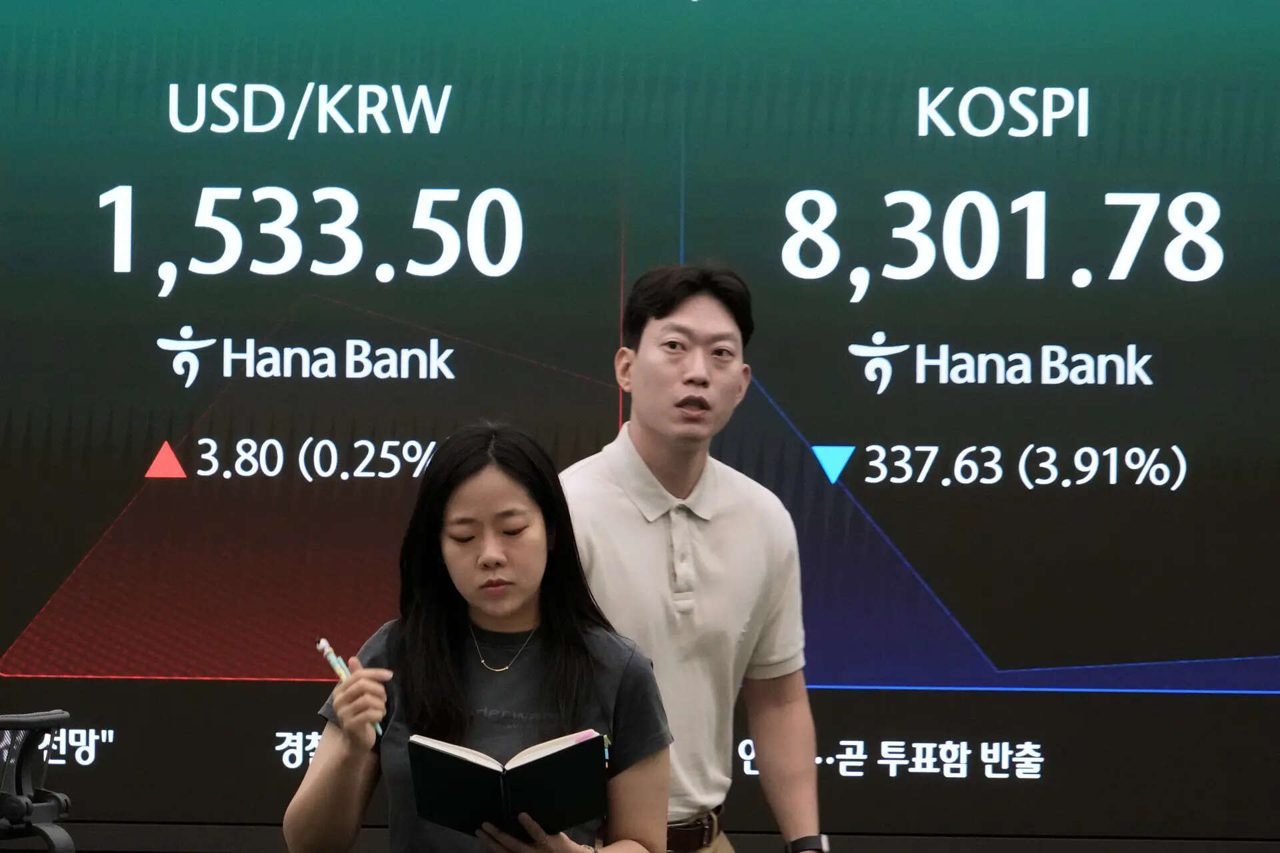
South Korea’s Kospi has plummeted into a bear market following a brutal two-day selloff in heavyweight chipmakers, underscoring the fragility of highly concentrated AI-driven equity rallies.
The Kospi slumped to 6,448.86 on Tuesday morning, marking a 14% collapse over just two trading sessions. The benchmark has now fallen 31% from its June peak of 9,386, officially crossing into bear market territory.
The severity of the downturn is directly tied to the index's heavy reliance on a single sector. Samsung Electronics and SK Hynix account for nearly half of the Kospi's total weight and generated roughly two-thirds of its gains earlier this year. As these semiconductor bellwethers surrendered their AI-fueled premiums, the broader market had nowhere to hide.
For market professionals, the crash demonstrates the structural danger of top-heavy benchmarks during thematic rallies. Even after this month's brutal selloff, the Kospi retains a year-to-date gain of over 50% for 2026. This extreme volatility follows a period where the index shattered President Lee Jae Myung’s previously dismissed 5,000-point target, surging past 9,000 on AI exuberance while Lee maintained that domestic equities remained cheap.
The tech-specific unwind is also playing out against a broader macroeconomic backdrop of rising global risk aversion. Escalating conflicts in the Middle East have driven oil prices sharply higher, dragging global equities lower and amplifying the selling pressure on high-valuation tech names that are sensitive to shifting inflation expectations.
South Korean officials are closely monitoring the fallout. Finance Minister Koo Yun-cheol met last week with the central bank governor and top financial regulators, attributing the intensified market swings to foreign and institutional profit-taking alongside shifting AI expectations. Deputy Finance Minister Moon Ji-sung offered a forward-looking view, stating that dollar-won supply-demand dynamics are expected to shift in the second half and that foreign investor selling pressure should ease.
"It's a wake-up call," said Francis Tan, chief strategist for Asia at Indosuez Wealth Management in Singapore. "Both for those who are greedy and those who are fearful... if you are already overweight this gives you a reminder that exposure (to chips) can be a volatile game."