Indian Stocks Drop as US-Iran Conflict Escalation Pushes Brent Crude to $84
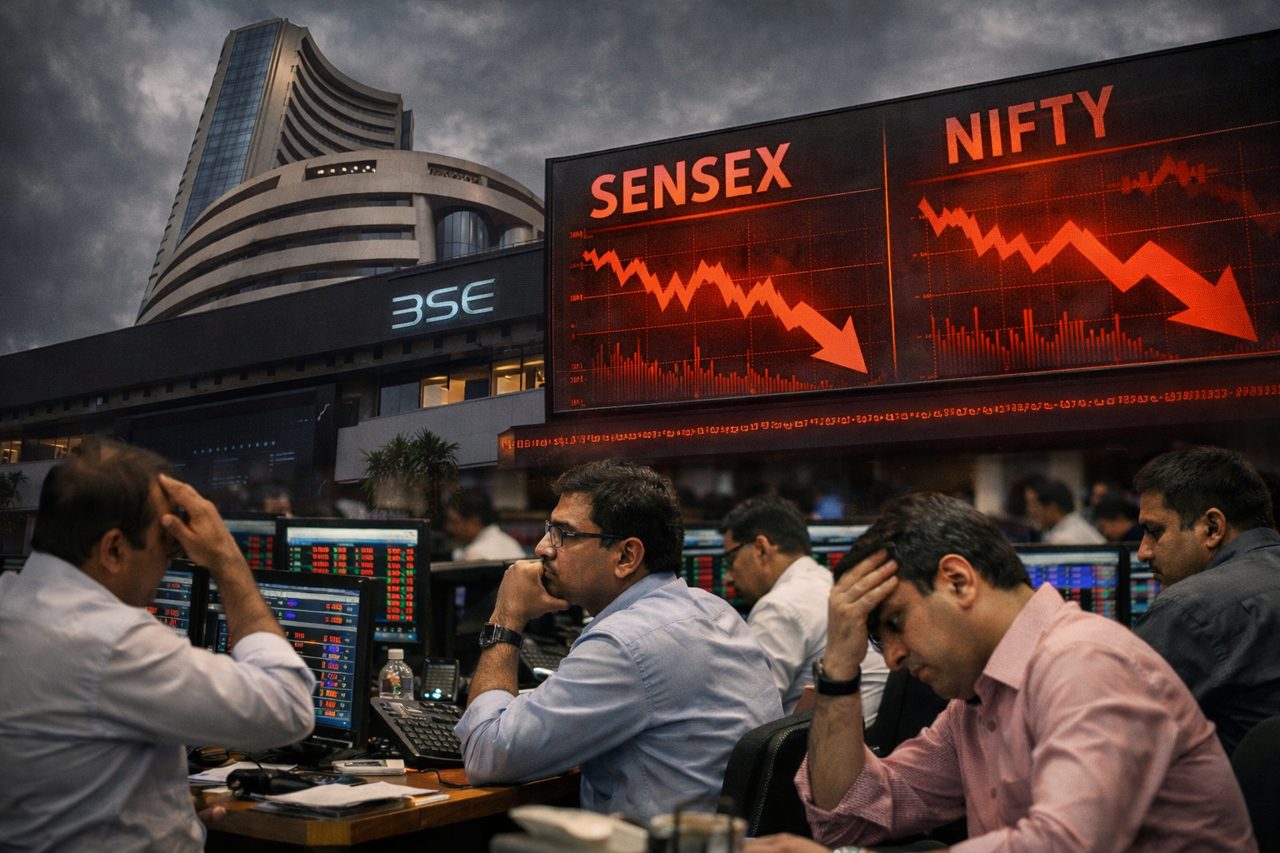
Indian benchmark indices fell sharply on Tuesday as escalating US-Iran tensions and a closure of the Strait of Hormuz drove Brent crude to $84, raising concerns over inflation and foreign portfolio investment flows.
Indian benchmark indices retreated on Tuesday as escalating geopolitical tensions in the Middle East triggered a broad market sell-off. The Sensex dropped more than 515 points to 77,096.34, while the Nifty 50 slipped 146 points to 24,064.
The downturn follows fresh US strikes against Iran and the closure of the Strait of Hormuz by Iranian forces. This critical waterway previously accounted for 20 percent of daily global oil and gas supply shipments, and its disruption has immediately rattled global energy markets.
Market breadth was decisively bearish, with 1,608 declining stocks against 780 advances on the National Stock Exchange. The Nifty Financial Services index was the hardest hit, crashing 1 percent, while the India VIX volatility gauge edged higher to 13.39. Conversely, the Nifty IT, Metal, and Pharma indices managed marginal gains.
Heavyweight financial and industrial stocks led the decline across the board. HDFC Bank, Kotak Mahindra Bank, Bajaj Finance, Bajaj Finserv, L&T, and UltraTech Cement all fell between 1 and 3 percent. Meanwhile, Tata Steel, TCS, and Infosys bucked the trend, rising nearly 1 percent each.
The geopolitical flare-up presents immediate macroeconomic headwinds for India by pushing Brent crude prices to $84. VK Vijayakumar, Chief Investment Strategist at Geojit Investments, noted that if this spike continues, “BoP vulnerability and the potential impact on the rupee can again become issues that may impact the market adversely.”
Vijayakumar also highlighted that India’s June CPI inflation has increased to 4.38 percent and is likely to inch higher. He added, “The spike in the U.S. 10-year yield to 4.61% is another concern which can impact FPI flows,” complicating the investment landscape.
From a technical perspective, the near-term market outlook remains cautiously neutral. Rajesh Palviya, Head of Research at Axis Direct, noted that the Nifty must reclaim and sustain levels above 24,100 to improve sentiment, with 24,400 acting as the next resistance zone.
On the downside, 24,000 serves as the immediate support level, and a breach could trigger further weakness toward 23,900. Ultimately, a moderation in global crude prices will be the key catalyst required for a durable recovery in Indian equities.