SK Hynix Raises $26.5bn in Record Foreign US Listing
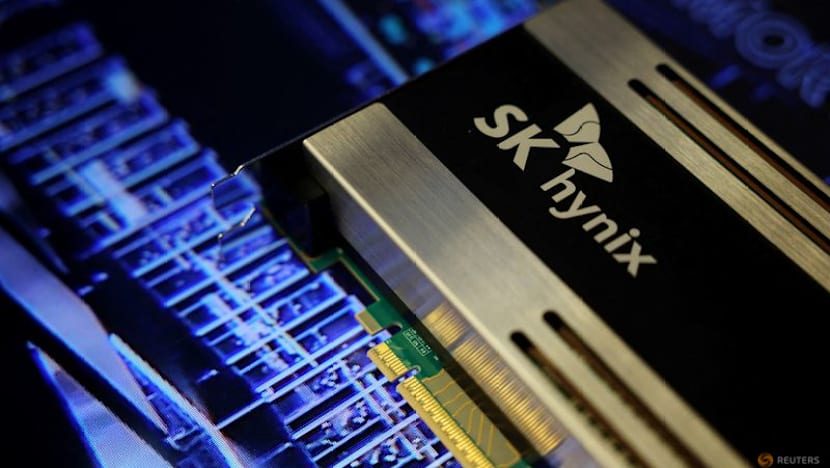
SK Hynix has raised $26.5 billion in the largest US listing by a foreign company, placing the chipmaker at the centre of a fierce tug-of-war between government spending demands and a looming cyclical market downturn.
SK Hynix raised $26.5 billion in its US stock market debut, marking the largest first-time share sale by a foreign company. The listing values the firm at $1 trillion, driven by its dominant position as the top supplier of high-bandwidth memory chips paired with Nvidia processors. However, the stock fell 10 per cent in Seoul on Monday following the US debut.
Analysts estimate the company can generate over $300 billion in free cash flow this year and next, banking on a memory chip supply shortage expected to last until 2027. Chief Executive Officer Kwak Noh-Jung holds an even more bullish view, forecasting the shortage will persist beyond 2030. This outlook has transformed the chipmaker into a critical pillar of the global AI infrastructure build.
That dominance has attracted heavy political interference. South Korea’s left-wing government, led by President Lee Jae Myung, views SK Hynix as the engine for a "great leap forward" to revive an economy that grew just 1 per cent last year. The company has committed 400 billion won to a new semiconductor cluster in the southwest, part of a broader 1,350 trillion won ($897 billion) state mega-project plan.
Washington is exerting similar pressure. Commerce Secretary Howard Lutnick has actively pushed for expanded US production. In response, Chairman Chey Tae-won pledged to invest an amount "much, much bigger than the US$35 billion" the company has already committed to the country.
Meeting these political demands requires aggressive expansion, with SK Hynix targeting a doubling of wafer capacity within five years. Rivals Samsung Electronics and Micron Technology are similarly ramping up high-bandwidth memory fabrication. Furthermore, China’s ChangXin Memory Technologies is emerging as a viable competitive threat.
This synchronized spending spree threatens to upend the very supply shortage driving current profits. The memory industry is notoriously cyclical, capable of swinging from peak to trough in just two years. SK Hynix itself was unprofitable just three years ago, and a flood of new supply over the next half-decade risks triggering a sharp downturn.
The fallout is already hitting retail investors. South Korean mom-and-pop traders filled the void left by global asset managers selling into the rally, often using leveraged exchange-traded funds launched in late May. Recent share volatility has triggered volatility decay and forced liquidations, destroying wealth among the middle class. US investors buying into the new listing are arriving even later to a highly precarious trade.