Hormuz blockade pushes Brent to $85, lifting Fed hike odds
A sharp jump in oil prices following a US blockade of the Strait of Hormuz has driven Treasury yields to their highest levels this year and elevated the odds of a July Federal Reserve rate hike.
Brent crude surged as much as 2.8% to $85.64 a barrel, building on a 9.6% jump on Monday that marked the commodity's largest single-day gain since May 2020. The rally followed President Donald Trump's reinstatement of a US blockade against Iranian ships transiting the Strait of Hormuz, alongside a demand for a 20% reimbursement on all other cargo passing through the waterway. The escalation in US-Iran tensions has effectively ended hopes for a near-term normalization of traffic through the critical shipping chokepoint.
The resulting rebound in global energy prices is reshaping interest rate expectations. Money markets are now pricing in a 50% probability of a Federal Reserve rate hike later this month. "If we get another hot reading on core inflation this week, then the FOMC will need to consider tightening monetary policy in the near term," said Governor Christopher Waller.
Treasury yields climbed to reflect this shifting consensus, with the two-year yield edging up one basis point to 4.29%, its highest level since February 2025. The benchmark 10-year yield rose to 4.63%, the highest since May. Gold and silver prices retreated as the prospect of tighter monetary policy and higher short-term yields dampened demand for non-yielding assets.
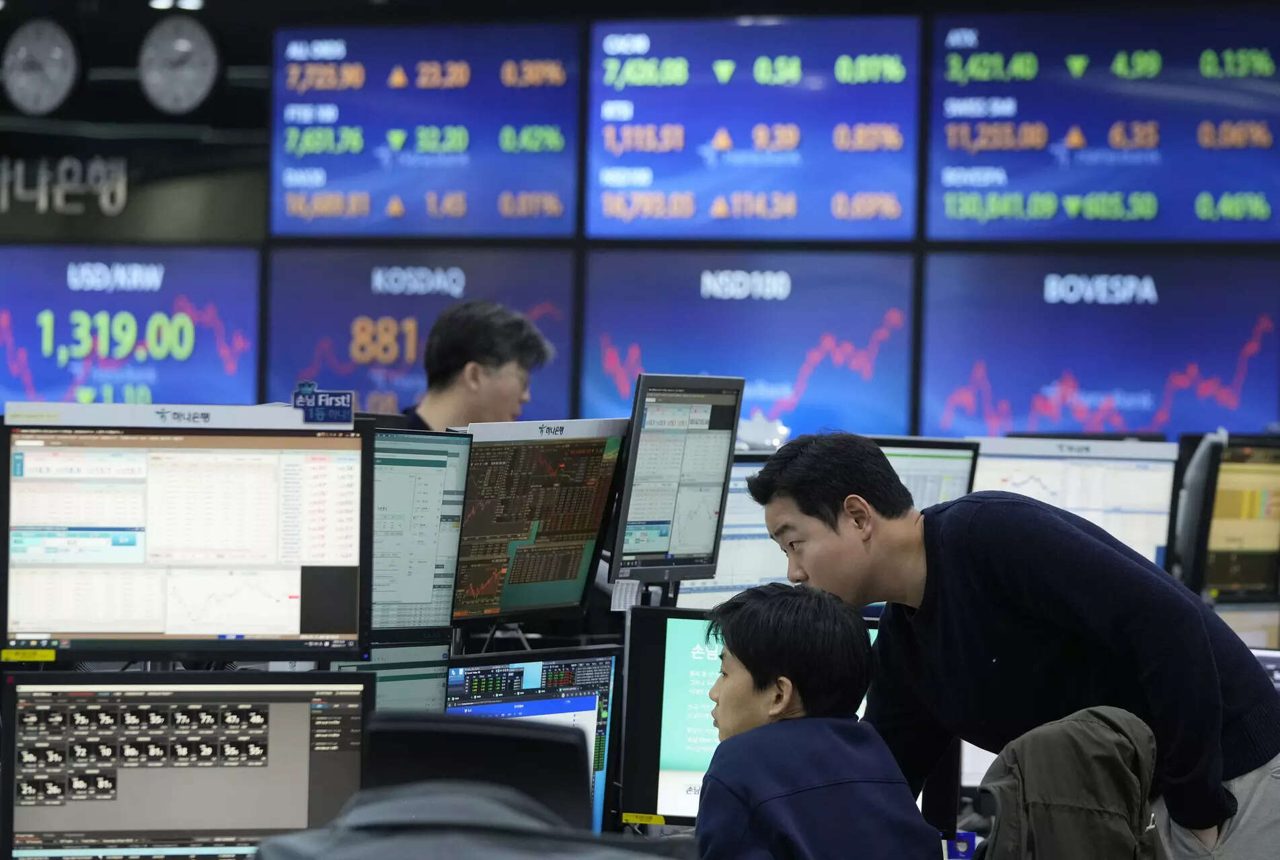
Asian equities struggled to find direction amid the crosscurrents of geopolitical risk and shifting rate expectations. MSCI's gauge of regional shares fluctuated between small gains and losses, while South Korean stocks experienced extreme volatility, swinging between a gain of 0.6% and a drop of 2.8%. The chip sector remained under severe pressure after SK Hynix Inc.’s American depositary shares tumbled 9.3%, dragging an AI-fueled stock rout from South Korea into US equity-index futures.
"The energy sector is once again in the limelight as the status of the Strait of Hormuz is driving price action in global markets," said Ian Lyngen at BMO Capital Markets. "There is a growing sense that the situation is likely to get worse before it de-escalates." Investors are now bracing for a pivotal week that includes Tuesday's US consumer price index data, expected to show a slowdown to 3.8% from 4.2%, and the first congressional testimony of Fed Chair Kevin Warsh.
Despite the immediate focus on energy and inflation, some strategists argue the underlying market drivers remain tied to corporate earnings. "Uncertainty around the Middle East continues, but we think the AI wave is what will drive markets over the next few weeks, especially as earnings season kicks off," said Sonu Varghese at Carson Group.