US Coal Rebound Drives Global Emissions to Record High
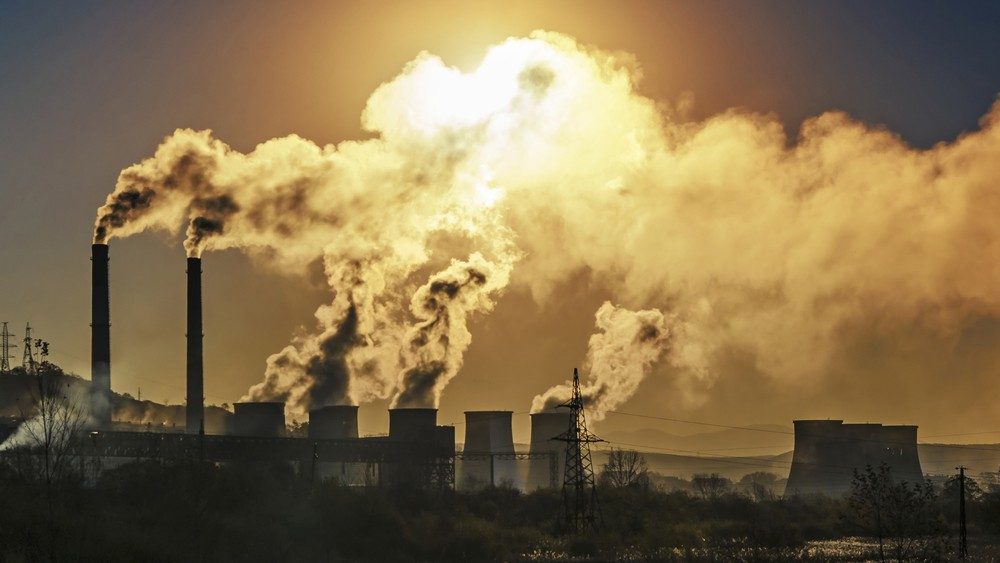
Global carbon emissions reached a record 41.0 billion metric tons in 2025, driven by a surprising US coal resurgence that overwhelmed renewable energy gains and highlighted the transition's limits outside the power sector.
Global greenhouse gas emissions rose to a record 41.0 billion metric tons in 2025, according to the Energy Institute’s 2026 Statistical Review of World Energy. The 1.1% increase marks the fourth consecutive year of record highs, adding 331 million metric tons to the atmosphere. Non-OECD countries now account for 70.5% of this global total, a sharp shift from 1990 when OECD nations represented the majority.
The headline figure masks a complex reality for energy investors. Global renewable generation expanded by 861 terawatt-hours, slightly outpacing the 855 terawatt-hour increase in total electricity demand. At the grid level, clean energy successfully shouldered the entire net increase in global power demand while coal-fired generation actually fell by 59 terawatt-hours.
Because the power sector held its own, the emissions increase originated elsewhere. Transportation fuels, industrial processes, methane leaks, and gas flaring were the primary culprits. For markets, this underscores that even massive renewable buildouts will not automatically lower global emissions without parallel decarbonization in heavy industry and fossil fuel supply chains.
US Coal Resurgence
The most significant market signal came from the United States, which accounted for 47.1% of the global emissions increase despite representing just 15.6% of total global output. US emissions jumped 3.2%, or 147 million metric tons, reversing two years of declines.
Surging power demand, partly attributed to expanding data centers, overwhelmed domestic renewable growth. While US renewable generation rose by 99 terawatt-hours, coal generation surged by 91 terawatt-hours, a 13% spike, as natural gas generation dropped by 67 terawatt-hours. This shift from lower-carbon gas back to highly carbon-intensive coal represents a major setback for US utility decarbonization trajectories, even if overall emissions remain below 2007 peaks.
China Stalls, Africa Rises
China presented a stark contrast to the US. As the world's largest emitter at 12.5 billion metric tons, China's emissions were essentially flat, growing by just 4 million metric tons. Massive deployments of renewables, nuclear, and hydro allowed China to absorb a 488 terawatt-hour jump in electricity demand while actually reducing coal generation by 80 terawatt-hours.
India’s emissions growth also slowed noticeably to 21 million metric tons. However, Africa accounted for 16.9% of the global increase from a low base, a warning for investors tracking long-term commodity demand curves. Meanwhile, European Union emissions declined further and are now roughly a third below 1990 levels.
The 2025 data demonstrates that the energy transition is not a monolithic global trend. Capital is successfully greening the power sector, but volatile regional fuel mixes and stubborn industrial emissions mean global carbon curves remain pointed upward.