BoE holds rates, projects two 2027 hikes on energy risks
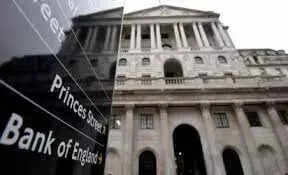
The Bank of England kept rates unchanged but signaled two future hikes by 2027, outlining a fragile outlook where diverging energy price paths will dictate inflation and growth.
The Bank of England kept interest rates unchanged on Thursday following a split 6-3 vote by its Monetary Policy Committee. The more significant takeaway for markets is the central bank’s embedded forecast, which adopts financial market expectations pointing to a high probability of two rate hikes by the third quarter of 2027.
The central projection anticipates inflation hitting a peak of 3.2% in late 2026 before falling beneath the 2% target to reach 1.7% by the first quarter of 2028. From there, price pressures are forecast to tick up to 1.9% by mid-2029. Annual economic growth is expected to hold flat at 1.1% through the third quarters of both 2026 and 2027. Momentum would then build to 1.7% in 2028 before a slight moderation to 1.6% the following year.
This baseline trajectory relies heavily on energy prices easing. The central bank assumes oil will gradually decline from roughly $76 per barrel in the third quarter of 2026 to approximately $71 by the end of the forecast period. Natural gas futures are projected to top out at just over 123 pence per therm in the fourth quarter before retreating to just under 60 pence. Because of this commodity outlook, the central scenario anticipates that the current energy price shock will generate only moderate second-round effects on broader inflation.
A sharply different picture emerges under the adverse scenario, which projects inflation climbing to 3.1% in the third quarter of 2026 and surging to 4.1% a year later. Price growth would only gradually ease, reaching 2.8% in 2028 and 2.4% in 2029. Simultaneously, economic growth would stall at 0.9% in 2027 after starting at 1.1% in the third quarter of 2026, only recovering to 1.6% in 2028 and 1.7% in 2029.
This downturn is driven by energy costs, assuming oil averages 30% above the central projection and natural gas remains 60% higher. While less severe than the bank's April stress scenario, persistently elevated energy prices in this model would lift inflation expectations and trigger stronger, more prolonged second-round inflationary effects.
For investors pricing UK assets, these diverging paths underscore energy costs as the primary determinant of monetary policy over the next three years. The wide gap between a return to target inflation and a scenario requiring prolonged intervention leaves gilt yields highly sensitive to commodity market fluctuations. Corporate treasurers managing UK exposure must therefore weigh the probability of a contained energy shock against the risk of an unanchoring in inflation expectations.