Adani Ports Q1 profit up 9% on 80% international revenue surge
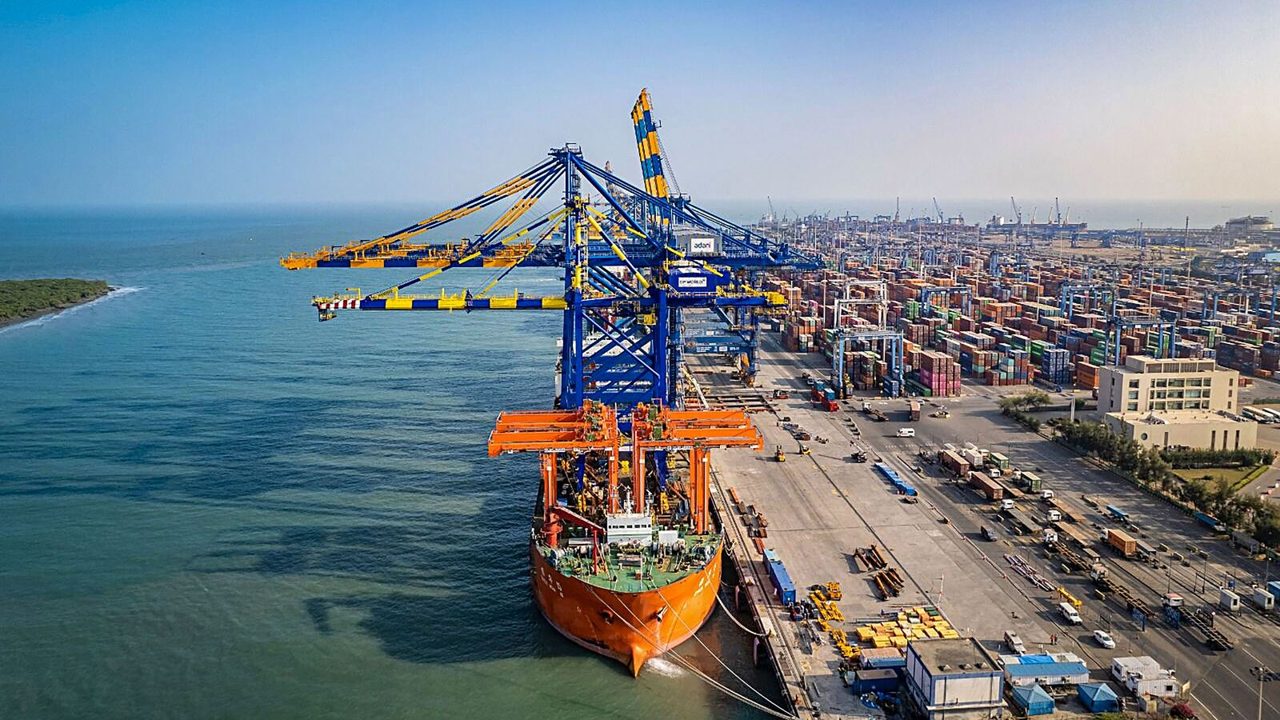
Adani Ports' first-quarter earnings were lifted by a dramatic turnaround in its international ports business, though logistics volumes remain squeezed by the Middle East conflict.
Adani Ports and Special Economic Zone posted a 9.2% rise in consolidated net profit to ₹3,620.40 crore for the April-June quarter of FY27, as revenue climbed 18.6% to ₹10,820.80 crore. EBITDA rose 19% to ₹6,541 crore with margins holding steady at 60.4%.
The headline numbers were solid but the real story for investors lies beneath the consolidated figures. International ports, long seen as a capital-hungry drag on returns, have swung decisively toward profitability.
Revenue from overseas ports surged 80% year-on-year to ₹1,747 crore, while EBITDA jumped 256% to ₹730 crore. Volumes nearly tripled to 22.8 million metric tonnes, driven by the inclusion of NQXT Australia and the ongoing ramp-up at Colombo. The EBITDA margin for the segment doubled to 41.8% from 21.1% a year earlier, with Colombo's revenue increasing fivefold and Tanzania's rising 36%.
Ashwani Gupta, Whole-time Director and CEO, said international ports, marine, and logistics had "transitioned decisively from scale-up to scale-value."
The domestic ports business remains the cash engine. The segment delivered record quarterly revenue and EBITDA, with margins at 74%. However, Adani Ports' all-India cargo market share edged down to 27.6% from 27.8%, and container share slipped to 44.8% from 45.2%. The declines are marginal but noteworthy in a quarter where domestic revenue grew 12%.
The company is betting on capacity to reclaim momentum. Domestic port capacity stood at 653 million metric tonnes as of June 30, with plans to reach 1,000 MMT by December 2030.
Logistics was the weakest link. Segment revenue was essentially flat at ₹1,173 crore, up just 0.3%, with EBITDA rising 3% to ₹219 crore. Rail volumes in TEU terms fell to 145,310 from 179,479 a year earlier, a decline the company attributed to the ongoing Middle East crisis. That geopolitical overhang is a concrete risk for a logistics network built partly around international freight corridors.
Some offset came from asset-light operations: trucking revenue rose 26% and international freight network revenue gained 28% sequentially.
The marine services segment posted 67% revenue growth and 36% EBITDA growth, supported by vessel additions. The unit is also extending its geographic reach, having secured a partnership with Oceaneering International for deepwater engineering in Europe and a landmark 10-year contract to support Argentina's first LNG exports to India.
Gupta pointed to the company's "Ambition 2031" targets, citing domestic capacity expansion, a growing international portfolio, and the logistics ecosystem as pillars of long-term value creation.
For shareholders, the quarter's message is mixed but largely positive. The international ports business is finally delivering the kind of margin improvement that justifies years of investment. The domestic franchise is robust, though slight share losses bear watching. The logistics drag from Middle East disruptions is a reminder that geographic diversification cuts both ways.