Japan tech shares fall as oil prices jump on Hormuz tensions
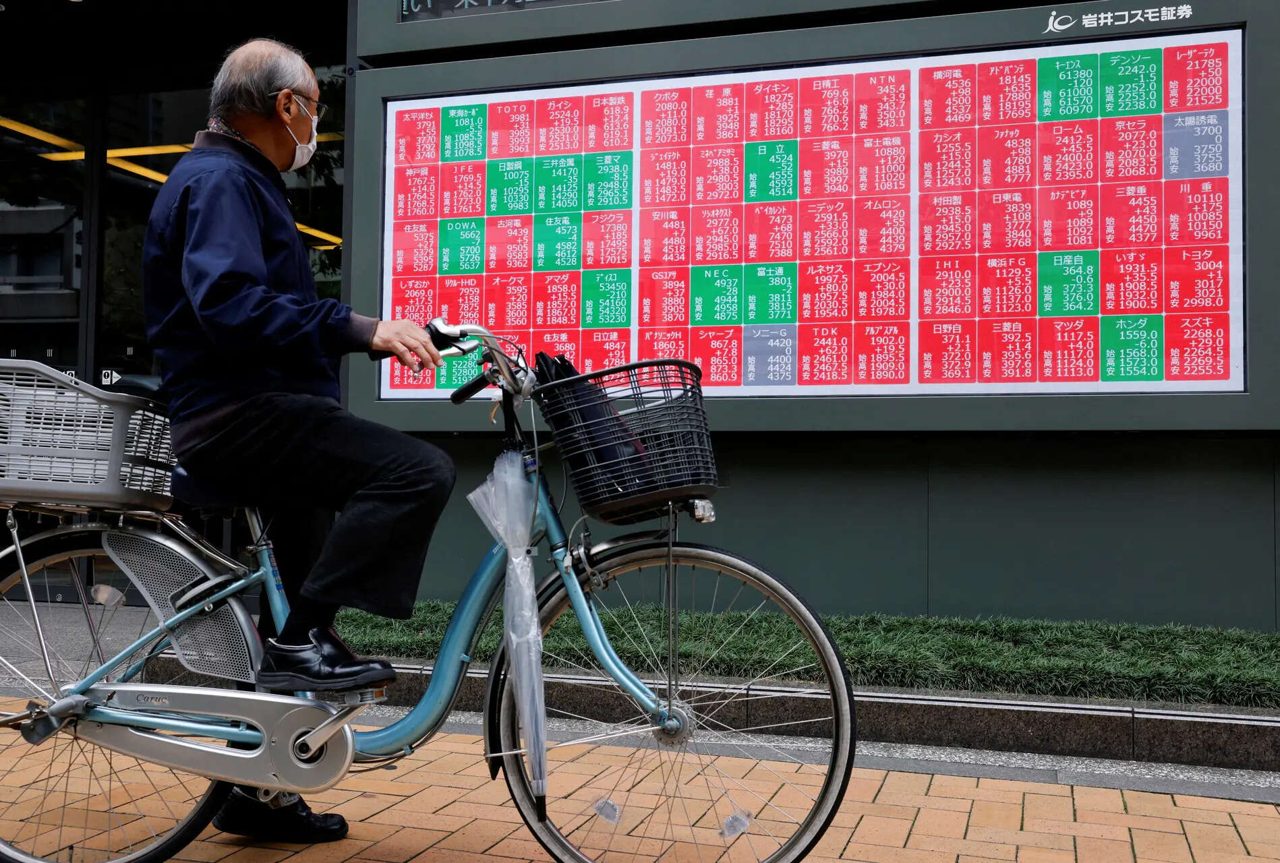
A sudden surge in oil prices triggered by Middle East tensions sparked a broad selloff in Japanese technology and industrial stocks, though a shift into banking shares limited the broader market's losses.
The Nikkei 225 fell 1.92% to close at 67,242.73 on Monday, while the broader Topix index declined 0.71% to 4,007.49. The losses were driven by a sharp rise in crude oil prices that threatened to squeeze corporate margins just as Japanese companies began reporting quarterly earnings.
Oil prices jumped more than 4% after the United States and Iran announced renewed military strikes, putting critical energy shipments through the Strait of Hormuz at immediate risk. For Japan, which relies heavily on imported energy, a sustained price spike threatens to inflate operational costs across the export-driven manufacturing sector.
"The market was concerned about increasing costs due to the rise in oil prices, and this came as the earnings season for Japanese firms kicked off," said Daisuke Hashizume, a senior analyst at Daiwa Securities. The timing of the geopolitical escalation is particularly problematic for equity valuations, as investors are positioned to scrutinise profit margins.
Semiconductor and technology equities bore the brunt of the selling pressure. Advantest dropped 3.39% and Tokyo Electron lost 2.25%. Memory manufacturer Kioxia tumbled 12.86%. The industrial sector also faced severe headwinds, demonstrating that the cost concerns are not limited to tech. Robot maker Yaskawa Electric plunged 14.34% to hit its daily limit low of 5,972 yen after reporting a 21.7% drop in first-quarter net profit.
Rotation cushions broader index
The heavy losses in technology and machinery contrasted sharply with a noticeable rotation into financials. Investors actively shifted capital away from AI-linked equities toward traditional value stocks, a dynamic that cushioned the broader Topix index from a steeper fall. Mitsubishi UFJ Financial Group advanced 2.31% and Sumitomo Mitsui Financial Group added 1.63%. Despite this defensive positioning, overall market breadth remained decidedly negative. Of the more than 1,500 stocks trading on the Tokyo Stock Exchange's prime market, 60% posted declines, 36% rose, and 2% were unchanged.