Carbon Capture Investments Face Technical and Cost Reality Checks
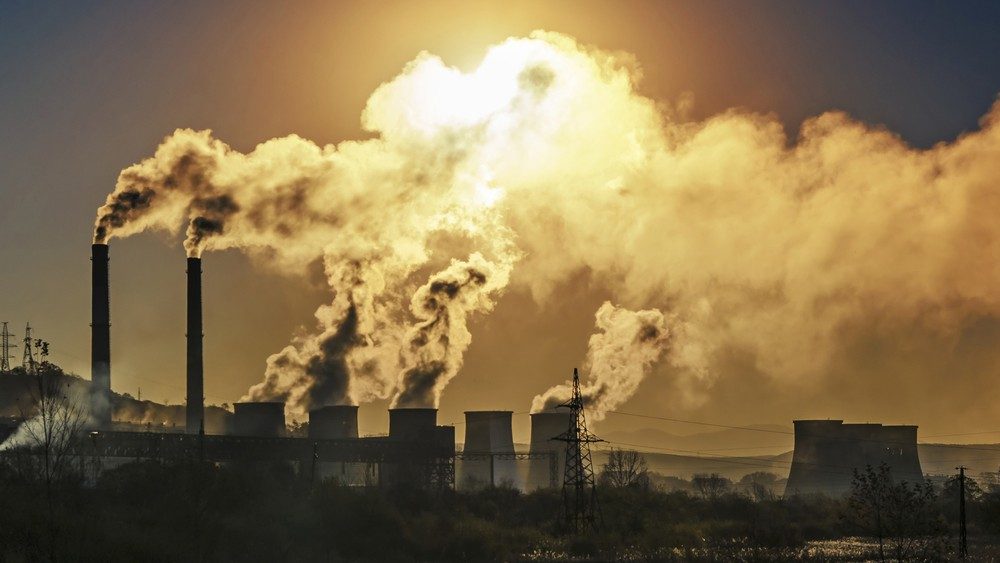
Despite billions in government backing and corporate pledges, carbon capture and storage projects are failing to meet performance targets, threatening the financial viability of a key decarbonization strategy for heavy industries.
Major carbon capture and storage (CCS) initiatives are encountering severe technical and financial headwinds, casting doubt on the technology's role in the global energy transition. A recent review by the Institute for Energy Economics and Financial Analysis of 13 operating CCS facilities revealed that most capture carbon dioxide well below their 90 percent design levels, with some projects failing outright.
This underperformance contrasts sharply with earlier industry optimism. In 2025, the World Economic Forum projected the CCS sector would expand fourfold by the end of the decade, backed by a massive pipeline of corporate and state investments.
Major oil and gas producers, including ExxonMobil, Shell, Chevron, TotalEnergies, Equinor, and Occidental, have heavily promoted CCS to decarbonize their operations. Governments have also committed substantial capital, such as the United Kingdom’s 2024 announcement of up to $29 billion over 25 years for carbon capture and hydrogen clusters.
Germany introduced a $5.7 billion Carbon Contracts for Difference scheme in May to support similar projects. In Denmark, cement manufacturer Aalborg Portland recently secured a $2.55 billion agreement with the national energy agency.
Aalborg Portland’s chief executive, Soren Holm Christensen, highlighted the scale of the endeavor. He stated, “We can now take the decisive step toward realising a project that is not only significant in a Danish context, but is also among the largest industrial CO2 capture projects in Europe.”
However, the financial reality of deploying this technology is proving steeper than anticipated. In the United States gas sector, integrating CCS is estimated to cost $20 to $30 per megawatt hour, potentially doubling power production expenses.
European cost projections are similarly daunting. Think tanks Agora Industry and Oeko-Institut estimate the combined expense of capturing, transporting, and storing carbon at $170 to $340 per tonne. The organizations noted, “According to these calculations, the costs of existing or planned CO2 storage projects are at least 50 per cent higher than previous forecasts.”
For investors and market professionals, these escalating costs and technical shortfalls signal a material risk to capital allocated toward CCS-dependent transition strategies. The Global CCS Institute reported only 50 facilities were operational worldwide in 2024, possessing the capacity to capture merely one-thousandth of global emissions.
Critics argue that heavy reliance on CCS serves as a greenwashing mechanism, allowing fossil fuel-dependent companies to extend the use of natural gas and market low-carbon oil without addressing core emission sources. As commercial rollout barriers mount, the financial viability of CCS as a primary decarbonization tool remains highly questionable.