France loses 800 millionaires as tax debate drives €4bn outflow
A net exodus of 800 millionaires took roughly €4 billion in assets out of France this year, highlighting the economic cost of the country's recurring wealth tax debates and political instability.
France experienced a net loss of 800 millionaires in 2025, according to the Henley & Partners Wealth Migration Report. While this represents a fraction of the country's 2.4 million high-net-worth residents, the departing individuals took an estimated €5 million in assets each. That translates to roughly €4 billion in total capital leaving the French economy.
The outflow underscores a persistent dilemma for Paris: how to raise revenue without driving away the capital and business ownership concentrated among its wealthiest citizens. Economists note that even a small exodus of entrepreneurs and investors can have an outsized impact on growth, investment, and tax receipts.
Recent political turbulence has amplified these anxieties. France has cycled through six prime ministers in five years amid repeated budget crises and mounting public debt. The prospect of a Marine Le Pen presidency in 2027 has added further uncertainty, with economists questioning whether her party's spending plans can align with EU fiscal rules.
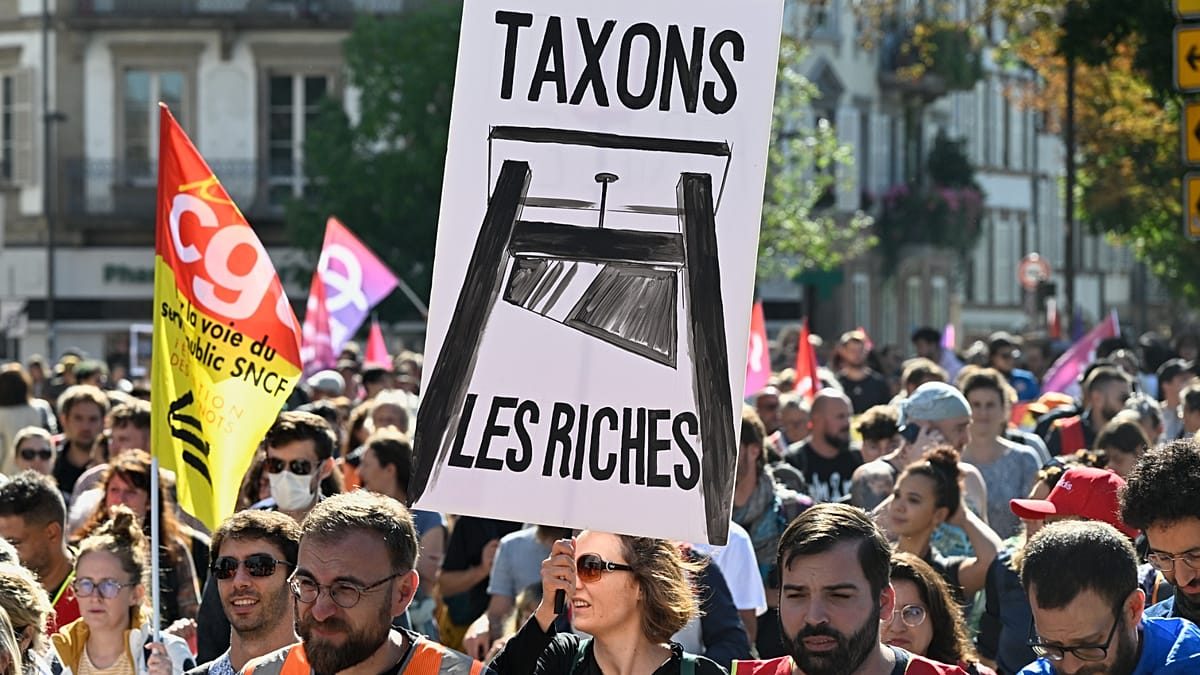
These macroeconomic fears intersected with a fierce domestic debate over taxation. Economist Gabriel Zucman proposed a 2% annual levy on fortunes exceeding €100 million, coupled with a five-year exit tax to prevent capital flight. Though the plan targeted only 1,800 households and promised €20 billion in annual revenue, it was defeated in the National Assembly during 2026 budget negotiations.
Lawmakers instead approved a 20% tax on luxury assets like yachts and private jets held within passive family holdings worth at least €5 million. Thomas Piketty has argued that the risks of capital flight from such policies are overstated. However, critics point to France's historical record as evidence that taxation prompts wealthy residents to relocate.
The European Commission found that the Solidarity Tax on Wealth, introduced in 1982 and scrapped in 2017, generated €63.5 billion over its lifespan. Yet economist Eric Pichet calculated that it triggered €200 billion in capital flight and reduced annual GDP growth by 0.2%. Similarly, François Hollande's 75% marginal income tax yielded just €160 million in 2013 and €260 million the following year before expiring in 2015, while prompting high-profile departures like LVMH chief Bernard Arnault.
The departing capital is finding receptive environments. Italy has become a major European beneficiary through a 15% flat-tax regime for foreign residents. The United Arab Emirates, Switzerland, and Monaco continue to attract wealthy migrants through zero-income-tax frameworks.
France now relies on a real estate-focused wealth tax that generates roughly €1.1 billion annually. As people and capital grow more mobile, Paris faces increasing pressure to balance its fiscal needs with the competitive realities of the global tax landscape.