US Sets Oil Production Records in 2025 While Leading Demand
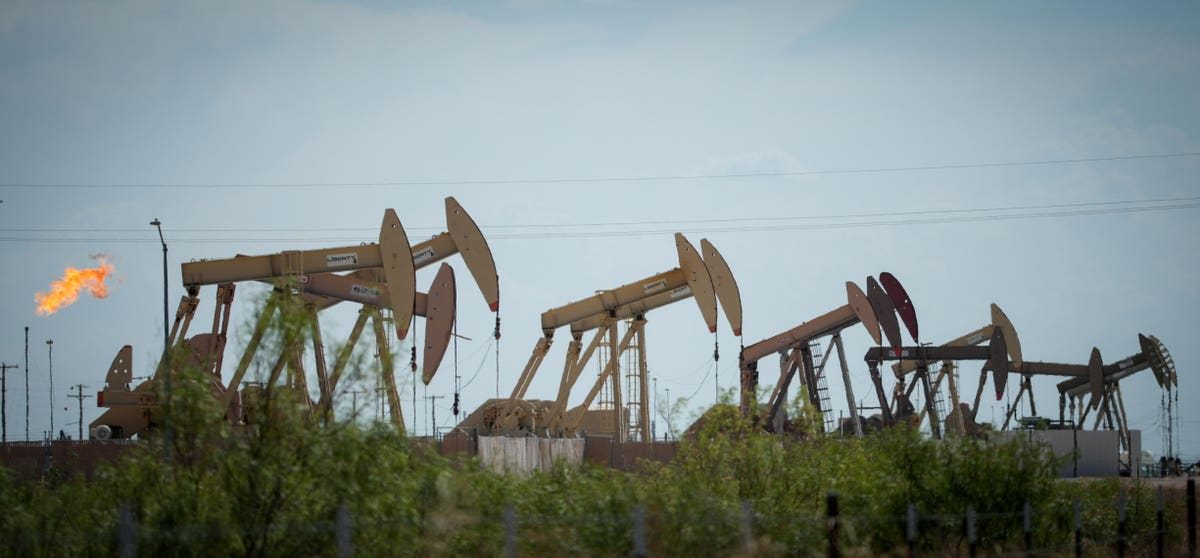
The 2026 Statistical Review of World Energy confirms the US produced record volumes of oil last year, yet its status as the world's largest consumer leaves it fully exposed to global price swings driven by Asian demand growth.
The United States produced a record 13.6 million barrels per day of crude and condensate in 2025, cementing its position as the world's top supplier. At the same time, the country consumed 19.4 million barrels per day, retaining its status as the largest oil buyer.
The American production lead expands significantly when measuring total liquids, a category that includes natural gas liquids. US output reached 21.1 million barrels per day on this basis. The 7.5 million barrel-per-day gap between the two metrics highlights the massive volumes of natural gas liquids unlocked by the shale boom.
Global crude plus condensate production rose 3.4% to 85.8 million barrels per day. While the US added 351,000 barrels per day, Saudi Arabia and Brazil posted larger individual gains. Total global liquids production hit 100.6 million barrels per day, with the US accounting for roughly 23% of the 3.4 million barrel-per-day increase.
Global oil consumption reached 103.0 million barrels per day. The US and China combined to drive 54% of the 1.3 million barrel-per-day growth. China alone added 459,000 barrels per day of demand, followed by the US at 253,000 barrels per day.
The figures underscore a structural shift in energy markets toward emerging economies. Non-OECD countries accounted for 88% of global demand growth in 2025, consuming 56.1% of the world's oil. Asia Pacific represented 38.5% of total demand and drove roughly half of the year's consumption increase, while European Union demand declined.
For markets, the central lesson is that US production records do not insulate the country from global price volatility. The US remains deeply integrated into global trade as both the leading supplier and leading consumer. As demand growth becomes increasingly concentrated in Asia, American oil assets will be priced by forces far beyond domestic borders.