Lagos targets Lekki water deficit with new pipeline MoU
Lagos State has signed a one-year scoping agreement with China Harbour Engineering Company and Naston Engineering to build an underwater pipeline to Lekki, marking the first step toward a concession deal aimed at closing the city's critical water infrastructure gap.
Lagos State Government, China Harbour Engineering Company (CHEC), and Naston Engineering Nigeria Limited have signed a one-year Memorandum of Understanding to design an underwater water transmission pipeline beneath the Lagos Lagoon into the Lekki Concession Area.
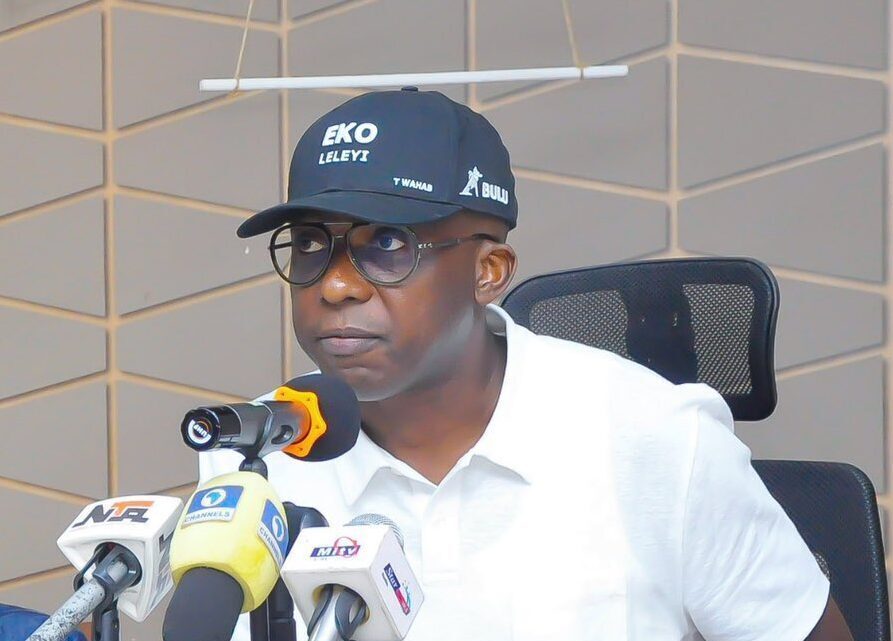
The agreement, which took immediate effect, tasks the consortium with scoping the subaquatic pipeline and a secondary project for downstream distribution, including metering and last-mile household connections. “Today, the Lagos State Government, through the Ministry of the Environment and Water Resources, signed a Memorandum of Understanding (MoU) with China Harbour Engineering Company and Naston Engineering Nigeria Limited to commence the scoping and definition of key components of the State’s water infrastructure development programme,” said Tokunbo Wahab, the state’s Commissioner for the Environment and Water Resources.
“The first project lot focuses on the installation of a water transmission pipeline beneath the Lagos Lagoon into the Lekki Concession Area,” Wahab added. CHEC Executive Director Luke Lin, Naston Executive Director Remi Agbowu, and Naston Managing Director Kole Funsho represented the private consortium at the signing.
For infrastructure investors, the MoU signals the state's intent to use concession models to close a critical supply gap. Over the next year, the consortium must deliver a comprehensive technical report and implementation framework. If successful, this scoping phase will culminate in a formal concession agreement between Lagos and the consortium to build and likely operate the assets.
The commercial rationale is clear despite the early stage of the agreement. Only 1.5 million residents are actively connected to the public water system, and physical network coverage stands at just 44%. In the fast-growing Lekki and Ajah corridors, last-mile connection failures force businesses and residential estates to rely on private boreholes and water tankers.
The Lekki pipeline forms part of a broader capital expenditure programme. The 70 million gallons per day Adiyan II Water Treatment Plant is 85% complete and is expected to supply an additional three million residents in western Lagos. Furthermore, rehabilitation of the Iju, Adiyan, and Akute water intakes is projected to lift capacity utilisation to 60% by August 2026.
To make these investments bankable, the Lagos Water Corporation is digitising its distribution network to curb non-revenue water. The state is also piloting public-private partnerships across seven mini and micro waterworks grouped into four lots, with five additional facilities slated for rehabilitation by November 2026.