Nigeria harmonises exam fees at N50,000, piling pressure on states
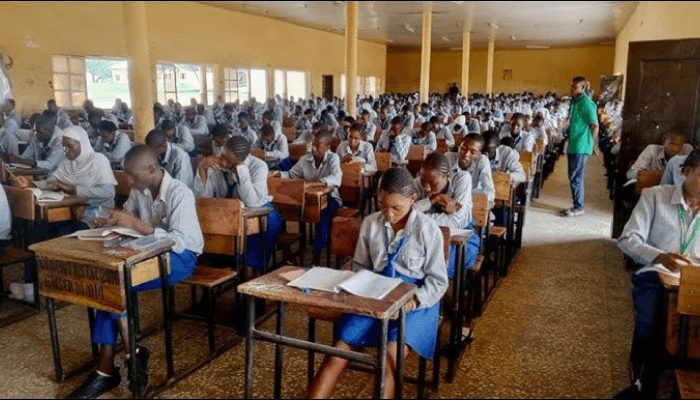
Nigeria’s decision to standardise secondary school exam fees at N50,000 threatens to deepen state-level fiscal deficits and push education costs beyond the reach of low-income households.
Nigeria’s federal government has mandated a uniform registration fee of N50,000 for senior secondary school certificate examinations, effective from 2027. The policy, detailed in a June 18, 2026 memo, applies to the internal exams administered by the West African Examinations Council (WAEC) and the National Examinations Council (NECO). Adeniji Ibrahim, the director of senior secondary education, signed the directive on behalf of Education Minister Tunji Alausa, formalising a pricing agreement reached on March 31.
The price adjustment marks a sharp escalation in testing costs. NECO’s internal fee will rise by roughly 67 percent, jumping from N30,000. WAEC’s fee faces an even steeper increase, climbing from N27,000 to N50,000. “I am directed to convey the minister of education’s approval of the sum of N50,000 only, as the new examination fee for candidates with effect from NECO SSCE internal 2027,” the memo stated.
State budgets face growing strain
The immediate financial fallout will likely be concentrated on Nigeria’s subnational governments. State authorities typically absorb the examination bills for candidates attending public schools, yet many are already in arrears to the examination bodies. Stakeholders note that this sudden cost increase will squeeze state education budgets that are already grappling with heavy recurrent expenditures.
This dynamic threatens to deepen the backlog of unpaid dues owed to WAEC and NECO. For the examination bodies, harmonised pricing eliminates internal competition over fees, but it introduces severe credit risk if state governments struggle to meet the higher financial burden. Creditors monitoring Nigeria's public education sector will likely view these growing state-level liabilities with caution.
Household cost shock
The fee hike also transfers financial pressure directly to consumers in regions with partial subsidies. In Lagos State, the government covers WAEC registration but leaves households to fund NECO exams independently. That out-of-pocket expense will now surge under the new harmonised rate.
In states where no government subsidy exists, the financial threshold for completing secondary education will rise significantly. Stakeholders caution that the near-doubling of fees could price low-income households out of the system entirely. This creates a risk of depressed candidate turnout when the policy takes effect in 2027, effectively reducing the addressable market for the examination councils.