Nikkei edges up on chip shares, BOJ rate fears limit gains
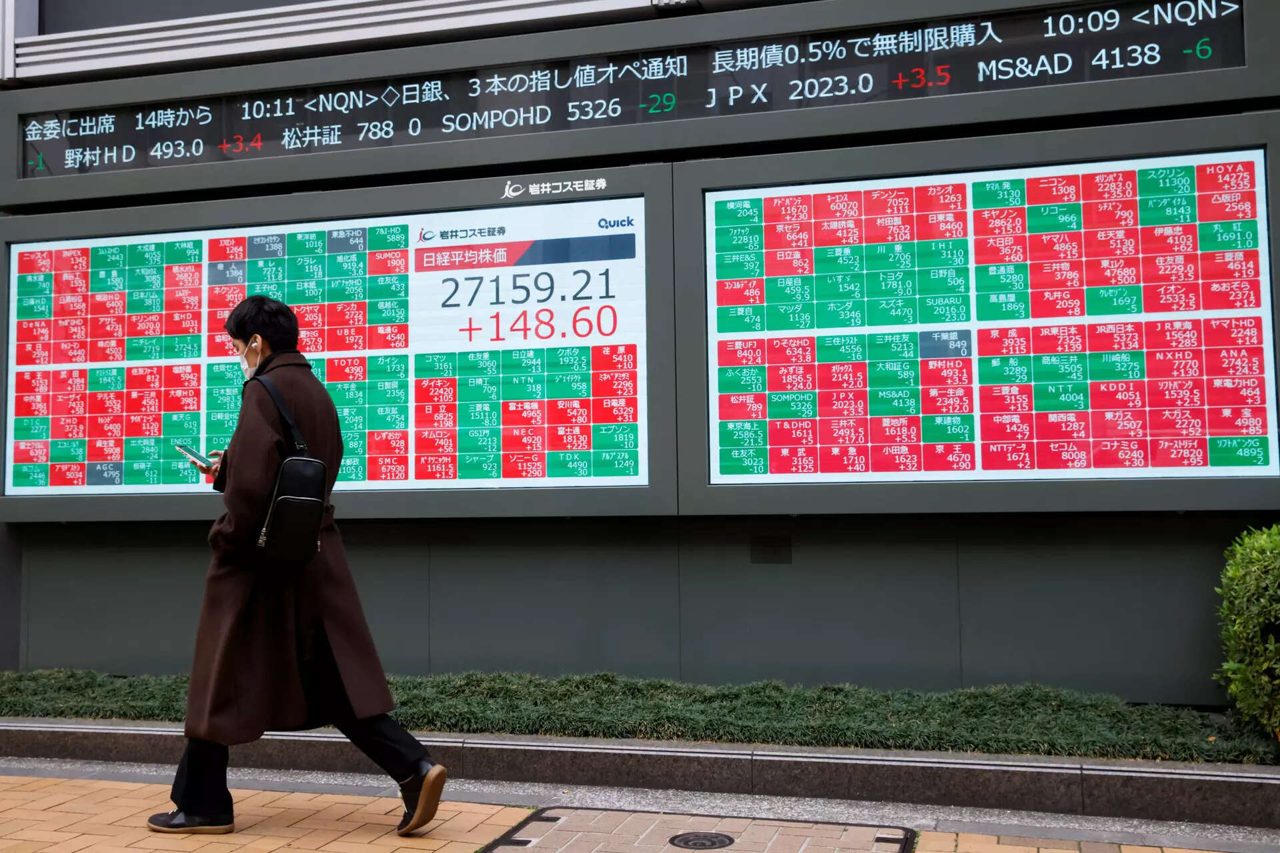
Tokyo's benchmark index rose at midday driven by semiconductor shares after Alphabet lifted its capital expenditure guidance, though gains were capped by mounting expectations of an early Bank of Japan rate hike.
The Nikkei 225 gained 0.47% to reach 66,424.44 by the midday break, while the broader Topix index advanced 0.39% to 4,048.79. The rally was narrowly focused on the technology sector, leaving the overall market breadth firmly negative.
Semiconductor equipment maker Advantest led the gainers with a 4.31% jump. Technology investor SoftBank Group climbed 2.09%, Tokyo Electron added 0.45%, and memory chip manufacturer Kioxia rose 0.76%. Across the Tokyo Stock Exchange's prime market, the underlying sentiment was notably weaker, with 55% of approximately 1,500 stocks declining, compared to just 41% that advanced and 3% that traded flat.
The immediate catalyst for the localized tech rally was an overnight move in U.S. markets. The Philadelphia SE Semiconductor index closed up 0.4% after Alphabet significantly revised its capital expenditure plans upward. The U.S. tech giant now expects to spend between $195 billion and $205 billion this year, a substantial increase from its previous guidance of $180 billion to $190 billion.
Despite the strength in chip-related names, the broader equity market struggled to build momentum due to shifting expectations around Japanese monetary policy. Traders are increasingly pricing in the likelihood that the Bank of Japan will raise interest rates sooner than anticipated, altering the environment for domestic equities.
Yasuda noted that this pivot in central bank expectations is creating a clear divide in the market. "On the other hand, bets that the BOJ may raise interest rates early hurt sentiment," he said. "Until now, the central bank tried to support the economy while raising rates, but that stance may change, which is negative for stocks led by domestic demand."
This divergence highlights a growing structural tension for portfolio managers operating in Japanese equities. Export-oriented and technology stocks are continuing to benefit from robust global demand for artificial intelligence infrastructure, directly driven by massive corporate spending commitments from entities like Alphabet. Conversely, domestic-focused companies now face looming headwinds from a potentially less accommodative central bank. A shift away from the BOJ's delicate balancing act of supporting growth while tightening policy threatens to dampen the specific economic conditions that had previously lifted domestic stock valuations.