US blue chips outpace tech as Strait of Hormuz fears lift oil
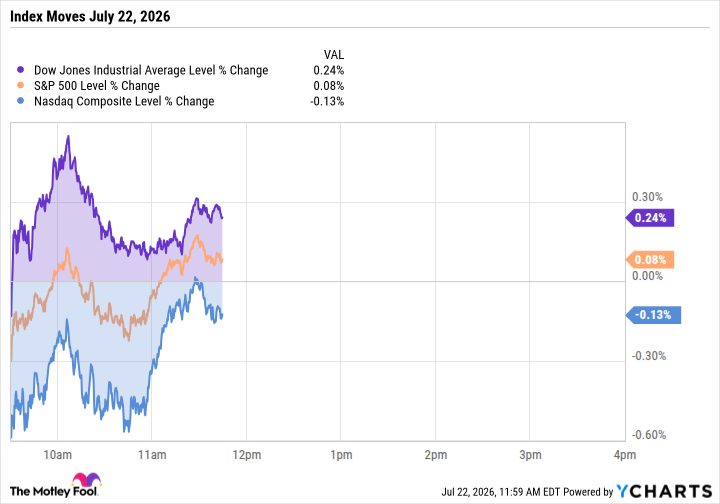
A surge in oil prices triggered by geopolitical tensions is driving a wedge between US blue-chip and technology stocks, keeping Treasury yields elevated and casting doubt on the cheap financing required for AI expansion.
US equity indices diverged on Wednesday as a sudden spike in crude prices punished growth stocks while lifting traditional industrial shares. The major indexes opened lower, with the Nasdaq briefly dipping 0.6% before lunch. The Dow Jones Industrial Average found its footing early, climbing as high as 0.5% around 10:00 a.m. ET before settling at a 0.2% gain, contrasting with a 0.1% decline in the Nasdaq Composite. The S&P 500 was essentially flat, up 0.1%, caught between industrial strength and tech weakness.
Brent crude surged roughly 4% to trade near $94 a barrel after President Trump threatened to strike Iranian infrastructure in response to any attacks on shipping in the Strait of Hormuz. This energy shock revived inflation anxieties and pinned the 10-year Treasury yield at 4.6%. For technology companies, elevated borrowing costs complicate plans to finance massive AI computing infrastructure.
The macroeconomic headwinds weighed heavily on Microsoft, which fell 2.1% and acted as a drag across all three major indexes. However, AI-adjacent hardware firms bucked the sector-wide malaise. Nvidia rose 2.6%, a move that single-handedly lifted both the S&P 500 and Nasdaq from their morning lows. The chipmaker was bolstered by news that partner Wistron is opening a new assembly plant in Texas to expand domestic manufacturing capacity.
Server maker Super Micro Computer surged 17.5% after raising its guidance on the back of record AI server orders. Outside of technology, AT&T gained 3.6% following stronger-than-expected quarterly profits. The telecom giant also announced a $10 billion accelerated share repurchase program slated for 2026, rewarding investors with a return of capital.
The 0.3 percentage point spread between the Dow's gains and the Nasdaq's losses underscores a market grappling with dueling narratives. While corporate AI demand remains robust enough to propel select hardware stocks, the broader growth sector is highly sensitive to the prospect that geopolitical friction will keep interest rates elevated. For investors, the session highlights a shift from broad tech momentum toward a more selective approach driven by tangible earnings and balance sheet strength.