SpaceX Falls to Record Low as August Unlock Looms
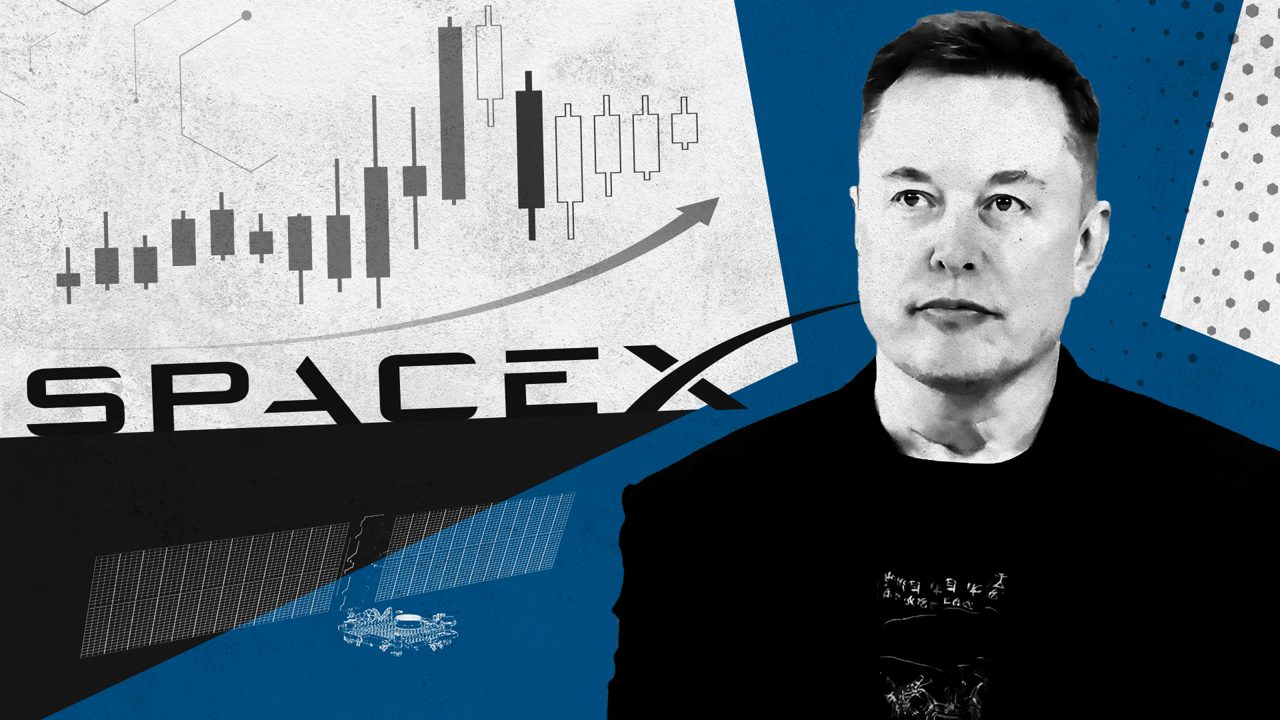
SpaceX shares have plunged 20% in a week to breach their IPO price, wiping out over $1.1 trillion in market value ahead of a massive insider share unlock and potential merger complications with Tesla.
SpaceX stock dropped more than 5% on Wednesday, pushing shares to an all-time closing low of $119.85 on Monday and extending a brutal 20% selloff from early last week. The rapid decline has completely erased the initial post-listing premium, wiping out more than $1.1 trillion in the rocket and satellite company's market capitalization.
The immediate catalyst for the recent downturn was last Thursday's sudden scrapping of the Starship V3 launch due to an engine issue. This failure triggered a Friday selloff that pushed the stock below its $150 debut price on July 10, and subsequently caused it to breach its $125 IPO price from June 12. Without a new positive catalyst, market watchers indicate that $100 is the next price level to monitor.
The company is now targeting Thursday for the next earliest Starship test, an event that could provide a brief reprieve for the battered shares. However, market professionals are primarily focused on August 4, when SpaceX is scheduled to release its second-quarter financial results. Investors will closely scrutinize the growth of the Starlink business, newly signed AI compute deals, and the company's spending on AI products like Grok to gauge overall corporate health.
Looming over these fundamental catalysts is a massive supply overhang. On August 6, the first major share unlock for insiders will occur, allowing as many as 900 million shares to become eligible for trading. This represents approximately 20% of eligible locked shares, with an additional 10% unlocking only if the stock manages to trade above $175.50 for five of ten consecutive trading days.
The selloff is also complicating a potential corporate restructuring involving Tesla, which reports its own second-quarter results on Wednesday night. Elon Musk has reportedly discussed merging the two companies, with the expectation that SpaceX would be the acquirer because he holds significantly more stock in the launch provider. As SpaceX shares plummet and Tesla shares jump, the valuation gap makes any potential merger structurally far more difficult to execute.