Ecuador Natural Resources Explained
Ecuador earned US$37.15 billion from exports in 2025, led by shrimp, oil, cocoa, bananas and mining. Here is who buys them and where the US trade deal stands. The post Ecuador Natural Resources Explained appeared first on The Rio Times .
Ecuador runs on the dollar and sells what its soil, sea and mountains give it. Here is what that basket holds, who buys it, and what is still open.
Ecuador earned US$37.15 billion from exports in 2025, according to its central bank, the Central Bank of Ecuador (BCE). Shrimp, at US$8.4 billion, was the top export, ahead of oil at US$7.75 billion.
On 13 March 2026 Ecuador signed a trade agreement with the US Trade Representative (USTR), Washington’s trade office. It would lift US surcharges on about half of Ecuador’s non-oil exports to the US, but as of 26 November 2026 it still needs approval by Ecuador’s National Assembly, the country’s parliament.
Ecuador adopted the US dollar in 2000 and has used it ever since. That makes the trade figures of the BCE the best single gauge of how much dollar income arrives.
Oil and derivatives brought US$7.75 billion in 2025, down 19%, the BCE said. That left oil second behind shrimp, and we could not confirm from the BCE data when the lead changed hands.
Non-oil goods made up US$29.4 billion of 2025 exports, the BCE said, valued FOB, meaning at the border before freight. Imports were US$30.9 billion, leaving a trade surplus of US$6.23 billion.
By our calculation of BCE figures, oil was about 21% of 2025 exports and shrimp about 23%. The top five lines, shrimp, oil, cocoa, bananas and mining, made up about 79%.
In the first nine months of 2026, the BCE reported in mid-November, exports reached US$30.45 billion, up 11.4%. Oil and derivatives rose 27.6% to US$7.54 billion.
President Daniel Noboa set out his aim on 22 September 2026, saying, in our translation, “If we have more barrels a day, we will get greater profitability.” He added that Sacha, an oil field in the Amazon, could reach 250,000 barrels a day.
The figures rule out a simple label for Ecuador as an oil state, as shrimp now sits on top. Our explainer on Ecuador’s role in Latin America places that in the wider region, and the 27.6% rise in oil sales in the first nine months of 2026 shows how much a price swing still matters.
National crude output averaged 460,562 barrels a day in January to August 2026, up 8.1% on a year earlier, according to official oil-sector data for those months. Petroecuador, the state oil company, pumped 363,393 barrels a day, or 79%, and private operators the other 97,169, or 21%.
Two pipelines carry the crude out of the jungle: SOTE, the state trans-Ecuadorian pipeline, and OCP, a private line for heavy crude. In July 2025 erosion of the Coca River interrupted both for about three weeks, and national output fell sharply.
A fire at the Baeza pumping station halted SOTE, the state pipeline, on 1 October 2026. Output averaged 448,736 barrels a day that month, the lowest of 2026, as our report on the October oil output low details.
The ITT block, named for the Ishpingo, Tambococha and Tiputini fields inside Yasuní National Park, a protected rainforest reserve, is the most contested site. Ecuadorians voted in August 2023 to leave its oil underground.
The closure of the block began on 28 August 2024 and is still under way. The block produced 42,105 barrels a day in the first half of 2026, about 9% of national output, a share that shows how slowly the oil is being left underground.
Shrimp earned US$7.43 billion in the first nine months of 2026, up 19.8%, the BCE reported in mid-November 2026. The 2025 total was US$8.4 billion.
China is the largest buyer of Ecuador’s shrimp, taking US$2.61 billion of US$6.56 billion in January to August 2026. That puts one government’s customs office at the centre of the trade.
China suspended 14 Ecuadorian plants from October 2025 over alleged preservative residues. In August 2026 Chinese customs reinstated eight, and six remained barred in October 2026, according to the National Aquaculture Chamber (CNA), the shrimp farmers’ industry body.
Our report on the six plants still barred follows the dispute. We found no date for China to reinstate them.
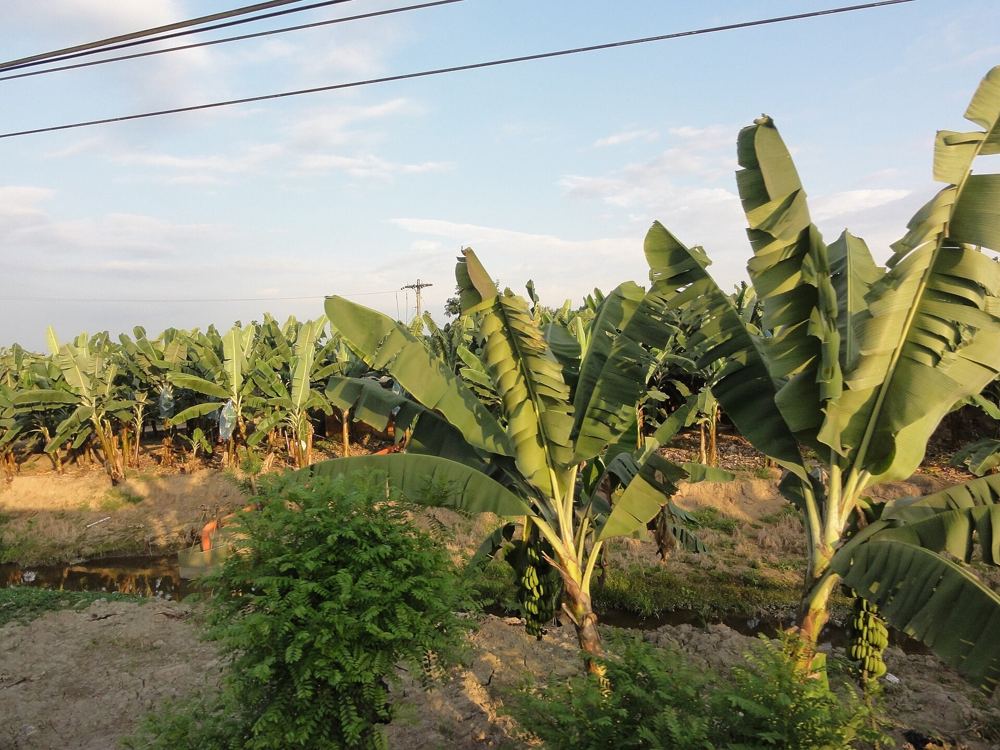
Acorbanec, the banana exporters’ association, said on 28 January 2026 that Ecuador exported 377.31 million boxes in 2025, up 3.45%. Bananas and plantains, the cooking bananas, earned US$4.26 billion, up 11%, according to the BCE.
By volume, Acorbanec said, the European Union took 30.71%, Russia 20.32%, the Middle East 14.88%, the United States 11.78% and the Southern Cone, the southern South American countries, 7.39%. China grew 16.2% and Turkey 29.6%, while South Korea fell 20%, the association added.
In the first nine months of 2026, mining earned US$3.84 billion against US$3.48 billion for bananas and plantains, the BCE reported in mid-November. Our report on how mining moved ahead of bananas has the detail.
Cocoa, including processed products, earned US$4.67 billion in 2025, up 29%, the BCE said, which makes it the third-largest export line by our reading of the list. Tuna and fish earned US$2.2 billion, up 9%, and cut flowers US$1.05 billion, up 2.8%.
Mining exports reached US$4.16 billion in 2025, up 35.4%, according to the BCE. The Chamber of Mining, the industry group, forecast about US$5 billion for 2026, it said.
In January to September 2026, lead and copper concentrate, the crushed ore sold for smelting, made up 39.8% of mining export value and gold 26.3%, according to BCE data. María Eulalia Silva, executive president of the Chamber of Mining, said on 19 May 2026, about the first quarter of 2026, that mining products were “now becoming the third export product”.
Fruta del Norte, a gold mine in the southern province of Zamora Chinchipe run by Canadian-listed Lundin Gold, produced 498,315 ounces in 2025, the company’s results release of 19 February 2026 said. It also booked record net revenue of US$1.78 billion, after treatment and refining charges.
Mirador, a copper mine in the same region, is seeking an extension. Noboa said on 26 October 2026 that the state wants US$1 billion from the operator for it, in cash or partly by building Cardenillo, a hydropower plant.
Llurimagua, a copper and molybdenum project in Imbabura, a northern Andean province, is headed for a tender planned for 2027 , said María José Burgos of Enami, the state mining company, on 10 November 2026. No investment figure or terms have been published.
The Galápagos National Park Directorate, the islands’ conservation authority, counted 290,404 arrivals in 2025, of which 62% were foreigners and 38% Ecuadorians, in a report cited in September 2026. That is about 800 arrivals a day on average, by our calculation.
The Galápagos Government Council, the islands’ governing body, sets an entry fee of US$200 for foreign adults, in force since August 2024. Foreign children under 12 pay US$100, as do non-resident adults from Andean Community or Mercosur countries, two South American trade blocs.
On 13 March 2026, the USTR and Ecuador’s production minister, Luis Alberto Jaramillo, signed the Agreement on Reciprocal Trade in Washington. US Trade Representative Jamieson Greer said “President Trump is unlocking commercially meaningful market access for American farmers and manufacturers”, opening a market “of over 18 million consumers”.
Ecuador’s Production Minister, Luis Alberto Jaramillo, said in February 2026 that the deal would cover about half of Ecuador’s non-oil exports to the United States. We could not confirm the list of covered goods or which US surcharge rate applies as of 26 November 2026.
Ecuador’s exports to the United States totalled US$6.83 billion in 2025, down 2%, according to Ecuadorian trade data, about 18% of all exports by our calculation. Non-oil exports to the United States rose 30% to US$6.57 billion.
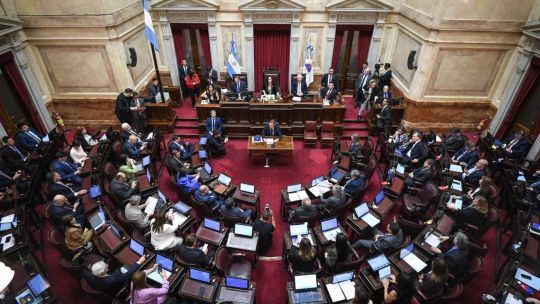
Ecuador’s Constitutional Court, the country’s top court on constitutional questions, ruled in mid-October 2026 that the agreement needs approval by the National Assembly. As of 26 November 2026 we found no confirmation of an Assembly vote.
The US took 11.78% of Ecuador’s banana volume in 2025, according to Acorbanec, so US tariff changes reach its farms directly. Any benefit from the trade deal waits for the National Assembly to act.
For investors, the numbers that move are oil prices, gold prices and the National Assembly’s calendar. Ecuador’s use of the US dollar removes currency risk against the dollar, yet the BCE data show how far export income swings with commodity prices.
We could not confirm when the National Assembly will vote on the trade agreement or what surcharge rate applies today. We also found no official count of ITT wells closed so far.
We could not find a verified figure for Ecuador’s 2025 economic output, oil’s share of the state budget or shrimp’s world rank. We also found no date for China to reinstate the six barred plants.
Shrimp, at US$8.4 billion in 2025, according to the BCE. Oil and derivatives came second at US$7.75 billion.
Yes, it has since 2000. Its export income therefore arrives in the currency the economy uses.