Colombia drops its bid to join the BRICS bank in a new shift towards the United States
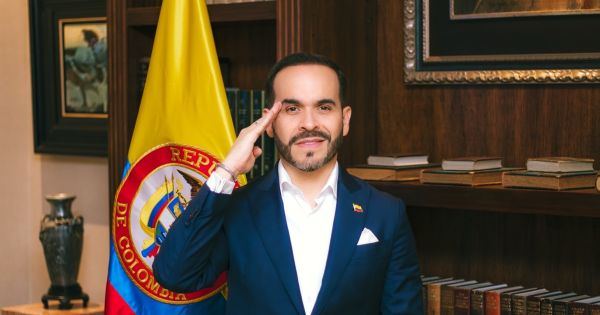
The government of Colombian President Abelardo de la Espriella has abandoned Colombia's process of joining the New Development Bank, the financial arm of the BRICS group of emerging economies, which his predecessor Gustavo Petro began in 2025. The decision adds to other changes in Colombian foreign policy, now more closely aligned with the United States and Israel.
The government of Colombian President Abelardo de la Espriella has abandoned Colombia's process of joining the New Development Bank, the financial arm of the BRICS group of emerging economies, which his predecessor Gustavo Petro began in 2025. The decision adds to other changes in Colombian foreign policy, now more closely aligned with the United States and Israel.
In a statement released on Wednesday night, the Foreign Ministry headed by Omar Bula said Colombia “will not continue the actions aimed at securing such membership” of the group founded by Brazil, Russia, India, China and South Africa and of its bank. The text adds that the government will seek financing from “other multilateral organisations” for its 2026-2030 National Development Plan, but does not explain the reasons for the decision.
Petro applied to join the bank in Shanghai on May 16, 2025, shortly after bringing Colombia into China's Belt and Road Initiative. On June 19, the bank's president, former Brazilian President Dilma Rousseff, announced its approval, which the board of governors ratified in July. Because the bank's founding agreement is a treaty, ratification required a law from the Colombian Congress. The government submitted the bill on November 25, 2025, but it never came to a vote, and Colombia was listed as an observer in the process of joining.
Since taking office, De la Espriella has recognised Israeli sovereignty over the Golan Heights, opened Colombia's embassy in Jerusalem and withdrawn the country from the Hague Group, a coalition of countries critical of Israel's offensive in Gaza. According to the Colombian newspaper Portafolio, Donald Trump's nominee for ambassador in Bogotá, Nathaniel Morris, told the US Senate that De la Espriella had expressed his intention to take the country out of the Belt and Road Initiative, something the Colombian government has not confirmed.
The decision reflects the weight of the United States, which buys almost three in every ten dollars of Colombia's exports, according to the statistics agency DANE. China, however, has been the country's main supplier since 2021: between January and September, Colombia bought US$17.833 billion of goods from China, 26.7% more than a year earlier, against US$13.995 billion from the United States.