Nigeria's cocoa seedling drive targets $25bn processing market
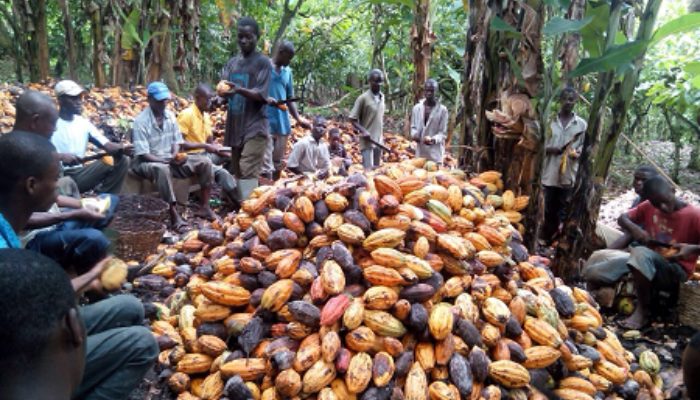
Nigeria's federal government is distributing one million climate-resilient cocoa seedlings to rehabilitate aging plantations and tap into a projected $25 billion domestic processing market, aiming to protect its critical non-oil export revenues from new EU sustainability regulations.
The Federal Ministry of Agriculture and Food Security is rolling out one million disease-resistant, climate-resilient hybrid cocoa seedlings across 14 producing states. The programme aims to replace aging, unproductive trees, rehabilitate plantations, and align the industry with the EU Deforestation Regulation (EUDR).
Cocoa remains Nigeria’s dominant agricultural export, valued at approximately $6 billion overall. The crop recently generated N1.23 trillion in year-on-year export revenues, accounting for 24 to 30 percent of the country's non-oil export earnings. It directly employs over 300,000 smallholder farmers across 1.4 million cultivated hectares, even though its direct contribution to total GDP has fallen below 1 percent as the oil sector dominates the broader economy.
Securing European market access is the immediate financial imperative for the sector. The EUDR demands strict farm traceability and verifiable sustainable farming practices. By strengthening agricultural extension services and training farmers in climate-smart agriculture, Nigeria is attempting to protect its market share in a region that is establishing tough new entry barriers for commodity exporters.
The larger strategic goal is to capture value downstream. Raw bean exports currently generate about $700 million annually for Nigeria, the third-largest producer in Africa. The government now plans to resuscitate state-owned processing facilities and establish cottage factories to manufacture chocolate, cosmetics, and beverages locally. Shifting away from raw exports could unlock an estimated $25 billion in potential market value.
Realising that valuation will require fixing chronic infrastructure deficits. Nigeria loses roughly 90,000 tonnes of cocoa, equivalent to about $180 million, every year due to inadequate processing and storage facilities. Systemic yield gaps caused by aging farmers and aging trees further constrain output.
Implementation will be managed at the state level. Authorities in key producing states like Ondo, Cross River, Osun, and Ekiti are partnering with the federal government to channel inputs through registered cooperative clusters and the Cocoa Farmers Association of Nigeria. For the programme to translate into real export gains, execution will require timely funding and a departure from the politicisation that often derails state-level agricultural interventions.