Nigeria launches SAF push to draw green aviation investment
Nigeria has inaugurated a steering committee and launched an implementation study to build a commercial sustainable aviation fuel industry, aiming to attract foreign and domestic capital to its agricultural and energy sectors.
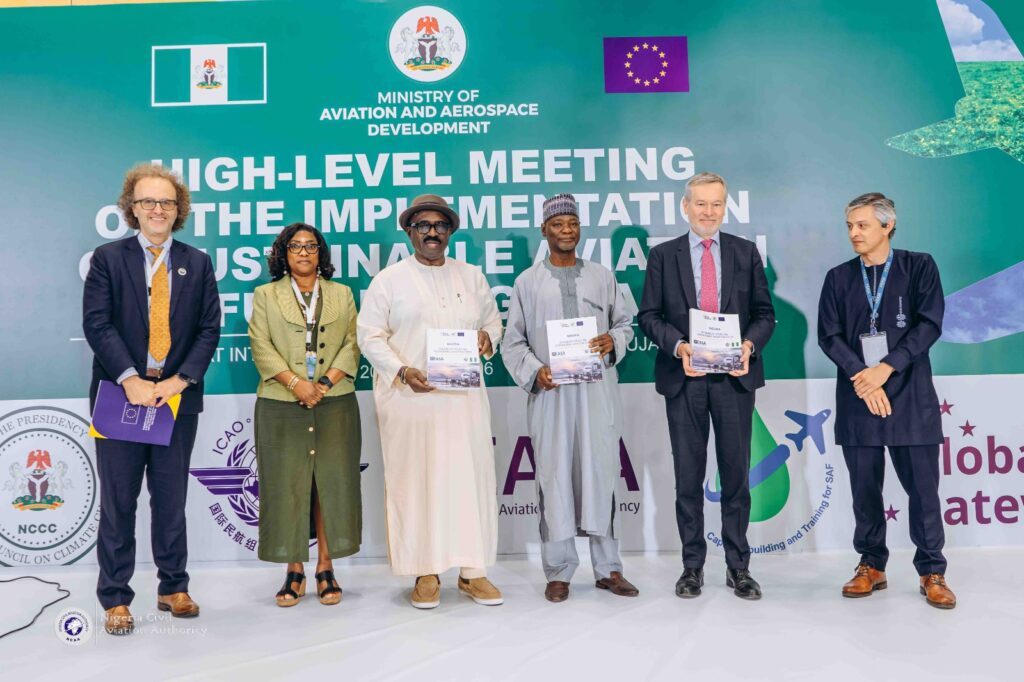
Nigeria's Federal Government has launched a national Sustainable Aviation Fuel (SAF) programme, moving the country from planning to commercial implementation. The initiative, unveiled on Monday in Abuja, establishes a National High-Level SAF Steering Committee tasked with overseeing the sector's development and inter-agency coordination.
For investors, the programme represents a structured entry point into Nigeria's green energy transition. The government is explicitly coupling its environmental drive with an investment pitch, promising policy support, a clear regulatory framework and financial incentives to facilitate the emerging industry.
The primary mechanism for capital deployment will be an ICAO-supported SAF Business Implementation Study. This study is designed to move beyond theoretical planning to identify commercially viable opportunities and develop bankable projects capable of securing both domestic and foreign investment.
Nigeria's investment thesis relies heavily on its existing resource base. The country aims to position itself as Africa's leading SAF producer by leveraging its status as one of the world's largest cassava producers, alongside extensive agricultural residues and expanding refining capacity. State-backed entities like NNPC New Energy Limited are already involved in shaping the ecosystem.
The Nigeria Civil Aviation Authority (NCAA) will act as the sector's regulator and the steering committee's secretariat. The feasibility phase, backed financially by the European Union and technically by the European Union Aviation Safety Agency (EASA), has concluded. Focus now shifts to cross-government coordination, involving the ministries of Petroleum Resources, Agriculture and Food Security, and Innovation.
The involvement of international bodies like the ICAO and EASA provides a layer of credibility that is often critical for securing foreign capital. Stakeholders stressed that developing a domestic SAF industry is central to Nigeria's broader economic diversification strategy, which aims to create jobs and strengthen energy security beyond traditional crude exports.
Aviation Minister Festus Keyamo described SAF as a strategic opportunity to unlock value across agricultural, energy and industrial supply chains. If the newly inaugurated steering committee can deliver on its promise of investment-friendly regulation, Nigeria's SAF programme could become a viable target for climate-focused capital entering Africa.