Parliament Backs South Africa Election Body
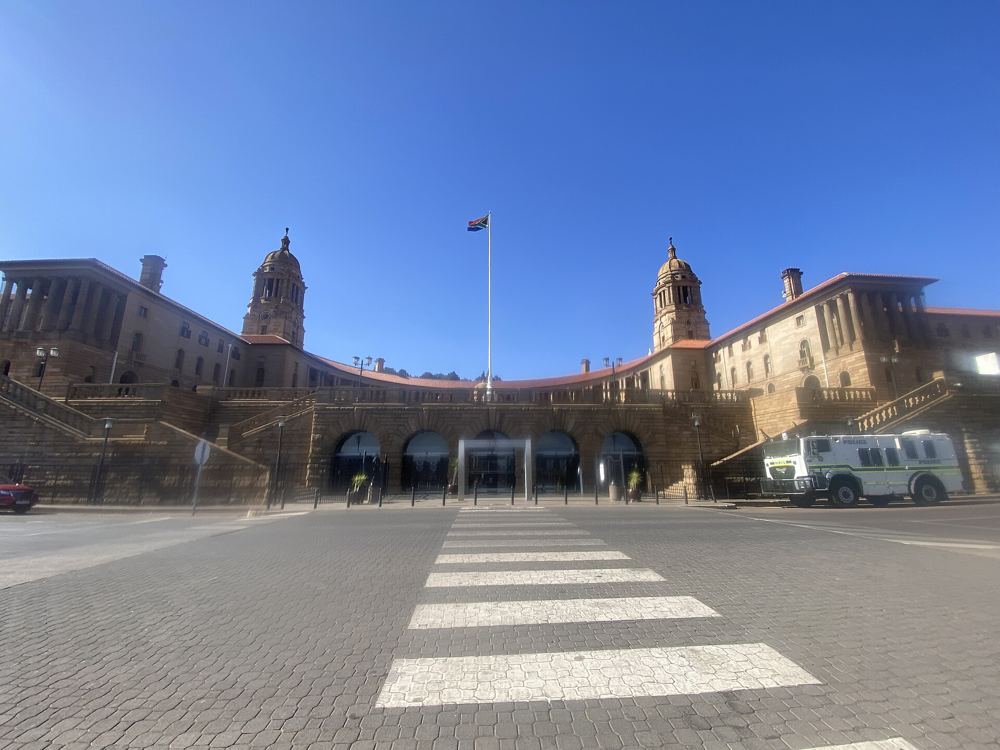
Parliament says South Africa's electoral body is ready for 4 November, while 6.6 million extra ballots are still printing after a court ruling. The post Parliament Backs South Africa Election Body appeared first on The Rio Times .
Three parliamentary committees said on Friday, 23 October, that South Africa’s Electoral Commission is ready for the 4 November local elections. The commission is still printing millions of extra ballots; our running coverage sits in the South Africa local elections hub.
Three parliamentary committees inspected the Electoral Commission of South Africa (IEC) headquarters in Pretoria on Friday, 23 October. They were the Portfolio Committees on Home Affairs and on Cooperative Governance and Traditional Affairs, and the Select Committee on Security and Justice.
Committee chair Mosa Chabane said the MPs are confident the IEC will deliver free and fair elections, while problems could still arise. Eyewitness News reported the visit on Saturday, 24 October.
The IEC had printed 66% of about 79 million ballot papers by mid-October, eNCA reported. A Constitutional Court ruling that put 181 excluded ANC candidates back on ballots now requires about 6.6 million extra papers.
Printing of the extra ballots is due to finish by 30 October, five days before voting. Whether it finishes on time is the main logistical risk.
The election is set for Wednesday, 4 November 2026, as gazetted by Cooperative Governance Minister Velenkosini Hlabisa in Government Gazette No. 55162. Voting runs from 07:00 to 21:00 South African time (00:00 to 14:00 US Eastern Time), with special votes on 2 and 3 November.
More than 29 million people are registered, and 10,526 council seats are at stake across 257 municipalities. The IEC certified 136,790 candidates on 16 September, and about 547 of 732 registered parties are contesting, SABC reported.
The eNCA/MarkData survey, published on 18 October, interviewed about 1,000 residents in each of six metros between 12 August and 10 September. In Cape Town, 60.5% said the city is run very well or averagely well, against 29.2% in Johannesburg, where 68.7% said it is run badly.
In Cape Town, the Democratic Alliance (DA) led with 52.6% against 23.6% for the African National Congress (ANC), the governing party nationally. In Johannesburg, the DA led with 35.0%, ahead of the ANC on 21.8%, uMkhonto weSizwe on 12.5%, the EFF on 11.9% and ActionSA on 10.3%.
Kalshi, regulated in the US by the CFTC, priced Helen Zille at 51.0% to be Johannesburg’s mayor after the election as of 1:56 p.m. ET on 24 October, with 13,542 contracts traded. David Makhura followed at 14.0% and Herman Mashaba at 7.0%.
Polymarket’s Johannesburg market, with about US$135,000 traded, had Zille at 51.5% and Makhura at 12.8%. These prices are bets on one city, not national forecasts.
Why we show this: prediction markets turn real-money bets into a live probability that moves within minutes of the news, which is why investors, campaigns and newsrooms in the United States now follow them closely. We show them next to polls and official results, never instead of them.
The Electoral Court dismissed independent candidate Llala Peter Phoshoko’s challenge over his exclusion from the Ward 33 ballot in Polokwane, the Citizen reported. The dispute centred on whether his nomination met the signature requirement.
Johannesburg and Cape Town host South Africa’s largest business districts, so who runs them matters to investors and travellers with exposure there. The Johannesburg survey shows no party near a majority, which points to coalition talks after the vote.
The parliamentary check matters because the commission is still reprinting ballots. A smooth count would support confidence in the result.
Which parties will control individual councils is unresolved, and the MarkData survey is not a national forecast. Whether the extra ballots arrive on time is not yet known.
The committees said they expect a free and fair vote but allowed that problems could arise. The effect of service-delivery complaints on turnout is not yet measurable.
Editorial responsibility: Matthias Camenzind , Editor-in-Chief · Editorial standards · Report an error
Voting is on Wednesday, 4 November 2026, from 07:00 to 21:00 South African time, or 00:00 to 14:00 US Eastern Time. Special votes are cast on 2 and 3 November.
Three committees inspected the commission’s Pretoria headquarters on Friday, 23 October. Committee chair Mosa Chabane said they are confident of free and fair elections, while problems could still arise.
A Constitutional Court ruling put 181 excluded African National Congress candidates back on ballots, Eyewitness News reported. That needs about 6.6 million extra ballot papers, with printing due to finish by 30 October.
Kalshi priced Helen Zille at 51% and Polymarket at 51.5% on 24 October. David Makhura ranked second on both, at 14.0% and 12.8%.