Morocco Arms Buying Cap Rises to US$19B
Morocco's 2027 budget bill lets the defense minister commit up to US$19.4 billion in advance for arms, up 21% from 2026. The post Morocco Arms Buying Cap Rises to US$19B appeared first on The Rio Times .
Morocco wants the legal room to order up to US$19.4 billion of military equipment in advance. The request sits in the 2027 budget bill that the finance minister presented on Friday, 23 October.
Morocco’s government has asked Parliament to lift the Morocco arms buying cap to MAD 190.5 billion (about US$19.4 billion). The request is Article 36 of Finance Bill No. 60.26, presented by Finance Minister Fouzi Lekjaa on Friday, 23 October.
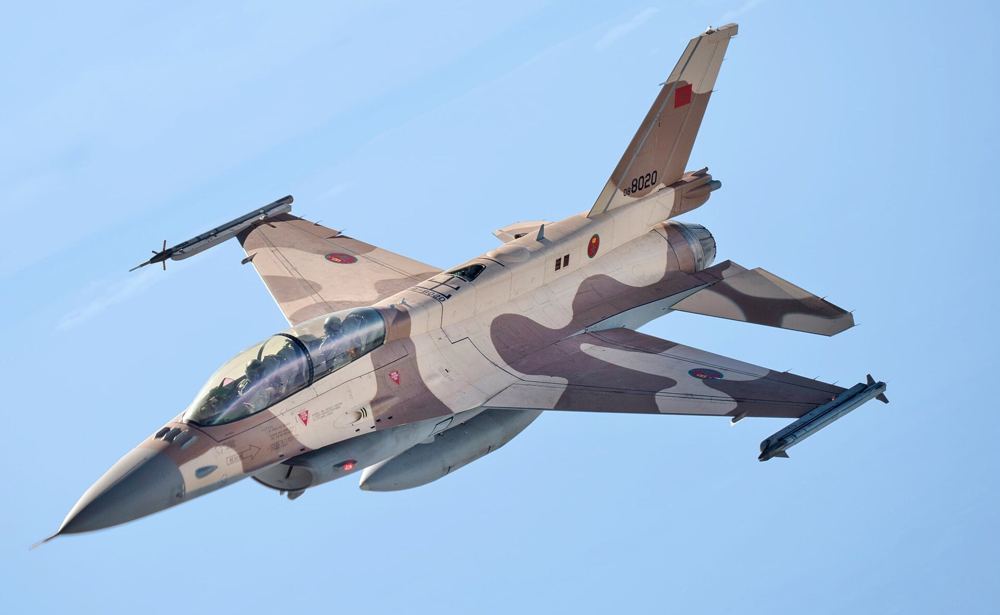
For a US reader, the number matters because Morocco flies US built F-16 jets and C-130 transport planes. It is a ceiling on future orders, not cash spent in 2027, and no contract has been named.
The bill’s Arabic text lets the defense minister commit up to MAD 190.5 billion (about US$19.4 billion) in 2027. The finance ministry site publishes the text, and the money comes from credits that Parliament would open in 2028.
The commitments run through a special account for buying and repairing military equipment and for building the defense industry. Such limits let ministries sign multi-year contracts before the money is paid.
The 2026 limit was MAD 157.17 billion (about US$16.0 billion), so the rise is MAD 33.3 billion (about US$3.4 billion), or 21%. Hespress, a Moroccan news site, says this is the largest rise among the advance limits in the bill.
Hespress lists the limit as MAD 124.77 billion in 2024 (about US$12.7 billion) and MAD 133.45 billion in 2025 (about US$13.6 billion). The 2026 figure was MAD 157.17 billion (about US$16.0 billion), and the new request is MAD 190.5 billion (about US$19.4 billion).
From 2024 to 2027, the cap would rise by about 53%, based on the Hespress figures. The cap lets the ministry sign contracts in 2027 that are paid from 2028 credits.
Abdelhamid Harifi, an analyst with the FAR-Maroc forum, told Le360 that the cap is room to act over several years. He said it is not a one year bill, and weapons cost far more than five or ten years ago.
The yearly budget moves much less than the cap. Personnel costs rise to MAD 49.34 billion (about US$5.0 billion), up about 5%, which Le360 ties to pay rises.
The bill also creates 5,500 budget posts for the defense administration, which the bill text confirms. Equipment and miscellaneous costs reach MAD 8.37 billion (about US$0.85 billion).
Investment totals MAD 15.2 billion (about US$1.5 billion), split between 2027 payments and commitments for later years. The special equipment account gets MAD 11.49 billion (about US$1.2 billion), against MAD 11.5 billion in 2026.
Lockheed Martin announced on Tuesday, 6 October, that the first F-16 Block 72 jet for Morocco completed its first flight. The same release says Moroccan forces will receive HIMARS rocket launchers, but gives no delivery date.
The US Army said it will hold its first counter-drone technology event in Tan-Tan, southern Morocco, in spring 2027. Soldier demonstrations are planned for February and March, then an assessment in April and May during the African Lion exercise.
Oshkosh Defense announced on Monday, 5 October, a Moroccan order for 50 heavy equipment tractors and 50 trailers, Hespress reports. The reports give no price for the order, which is a direct commercial sale between the company and Morocco.
On 7 October, at the Marrakech Air Show, Loudiyi said Morocco wants to move from importing defense capacity to building its own. Le360 notes that two defense industrial zones, at Nouaceur and near Kénitra, were created by a June 2024 decree.
For US defense suppliers and investors, the bill is a sign of future demand rather than a purchase order. Lockheed Martin, which says its Morocco ties go back to 1974, is the main US name in the public record.
For policy watchers, the Tan-Tan event shows US forces testing equipment in Morocco, alongside the arms trade. Conversions here use the market rate of 24 October 2026, which was 9.81 per US dollar.
It is not known how much of the US$19.4 billion cap will be signed in 2027, or with which countries and companies. The bill text names no contracts.
Neither the price of the Oshkosh order nor any further US tank purchase has been confirmed. Parliament could also change the bill, and no date for the final vote was found.
Parliament will now examine the 2027 Finance Bill in committee and in the House of Representatives. No dates for those steps were found.
Approval of the cap would not mean immediate spending or delivery. It would only give the defense administration legal room to sign contracts in 2027.
It raises the advance commitment limit to MAD 190.5 billion (about US$19.4 billion) from MAD 157.17 billion. The limit lets the defense minister sign multi-year equipment contracts.
No, it is a ceiling on commitments paid from 2028 credits. The 2027 cash for the equipment account is MAD 11.49 billion (about US$1.2 billion).
Not by itself, because the bill names no supplier. Morocco already flies F-16s, and Lockheed announced the first F-16 Block 72 flight on 6 October.
Finance Minister Fouzi Lekjaa presented it at a joint session of both houses of Parliament on Friday, 23 October 2026. The session was set for 3:00 p.m. at the House of Representatives.
Parliament must still debate and vote on it, and no date for the final vote was found. Until then the figures are proposals.
Sources: Morocco Ministry of Economy and Finance, Finance Bill No. 60.26 for 2027, text (Arabic) ; Hespress (French), 23 October ; Hespress (English), 23 October ; Le360, breakdown of the defense budget, 23 October ; Le360, analyst explainer, 24 October ; Hespress (French), parliamentary calendar, 21 October ; Hespress (English), US Army test plan, 18 October ; Hespress (French), F-16 Block 72 first flight, 6 October ; US Army statement, as published by Soldier Systems Daily, 21 October ; Lockheed Martin release, 6 October ; Hespress (French), Oshkosh order, October ; The Defense Post, US Army Tan-Tan event, 21 October (all accessed 24 October 2026).
Editorial responsibility: Matthias Camenzind , Editor-in-Chief · Editorial standards · Report an error
Africa: The New Scramble, the great-power contest over the continent.