Nigeria capacity index scores 54.2, flags coordination gaps
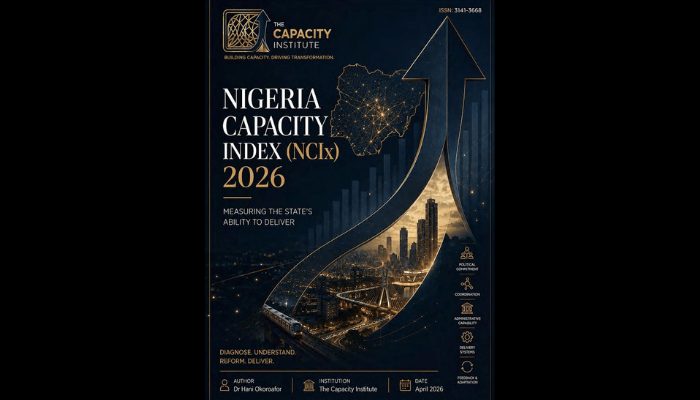
A new institutional benchmark scores Nigeria 54.2 out of 100, identifying poor inter-agency coordination as the primary bottleneck preventing the country from converting its vast economic potential into tangible market outcomes.
The Nigeria Capacity Index 2026 has assigned the country a baseline score of 54.2. The metric evaluates the institutional machinery required to translate policy ambitions into measurable results, deliberately stepping away from traditional economic indicators like GDP or inflation. It measures the strength of the state's execution architecture.
The benchmark reveals a stark disconnect between individual competence and systemic execution. While the index found robust political commitment and a technically capable civil service across federal and state levels, it identified poor coordination between government agencies as the critical constraint. Individual departments frequently operate in isolation, causing broadly sound policies to fragment during implementation.
For foreign investors and corporate executives, this diagnosis provides a concrete explanation for a persistent feature of the Nigerian market: the gap between ambitious reform announcements and actual delivery. Large-scale projects, particularly in infrastructure, routinely stall because transport ministries, finance departments, environmental regulators, and procurement agencies fail to integrate their workflows. The system consistently underperforms relative to the talent within it.
This fragmentation alters the traditional risk assessment for Nigeria. While corruption, funding gaps, and leadership volatility are frequently cited as primary investment risks, the index suggests these are often symptoms of a deeper structural flaw. The country possesses abundant natural resources, a young population, and recognised entrepreneurial talent, but lacks the institutional ability to organise those assets into sustained productivity.
The index frames the 54.2 score not as a permanent verdict, but as a diagnostic baseline for targeted reform. It draws parallels with Rwanda and Vietnam, nations that accelerated economic growth by systematically strengthening inter-agency coordination, industrial policy management, and performance delivery. For markets watching Nigeria, the 54.2 score establishes a clear metric: future economic performance will depend less on new policy announcements and more on whether the government can build the connective tissue between its existing, capable institutions.