Ecopetrol Gas Plan Backed, Reserves Down 39%
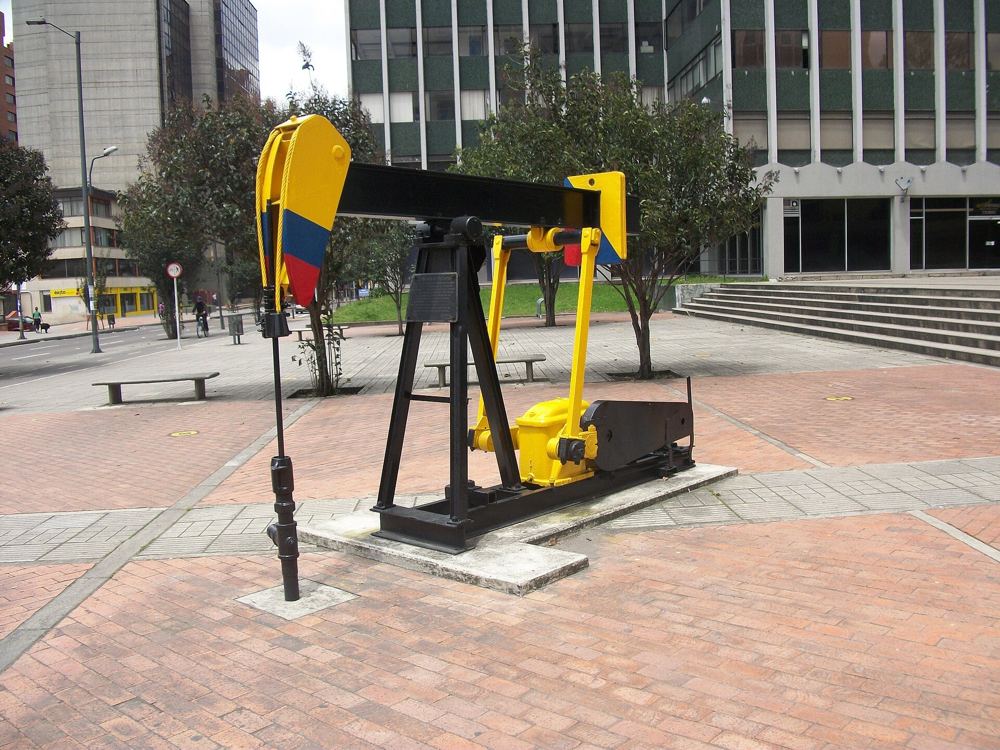
Ecopetrol voided its five-year LNG import tenders on 19 October and the energy minister backed it, as Colombia's proven gas reserves fell about 39%. The post Ecopetrol Gas Plan Backed, Reserves Down 39% appeared first on The Rio Times .
Ecopetrol gas supply strategy won public backing from Colombia’s Energy Minister, María Nohemí Arboleda, after the state-controlled oil company declared its five-year liquefied natural gas (LNG) import tenders void on Monday 19 October 2026. “Void” means no contract was awarded, so Colombia gets no new imported cargoes from these processes.
For US readers the story touches the New York-listed shares of one of Latin America’s largest oil companies and the price of the LNG that suppliers around the world compete to sell. Ecopetrol said it would not take on purchase obligations abroad that Colombian customers had not agreed to buy, a stance that protects its margins but means it must still find imported gas elsewhere.
Colombia’s gas squeeze was already visible in September, when we covered rationing after a fault at the Cartagena LNG terminal in Colombia Gas Rationing Ordered After Cartagena LNG Terminal Failure . The minister’s remarks and the company’s announcement carry the same message, that the shortage traces back to decisions of the previous government.
Ecopetrol said the processes covered five years of LNG supply for the regasification terminals on the Pacific coast and at Puerto Bahía. Valora Analítik and El Colombiano report that the processes began under former president Gustavo Petro.
Accepting the offers would have meant taking on buying obligations abroad without sales contracts to recover the cost, Ecopetrol said, and the extra cost could have reached final users. Imported LNG must be bought, shipped and regasified, the company added, while competing with buyers in Europe and Asia in a market it said is hit by the Middle East crisis.
Ecopetrol said it will keep looking for imports with volumes, terms and price formulas that fit Colombian sales. The coverage reviewed does not say who bid or at what price.
Minister Arboleda said in a statement published on 19 October that Colombia “needs to recover its energy sovereignty as soon as possible,” which for gas means producing in the country what is needed for daily use (our translation). She added that the ministry supports “all the efforts of Ecopetrol to increase the gas supply.”
She blamed the previous government, saying that between 2023 and 2025 it “did not sign new exploration contracts” while existing fields kept running down, as La FM reported. She also said pilot projects in unconventional fields, which held environmental licences, and offshore gas drilling were halted under Petro.
In a post on X reported by El Heraldo on 20 October, the ministry wrote that “since 2017 it was known that gas would become scarce” and that exploration was stopped anyway. It added that “energy security is not improvised, it is built.”
These are the account of the minister and of Ecopetrol, and we found no reply from Petro or his former ministers in the coverage reviewed. The two statements also use different start dates, 2017 in the post and 2023 to 2025 in the longer statement.
Ecopetrol, citing the National Hydrocarbons Agency (ANH), said proven gas reserves fell from 2,817 gigacubic feet at the end of 2022 to 1,717 at the end of 2025, a drop of about 39%. Marketed annual production fell from 392 to 290 gigacubic feet over the same period, about 26%.
The percentages check out against the figures, since 1,100 of 2,817 is 39.0% and 102 of 392 is 26.0%. Dividing annual output by 365 days gives roughly 1.07 billion cubic feet a day in 2022 and 0.79 billion in 2025, which is our own arithmetic.
The minister, citing the agency for the reserves figure, said 2025 alone brought the biggest fall in the country’s history and that more than three of every ten cubic metres of gas used in Colombia are imported. Radio comments that accompanied the announcement, quoted by La FM, put imports near 40% and said the imported price rose from about US$13 to almost US$25 per million British thermal units, figures given without dates.
Ecopetrol said the national planning unit UPME had already projected in its 2017-2026 gas balance a gap between supply and demand from 2024. It also said Ideam, Colombia’s weather institute, declared an El Niño on Thursday 8 October, which can cut hydropower and raise demand for gas-fired plants.
Infobae reported on 15 October that Arboleda told an energy-market congress in Cartagena that Colombia could face gas restrictions from February 2027, since proven reserves equal about 5.9 years of supply and part of demand is covered by imports. The ministry listed regasification plants at the Pacific, planned around November 2026, and at Puerto Bahía, projected for early 2027, as part of the response, and their start depends on project execution.
Juan Ricardo Ortega, president of Grupo de Energía de Bogotá, told El Colombiano that Ecopetrol could have arranged the purchase since October 2025 at about US$9 to US$10 per million British thermal units. “They signed the regasification contracts and did not buy the gas,” he said, and Ecopetrol’s answer was not in the coverage reviewed.
Ecopetrol’s answer to the shortage is Sirius, an offshore gas discovery in the Caribbean that it is developing with Petrobras of Brazil. The company said it will advance the discoveries, process environmental and social permits on time and coordinate the pipelines that carry new gas to market.
In November 2025 the partners said they were aiming for first gas from Sirius in 2030, conditional on licences and permits. In August 2026 Ecopetrol’s finance chief said the environmental licence application would be filed in the first quarter of 2027, according to Portafolio.
Dates in the coverage run from 2029 to 2031, and radio comments tied to the announcement pointed to about 2031, so the start is not settled. We looked at the field in Ecopetrol Sirius Gas Field: Startup Could Slip to 2031 , and the wider reserve picture in Ecopetrol Fracking Return and Offshore Push as Colombia Reserves Fall .
Investors in Ecopetrol’s New York shares should read the Ecopetrol gas decision as a choice to protect margins over short-term supply, with the energy ministry publicly behind it. We could not confirm how the shares moved on the news, so we draw no price conclusion, and What Is Ecopetrol? explains the company’s size and management.
Industrial users, power plants and households in Colombia are the ones exposed if imported gas stays costly or short, and the minister asked citizens to save energy, water and gas this summer. Our guide to Colombia Natural Resources Explained 2026 and our Colombia Explained 2026 pillar give the wider background.
Visitors and residents should watch for official saving appeals and any local supply notices, since the sources reviewed announce no new rationing. Our Bogotá city guide covers daily costs in the capital.
Ecopetrol’s own release could not be opened on its website, so the company’s statements come from Colombian outlets that quote it, among them La FM, Valora Analítik, El Colombiano, Forbes Colombia and Portafolio. The bidders, their prices and the volumes offered have not been published in the coverage reviewed.
It is not known how the Ecopetrol gas plan will cover the missing import supply before Sirius starts, or whether Ecopetrol will launch a new tender. The claim that the previous administration caused the fall in reserves comes from the minister and Ecopetrol, and we found no reply from Petro’s side.
The sources do not show how Ecopetrol shares reacted, and they give different start dates for Sirius. Mr Ortega’s claim of a cheaper purchase window since October 2025 is his own and was not answered by Ecopetrol in the coverage reviewed.
On Monday 19 October 2026 Ecopetrol declared its five-year LNG import tenders void because the prices lacked commercial backing from Colombian buyers. No contract was awarded, and the company said it will keep looking for other import options.
Minister María Nohemí Arboleda said the government supports all of Ecopetrol’s efforts to raise gas supply and called for Colombia to recover its energy sovereignty. She blamed the previous government for failing to sign new exploration contracts.
Ecopetrol, citing the National Hydrocarbons Agency, said proven reserves fell about 39% from the end of 2022 to the end of 2025. They went from 2,817 to 1,717 gigacubic feet.
That is the claim of the current energy minister and of Ecopetrol, and the sources reviewed carry no reply from Gustavo Petro’s side. Ecopetrol itself says planners warned of a gap from 2024 as far back as 2017.
Ecopetrol’s shares trade in New York, so a decision on how much gas it commits to buy abroad bears on its margins and supply risk. We could not confirm how the shares moved on the news.
Sources: La FM, 19 October 2026 (Ecopetrol) ; La FM, 19 October 2026 (minister) ; El Heraldo, 20 October 2026 ; El Norte, 19 October 2026 ; Valora Analítik, 19 October 2026 ; El Colombiano, 19 October 2026 ; Forbes Colombia, 19 October 2026 ; Portafolio, 19 October 2026 ; Portafolio, 12 August 2026 ; El Colombiano, 3 November 2025 ; Infobae, 15 October 2026 ; National Hydrocarbons Agency (ANH) ; Ecopetrol .
Editorial responsibility: Matthias Camenzind , Editor-in-Chief · Editorial standards · Report an error