Nigeria bets legal certainty will anchor energy investment
Nigeria is prioritizing regulatory enforcement over financial incentives to retain oil and gas capital during its net-zero transition, a strategy highlighting how legal fragmentation across Africa is inflating project costs.
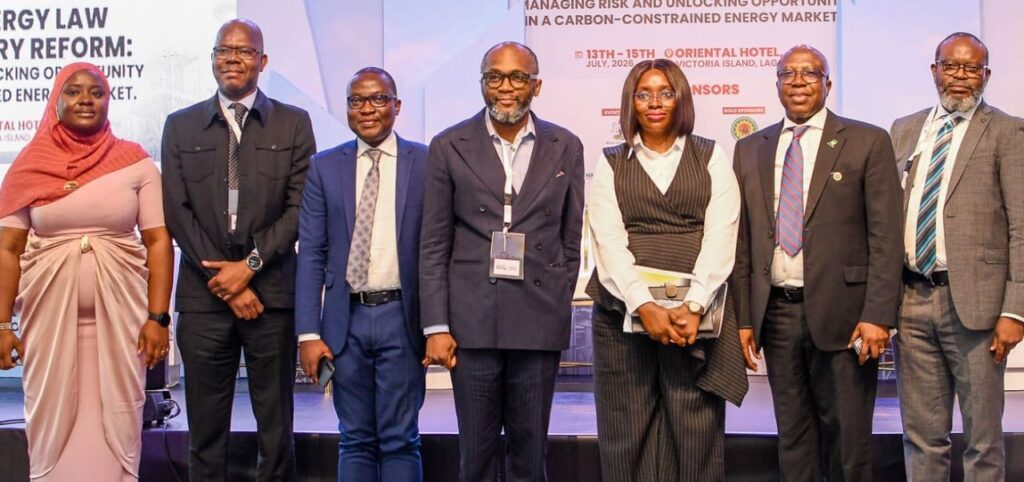
Nigeria’s petroleum ministry is telling international investors it will rely on regulatory certainty to keep them committed to the country’s oil and gas sector as it pursues net-zero targets. Speaking at the Lawyers in Energy International Conference in Lagos on July 15, Senator Heineken Lokpobiri, the minister of state for petroleum resources, argued that "capital follows enforcement, not just legislation."
For operators and financiers, this signals a pivot away from using financial incentives to attract capital. Instead, the government is using the Petroleum Industry Act as a foundation to eliminate regulatory gray areas across upstream and downstream operations. The ministry is simultaneously deploying a domestic carbon-credit framework alongside the Climate Change Act to position Nigeria as a viable destination for climate-linked finance.
The broader investment climate across the continent, however, presents a structural challenge to these ambitions. Farid Ghezali, secretary-general of the African Petroleum Producers’ Organisation, warned delegates that geological potential alone no longer secures capital deployments. He estimated that more than 50 distinct legal and regulatory regimes govern petroleum activity across Africa, a fragmentation that directly inflates project costs and steers capital toward jurisdictions with fewer legal surprises.
This legal patchwork is also effectively stalling multinational infrastructure ambitions. Ghezali noted that cross-border pipelines, shared gas markets, and interconnected power grids are being sidelined because incompatible national legal systems turn commercial decisions into legal standoffs. He described uncertainty as "one of the continent’s largest unseen costs," a dynamic that makes standardized rules on licensing and dispute resolution a critical missed opportunity for institutional capital.
Industry figures at the conference pointed to coordination mechanisms like the African Petroleum Regulators Forum as a necessary template for harmonizing oversight. Ghezali cautioned that if African governments fail to participate in drafting global transition rules, they risk having those rules imposed on their markets. Raqueebah Oloko, the network’s founder, emphasized that any transition framework must ultimately align with Africa’s economic development priorities rather than compromising them.