Guinea Bauxite Exports Hit 182.8m Tonnes
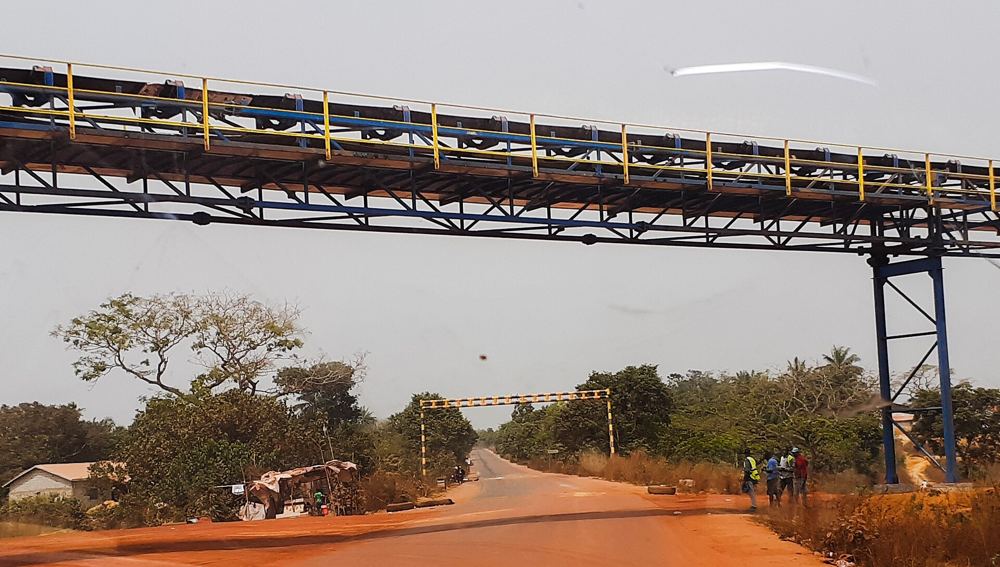
Guinea exported 182.8 million tonnes of raw bauxite in 2025, a Conakry forum heard on 16 October, where a mining engineer set out the hurdles to refining it. The post Guinea Bauxite Exports Hit 182.8m Tonnes appeared first on The Rio Times .
Guinea bauxite exports reached 182.8 million tonnes in 2025, according to figures presented in Conakry on Friday 16 October 2026. The speaker used the number to argue that refining the ore at home is far harder than shipping it.
For US readers the link is aluminium, because bauxite is the ore behind it and the United States relies on imports for more than 75% of its bauxite, the US Geological Survey says. Guinea is not among the four biggest sources of those US imports, yet the same survey puts it at about a third of world output.
The speaker, Ismaël Diakité, was described by the Guinean news site Guineenews in August as a mining engineer and senior manager of mining projects. Its report does not present him as a government official, so the remarks are his own analysis.
Diakité spoke at the second round table of the Observatoire guinéen de conjoncture économique (OGCE), a Guinean observatory that tracks economic conditions. Guineenews reported on Saturday 17 October that he presented the 182.8 million tonnes as 2025 exports of raw bauxite, from data shown at the event.
The same number was published in January, when Afrimag attributed it to the Ministry of Mines and Financial Afrik to official data. Both described it as a 25% rise on 2024, which by our arithmetic implies about 146 million tonnes the year before.
Afrimag listed 23 exporting companies, led by the Chinese group Chalco with 22.1 million tonnes and the Compagnie des Bauxites de Guinée (CBG) with 17.4 million. The Société minière de Boké and the AGB2A/SDM venture each shipped about 17 million tonnes.
Financial Afrik said China took about 74% of the volume, based on Chinese customs statistics. We could not find the ministry’s own release, so the 2025 total rests on the two January reports and the October presentation.
Diakité said reserves are probably 7.4 billion tonnes at about 45% alumina content, enough for more than three decades of production. That matches the 7.4 billion tonnes the US Geological Survey lists for Guinea.
Alumina, the white powder made from bauxite, comes from the Bayer process, he explained, and aluminium then requires electrolysis, which uses very large amounts of electricity. A refinery alone does not make an integrated industry competitive, he said, without energy, water, transport links, suitable ore and buyers.
He also pointed to the “red mud” residue left by the Bayer process, which needs safe storage to prevent pollution. Counting all industrial and environmental costs, rather than only the value of the finished product, should guide any local plan, he argued.
On sales, he discussed how bauxite prices are set, the difference between FOB and CIF terms, and the cost of shipping and port handling. Guineenews noted that much of Guinea’s output goes to Asian markets.
He added that a European Union regulation on critical raw materials, number 2024/1252, lists aluminium as strategic and sets 2030 targets. That could open opportunities for Guinea, he said, if the country builds competitive processing capacity.
Specialty aluminas and gallium, a metal found alongside the ore, were named as further options, subject to technical and economic feasibility. His talk, as reported, announced no new refinery or investment.
The US Geological Survey estimates Guinea mined 150 million tonnes of bauxite in 2025 out of about 440 million tonnes worldwide, excluding the United States. It puts Guinea’s alumina output at only 360,000 tonnes.
The survey’s general rule is that four tonnes of dried bauxite make two tonnes of alumina and one tonne of aluminium. On that rule 150 million tonnes of ore could in principle yield about 75 million tonnes of alumina, a rough comparison and not a plant forecast.
The survey’s figure is a dry-weight estimate for mine output, below the 182.8 million tonnes in the export data. The sources do not say whether the export tonnages are wet or dry, or whether that explains the gap.
The value gap explains why refining draws attention. The survey puts the average US import price at US$32 a tonne for bauxite and US$590 a tonne for alumina in 2025, estimates that show how much value lies beyond the mine.
Two other speakers at the same forum gave their own views. Businessman Fadi Wazni projected 200 million tonnes for 2026, as we covered in Guinea Bauxite Boss Sees US$1.2 Billion Tax , and former communication minister Amara Somparé proposed five reforms to spread mining income through the wider economy.
Somparé put the sector at about a fifth of Guinea’s gross domestic product, over 90% of its exports and nearly a fifth of public revenue, according to Guineenews. Those are his projected figures and were not checked against official statistics here.
The United States imported about 3 million tonnes of bauxite in 2025, the US Geological Survey estimates, mainly from Jamaica, Turkey, Guyana and Australia in the 2021 to 2024 period. Guinea is not on that list, so US exposure to Guinean ore is indirect, through world prices and supply chains.
The survey also puts US reliance on imported alumina at 71% in 2025, with Brazil supplying most of it. Anyone buying aluminium-based goods, from cans to aircraft parts, depends on a chain that begins with mines like those in Guinea.
Our guides Guinea Explained: Doumbouya’s Rule, Bauxite, Simandou Iron Ore and What to Watch , Africa’s Critical Minerals 2026: Who Holds What and Why and Guinea’s Bauxite Boom Makes It Africa’s Fastest-Growing Economy give the wider background on Guinea’s mining sector. Any shift in Guinea bauxite exports or export rules would be watched in the global alumina market, since the country supplies about a third of world output.
The Guineenews report does not say which agency produced the 182.8 million tonnes that were shown at the forum. The same total was reported in January from ministry data, but the ministry’s release was not found.
It is not known whether the export tonnages are wet or dry, or why the US Geological Survey’s 150 million tonne estimate is lower. The sources also do not show whether a refinery, a power plant or any new financing follows from the discussion.
No government response to the remarks was found, and Diakité did not speak for the state. The next official export and tax data will show whether Guinea bauxite exports kept their 2025 pace in 2026.
Guinea bauxite exports were 182.8 million tonnes of raw ore in 2025, according to the figure presented in Conakry on 16 October 2026. Afrimag and Financial Afrik reported the same total in January as official data, up 25% on 2024.
Mining engineer Ismaël Diakité presented it at the second round table of the Observatoire guinéen de conjoncture économique in Conakry. Guineenews does not describe him as a government official.
Making alumina needs a large refinery, and making aluminium needs a great deal of electricity, along with water, transport and buyers. Diakité also pointed to red mud residue and the costs of shipping and port handling.
Guinea is not among the main sources of US bauxite imports, which come mostly from Jamaica, Turkey, Guyana and Australia. The United States still relies on imports for more than 75% of its bauxite consumption.
Diakité did not announce one, as reported. Another speaker at the forum, Fadi Wazni, said an alumina refinery should be ready by the end of 2027, a claim covered in our earlier report.
Sources: Guineenews, 17 October 2026 ; Guineenews on Amara Somparé, 17 October 2026 ; Guineenews, 21 August 2026 ; Afrimag, 27 January 2026 ; Financial Afrik, 29 January 2026 ; US Geological Survey, Mineral Commodity Summaries, February 2026 .
Editorial responsibility: Matthias Camenzind , Editor-in-Chief · Editorial standards · Report an error
Africa: The New Scramble, the great-power contest over the continent.