Mexico Eyes US$12.5B Solar and Wind Plan
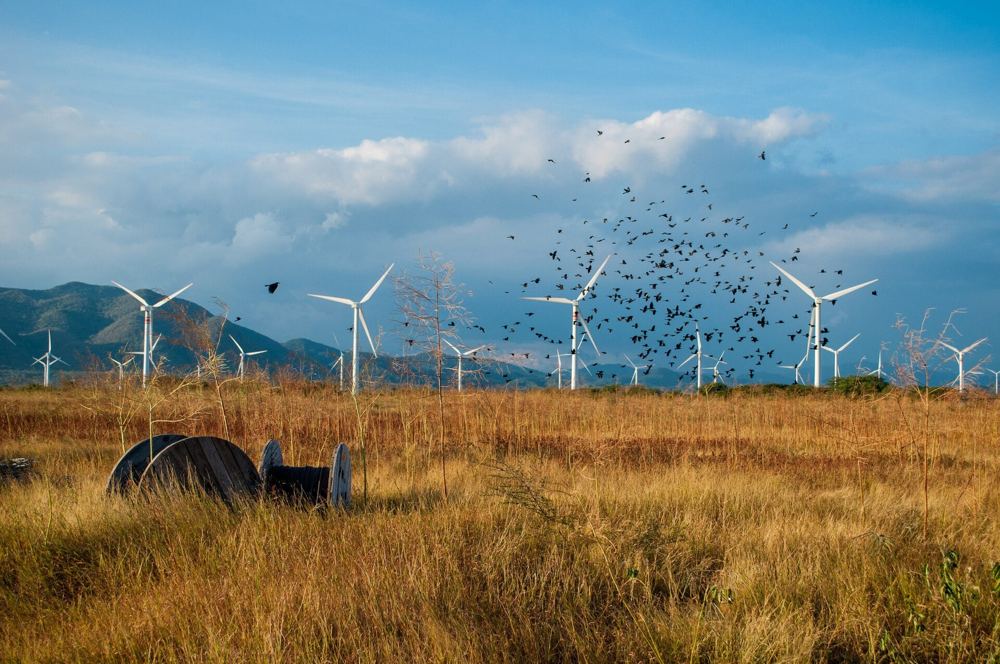
Mexico's CFE is expected to vote on 20 October on more than 60 solar and wind projects worth about US$12.5 billion, but the figures are not yet confirmed. The post Mexico Eyes US$12.5B Solar and Wind Plan appeared first on The Rio Times .
Mexico’s state power company CFE is expected to vote on Tuesday 20 October on a solar and wind plan covering more than 60 projects, put at about US$12.5 billion. For US readers, the batch matters because factories that serve American customers depend on a grid that has suffered seasonal blackouts.
The figures come from Bloomberg, which cited one unnamed person and was carried in Spanish by El Financiero on 16 October. CFE did not answer a request for comment, so the numbers are not confirmed by the company.
The proposed plants are mostly wind farms and solar parks, and together they would add about 8.2 gigawatts of capacity. A gigawatt is 1,000 megawatts, the standard measure of a power plant’s maximum output.
The estimated cost of US$12.5 billion depends on transmission spending, according to the same source. A second person said the number of projects that win final approval could be lower than 60.
The vote is described as a preliminary approval, not a final award. CFE has not published a project list, so the companies and sites involved are not public.
CFE director Emilia Calleja told the president’s morning press conference on Wednesday 7 October that a first call for projects had already awarded 38 solar and wind plants in 16 states, from Baja California to Yucatán. She said CFE plans 58 renewable generation projects of more than 10,400 megawatts in all, including mixed schemes in which the state utility works with private developers.
We found no official statement linking the 8.2 gigawatts now described to those 58 projects or to the 38 already awarded. It is therefore unclear whether the list CFE’s board will vote on is new or largely the same group.
The awarded plants are spread across Baja California, Campeche, Coahuila, Nuevo León, Sonora, Tamaulipas, Veracruz and Yucatán, among other states. The full list covers 16 states in the north, centre and south-east of the country.
Energy Secretary Luz Elena González said the government wants renewables to rise from 24% to at least 38% of electricity generation by 2030. The plan adds about 32,000 megawatts of new capacity by 2030, and Calleja said nine more combined-cycle plants of more than 9,300 megawatts are due by then.
The government says CFE must keep at least 54% of electricity generation, a commitment the energy ministry restated on 7 October. That leaves room for private firms to join new plants under mixed schemes with the state utility.
The approach is a change from the previous government of Andrés Manuel López Obrador, which largely restricted foreign investment in the sector. President Claudia Sheinbaum has kept the state at the centre while inviting private companies back in.
Our earlier report on Mexico Throws Open Its Power Grid to Private Renewables explains the first round of the mixed model. Our report on Mexico’s State Power Firm Charts US$39.8 Billion Power Expansion Through 2030 sets out the utility’s own spending plan.
Years of weak investment left Mexico with too few power plants and transmission lines, and blackouts have hit the Yucatán peninsula in the hot, humid months. Our report on Mexico Blackouts Hit Yucatán Businesses as CFE Restores Power After ‘Vandalism’ covers an earlier outage there.
The ministry says the state is spending about 1.17 trillion pesos (about US$63 billion) on generation, transmission, distribution and gas pipelines. That includes 161 billion pesos (about US$8.7 billion) for transmission lines, converted at Banxico’s reference rate of 18.493 pesos per dollar for 16 October.
US manufacturers with plants in Mexico, and the American firms that buy from them, gain if more power reaches industrial regions on time. Delays would keep blackout risk in the planning of nearshoring projects, a theme our guide to Mexico nearshoring explores.
Investors should watch the 20 October vote and any CFE statement rather than the first headlines, because the board may approve fewer projects than reported. Readers in the Yucatán peninsula, including Mérida , should not expect the new plants to change this year’s grid, since approved projects still have to be built.
Our Mexico economy outlook and the guide to Mexico in North America show how energy fits into US-Mexico trade. For another US-Mexico story this week, see Sonora Cattle Exports Halt After 1 Lesion .
It is not known whether CFE’s board will vote on 20 October as planned, because the date comes from one unnamed person and the company has not confirmed it. It is also not known which companies submitted the projects or how many will win approval.
The US$12.5 billion total depends on transmission costs that have not been published, and we found no official document listing the projects. Whether the 8.2 gigawatts are new or part of the 58 projects CFE described on 7 October also remains unconfirmed.
CFE is expected to vote on 20 October on more than 60 mostly solar and wind projects worth about US$12.5 billion. The figures come from one unnamed source and CFE has not confirmed them.
The projects would add about 8.2 gigawatts of capacity, according to the report. CFE separately said on 7 October that it plans 58 renewable projects of more than 10,400 megawatts in all.
CFE, the state utility, must keep at least 54% of generation, and private firms can join through mixed schemes. Energy Secretary Luz Elena González and CFE director Emilia Calleja presented the plans on 7 October.
Years of low investment left too few plants and transmission lines, and blackouts have hit the Yucatán peninsula. The government wants renewables to reach at least 38% of generation, up from 24% today.
US factories in Mexico and their American customers depend on steady power. A smaller approval or a delay would keep blackout risk in nearshoring plans.
Sources: El Financiero, 16 October 2026 (Bloomberg report) ; Infobae, 7 October 2026 (press conference) ; Tiempo, 7 October 2026 .
Editorial responsibility: Matthias Camenzind , Editor-in-Chief · Editorial standards · Report an error