Sonora Cattle Exports Halt After 1 Lesion
A calf with mouth sores halted Sonora cattle exports to the US on 16 October. Mexico says vesicular stomatitis is likely, and laboratory tests are pending. The post Sonora Cattle Exports Halt After 1 Lesion appeared first on The Rio Times .
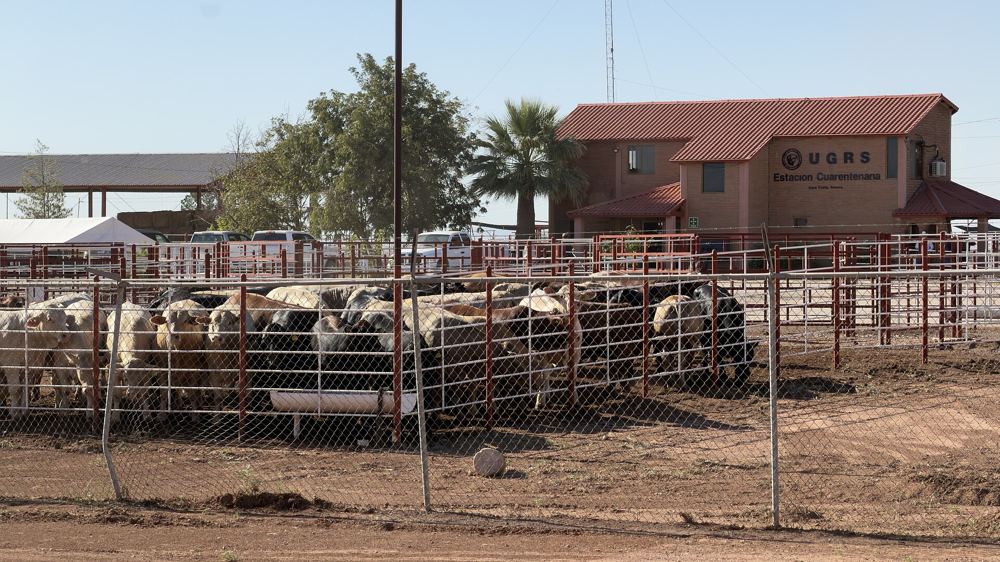
Sonora cattle exports to the United States stopped on Friday 16 October after inspectors found a calf with sores in its mouth at the Agua Prieta quarantine station. Mexico’s agriculture ministry says its first veterinary assessment points to vesicular stomatitis or bovine papular stomatitis, and no foot-and-mouth disease has been confirmed.
For US readers, the pause hits the one Arizona port that has brought Mexican calves to American feedlots since the border reopened on 24 August after a screwworm closure of more than a year. Our earlier report on One Infected Cow in Sonora Lands Days Before the US Reopens Its Cattle Border explains how that reopening came about.
Sonora’s regional cattlemen’s union, known as UGRS, said an inspection found a sore, called an afta in Spanish, on one animal, and that the lesion matches the symptoms of foot-and-mouth disease. The union said it halted exports as a precaution while the authorities rule the disease out, because foot-and-mouth is a notifiable disease that must be reported.
The federal agriculture ministry, known as Agricultura, described the animal as a calf at the Agua Prieta quarantine station, where cattle are checked before the Douglas, Arizona crossing. It sent staff of the joint Mexico-United States commission for foot-and-mouth disease to take samples for the high-security laboratory at Palo Alto in Mexico City.
Animals held at the station were sent back to their place of origin, and the premises were disinfected at once. The union added a temporary 60-day block on cattle destined for export in the national movement register, and its statement does not say how many animals that covers.
Agricultura says the sores could come from vesicular stomatitis or bovine papular stomatitis, which it describes as diseases that have been endemic in Sonora and Chihuahua in the past. On Friday evening it added that the preliminary veterinary view points to those two diseases, which it says pose no public health risk, and that laboratory tests will confirm it.
The ministry also says Mexico runs permanent surveillance for vesicular diseases and has so far confirmed that exotic notifiable diseases are absent from the country. Its animal health service, Senasica, said it would process the samples on Friday and that inspections for US-bound cattle at Agua Prieta stay suspended until an exotic disease is ruled out.
Exports through the San Jerónimo quarantine station in Chihuahua continue as normal, according to the ministry. Senasica also asked veterinarians to inspect animals at the farm of origin and to report any mouth sores to the national hotline.
The World Organisation for Animal Health describes foot-and-mouth disease as a severe, highly contagious viral disease that causes fever and blister-like sores on the tongue, lips and mouth of cattle. It says the disease disrupts regional and international trade in animals, and that countries free of it remain under constant threat of an incursion.
Mexico’s agriculture ministry says the country eradicated foot-and-mouth disease in 1954 and has kept that status since. The US Department of Agriculture says vesicular stomatitis, the milder look-alike, also produces blister-like sores and has been confirmed in the United States in 2026, and that it can still disrupt animal movement and trade.
That look-alike effect is why a single sore on a calf can stop a border crossing even when the likely cause is harmless. The union says laboratory analysis is required because the symptoms can be confused, and no result has been published yet.
Sonora’s governor said on 13 October that about 1,300 head a day now cross, up from 700 when the Douglas port reopened, with close to 30,000 calves exported since. The state is building corrals to lift capacity from 1,500 to 3,000 head a day, and our report on Mexico’s Sonora Exports Hit a Record US$8.5 Billion in the Second Quarter covers the state’s wider export strength.
Douglas is one of only two Mexican cattle ports open to the United States, according to KJZZ, the Arizona public radio station. The other, Santa Teresa in New Mexico, reopened last month and handled about 43% of Mexican cattle crossings before the shutdown, according to Agriculture Secretary Brooke Rollins.
A 12 October market report citing US Department of Agriculture marketing data put Douglas’s weekly total at 2,550 head and Santa Teresa’s at 1,350. The same report said prices for feeder steer calves and yearlings held steady.
Sonora’s government reports 115 screwworm cases, and says any animal with wounds, no ear tag or signs of weakness is held back at the border. We found no statement from the US Department of Agriculture on the Agua Prieta lesion by Saturday morning.
The cattlemen’s union says exports could restart on Tuesday 20 October if the laboratory rules out foot-and-mouth disease, and Sonora’s agriculture department says the same date, with no crossings planned for Monday under a schedule set by US authorities. The federal ministry speaks only of resuming “next week” once Senasica rules out an exotic disease.
Cattle can cross only when US inspectors accept them at Douglas, and the sources reviewed give no US statement on conditions for restarting. The union says US officials are inspecting quarantine facilities at Nogales, Sonora, which will be ready if Washington decides to reopen the border there.
US feedlots, cattle buyers and anyone watching beef prices should treat this as a short-term supply delay unless the laboratory finds an exotic disease. At about 1,300 head a day, each working day of closure means that many fewer Mexican calves reaching American pens.
Investors in cattle and beef should watch the laboratory result and the Douglas restart date rather than the first headlines about a suspected case. Our Mexico economy outlook and the guide to Mexico in North America set out how farm trade fits into the wider US-Mexico relationship.
It is not known what the lesion is, because no laboratory result had been published by Saturday morning, and the ministry itself calls its view preliminary. It is also not known whether other animals in the same consignment showed sores, or how long the Douglas port will stay quiet.
No US government statement on the case was found, and the exact date of Agua Prieta’s restart rests on statements from producers and the state, not on a federal order. The 60-day export block comes from the cattlemen’s union, which does not say how many animals it covers.
Inspectors found a calf with sores in its mouth at the Agua Prieta quarantine station on Friday 16 October, and inspections for US-bound cattle were suspended. The pause is a precaution while a laboratory identifies the cause.
No case has been confirmed. Mexico’s agriculture ministry says its preliminary view points to vesicular stomatitis or bovine papular stomatitis, and laboratory tests will confirm it.
The state cattlemen’s union and Sonora’s agriculture department point to Tuesday 20 October if the tests rule out foot-and-mouth disease. The federal ministry says only that operations resume next week.
The agriculture ministry says exports through the San Jerónimo station in Chihuahua are flowing normally. The suspension covers the Agua Prieta station, the only open Sonora cattle crossing.
Sonora’s governor said on 13 October that about 1,300 head cross daily, up from 700 on 24 August. The state is building capacity to reach 3,000 head a day.
Sources: El Financiero, 16 October 2026 ; Agricultura communiqué as published by Dossier Político, 16 October 2026 ; MVS Noticias, 16 October 2026 ; El Universal, 16 October 2026 ; Expreso, 16 October 2026 ; Tribuna, 16 October 2026 ; Sonora government statement via Marquesina, 13 October 2026 ; KJZZ, 14 October 2026 ; The Cattle Site, 12 October 2026 ; KRWG, 21 September 2026 ; World Organisation for Animal Health ; Agricultura, animal health history ; USDA APHIS, vesicular stomatitis .
Editorial responsibility: Matthias Camenzind , Editor-in-Chief · Editorial standards · Report an error