Brazil Harvest Hits Record 354.5M Tons
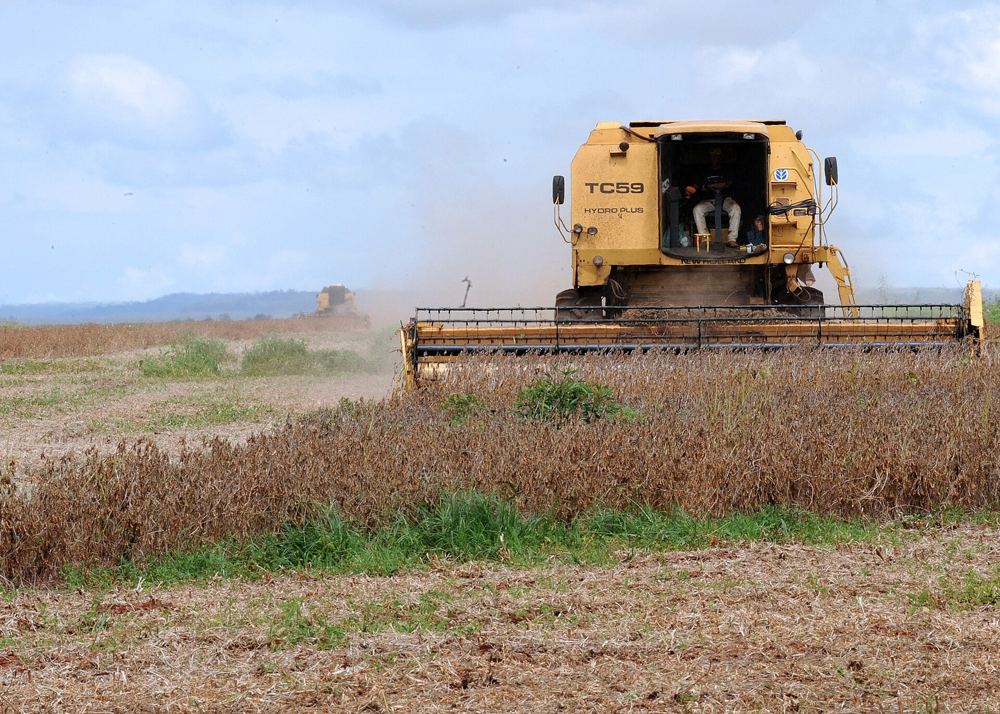
Brazil's statistics office expects a record 354.5 million tons of grains in 2026, with soybeans at 175.0 million tons and coffee up 18.1%. The post Brazil Harvest Hits Record 354.5M Tons appeared first on The Rio Times .
Date, polls, debates, odds and how the runoff works, updated every day.
Brazil runoff polls · Polymarket and Kalshi odds · When results come
Implied chance of winning Brazil’s presidency on 25 October, from traders’ prices.
As of 15 October, 3:00 pm ET (20:00 Lisbon) , updated every 20 minutes. Prices are bets, not polls, and can move fast.
Why we show this: prediction markets turn real-money bets into a live probability that moves within minutes of the news, which is why investors, campaigns and newsrooms in the United States now follow them closely. We show them next to polls and official results, never instead of them.
Brazil’s statistics office expects a record 354.5 million metric tons of grains, beans and oilseeds in 2026. Soybeans, corn and coffee all reach records in its series, while wheat and rice shrink.
The Brazil harvest is on course for a record 354.5 million metric tons in 2026, says IBGE, the country’s statistics institute. The estimate, published on Thursday, 15 October, is 2.4% above 2025’s 346.1 million tons and 0.4% above August’s.
USDA’s 9 October outlook has Brazil shipping 114.5 million tons of soybeans in 2025/26, against 41.2 million for the US. That makes Brazil the top soybean exporter, and IBGE now puts its 2026 crop at a record 175.0 million tons, up 5.4%.
For scale, USDA puts the 2025/26 US soybean crop at 116.0 million tons and the US corn crop at 430.9 million. On those rough numbers, Brazil’s soy crop is half again as big as America’s, and its corn crop a third the size.
Corn totals 143.3 million tons, a record and 1.1% above 2025, with the first crop up 15.5% to 29.7 million tons. The larger second crop is forecast at 113.6 million tons, 2.0% lower than last year on a weaker average yield.
Coffee is forecast at 68.0 million 60-kilogram bags, or 4.1 million tons, up 18.1% on 2025 and 3.0% on August. That is the highest in IBGE’s coffee series, which starts in 2002.
Arabica accounts for 46.3 million bags and canephora, also sold as robusta, for 21.7 million. Minas Gerais state grows 73.4% of the arabica, and Espírito Santo state 66.9% of the canephora.
Wheat is forecast at 5.9 million tons, down 24.0% from 2025 and 6.2% below the August estimate. IBGE links the fall to a smaller planted area and lower yields.
Rice in the husk drops 11.4% to 11.2 million tons as the harvested area shrinks 12.6%. Beans fall 6.6% and oranges 5.5%, while cotton is down 3.9% and sorghum up 11.0%.
Mato Grosso, a Centre-West state, grows 32.2% of the total, ahead of Paraná at 13.3% and Rio Grande do Sul at 10.4%. The Centre-West region as a whole grows 50.4% of the national total.
Since August’s estimate, Mato Grosso added the most, 930,020 tons, followed by Bahia with 699,888 tons. Goiás fell the most, by 169,658 tons.
IBGE’s Systematic Survey of Agricultural Production, known as the LSPA, updates the crop estimate every month. The grain harvest covers 83.2 million hectares, up 2.0%, or about 206 million acres, an area larger than Texas.
Rice, corn and soybeans make up 93.0% of the grain tonnage. Coffee, sugarcane and oranges are counted separately and sit outside the 354.5 million-ton total.
US growers face a rival: USDA sees Brazil exporting 118.0 million tons of soybeans in 2026/27, against 46.1 million for the US. That outlook covers the 2026/27 marketing year and the crop now being planted, not the harvest IBGE has just estimated.
A bigger Brazilian coffee crop matters to US roasters and cafes, though prices also depend on demand, weather and trade rules. The latest monthly figures on Brazil’s coffee exports to the United States in September are covered separately.
Brazil’s wheat crop is shrinking, and USDA sees 5.8 million tons of output against 7.5 million tons of imports in 2026/27. USDA also says US hard red winter wheat remains uncompetitive in export markets because of higher prices.
The wider picture of what Brazil grows, mines and exports is set out in Brazil’s natural resources . That guide covers soybeans, oil and iron ore with a focus on US readers.
IBGE’s soybean figure of 175.0 million tons differs from USDA’s 180.5 million for Brazil’s 2025/26 crop. The IBGE release does not discuss the 5.5 million-ton gap, and the reason for it is not established.
The release covers the 2026 harvest only and gives no price or revenue figures, so the crop’s value is not known. IBGE revises each estimate monthly, so the 354.5 million-ton total can still change.
IBGE publishes its next harvest estimate on Friday, 13 November. It will show whether the soybean and corn records hold after a month of revisions.
IBGE estimated a record 354.5 million metric tons of grains, beans and oilseeds on Thursday, 15 October. That is 2.4% above 2025 and 0.4% above its August estimate.
IBGE puts it at a record 175.0 million tons, up 5.4% on 2025 and 0.1% on the August estimate. USDA’s own estimate for the 2025/26 crop is 180.5 million tons.
IBGE forecasts 68.0 million 60-kilogram bags, up 18.1% on 2025. That is a record in its series, which starts in 2002.
USDA’s 9 October outlook has Brazil shipping 114.5 million tons of soybeans in 2025/26, against 41.2 million for the US. A large Brazilian crop adds to the supply American growers compete with.
Wheat is forecast down 24.0% and rice down 11.4% from 2025. Beans fall 6.6%, oranges 5.5% and cotton 3.9%.
IBGE, the Brazilian Institute of Geography and Statistics, is the federal agency that produces Brazil’s official statistics. Its monthly harvest survey is called the LSPA.
Sources: IBGE, September 2026 harvest estimate (LSPA), 15 October 2026 ; IBGE SIDRA, table 6588, monthly harvest estimates by state and region ; USDA, World Agricultural Supply and Demand Estimates, WASDE-676, 9 October 2026 (all accessed 15 October 2026).
Editorial responsibility: Matthias Camenzind , Editor-in-Chief · Editorial standards · Report an error