S&P 500 faces correction risks following 83 percent AI rally
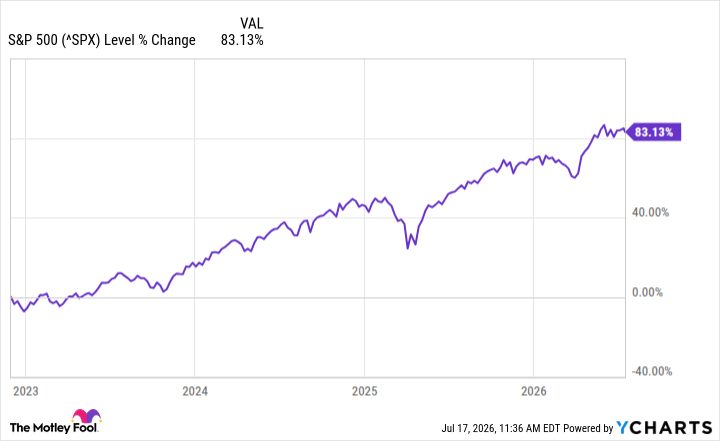
Elevated valuations and heavy concentration in dominant technology names are sparking correction fears after the S&P 500 surged 83 percent since late 2022.
The S&P 500 has accumulated an 83 percent gain since the artificial intelligence revolution began in late November 2022. This expansion, driven by technology sector profits and innovation, has pushed market valuations to elevated levels while relying heavily on a narrow group of outperforming companies.
Investors are now weighing the risks of a meaningful correction or bear market due to heavy concentration in a handful of dominant corporate names. This lack of breadth leaves the broader market vulnerable to sentiment shifts, meaning disappointment from a few major companies could disproportionately impact the entire benchmark index.
Equity cycles naturally alternate between expansion and contraction based on macroeconomic conditions and investor psychology. Understanding these historical ebbs and flows as ordinary market features, rather than anomalies, helps participants digest downturns with greater composure instead of panic when economic weakness emerges.
Downturns can occur independently of broader economic weakness when corporate earnings fail to meet optimistic forecasts already priced into equities. Market participants often decide to lock in their gains during these periods, causing profit-taking to rapidly escalate into widespread selling across multiple sectors.
The market recently demonstrated this dynamic earlier this year when the S&P 500 experienced a 7 percent pullback. Investors locked in gains and questioned whether the rapid pace of earnings growth would continue, highlighting the fragility of sentiment when multi-year gains face intense scrutiny.
Historical data suggests that such downturns are temporary features of equity investing, with the benchmark enduring four distinct bear markets since the year 2000. In every instance, the market ultimately absorbed the selling pressure, stabilized, and resumed its upward trajectory to post new all-time highs.
The dot-com bust triggered a 49 percent decline, while the 2008 financial crisis resulted in a 57 percent drop. More recently, the pandemic caused a 34 percent crash, and the 2022 bear market saw a 25 percent decline, demonstrating that even severe contractions are eventually overcome by subsequent expansions.