Energy transition: Why fossil fuels aren’t going away, Mesagan
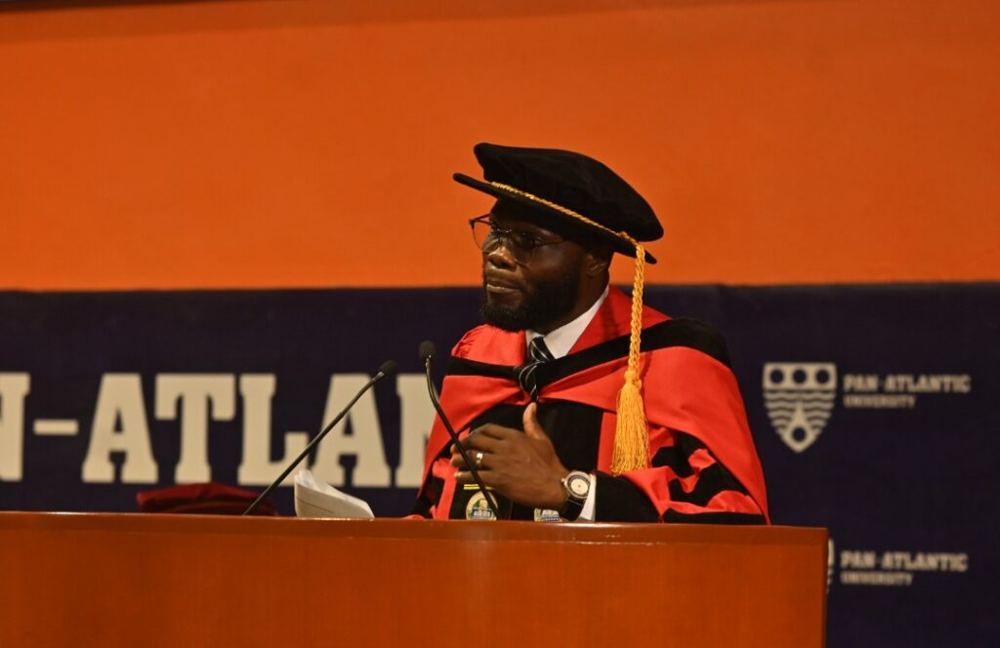
…as Pan-Atlantic University holds its 26th inaugural lecture Fossil fuels will remain a critical part of the global energy mix
Fossil fuels will remain a critical part of the global energy mix for years to come despite growing efforts to accelerate the transition to cleaner energy sources, Ekundayo Mesagan, a professor of Energy and Environmental Economics, has argued. Mesagan said this while delivering Pan-Atlantic University’s 26th inaugural lecture titled “Making Lemonade from Lemons: The Fossil Energy & Sustainability Puzzle.” He examined the tension between the global push for environmental sustainability and the developmental realities of oil-rich and energy-deficient nations, when he said, “The energy transition is far more complex than simply substituting fossil fuels with renewables, as technological and cost constraints mean fossil fuels will remain part of the global energy mix for the foreseeable future.” He framed the discussion with a central question: “In the last few decades, the global argument for environmental sustainability has been that we should deemphasise the use of fossil energy while scaling up other forms of energy that are less carbon-dioxide-emitting. Is this true or not? Read also: Don’t wait for FG, develop your seaports, Akwa Ibom, C/River, others told “What should happen to oil-rich nations, especially developing countries? Should they fold up or should they seek alternative sources of income for financing their projects?” he asked. Besides, he stressed that Africa’s pathway cannot mirror Europe’s, because expanding energy access and supporting economic growth must remain urgent priorities alongside environmental goals. Mesagan further emphasised that natural resources do not determine a nation’s destiny; outcomes depend on the quality of governance, policy choices, innovation and investment. “The future belongs to countries that can transform challenges into opportunities; underscoring the lecture’s central metaphor,” he noted. He emphasised the critical roles of technology, including cleaner industrial processes and carbon capture and storage, and financial systems aligned with sustainability priorities. “Energy transition cannot be separated from poverty reduction and improved energy access, and meaningful progress will require genuine collaboration among economists, engineers, policymakers, environmental scientists and other experts,” he said. Enase Okonedo, vice-chancellor at Pan-Atlantic University, earlier in her opening speech, described Mesagan as “an economist, researcher and policy advisor whose work spans energy and environmental economics, industrial policy, natural resources and sustainable economic development.” She highlighted his contributions to national development, including his membership of the drafting committee for Nigeria’s Agenda 2050 under the Federal Ministry of Budget and Economic Planning, and his engagement with the Nigerian Economic Summit Group and the Nigerian Institute of Social and Economic Research. “Through his research, teaching and engagement with policy and industry, Mesagan continues to contribute to the understanding of some of the economic and environmental issues shaping Nigeria and the wider African continent,” she said. Read also: Ondo signs $362m titanium mega-plant deal, first in Nigeria The event, which was held in the School of Management and Social Sciences (SMSS), at the Honeywell Group Auditorium, Lagos Business School, drew principal officers of the university, members of Senate, faculty, students, alumni, industry leaders, policymakers and members of the public. Pan-Atlantic University is a private, non-profit institution located in Lagos, Nigeria, committed to forming competent and ethical professionals equipped to serve society with integrity. Related News 5 lessons from Bokku Mart that every Nigerian MSME should pay attention to YIAGA Africa: Will over 84% of Nigerians vote? The missing middle of capital access, Why long-term capital still struggles to reach infrastructure Charles Ogwo Charles Ogwo is a proactive journalist, driving education, and business innovations for over 10 years. He leads initiatives leveraging tech to enhance storytelling and build topnotch performing team. Charles is passionate about harnessing technology to inform, engage and empower communities. Share
Mesagan said this while delivering Pan-Atlantic University’s 26th inaugural lecture titled “Making Lemonade from Lemons: The Fossil Energy & Sustainability Puzzle.” He examined the tension between the global push for environmental sustainability and the developmental realities of oil-rich and energy-deficient nations, when he said, “The energy transition is far more complex than simply substituting fossil fuels with renewables, as technological and cost constraints mean fossil fuels will remain part of the global energy mix for the foreseeable future.” He framed the discussion with a central question: “In the last few decades, the global argument for environmental sustainability has been that we should deemphasise the use of fossil energy while scaling up other forms of energy that are less carbon-dioxide-emitting. Is this true or not? Read also: Don’t wait for FG, develop your seaports, Akwa Ibom, C/River, others told “What should happen to oil-rich nations, especially developing countries? Should they fold up or should they seek alternative sources of income for financing their projects?” he asked. Besides, he stressed that Africa’s pathway cannot mirror Europe’s, because expanding energy access and supporting economic growth must remain urgent priorities alongside environmental goals. Mesagan further emphasised that natural resources do not determine a nation’s destiny; outcomes depend on the quality of governance, policy choices, innovation and investment. “The future belongs to countries that can transform challenges into opportunities; underscoring the lecture’s central metaphor,” he noted. He emphasised the critical roles of technology, including cleaner industrial processes and carbon capture and storage, and financial systems aligned with sustainability priorities. “Energy transition cannot be separated from poverty reduction and improved energy access, and meaningful progress will require genuine collaboration among economists, engineers, policymakers, environmental scientists and other experts,” he said. Enase Okonedo, vice-chancellor at Pan-Atlantic University, earlier in her opening speech, described Mesagan as “an economist, researcher and policy advisor whose work spans energy and environmental economics, industrial policy, natural resources and sustainable economic development.” She highlighted his contributions to national development, including his membership of the drafting committee for Nigeria’s Agenda 2050 under the Federal Ministry of Budget and Economic Planning, and his engagement with the Nigerian Economic Summit Group and the Nigerian Institute of Social and Economic Research. “Through his research, teaching and engagement with policy and industry, Mesagan continues to contribute to the understanding of some of the economic and environmental issues shaping Nigeria and the wider African continent,” she said. Read also: Ondo signs $362m titanium mega-plant deal, first in Nigeria The event, which was held in the School of Management and Social Sciences (SMSS), at the Honeywell Group Auditorium, Lagos Business School, drew principal officers of the university, members of Senate, faculty, students, alumni, industry leaders, policymakers and members of the public. Pan-Atlantic University is a private, non-profit institution located in Lagos, Nigeria, committed to forming competent and ethical professionals equipped to serve society with integrity. Related News 5 lessons from Bokku Mart that every Nigerian MSME should pay attention to YIAGA Africa: Will over 84% of Nigerians vote? The missing middle of capital access, Why long-term capital still struggles to reach infrastructure Charles Ogwo Charles Ogwo is a proactive journalist, driving education, and business innovations for over 10 years. He leads initiatives leveraging tech to enhance storytelling and build topnotch performing team. Charles is passionate about harnessing technology to inform, engage and empower communities. Share
He examined the tension between the global push for environmental sustainability and the developmental realities of oil-rich and energy-deficient nations, when he said, “The energy transition is far more complex than simply substituting fossil fuels with renewables, as technological and cost constraints mean fossil fuels will remain part of the global energy mix for the foreseeable future.” He framed the discussion with a central question: “In the last few decades, the global argument for environmental sustainability has been that we should deemphasise the use of fossil energy while scaling up other forms of energy that are less carbon-dioxide-emitting. Is this true or not? Read also: Don’t wait for FG, develop your seaports, Akwa Ibom, C/River, others told “What should happen to oil-rich nations, especially developing countries? Should they fold up or should they seek alternative sources of income for financing their projects?” he asked. Besides, he stressed that Africa’s pathway cannot mirror Europe’s, because expanding energy access and supporting economic growth must remain urgent priorities alongside environmental goals. Mesagan further emphasised that natural resources do not determine a nation’s destiny; outcomes depend on the quality of governance, policy choices, innovation and investment. “The future belongs to countries that can transform challenges into opportunities; underscoring the lecture’s central metaphor,” he noted. He emphasised the critical roles of technology, including cleaner industrial processes and carbon capture and storage, and financial systems aligned with sustainability priorities. “Energy transition cannot be separated from poverty reduction and improved energy access, and meaningful progress will require genuine collaboration among economists, engineers, policymakers, environmental scientists and other experts,” he said. Enase Okonedo, vice-chancellor at Pan-Atlantic University, earlier in her opening speech, described Mesagan as “an economist, researcher and policy advisor whose work spans energy and environmental economics, industrial policy, natural resources and sustainable economic development.” She highlighted his contributions to national development, including his membership of the drafting committee for Nigeria’s Agenda 2050 under the Federal Ministry of Budget and Economic Planning, and his engagement with the Nigerian Economic Summit Group and the Nigerian Institute of Social and Economic Research. “Through his research, teaching and engagement with policy and industry, Mesagan continues to contribute to the understanding of some of the economic and environmental issues shaping Nigeria and the wider African continent,” she said. Read also: Ondo signs $362m titanium mega-plant deal, first in Nigeria The event, which was held in the School of Management and Social Sciences (SMSS), at the Honeywell Group Auditorium, Lagos Business School, drew principal officers of the university, members of Senate, faculty, students, alumni, industry leaders, policymakers and members of the public. Pan-Atlantic University is a private, non-profit institution located in Lagos, Nigeria, committed to forming competent and ethical professionals equipped to serve society with integrity. Related News 5 lessons from Bokku Mart that every Nigerian MSME should pay attention to YIAGA Africa: Will over 84% of Nigerians vote? The missing middle of capital access, Why long-term capital still struggles to reach infrastructure Charles Ogwo Charles Ogwo is a proactive journalist, driving education, and business innovations for over 10 years. He leads initiatives leveraging tech to enhance storytelling and build topnotch performing team. Charles is passionate about harnessing technology to inform, engage and empower communities. Share
He framed the discussion with a central question: “In the last few decades, the global argument for environmental sustainability has been that we should deemphasise the use of fossil energy while scaling up other forms of energy that are less carbon-dioxide-emitting. Is this true or not? Read also: Don’t wait for FG, develop your seaports, Akwa Ibom, C/River, others told “What should happen to oil-rich nations, especially developing countries? Should they fold up or should they seek alternative sources of income for financing their projects?” he asked. Besides, he stressed that Africa’s pathway cannot mirror Europe’s, because expanding energy access and supporting economic growth must remain urgent priorities alongside environmental goals. Mesagan further emphasised that natural resources do not determine a nation’s destiny; outcomes depend on the quality of governance, policy choices, innovation and investment. “The future belongs to countries that can transform challenges into opportunities; underscoring the lecture’s central metaphor,” he noted. He emphasised the critical roles of technology, including cleaner industrial processes and carbon capture and storage, and financial systems aligned with sustainability priorities. “Energy transition cannot be separated from poverty reduction and improved energy access, and meaningful progress will require genuine collaboration among economists, engineers, policymakers, environmental scientists and other experts,” he said. Enase Okonedo, vice-chancellor at Pan-Atlantic University, earlier in her opening speech, described Mesagan as “an economist, researcher and policy advisor whose work spans energy and environmental economics, industrial policy, natural resources and sustainable economic development.” She highlighted his contributions to national development, including his membership of the drafting committee for Nigeria’s Agenda 2050 under the Federal Ministry of Budget and Economic Planning, and his engagement with the Nigerian Economic Summit Group and the Nigerian Institute of Social and Economic Research. “Through his research, teaching and engagement with policy and industry, Mesagan continues to contribute to the understanding of some of the economic and environmental issues shaping Nigeria and the wider African continent,” she said. Read also: Ondo signs $362m titanium mega-plant deal, first in Nigeria The event, which was held in the School of Management and Social Sciences (SMSS), at the Honeywell Group Auditorium, Lagos Business School, drew principal officers of the university, members of Senate, faculty, students, alumni, industry leaders, policymakers and members of the public. Pan-Atlantic University is a private, non-profit institution located in Lagos, Nigeria, committed to forming competent and ethical professionals equipped to serve society with integrity. Related News 5 lessons from Bokku Mart that every Nigerian MSME should pay attention to YIAGA Africa: Will over 84% of Nigerians vote? The missing middle of capital access, Why long-term capital still struggles to reach infrastructure Charles Ogwo Charles Ogwo is a proactive journalist, driving education, and business innovations for over 10 years. He leads initiatives leveraging tech to enhance storytelling and build topnotch performing team. Charles is passionate about harnessing technology to inform, engage and empower communities. Share
Read also: Don’t wait for FG, develop your seaports, Akwa Ibom, C/River, others told “What should happen to oil-rich nations, especially developing countries? Should they fold up or should they seek alternative sources of income for financing their projects?” he asked. Besides, he stressed that Africa’s pathway cannot mirror Europe’s, because expanding energy access and supporting economic growth must remain urgent priorities alongside environmental goals. Mesagan further emphasised that natural resources do not determine a nation’s destiny; outcomes depend on the quality of governance, policy choices, innovation and investment. “The future belongs to countries that can transform challenges into opportunities; underscoring the lecture’s central metaphor,” he noted. He emphasised the critical roles of technology, including cleaner industrial processes and carbon capture and storage, and financial systems aligned with sustainability priorities. “Energy transition cannot be separated from poverty reduction and improved energy access, and meaningful progress will require genuine collaboration among economists, engineers, policymakers, environmental scientists and other experts,” he said. Enase Okonedo, vice-chancellor at Pan-Atlantic University, earlier in her opening speech, described Mesagan as “an economist, researcher and policy advisor whose work spans energy and environmental economics, industrial policy, natural resources and sustainable economic development.” She highlighted his contributions to national development, including his membership of the drafting committee for Nigeria’s Agenda 2050 under the Federal Ministry of Budget and Economic Planning, and his engagement with the Nigerian Economic Summit Group and the Nigerian Institute of Social and Economic Research. “Through his research, teaching and engagement with policy and industry, Mesagan continues to contribute to the understanding of some of the economic and environmental issues shaping Nigeria and the wider African continent,” she said. Read also: Ondo signs $362m titanium mega-plant deal, first in Nigeria The event, which was held in the School of Management and Social Sciences (SMSS), at the Honeywell Group Auditorium, Lagos Business School, drew principal officers of the university, members of Senate, faculty, students, alumni, industry leaders, policymakers and members of the public. Pan-Atlantic University is a private, non-profit institution located in Lagos, Nigeria, committed to forming competent and ethical professionals equipped to serve society with integrity. Related News 5 lessons from Bokku Mart that every Nigerian MSME should pay attention to YIAGA Africa: Will over 84% of Nigerians vote? The missing middle of capital access, Why long-term capital still struggles to reach infrastructure Charles Ogwo Charles Ogwo is a proactive journalist, driving education, and business innovations for over 10 years. He leads initiatives leveraging tech to enhance storytelling and build topnotch performing team. Charles is passionate about harnessing technology to inform, engage and empower communities. Share
“What should happen to oil-rich nations, especially developing countries? Should they fold up or should they seek alternative sources of income for financing their projects?” he asked. Besides, he stressed that Africa’s pathway cannot mirror Europe’s, because expanding energy access and supporting economic growth must remain urgent priorities alongside environmental goals. Mesagan further emphasised that natural resources do not determine a nation’s destiny; outcomes depend on the quality of governance, policy choices, innovation and investment. “The future belongs to countries that can transform challenges into opportunities; underscoring the lecture’s central metaphor,” he noted. He emphasised the critical roles of technology, including cleaner industrial processes and carbon capture and storage, and financial systems aligned with sustainability priorities. “Energy transition cannot be separated from poverty reduction and improved energy access, and meaningful progress will require genuine collaboration among economists, engineers, policymakers, environmental scientists and other experts,” he said. Enase Okonedo, vice-chancellor at Pan-Atlantic University, earlier in her opening speech, described Mesagan as “an economist, researcher and policy advisor whose work spans energy and environmental economics, industrial policy, natural resources and sustainable economic development.” She highlighted his contributions to national development, including his membership of the drafting committee for Nigeria’s Agenda 2050 under the Federal Ministry of Budget and Economic Planning, and his engagement with the Nigerian Economic Summit Group and the Nigerian Institute of Social and Economic Research. “Through his research, teaching and engagement with policy and industry, Mesagan continues to contribute to the understanding of some of the economic and environmental issues shaping Nigeria and the wider African continent,” she said. Read also: Ondo signs $362m titanium mega-plant deal, first in Nigeria The event, which was held in the School of Management and Social Sciences (SMSS), at the Honeywell Group Auditorium, Lagos Business School, drew principal officers of the university, members of Senate, faculty, students, alumni, industry leaders, policymakers and members of the public. Pan-Atlantic University is a private, non-profit institution located in Lagos, Nigeria, committed to forming competent and ethical professionals equipped to serve society with integrity. Related News 5 lessons from Bokku Mart that every Nigerian MSME should pay attention to YIAGA Africa: Will over 84% of Nigerians vote? The missing middle of capital access, Why long-term capital still struggles to reach infrastructure Charles Ogwo Charles Ogwo is a proactive journalist, driving education, and business innovations for over 10 years. He leads initiatives leveraging tech to enhance storytelling and build topnotch performing team. Charles is passionate about harnessing technology to inform, engage and empower communities. Share
Besides, he stressed that Africa’s pathway cannot mirror Europe’s, because expanding energy access and supporting economic growth must remain urgent priorities alongside environmental goals. Mesagan further emphasised that natural resources do not determine a nation’s destiny; outcomes depend on the quality of governance, policy choices, innovation and investment. “The future belongs to countries that can transform challenges into opportunities; underscoring the lecture’s central metaphor,” he noted. He emphasised the critical roles of technology, including cleaner industrial processes and carbon capture and storage, and financial systems aligned with sustainability priorities. “Energy transition cannot be separated from poverty reduction and improved energy access, and meaningful progress will require genuine collaboration among economists, engineers, policymakers, environmental scientists and other experts,” he said. Enase Okonedo, vice-chancellor at Pan-Atlantic University, earlier in her opening speech, described Mesagan as “an economist, researcher and policy advisor whose work spans energy and environmental economics, industrial policy, natural resources and sustainable economic development.” She highlighted his contributions to national development, including his membership of the drafting committee for Nigeria’s Agenda 2050 under the Federal Ministry of Budget and Economic Planning, and his engagement with the Nigerian Economic Summit Group and the Nigerian Institute of Social and Economic Research. “Through his research, teaching and engagement with policy and industry, Mesagan continues to contribute to the understanding of some of the economic and environmental issues shaping Nigeria and the wider African continent,” she said. Read also: Ondo signs $362m titanium mega-plant deal, first in Nigeria The event, which was held in the School of Management and Social Sciences (SMSS), at the Honeywell Group Auditorium, Lagos Business School, drew principal officers of the university, members of Senate, faculty, students, alumni, industry leaders, policymakers and members of the public. Pan-Atlantic University is a private, non-profit institution located in Lagos, Nigeria, committed to forming competent and ethical professionals equipped to serve society with integrity. Related News 5 lessons from Bokku Mart that every Nigerian MSME should pay attention to YIAGA Africa: Will over 84% of Nigerians vote? The missing middle of capital access, Why long-term capital still struggles to reach infrastructure Charles Ogwo Charles Ogwo is a proactive journalist, driving education, and business innovations for over 10 years. He leads initiatives leveraging tech to enhance storytelling and build topnotch performing team. Charles is passionate about harnessing technology to inform, engage and empower communities. Share
Mesagan further emphasised that natural resources do not determine a nation’s destiny; outcomes depend on the quality of governance, policy choices, innovation and investment. “The future belongs to countries that can transform challenges into opportunities; underscoring the lecture’s central metaphor,” he noted. He emphasised the critical roles of technology, including cleaner industrial processes and carbon capture and storage, and financial systems aligned with sustainability priorities. “Energy transition cannot be separated from poverty reduction and improved energy access, and meaningful progress will require genuine collaboration among economists, engineers, policymakers, environmental scientists and other experts,” he said. Enase Okonedo, vice-chancellor at Pan-Atlantic University, earlier in her opening speech, described Mesagan as “an economist, researcher and policy advisor whose work spans energy and environmental economics, industrial policy, natural resources and sustainable economic development.” She highlighted his contributions to national development, including his membership of the drafting committee for Nigeria’s Agenda 2050 under the Federal Ministry of Budget and Economic Planning, and his engagement with the Nigerian Economic Summit Group and the Nigerian Institute of Social and Economic Research. “Through his research, teaching and engagement with policy and industry, Mesagan continues to contribute to the understanding of some of the economic and environmental issues shaping Nigeria and the wider African continent,” she said. Read also: Ondo signs $362m titanium mega-plant deal, first in Nigeria The event, which was held in the School of Management and Social Sciences (SMSS), at the Honeywell Group Auditorium, Lagos Business School, drew principal officers of the university, members of Senate, faculty, students, alumni, industry leaders, policymakers and members of the public. Pan-Atlantic University is a private, non-profit institution located in Lagos, Nigeria, committed to forming competent and ethical professionals equipped to serve society with integrity. Related News 5 lessons from Bokku Mart that every Nigerian MSME should pay attention to YIAGA Africa: Will over 84% of Nigerians vote? The missing middle of capital access, Why long-term capital still struggles to reach infrastructure Charles Ogwo Charles Ogwo is a proactive journalist, driving education, and business innovations for over 10 years. He leads initiatives leveraging tech to enhance storytelling and build topnotch performing team. Charles is passionate about harnessing technology to inform, engage and empower communities. Share
“The future belongs to countries that can transform challenges into opportunities; underscoring the lecture’s central metaphor,” he noted. He emphasised the critical roles of technology, including cleaner industrial processes and carbon capture and storage, and financial systems aligned with sustainability priorities. “Energy transition cannot be separated from poverty reduction and improved energy access, and meaningful progress will require genuine collaboration among economists, engineers, policymakers, environmental scientists and other experts,” he said. Enase Okonedo, vice-chancellor at Pan-Atlantic University, earlier in her opening speech, described Mesagan as “an economist, researcher and policy advisor whose work spans energy and environmental economics, industrial policy, natural resources and sustainable economic development.” She highlighted his contributions to national development, including his membership of the drafting committee for Nigeria’s Agenda 2050 under the Federal Ministry of Budget and Economic Planning, and his engagement with the Nigerian Economic Summit Group and the Nigerian Institute of Social and Economic Research. “Through his research, teaching and engagement with policy and industry, Mesagan continues to contribute to the understanding of some of the economic and environmental issues shaping Nigeria and the wider African continent,” she said. Read also: Ondo signs $362m titanium mega-plant deal, first in Nigeria The event, which was held in the School of Management and Social Sciences (SMSS), at the Honeywell Group Auditorium, Lagos Business School, drew principal officers of the university, members of Senate, faculty, students, alumni, industry leaders, policymakers and members of the public. Pan-Atlantic University is a private, non-profit institution located in Lagos, Nigeria, committed to forming competent and ethical professionals equipped to serve society with integrity. Related News 5 lessons from Bokku Mart that every Nigerian MSME should pay attention to YIAGA Africa: Will over 84% of Nigerians vote? The missing middle of capital access, Why long-term capital still struggles to reach infrastructure Charles Ogwo Charles Ogwo is a proactive journalist, driving education, and business innovations for over 10 years. He leads initiatives leveraging tech to enhance storytelling and build topnotch performing team. Charles is passionate about harnessing technology to inform, engage and empower communities. Share
He emphasised the critical roles of technology, including cleaner industrial processes and carbon capture and storage, and financial systems aligned with sustainability priorities. “Energy transition cannot be separated from poverty reduction and improved energy access, and meaningful progress will require genuine collaboration among economists, engineers, policymakers, environmental scientists and other experts,” he said. Enase Okonedo, vice-chancellor at Pan-Atlantic University, earlier in her opening speech, described Mesagan as “an economist, researcher and policy advisor whose work spans energy and environmental economics, industrial policy, natural resources and sustainable economic development.” She highlighted his contributions to national development, including his membership of the drafting committee for Nigeria’s Agenda 2050 under the Federal Ministry of Budget and Economic Planning, and his engagement with the Nigerian Economic Summit Group and the Nigerian Institute of Social and Economic Research. “Through his research, teaching and engagement with policy and industry, Mesagan continues to contribute to the understanding of some of the economic and environmental issues shaping Nigeria and the wider African continent,” she said. Read also: Ondo signs $362m titanium mega-plant deal, first in Nigeria The event, which was held in the School of Management and Social Sciences (SMSS), at the Honeywell Group Auditorium, Lagos Business School, drew principal officers of the university, members of Senate, faculty, students, alumni, industry leaders, policymakers and members of the public. Pan-Atlantic University is a private, non-profit institution located in Lagos, Nigeria, committed to forming competent and ethical professionals equipped to serve society with integrity. Related News 5 lessons from Bokku Mart that every Nigerian MSME should pay attention to YIAGA Africa: Will over 84% of Nigerians vote? The missing middle of capital access, Why long-term capital still struggles to reach infrastructure Charles Ogwo Charles Ogwo is a proactive journalist, driving education, and business innovations for over 10 years. He leads initiatives leveraging tech to enhance storytelling and build topnotch performing team. Charles is passionate about harnessing technology to inform, engage and empower communities. Share
“Energy transition cannot be separated from poverty reduction and improved energy access, and meaningful progress will require genuine collaboration among economists, engineers, policymakers, environmental scientists and other experts,” he said. Enase Okonedo, vice-chancellor at Pan-Atlantic University, earlier in her opening speech, described Mesagan as “an economist, researcher and policy advisor whose work spans energy and environmental economics, industrial policy, natural resources and sustainable economic development.” She highlighted his contributions to national development, including his membership of the drafting committee for Nigeria’s Agenda 2050 under the Federal Ministry of Budget and Economic Planning, and his engagement with the Nigerian Economic Summit Group and the Nigerian Institute of Social and Economic Research. “Through his research, teaching and engagement with policy and industry, Mesagan continues to contribute to the understanding of some of the economic and environmental issues shaping Nigeria and the wider African continent,” she said. Read also: Ondo signs $362m titanium mega-plant deal, first in Nigeria The event, which was held in the School of Management and Social Sciences (SMSS), at the Honeywell Group Auditorium, Lagos Business School, drew principal officers of the university, members of Senate, faculty, students, alumni, industry leaders, policymakers and members of the public. Pan-Atlantic University is a private, non-profit institution located in Lagos, Nigeria, committed to forming competent and ethical professionals equipped to serve society with integrity. Related News 5 lessons from Bokku Mart that every Nigerian MSME should pay attention to YIAGA Africa: Will over 84% of Nigerians vote? The missing middle of capital access, Why long-term capital still struggles to reach infrastructure Charles Ogwo Charles Ogwo is a proactive journalist, driving education, and business innovations for over 10 years. He leads initiatives leveraging tech to enhance storytelling and build topnotch performing team. Charles is passionate about harnessing technology to inform, engage and empower communities. Share
Enase Okonedo, vice-chancellor at Pan-Atlantic University, earlier in her opening speech, described Mesagan as “an economist, researcher and policy advisor whose work spans energy and environmental economics, industrial policy, natural resources and sustainable economic development.” She highlighted his contributions to national development, including his membership of the drafting committee for Nigeria’s Agenda 2050 under the Federal Ministry of Budget and Economic Planning, and his engagement with the Nigerian Economic Summit Group and the Nigerian Institute of Social and Economic Research. “Through his research, teaching and engagement with policy and industry, Mesagan continues to contribute to the understanding of some of the economic and environmental issues shaping Nigeria and the wider African continent,” she said. Read also: Ondo signs $362m titanium mega-plant deal, first in Nigeria The event, which was held in the School of Management and Social Sciences (SMSS), at the Honeywell Group Auditorium, Lagos Business School, drew principal officers of the university, members of Senate, faculty, students, alumni, industry leaders, policymakers and members of the public. Pan-Atlantic University is a private, non-profit institution located in Lagos, Nigeria, committed to forming competent and ethical professionals equipped to serve society with integrity. Related News 5 lessons from Bokku Mart that every Nigerian MSME should pay attention to YIAGA Africa: Will over 84% of Nigerians vote? The missing middle of capital access, Why long-term capital still struggles to reach infrastructure Charles Ogwo Charles Ogwo is a proactive journalist, driving education, and business innovations for over 10 years. He leads initiatives leveraging tech to enhance storytelling and build topnotch performing team. Charles is passionate about harnessing technology to inform, engage and empower communities. Share
She highlighted his contributions to national development, including his membership of the drafting committee for Nigeria’s Agenda 2050 under the Federal Ministry of Budget and Economic Planning, and his engagement with the Nigerian Economic Summit Group and the Nigerian Institute of Social and Economic Research. “Through his research, teaching and engagement with policy and industry, Mesagan continues to contribute to the understanding of some of the economic and environmental issues shaping Nigeria and the wider African continent,” she said. Read also: Ondo signs $362m titanium mega-plant deal, first in Nigeria The event, which was held in the School of Management and Social Sciences (SMSS), at the Honeywell Group Auditorium, Lagos Business School, drew principal officers of the university, members of Senate, faculty, students, alumni, industry leaders, policymakers and members of the public. Pan-Atlantic University is a private, non-profit institution located in Lagos, Nigeria, committed to forming competent and ethical professionals equipped to serve society with integrity. Related News 5 lessons from Bokku Mart that every Nigerian MSME should pay attention to YIAGA Africa: Will over 84% of Nigerians vote? The missing middle of capital access, Why long-term capital still struggles to reach infrastructure Charles Ogwo Charles Ogwo is a proactive journalist, driving education, and business innovations for over 10 years. He leads initiatives leveraging tech to enhance storytelling and build topnotch performing team. Charles is passionate about harnessing technology to inform, engage and empower communities. Share
“Through his research, teaching and engagement with policy and industry, Mesagan continues to contribute to the understanding of some of the economic and environmental issues shaping Nigeria and the wider African continent,” she said. Read also: Ondo signs $362m titanium mega-plant deal, first in Nigeria The event, which was held in the School of Management and Social Sciences (SMSS), at the Honeywell Group Auditorium, Lagos Business School, drew principal officers of the university, members of Senate, faculty, students, alumni, industry leaders, policymakers and members of the public. Pan-Atlantic University is a private, non-profit institution located in Lagos, Nigeria, committed to forming competent and ethical professionals equipped to serve society with integrity. Related News 5 lessons from Bokku Mart that every Nigerian MSME should pay attention to YIAGA Africa: Will over 84% of Nigerians vote? The missing middle of capital access, Why long-term capital still struggles to reach infrastructure Charles Ogwo Charles Ogwo is a proactive journalist, driving education, and business innovations for over 10 years. He leads initiatives leveraging tech to enhance storytelling and build topnotch performing team. Charles is passionate about harnessing technology to inform, engage and empower communities. Share
Read also: Ondo signs $362m titanium mega-plant deal, first in Nigeria The event, which was held in the School of Management and Social Sciences (SMSS), at the Honeywell Group Auditorium, Lagos Business School, drew principal officers of the university, members of Senate, faculty, students, alumni, industry leaders, policymakers and members of the public. Pan-Atlantic University is a private, non-profit institution located in Lagos, Nigeria, committed to forming competent and ethical professionals equipped to serve society with integrity. Related News 5 lessons from Bokku Mart that every Nigerian MSME should pay attention to YIAGA Africa: Will over 84% of Nigerians vote? The missing middle of capital access, Why long-term capital still struggles to reach infrastructure Charles Ogwo Charles Ogwo is a proactive journalist, driving education, and business innovations for over 10 years. He leads initiatives leveraging tech to enhance storytelling and build topnotch performing team. Charles is passionate about harnessing technology to inform, engage and empower communities. Share
The event, which was held in the School of Management and Social Sciences (SMSS), at the Honeywell Group Auditorium, Lagos Business School, drew principal officers of the university, members of Senate, faculty, students, alumni, industry leaders, policymakers and members of the public. Pan-Atlantic University is a private, non-profit institution located in Lagos, Nigeria, committed to forming competent and ethical professionals equipped to serve society with integrity. Related News 5 lessons from Bokku Mart that every Nigerian MSME should pay attention to YIAGA Africa: Will over 84% of Nigerians vote? The missing middle of capital access, Why long-term capital still struggles to reach infrastructure Charles Ogwo Charles Ogwo is a proactive journalist, driving education, and business innovations for over 10 years. He leads initiatives leveraging tech to enhance storytelling and build topnotch performing team. Charles is passionate about harnessing technology to inform, engage and empower communities. Share
Pan-Atlantic University is a private, non-profit institution located in Lagos, Nigeria, committed to forming competent and ethical professionals equipped to serve society with integrity. Related News 5 lessons from Bokku Mart that every Nigerian MSME should pay attention to YIAGA Africa: Will over 84% of Nigerians vote? The missing middle of capital access, Why long-term capital still struggles to reach infrastructure Charles Ogwo Charles Ogwo is a proactive journalist, driving education, and business innovations for over 10 years. He leads initiatives leveraging tech to enhance storytelling and build topnotch performing team. Charles is passionate about harnessing technology to inform, engage and empower communities. Share
Related News 5 lessons from Bokku Mart that every Nigerian MSME should pay attention to YIAGA Africa: Will over 84% of Nigerians vote? The missing middle of capital access, Why long-term capital still struggles to reach infrastructure Charles Ogwo Charles Ogwo is a proactive journalist, driving education, and business innovations for over 10 years. He leads initiatives leveraging tech to enhance storytelling and build topnotch performing team. Charles is passionate about harnessing technology to inform, engage and empower communities. Share
Charles Ogwo is a proactive journalist, driving education, and business innovations for over 10 years. He leads initiatives leveraging tech to enhance storytelling and build topnotch performing team. Charles is passionate about harnessing technology to inform, engage and empower communities.