Who Dominates Peru, Elites and Regions Explained
Peru power explained: President Keiko Fujimori, a split Congress, Lima's banking families, the military, the Church and who is left out. The post Who Dominates Peru, Elites and Regions Explained appeared first on The Rio Times .
Peru’s levers of power sit with a conservative president, a divided Congress, a few Lima business families and the armed forces.
Peru power is concentrated in Lima, home to the presidency, Congress, the big banks and almost three in ten Peruvians. This guide explains who dominates whom in Peru as of October 2026: families, regions, ethnic groups, soldiers, priests and unions.
It matters to Americans because Peru is the world’s third-largest copper miner and a new US security partner.
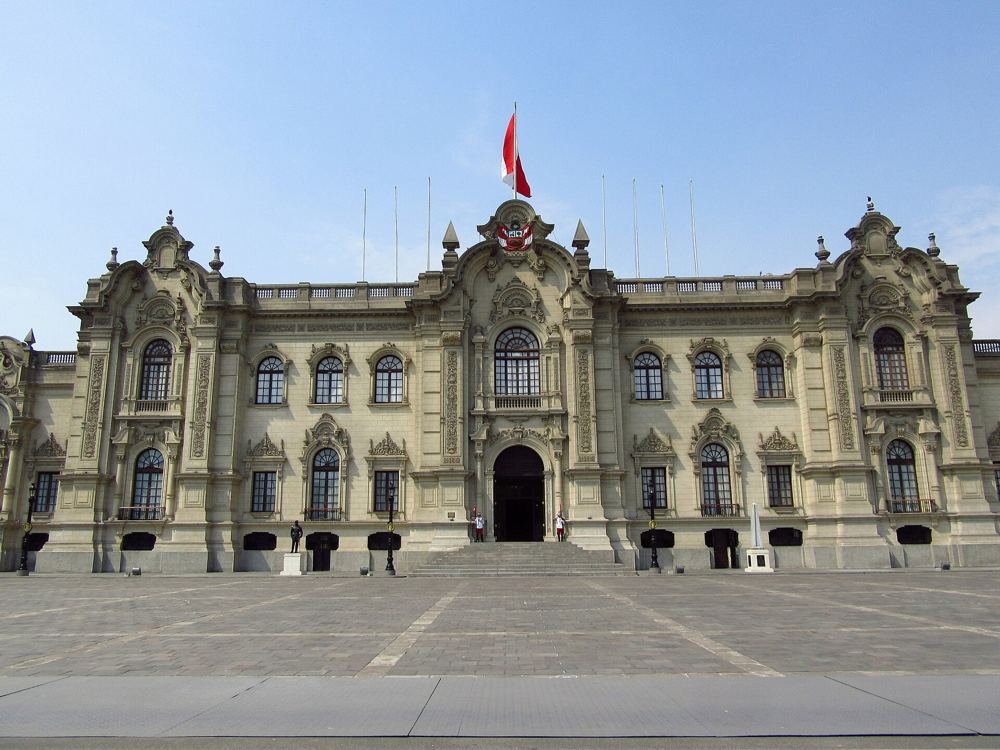
Peru is a presidential republic: the president is head of state and directs the general policy of the government. Keiko Fujimori of Fuerza Popular, a conservative party, has held the office since Tuesday, 28 July 2026.
She won the runoff with 50.135% of valid votes, final figures from ONPE, the office that runs elections, show. Her rival, Roberto Sánchez of the left-wing Juntos por el Perú, lost by 49,641 votes.
Her father, Alberto Fujimori, was president from 1990 to 2000 and died in September 2024. Peru’s Truth and Reconciliation Commission found that he became an authoritarian ruler after his coup of 5 April 1992.
Since July 2026, Congress has had two chambers again: a 60-seat Senate and a 130-seat Chamber of Deputies. Fuerza Popular is the largest group in both, with 22 senators and 41 deputies, the official registers show.
Together with Renovación Popular, another conservative party, it has 30 of 60 senators and 56 of 130 deputies. That is exactly half the Senate and ten seats short of a majority among deputies.
The main opposition, Juntos por el Perú, has 14 senators and 32 deputies. Three smaller groups, Partido del Buen Gobierno, Partido Cívico Obras and Ahora Nación, hold the rest.
Miguel Torres of Fuerza Popular presides over the Senate; Oscar Reto of Buen Gobierno presides over the deputies. Luis Galarreta, president of the Council of Ministers, runs the cabinet day to day.
Congress can remove a president for “permanent moral incapacity” under Article 113 of the Constitution, which does not define the term. It used that clause against Dina Boluarte in October 2025, with 122 of 130 votes, El Diario of Ecuador reported.
Her predecessor, Pedro Castillo, fell in December 2022 after trying to dissolve Congress. The full sequence is set out in Peru Political Instability Explained .
On Tuesday, 6 October 2026, deputies voted 66 to 34 to give her government 90 days of decree powers. The grant covers only public security and the El Niño weather threat and now goes to the Senate, El Comercio reported.
The details are in this report on the deputies’ vote . The guide to Peru politics profiles the ministers, courts and parties in detail.
Private economic power rests with a few family-linked groups, three of them listed in New York. Their annual 20-F filings with the US Securities and Exchange Commission show the families’ stakes.
The Romero family beneficially owned 12.29% of Credicorp at the end of 2025, its 20-F shows. Credicorp controls Banco de Crédito del Perú (BCP), which holds close to 29% of Peru’s loans and 33% of deposits.
Luis Romero Belismelis has chaired Credicorp since June 2020. Manuel Romero Valdez, chairman of Grupo Romero, joined Credicorp’s board in March 2026 and sits on the board of Lima-listed Alicorp.
Interbank, one of Peru’s four largest banks, belongs to Intercorp Financial Services (IFS), listed in Lima and New York. Its parent, Intercorp Peru, owned 74.38% of IFS at the end of 2025, the IFS 20-F shows.
Under a 2019 proxy, Carlos Rodríguez-Pastor Persivale and two family members vote the shares that pick most of Intercorp Peru’s board. The group’s reach therefore runs through one family.
In mining, Roque Benavides chairs New York-listed Buenaventura, and his brother Raúl sits on its board. Together with Antofagasta plc, a copper group, the Benavides family held about 35% of Buenaventura in March 2026.
Big business speaks collectively through CONFIEP, a confederation of 21 business associations across ten sectors. Its president in October 2026 is Jorge Zapata Ríos.
Politics has its own dynasty in the Fujimori family, now back in the presidency a generation after Alberto Fujimori. The guide to who runs Peru’s economy covers the companies and sectors in more depth.
Lima Metropolitana had 10,129,708 residents in the 2025 census, 29.7% of the national total, INEI, the statistics office, reports. The next largest regions, Piura and La Libertad, have about 2.1 million each.
The Lima region gained a net 2.3 million people from other regions, while Cajamarca, in the northern Andes, lost a net 623,000. Puno, Huancavelica, Ancash and Ayacucho also lost more people than they gained.
That weight shows up in Congress. Lima Metropolitana elects 32 of the 130 deputies, by far the largest delegation, the chamber’s register shows.
It shows up in pay, too. Workers in Lima and Callao earned on average S/2,486 a month in 2025 (about US$722), the highest in INEI’s urban survey.
Conversions use the open.er-api.com rate of 8 October 2026, S/3.44 per US dollar (about US$0.29 per sol).
Regions do have elected leaders. Peruvians voted for regional governors and mayors on Sunday, 4 October 2026.
A governor needs at least 30% of valid votes; otherwise the top two meet in a runoff on Sunday, 29 November 2026. Mayors need no runoff, according to the JNE, Peru’s electoral court.
In Lima, the mayoral count is close. On 7 October, with 92.71% of tally sheets counted, Renovación Popular led with 27.703% against 26.841% for Avanza País.
Avanza País holds no seats in Congress; its candidate is Francis Allison. The remaining 1,921 tally sheets went to special electoral juries for review, Infobae Perú reported from ONPE data.
Renovación Popular’s list is headed by its founder, Rafael López Aliaga, as candidate for first councillor rather than mayor. He took that place after Luis Rubio withdrew his candidacy on 4 August, Infobae Perú reported.
The guide to Peru’s population and ethnic groups has the full census picture.
In the 2025 census, 61.8% of Peruvians identified as mestizo, of mixed Indigenous and European descent. Another 17.2% identified as Quechua, 2.0% as Aymara, 1.6% as Amazonian Indigenous, 6.0% as Afro-Peruvian and 9.0% as white.
Poverty is sharply higher in Indigenous-language homes, INEI’s 2025 figures show. It reached 46.2% where the household head’s mother tongue is Amazonian, 30.4% for Quechua or Aymara, and 23.8% for Spanish.
The divide has a violent history. Peru’s Truth and Reconciliation Commission estimated 69,280 deaths in the internal armed conflict of 1980 to 2000.
It found that 75% of those killed had Quechua or another native language as their mother tongue. Only 16% of Peruvians shared that trait in the 1993 census.
The Truth Commission named the Maoist Shining Path as the main perpetrator, responsible for 54% of the deaths reported to it.
The Inter-American Commission on Human Rights, part of the Organization of American States, studied the protests that began on 7 December 2022. It pointed especially to the south, where Indigenous and campesino populations predominate.
In May 2023 the commission reported disproportionate, indiscriminate and lethal force, and said deaths in Ayacucho could amount to extrajudicial executions. It also recorded protesters being labelled “terrorists” on ethnic and regional grounds.