X-raying seven and half decades of manufacturing, jobs and local value
The significance of 75 years is best measured not simply by longevity but by the extent to which a company read more X-raying seven and half decades of manufacturing, jobs and local value
The significance of 75 years is best measured not simply by longevity but by the extent to which a company has remained embedded in production, employment, supply chains, and consumer activity. In Nigerian Bottling Company (NBC) Limited’s case, its history also mirrors important phases of Nigeria’s industrial development, from the early post-colonial economy to today’s more complex manufacturing and distribution environment. Truly, 75 years is a long time for any business to remain in an economy, particularly one as challenging as Nigeria. For NBC, however, the significance of the anniversary goes beyond celebrating corporate longevity. It provides an opportunity to examine how a company that began production in Lagos in 1951 has evolved alongside Nigeria’s economy and how its operations now connect manufacturing with agriculture, logistics, distribution, retail, employment, and community development. NBC marked its 75th anniversary in September 2026 with a gala in Abuja attended by government officials and representatives of the Coca-Cola system. The anniversary provides a useful lens for examining the economic footprint of a business whose operations have expanded considerably since its first production run in Ebute Metta. Today, NBC operates eight plants, 11 depots, and 52 commercial territories across Nigeria. The geographical spread is significant because a beverage manufacturer’s economic contribution does not end at the factory gate. Its activities require suppliers, transporters, distributors, retailers, agricultural inputs, packaging, logistics, and a large network of businesses that move products from production lines to consumers. That wider footprint is reflected in a 2024 socio-economic impact study by Steward Redqueen. The study found that the Coca-Cola system generated approximately $1 billion in value-added economic activity across its Nigerian value chain in 2024 and supported more than 160,000 jobs. Of these, 2,989 were direct employees, while about 157,200 jobs were supported indirectly across sectors, including retail, agriculture, manufacturing, transportation, and services. The study also recorded $601 million in goods and services purchased from Nigerian suppliers. These figures are important because they demonstrate the distinction between direct employment and economic impact. A manufacturing company may employ thousands of people directly, but its broader economic impact lies in the businesses that depend on its operations. For every direct Coca-Cola job, the Steward Redqueen study estimated that another 53 jobs were supported across the value chain. That ratio illustrates why the survival and expansion of large-scale manufacturing companies matter beyond their payrolls. NBC’s Nigerian story began in 1951, when Greek-Cypriot entrepreneur Anastasios Leventis established the company and secured Coca-Cola rights for Nigeria. The business subsequently became part of the wider Coca-Cola bottling system, while Coca-Cola HBC evolved into a multinational bottling group with operations across three continents. The Nigerian operation has undergone considerable transformation since those early years. Its present eight-plant network represents a substantial change from the single production base from which the business started. The evolution is particularly relevant to Nigeria’s continuing struggle to expand domestic manufacturing capacity. According to the National Bureau of Statistics, manufacturing real GDP grew by 3.29 percent year-on-year in the first quarter of 2026. Manufacturing remains a major component of the non-oil economy, and the non-oil sector accounted for 96.08 percent of real GDP in the same quarter. Within that environment, investments that add local production capacity contribute to the broader effort to maintain industrial activity in the nation rather than relying entirely on imported finished products. NBC’s recent investments illustrate this continuing expansion. In June 2026, the company commissioned three new production lines (two at its Asejire plant in Oyo State and one at Challawa in Kano State). The company said the new lines were the first phase of a wider programme of additional production capacity across its Nigerian plants. The investment is part of a much larger capital commitment. NBC and the Coca-Cola system say more than $1.5 billion has been invested across NBC’s Nigerian operations over the past decade. The Coca-Cola system also announced in 2024 plans to invest up to another $1 billion in Nigeria over five years, subject to a predictable and enabling business environment. One of the clearest measures of an industrial company’s integration into an economy is the extent to which it purchases locally. The $601 million in goods and services sourced from Nigerian suppliers by the Coca-Cola system in 2024 is therefore significant. It represents spending that feeds into other businesses and economic activities rather than remaining confined to the company’s own operations. The impact spreads through transportation, warehousing, retail, distribution, and other services. It also creates a market for suppliers that must meet the requirements of a large multinational production and distribution system. For Nigeria, where the expansion of local production is closely tied to employment creation, foreign-exchange pressures, and the development of domestic supply chains, this kind of industrial linkage has wider significance. But the $1 billion economic contribution should be understood accurately. It is an estimate for the wider Coca-Cola system’s value-added economic activity in Nigeria, not a claim that NBC itself independently generated the entire amount. The distinction matters when assessing the company’s economic footprint. NBC’s 75-year history also covers some of Nigeria’s most significant economic transitions, independence, the civil war, the oil boom, structural adjustment, military and civilian administrations, and periods of high inflation, currency pressures, and successive attempts to rebuild domestic manufacturing. Remaining operational through these different economic periods does not mean the company has been insulated from Nigeria’s challenges. Like other manufacturers, it is exposed to energy costs, logistics, foreign exchange, inflation, infrastructure constraints, and changes in consumer purchasing power. The company’s continued investment, therefore, provides another dimension to its 75-year story. The commissioning of the Asejire and Challawa production lines in 2026 is evidence that investment has continued despite the difficult operating environment. The new facilities also show the geographical dimension of the company’s strategy, with manufacturing capacity spread between the South-West and northern Nigeria. That geographical spread is important because manufacturing investment creates economic activity around production locations. It generates demand for logistics, maintenance, distribution, and other services while bringing industrial activity closer to different consumer markets. The economic significance of NBC’s presence is also reflected in its programmes involving skills development, water access and recycling. The company launched its Youth Empowered programme in Nigeria in 2024, focusing on life and business skills for young people. It has also undertaken water, sanitation, and hygiene projects, including a solar-powered borehole in Maiduguri and WASH facilities in Kano, Owerri, and Benin City, according to company records. Such initiatives should not be confused with the company’s core economic contribution, but they form part of the wider social footprint of a large corporate organisation operating across communities. The company has also established recycling initiatives, including neighbourhood recycling banks in Lagos and Abuja, and a plastics collection hub in Apapa. These activities are linked to the broader Coca-Cola system commitment to packaging recovery and a circular economy. This year, Coca-Cola HBC also announced a $1.25 million commitment through its foundation to support young Nigerian entrepreneurs in the hospitality and food-service sector over three years. The programme is intended to provide grants, entrepreneurship training, business formalisation support and mentorship. Separately, the Coca-Cola Foundation committed another $1.25 million toward more sustainable water solutions in Nigeria, including initiatives in Lagos and Abuja. The most important lesson from NBC’s 75 years may therefore be found in continuity. A business that began with one production operation in 1951 now has eight plants, 11 depots, and 52 commercial territories. The Coca-Cola system’s 2024 economic impact study links its Nigerian value chain to about $1 billion in value-added activity, more than 160,000 supported jobs, and $601 million in purchases from Nigerian suppliers. These numbers provide a measurable basis for assessing the significance of the anniversary. They also place responsibility on both the company and policymakers. For NBC, the next phase will require maintaining investment, improving productivity, strengthening local sourcing, and adapting to changing consumer and environmental expectations. For the government, the company’s continued expansion illustrates the importance of policies that make manufacturing investment viable: reliable infrastructure, predictable regulation, efficient logistics, and an environment in which businesses can plan for the long term. These years do not automatically prove that every aspect of a company’s operations has been successful, nor does longevity alone resolve Nigeria’s wider industrial challenges. But NBC’s seven-and-a-half decades provide a substantial record of sustained manufacturing presence. From the first production run in Ebute Metta in 1951 to new production lines at Asejire and Challawa in 2026, the story is one of an enterprise that has grown from a single Nigerian operation into a national manufacturing and distribution network. Its significance to Nigeria is therefore not simply that it has survived for 75 years. It is that its continued presence has created an economic chain extending from factories to suppliers, workers, transporters, distributors, retailers, and consumers. In an economy seeking sustainable growth beyond oil, that chain is perhaps the most important indicator of what 75 years of manufacturing presence represents. Related News Complexity is expensive: Why simpler organisations often perform better Board effectiveness, governance, and sustainability Playing the devil’s advocate: Should Nigeria rethink its refineries? Osa Victor Obayagbona Socio-cultural Affairs Share
Truly, 75 years is a long time for any business to remain in an economy, particularly one as challenging as Nigeria. For NBC, however, the significance of the anniversary goes beyond celebrating corporate longevity. It provides an opportunity to examine how a company that began production in Lagos in 1951 has evolved alongside Nigeria’s economy and how its operations now connect manufacturing with agriculture, logistics, distribution, retail, employment, and community development. NBC marked its 75th anniversary in September 2026 with a gala in Abuja attended by government officials and representatives of the Coca-Cola system. The anniversary provides a useful lens for examining the economic footprint of a business whose operations have expanded considerably since its first production run in Ebute Metta. Today, NBC operates eight plants, 11 depots, and 52 commercial territories across Nigeria. The geographical spread is significant because a beverage manufacturer’s economic contribution does not end at the factory gate. Its activities require suppliers, transporters, distributors, retailers, agricultural inputs, packaging, logistics, and a large network of businesses that move products from production lines to consumers. That wider footprint is reflected in a 2024 socio-economic impact study by Steward Redqueen. The study found that the Coca-Cola system generated approximately $1 billion in value-added economic activity across its Nigerian value chain in 2024 and supported more than 160,000 jobs. Of these, 2,989 were direct employees, while about 157,200 jobs were supported indirectly across sectors, including retail, agriculture, manufacturing, transportation, and services. The study also recorded $601 million in goods and services purchased from Nigerian suppliers. These figures are important because they demonstrate the distinction between direct employment and economic impact. A manufacturing company may employ thousands of people directly, but its broader economic impact lies in the businesses that depend on its operations. For every direct Coca-Cola job, the Steward Redqueen study estimated that another 53 jobs were supported across the value chain. That ratio illustrates why the survival and expansion of large-scale manufacturing companies matter beyond their payrolls. NBC’s Nigerian story began in 1951, when Greek-Cypriot entrepreneur Anastasios Leventis established the company and secured Coca-Cola rights for Nigeria. The business subsequently became part of the wider Coca-Cola bottling system, while Coca-Cola HBC evolved into a multinational bottling group with operations across three continents. The Nigerian operation has undergone considerable transformation since those early years. Its present eight-plant network represents a substantial change from the single production base from which the business started. The evolution is particularly relevant to Nigeria’s continuing struggle to expand domestic manufacturing capacity. According to the National Bureau of Statistics, manufacturing real GDP grew by 3.29 percent year-on-year in the first quarter of 2026. Manufacturing remains a major component of the non-oil economy, and the non-oil sector accounted for 96.08 percent of real GDP in the same quarter. Within that environment, investments that add local production capacity contribute to the broader effort to maintain industrial activity in the nation rather than relying entirely on imported finished products. NBC’s recent investments illustrate this continuing expansion. In June 2026, the company commissioned three new production lines (two at its Asejire plant in Oyo State and one at Challawa in Kano State). The company said the new lines were the first phase of a wider programme of additional production capacity across its Nigerian plants. The investment is part of a much larger capital commitment. NBC and the Coca-Cola system say more than $1.5 billion has been invested across NBC’s Nigerian operations over the past decade. The Coca-Cola system also announced in 2024 plans to invest up to another $1 billion in Nigeria over five years, subject to a predictable and enabling business environment. One of the clearest measures of an industrial company’s integration into an economy is the extent to which it purchases locally. The $601 million in goods and services sourced from Nigerian suppliers by the Coca-Cola system in 2024 is therefore significant. It represents spending that feeds into other businesses and economic activities rather than remaining confined to the company’s own operations. The impact spreads through transportation, warehousing, retail, distribution, and other services. It also creates a market for suppliers that must meet the requirements of a large multinational production and distribution system. For Nigeria, where the expansion of local production is closely tied to employment creation, foreign-exchange pressures, and the development of domestic supply chains, this kind of industrial linkage has wider significance. But the $1 billion economic contribution should be understood accurately. It is an estimate for the wider Coca-Cola system’s value-added economic activity in Nigeria, not a claim that NBC itself independently generated the entire amount. The distinction matters when assessing the company’s economic footprint. NBC’s 75-year history also covers some of Nigeria’s most significant economic transitions, independence, the civil war, the oil boom, structural adjustment, military and civilian administrations, and periods of high inflation, currency pressures, and successive attempts to rebuild domestic manufacturing. Remaining operational through these different economic periods does not mean the company has been insulated from Nigeria’s challenges. Like other manufacturers, it is exposed to energy costs, logistics, foreign exchange, inflation, infrastructure constraints, and changes in consumer purchasing power. The company’s continued investment, therefore, provides another dimension to its 75-year story. The commissioning of the Asejire and Challawa production lines in 2026 is evidence that investment has continued despite the difficult operating environment. The new facilities also show the geographical dimension of the company’s strategy, with manufacturing capacity spread between the South-West and northern Nigeria. That geographical spread is important because manufacturing investment creates economic activity around production locations. It generates demand for logistics, maintenance, distribution, and other services while bringing industrial activity closer to different consumer markets. The economic significance of NBC’s presence is also reflected in its programmes involving skills development, water access and recycling. The company launched its Youth Empowered programme in Nigeria in 2024, focusing on life and business skills for young people. It has also undertaken water, sanitation, and hygiene projects, including a solar-powered borehole in Maiduguri and WASH facilities in Kano, Owerri, and Benin City, according to company records. Such initiatives should not be confused with the company’s core economic contribution, but they form part of the wider social footprint of a large corporate organisation operating across communities. The company has also established recycling initiatives, including neighbourhood recycling banks in Lagos and Abuja, and a plastics collection hub in Apapa. These activities are linked to the broader Coca-Cola system commitment to packaging recovery and a circular economy. This year, Coca-Cola HBC also announced a $1.25 million commitment through its foundation to support young Nigerian entrepreneurs in the hospitality and food-service sector over three years. The programme is intended to provide grants, entrepreneurship training, business formalisation support and mentorship. Separately, the Coca-Cola Foundation committed another $1.25 million toward more sustainable water solutions in Nigeria, including initiatives in Lagos and Abuja. The most important lesson from NBC’s 75 years may therefore be found in continuity. A business that began with one production operation in 1951 now has eight plants, 11 depots, and 52 commercial territories. The Coca-Cola system’s 2024 economic impact study links its Nigerian value chain to about $1 billion in value-added activity, more than 160,000 supported jobs, and $601 million in purchases from Nigerian suppliers. These numbers provide a measurable basis for assessing the significance of the anniversary. They also place responsibility on both the company and policymakers. For NBC, the next phase will require maintaining investment, improving productivity, strengthening local sourcing, and adapting to changing consumer and environmental expectations. For the government, the company’s continued expansion illustrates the importance of policies that make manufacturing investment viable: reliable infrastructure, predictable regulation, efficient logistics, and an environment in which businesses can plan for the long term. These years do not automatically prove that every aspect of a company’s operations has been successful, nor does longevity alone resolve Nigeria’s wider industrial challenges. But NBC’s seven-and-a-half decades provide a substantial record of sustained manufacturing presence. From the first production run in Ebute Metta in 1951 to new production lines at Asejire and Challawa in 2026, the story is one of an enterprise that has grown from a single Nigerian operation into a national manufacturing and distribution network. Its significance to Nigeria is therefore not simply that it has survived for 75 years. It is that its continued presence has created an economic chain extending from factories to suppliers, workers, transporters, distributors, retailers, and consumers. In an economy seeking sustainable growth beyond oil, that chain is perhaps the most important indicator of what 75 years of manufacturing presence represents. Related News Complexity is expensive: Why simpler organisations often perform better Board effectiveness, governance, and sustainability Playing the devil’s advocate: Should Nigeria rethink its refineries? Osa Victor Obayagbona Socio-cultural Affairs Share
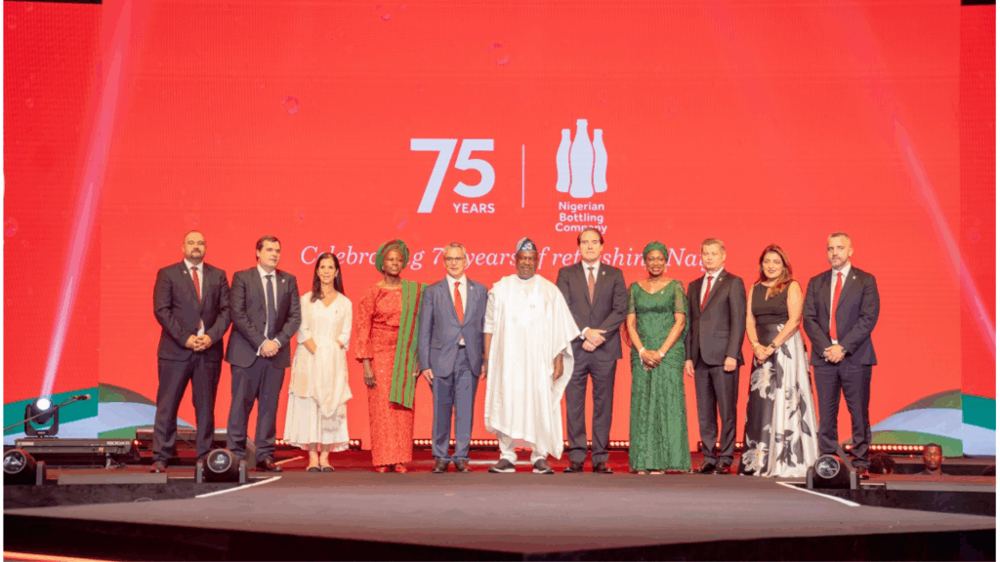
NBC marked its 75th anniversary in September 2026 with a gala in Abuja attended by government officials and representatives of the Coca-Cola system. The anniversary provides a useful lens for examining the economic footprint of a business whose operations have expanded considerably since its first production run in Ebute Metta. Today, NBC operates eight plants, 11 depots, and 52 commercial territories across Nigeria. The geographical spread is significant because a beverage manufacturer’s economic contribution does not end at the factory gate. Its activities require suppliers, transporters, distributors, retailers, agricultural inputs, packaging, logistics, and a large network of businesses that move products from production lines to consumers. That wider footprint is reflected in a 2024 socio-economic impact study by Steward Redqueen. The study found that the Coca-Cola system generated approximately $1 billion in value-added economic activity across its Nigerian value chain in 2024 and supported more than 160,000 jobs. Of these, 2,989 were direct employees, while about 157,200 jobs were supported indirectly across sectors, including retail, agriculture, manufacturing, transportation, and services. The study also recorded $601 million in goods and services purchased from Nigerian suppliers. These figures are important because they demonstrate the distinction between direct employment and economic impact. A manufacturing company may employ thousands of people directly, but its broader economic impact lies in the businesses that depend on its operations. For every direct Coca-Cola job, the Steward Redqueen study estimated that another 53 jobs were supported across the value chain. That ratio illustrates why the survival and expansion of large-scale manufacturing companies matter beyond their payrolls. NBC’s Nigerian story began in 1951, when Greek-Cypriot entrepreneur Anastasios Leventis established the company and secured Coca-Cola rights for Nigeria. The business subsequently became part of the wider Coca-Cola bottling system, while Coca-Cola HBC evolved into a multinational bottling group with operations across three continents. The Nigerian operation has undergone considerable transformation since those early years. Its present eight-plant network represents a substantial change from the single production base from which the business started. The evolution is particularly relevant to Nigeria’s continuing struggle to expand domestic manufacturing capacity. According to the National Bureau of Statistics, manufacturing real GDP grew by 3.29 percent year-on-year in the first quarter of 2026. Manufacturing remains a major component of the non-oil economy, and the non-oil sector accounted for 96.08 percent of real GDP in the same quarter. Within that environment, investments that add local production capacity contribute to the broader effort to maintain industrial activity in the nation rather than relying entirely on imported finished products. NBC’s recent investments illustrate this continuing expansion. In June 2026, the company commissioned three new production lines (two at its Asejire plant in Oyo State and one at Challawa in Kano State). The company said the new lines were the first phase of a wider programme of additional production capacity across its Nigerian plants. The investment is part of a much larger capital commitment. NBC and the Coca-Cola system say more than $1.5 billion has been invested across NBC’s Nigerian operations over the past decade. The Coca-Cola system also announced in 2024 plans to invest up to another $1 billion in Nigeria over five years, subject to a predictable and enabling business environment. One of the clearest measures of an industrial company’s integration into an economy is the extent to which it purchases locally. The $601 million in goods and services sourced from Nigerian suppliers by the Coca-Cola system in 2024 is therefore significant. It represents spending that feeds into other businesses and economic activities rather than remaining confined to the company’s own operations. The impact spreads through transportation, warehousing, retail, distribution, and other services. It also creates a market for suppliers that must meet the requirements of a large multinational production and distribution system. For Nigeria, where the expansion of local production is closely tied to employment creation, foreign-exchange pressures, and the development of domestic supply chains, this kind of industrial linkage has wider significance. But the $1 billion economic contribution should be understood accurately. It is an estimate for the wider Coca-Cola system’s value-added economic activity in Nigeria, not a claim that NBC itself independently generated the entire amount. The distinction matters when assessing the company’s economic footprint. NBC’s 75-year history also covers some of Nigeria’s most significant economic transitions, independence, the civil war, the oil boom, structural adjustment, military and civilian administrations, and periods of high inflation, currency pressures, and successive attempts to rebuild domestic manufacturing. Remaining operational through these different economic periods does not mean the company has been insulated from Nigeria’s challenges. Like other manufacturers, it is exposed to energy costs, logistics, foreign exchange, inflation, infrastructure constraints, and changes in consumer purchasing power. The company’s continued investment, therefore, provides another dimension to its 75-year story. The commissioning of the Asejire and Challawa production lines in 2026 is evidence that investment has continued despite the difficult operating environment. The new facilities also show the geographical dimension of the company’s strategy, with manufacturing capacity spread between the South-West and northern Nigeria. That geographical spread is important because manufacturing investment creates economic activity around production locations. It generates demand for logistics, maintenance, distribution, and other services while bringing industrial activity closer to different consumer markets. The economic significance of NBC’s presence is also reflected in its programmes involving skills development, water access and recycling. The company launched its Youth Empowered programme in Nigeria in 2024, focusing on life and business skills for young people. It has also undertaken water, sanitation, and hygiene projects, including a solar-powered borehole in Maiduguri and WASH facilities in Kano, Owerri, and Benin City, according to company records. Such initiatives should not be confused with the company’s core economic contribution, but they form part of the wider social footprint of a large corporate organisation operating across communities. The company has also established recycling initiatives, including neighbourhood recycling banks in Lagos and Abuja, and a plastics collection hub in Apapa. These activities are linked to the broader Coca-Cola system commitment to packaging recovery and a circular economy. This year, Coca-Cola HBC also announced a $1.25 million commitment through its foundation to support young Nigerian entrepreneurs in the hospitality and food-service sector over three years. The programme is intended to provide grants, entrepreneurship training, business formalisation support and mentorship. Separately, the Coca-Cola Foundation committed another $1.25 million toward more sustainable water solutions in Nigeria, including initiatives in Lagos and Abuja. The most important lesson from NBC’s 75 years may therefore be found in continuity. A business that began with one production operation in 1951 now has eight plants, 11 depots, and 52 commercial territories. The Coca-Cola system’s 2024 economic impact study links its Nigerian value chain to about $1 billion in value-added activity, more than 160,000 supported jobs, and $601 million in purchases from Nigerian suppliers. These numbers provide a measurable basis for assessing the significance of the anniversary. They also place responsibility on both the company and policymakers. For NBC, the next phase will require maintaining investment, improving productivity, strengthening local sourcing, and adapting to changing consumer and environmental expectations. For the government, the company’s continued expansion illustrates the importance of policies that make manufacturing investment viable: reliable infrastructure, predictable regulation, efficient logistics, and an environment in which businesses can plan for the long term. These years do not automatically prove that every aspect of a company’s operations has been successful, nor does longevity alone resolve Nigeria’s wider industrial challenges. But NBC’s seven-and-a-half decades provide a substantial record of sustained manufacturing presence. From the first production run in Ebute Metta in 1951 to new production lines at Asejire and Challawa in 2026, the story is one of an enterprise that has grown from a single Nigerian operation into a national manufacturing and distribution network. Its significance to Nigeria is therefore not simply that it has survived for 75 years. It is that its continued presence has created an economic chain extending from factories to suppliers, workers, transporters, distributors, retailers, and consumers. In an economy seeking sustainable growth beyond oil, that chain is perhaps the most important indicator of what 75 years of manufacturing presence represents. Related News Complexity is expensive: Why simpler organisations often perform better Board effectiveness, governance, and sustainability Playing the devil’s advocate: Should Nigeria rethink its refineries? Osa Victor Obayagbona Socio-cultural Affairs Share
Today, NBC operates eight plants, 11 depots, and 52 commercial territories across Nigeria. The geographical spread is significant because a beverage manufacturer’s economic contribution does not end at the factory gate. Its activities require suppliers, transporters, distributors, retailers, agricultural inputs, packaging, logistics, and a large network of businesses that move products from production lines to consumers. That wider footprint is reflected in a 2024 socio-economic impact study by Steward Redqueen. The study found that the Coca-Cola system generated approximately $1 billion in value-added economic activity across its Nigerian value chain in 2024 and supported more than 160,000 jobs. Of these, 2,989 were direct employees, while about 157,200 jobs were supported indirectly across sectors, including retail, agriculture, manufacturing, transportation, and services. The study also recorded $601 million in goods and services purchased from Nigerian suppliers. These figures are important because they demonstrate the distinction between direct employment and economic impact. A manufacturing company may employ thousands of people directly, but its broader economic impact lies in the businesses that depend on its operations. For every direct Coca-Cola job, the Steward Redqueen study estimated that another 53 jobs were supported across the value chain. That ratio illustrates why the survival and expansion of large-scale manufacturing companies matter beyond their payrolls. NBC’s Nigerian story began in 1951, when Greek-Cypriot entrepreneur Anastasios Leventis established the company and secured Coca-Cola rights for Nigeria. The business subsequently became part of the wider Coca-Cola bottling system, while Coca-Cola HBC evolved into a multinational bottling group with operations across three continents. The Nigerian operation has undergone considerable transformation since those early years. Its present eight-plant network represents a substantial change from the single production base from which the business started. The evolution is particularly relevant to Nigeria’s continuing struggle to expand domestic manufacturing capacity. According to the National Bureau of Statistics, manufacturing real GDP grew by 3.29 percent year-on-year in the first quarter of 2026. Manufacturing remains a major component of the non-oil economy, and the non-oil sector accounted for 96.08 percent of real GDP in the same quarter. Within that environment, investments that add local production capacity contribute to the broader effort to maintain industrial activity in the nation rather than relying entirely on imported finished products. NBC’s recent investments illustrate this continuing expansion. In June 2026, the company commissioned three new production lines (two at its Asejire plant in Oyo State and one at Challawa in Kano State). The company said the new lines were the first phase of a wider programme of additional production capacity across its Nigerian plants. The investment is part of a much larger capital commitment. NBC and the Coca-Cola system say more than $1.5 billion has been invested across NBC’s Nigerian operations over the past decade. The Coca-Cola system also announced in 2024 plans to invest up to another $1 billion in Nigeria over five years, subject to a predictable and enabling business environment. One of the clearest measures of an industrial company’s integration into an economy is the extent to which it purchases locally. The $601 million in goods and services sourced from Nigerian suppliers by the Coca-Cola system in 2024 is therefore significant. It represents spending that feeds into other businesses and economic activities rather than remaining confined to the company’s own operations. The impact spreads through transportation, warehousing, retail, distribution, and other services. It also creates a market for suppliers that must meet the requirements of a large multinational production and distribution system. For Nigeria, where the expansion of local production is closely tied to employment creation, foreign-exchange pressures, and the development of domestic supply chains, this kind of industrial linkage has wider significance. But the $1 billion economic contribution should be understood accurately. It is an estimate for the wider Coca-Cola system’s value-added economic activity in Nigeria, not a claim that NBC itself independently generated the entire amount. The distinction matters when assessing the company’s economic footprint. NBC’s 75-year history also covers some of Nigeria’s most significant economic transitions, independence, the civil war, the oil boom, structural adjustment, military and civilian administrations, and periods of high inflation, currency pressures, and successive attempts to rebuild domestic manufacturing. Remaining operational through these different economic periods does not mean the company has been insulated from Nigeria’s challenges. Like other manufacturers, it is exposed to energy costs, logistics, foreign exchange, inflation, infrastructure constraints, and changes in consumer purchasing power. The company’s continued investment, therefore, provides another dimension to its 75-year story. The commissioning of the Asejire and Challawa production lines in 2026 is evidence that investment has continued despite the difficult operating environment. The new facilities also show the geographical dimension of the company’s strategy, with manufacturing capacity spread between the South-West and northern Nigeria. That geographical spread is important because manufacturing investment creates economic activity around production locations. It generates demand for logistics, maintenance, distribution, and other services while bringing industrial activity closer to different consumer markets. The economic significance of NBC’s presence is also reflected in its programmes involving skills development, water access and recycling. The company launched its Youth Empowered programme in Nigeria in 2024, focusing on life and business skills for young people. It has also undertaken water, sanitation, and hygiene projects, including a solar-powered borehole in Maiduguri and WASH facilities in Kano, Owerri, and Benin City, according to company records. Such initiatives should not be confused with the company’s core economic contribution, but they form part of the wider social footprint of a large corporate organisation operating across communities. The company has also established recycling initiatives, including neighbourhood recycling banks in Lagos and Abuja, and a plastics collection hub in Apapa. These activities are linked to the broader Coca-Cola system commitment to packaging recovery and a circular economy. This year, Coca-Cola HBC also announced a $1.25 million commitment through its foundation to support young Nigerian entrepreneurs in the hospitality and food-service sector over three years. The programme is intended to provide grants, entrepreneurship training, business formalisation support and mentorship. Separately, the Coca-Cola Foundation committed another $1.25 million toward more sustainable water solutions in Nigeria, including initiatives in Lagos and Abuja. The most important lesson from NBC’s 75 years may therefore be found in continuity. A business that began with one production operation in 1951 now has eight plants, 11 depots, and 52 commercial territories. The Coca-Cola system’s 2024 economic impact study links its Nigerian value chain to about $1 billion in value-added activity, more than 160,000 supported jobs, and $601 million in purchases from Nigerian suppliers. These numbers provide a measurable basis for assessing the significance of the anniversary. They also place responsibility on both the company and policymakers. For NBC, the next phase will require maintaining investment, improving productivity, strengthening local sourcing, and adapting to changing consumer and environmental expectations. For the government, the company’s continued expansion illustrates the importance of policies that make manufacturing investment viable: reliable infrastructure, predictable regulation, efficient logistics, and an environment in which businesses can plan for the long term. These years do not automatically prove that every aspect of a company’s operations has been successful, nor does longevity alone resolve Nigeria’s wider industrial challenges. But NBC’s seven-and-a-half decades provide a substantial record of sustained manufacturing presence. From the first production run in Ebute Metta in 1951 to new production lines at Asejire and Challawa in 2026, the story is one of an enterprise that has grown from a single Nigerian operation into a national manufacturing and distribution network. Its significance to Nigeria is therefore not simply that it has survived for 75 years. It is that its continued presence has created an economic chain extending from factories to suppliers, workers, transporters, distributors, retailers, and consumers. In an economy seeking sustainable growth beyond oil, that chain is perhaps the most important indicator of what 75 years of manufacturing presence represents. Related News Complexity is expensive: Why simpler organisations often perform better Board effectiveness, governance, and sustainability Playing the devil’s advocate: Should Nigeria rethink its refineries? Osa Victor Obayagbona Socio-cultural Affairs Share
That wider footprint is reflected in a 2024 socio-economic impact study by Steward Redqueen. The study found that the Coca-Cola system generated approximately $1 billion in value-added economic activity across its Nigerian value chain in 2024 and supported more than 160,000 jobs. Of these, 2,989 were direct employees, while about 157,200 jobs were supported indirectly across sectors, including retail, agriculture, manufacturing, transportation, and services. The study also recorded $601 million in goods and services purchased from Nigerian suppliers. These figures are important because they demonstrate the distinction between direct employment and economic impact. A manufacturing company may employ thousands of people directly, but its broader economic impact lies in the businesses that depend on its operations. For every direct Coca-Cola job, the Steward Redqueen study estimated that another 53 jobs were supported across the value chain. That ratio illustrates why the survival and expansion of large-scale manufacturing companies matter beyond their payrolls. NBC’s Nigerian story began in 1951, when Greek-Cypriot entrepreneur Anastasios Leventis established the company and secured Coca-Cola rights for Nigeria. The business subsequently became part of the wider Coca-Cola bottling system, while Coca-Cola HBC evolved into a multinational bottling group with operations across three continents. The Nigerian operation has undergone considerable transformation since those early years. Its present eight-plant network represents a substantial change from the single production base from which the business started. The evolution is particularly relevant to Nigeria’s continuing struggle to expand domestic manufacturing capacity. According to the National Bureau of Statistics, manufacturing real GDP grew by 3.29 percent year-on-year in the first quarter of 2026. Manufacturing remains a major component of the non-oil economy, and the non-oil sector accounted for 96.08 percent of real GDP in the same quarter. Within that environment, investments that add local production capacity contribute to the broader effort to maintain industrial activity in the nation rather than relying entirely on imported finished products. NBC’s recent investments illustrate this continuing expansion. In June 2026, the company commissioned three new production lines (two at its Asejire plant in Oyo State and one at Challawa in Kano State). The company said the new lines were the first phase of a wider programme of additional production capacity across its Nigerian plants. The investment is part of a much larger capital commitment. NBC and the Coca-Cola system say more than $1.5 billion has been invested across NBC’s Nigerian operations over the past decade. The Coca-Cola system also announced in 2024 plans to invest up to another $1 billion in Nigeria over five years, subject to a predictable and enabling business environment. One of the clearest measures of an industrial company’s integration into an economy is the extent to which it purchases locally. The $601 million in goods and services sourced from Nigerian suppliers by the Coca-Cola system in 2024 is therefore significant. It represents spending that feeds into other businesses and economic activities rather than remaining confined to the company’s own operations. The impact spreads through transportation, warehousing, retail, distribution, and other services. It also creates a market for suppliers that must meet the requirements of a large multinational production and distribution system. For Nigeria, where the expansion of local production is closely tied to employment creation, foreign-exchange pressures, and the development of domestic supply chains, this kind of industrial linkage has wider significance. But the $1 billion economic contribution should be understood accurately. It is an estimate for the wider Coca-Cola system’s value-added economic activity in Nigeria, not a claim that NBC itself independently generated the entire amount. The distinction matters when assessing the company’s economic footprint. NBC’s 75-year history also covers some of Nigeria’s most significant economic transitions, independence, the civil war, the oil boom, structural adjustment, military and civilian administrations, and periods of high inflation, currency pressures, and successive attempts to rebuild domestic manufacturing. Remaining operational through these different economic periods does not mean the company has been insulated from Nigeria’s challenges. Like other manufacturers, it is exposed to energy costs, logistics, foreign exchange, inflation, infrastructure constraints, and changes in consumer purchasing power. The company’s continued investment, therefore, provides another dimension to its 75-year story. The commissioning of the Asejire and Challawa production lines in 2026 is evidence that investment has continued despite the difficult operating environment. The new facilities also show the geographical dimension of the company’s strategy, with manufacturing capacity spread between the South-West and northern Nigeria. That geographical spread is important because manufacturing investment creates economic activity around production locations. It generates demand for logistics, maintenance, distribution, and other services while bringing industrial activity closer to different consumer markets. The economic significance of NBC’s presence is also reflected in its programmes involving skills development, water access and recycling. The company launched its Youth Empowered programme in Nigeria in 2024, focusing on life and business skills for young people. It has also undertaken water, sanitation, and hygiene projects, including a solar-powered borehole in Maiduguri and WASH facilities in Kano, Owerri, and Benin City, according to company records. Such initiatives should not be confused with the company’s core economic contribution, but they form part of the wider social footprint of a large corporate organisation operating across communities. The company has also established recycling initiatives, including neighbourhood recycling banks in Lagos and Abuja, and a plastics collection hub in Apapa. These activities are linked to the broader Coca-Cola system commitment to packaging recovery and a circular economy. This year, Coca-Cola HBC also announced a $1.25 million commitment through its foundation to support young Nigerian entrepreneurs in the hospitality and food-service sector over three years. The programme is intended to provide grants, entrepreneurship training, business formalisation support and mentorship. Separately, the Coca-Cola Foundation committed another $1.25 million toward more sustainable water solutions in Nigeria, including initiatives in Lagos and Abuja. The most important lesson from NBC’s 75 years may therefore be found in continuity. A business that began with one production operation in 1951 now has eight plants, 11 depots, and 52 commercial territories. The Coca-Cola system’s 2024 economic impact study links its Nigerian value chain to about $1 billion in value-added activity, more than 160,000 supported jobs, and $601 million in purchases from Nigerian suppliers. These numbers provide a measurable basis for assessing the significance of the anniversary. They also place responsibility on both the company and policymakers. For NBC, the next phase will require maintaining investment, improving productivity, strengthening local sourcing, and adapting to changing consumer and environmental expectations. For the government, the company’s continued expansion illustrates the importance of policies that make manufacturing investment viable: reliable infrastructure, predictable regulation, efficient logistics, and an environment in which businesses can plan for the long term. These years do not automatically prove that every aspect of a company’s operations has been successful, nor does longevity alone resolve Nigeria’s wider industrial challenges. But NBC’s seven-and-a-half decades provide a substantial record of sustained manufacturing presence. From the first production run in Ebute Metta in 1951 to new production lines at Asejire and Challawa in 2026, the story is one of an enterprise that has grown from a single Nigerian operation into a national manufacturing and distribution network. Its significance to Nigeria is therefore not simply that it has survived for 75 years. It is that its continued presence has created an economic chain extending from factories to suppliers, workers, transporters, distributors, retailers, and consumers. In an economy seeking sustainable growth beyond oil, that chain is perhaps the most important indicator of what 75 years of manufacturing presence represents. Related News Complexity is expensive: Why simpler organisations often perform better Board effectiveness, governance, and sustainability Playing the devil’s advocate: Should Nigeria rethink its refineries? Osa Victor Obayagbona Socio-cultural Affairs Share
These figures are important because they demonstrate the distinction between direct employment and economic impact. A manufacturing company may employ thousands of people directly, but its broader economic impact lies in the businesses that depend on its operations. For every direct Coca-Cola job, the Steward Redqueen study estimated that another 53 jobs were supported across the value chain. That ratio illustrates why the survival and expansion of large-scale manufacturing companies matter beyond their payrolls. NBC’s Nigerian story began in 1951, when Greek-Cypriot entrepreneur Anastasios Leventis established the company and secured Coca-Cola rights for Nigeria. The business subsequently became part of the wider Coca-Cola bottling system, while Coca-Cola HBC evolved into a multinational bottling group with operations across three continents. The Nigerian operation has undergone considerable transformation since those early years. Its present eight-plant network represents a substantial change from the single production base from which the business started. The evolution is particularly relevant to Nigeria’s continuing struggle to expand domestic manufacturing capacity. According to the National Bureau of Statistics, manufacturing real GDP grew by 3.29 percent year-on-year in the first quarter of 2026. Manufacturing remains a major component of the non-oil economy, and the non-oil sector accounted for 96.08 percent of real GDP in the same quarter. Within that environment, investments that add local production capacity contribute to the broader effort to maintain industrial activity in the nation rather than relying entirely on imported finished products. NBC’s recent investments illustrate this continuing expansion. In June 2026, the company commissioned three new production lines (two at its Asejire plant in Oyo State and one at Challawa in Kano State). The company said the new lines were the first phase of a wider programme of additional production capacity across its Nigerian plants. The investment is part of a much larger capital commitment. NBC and the Coca-Cola system say more than $1.5 billion has been invested across NBC’s Nigerian operations over the past decade. The Coca-Cola system also announced in 2024 plans to invest up to another $1 billion in Nigeria over five years, subject to a predictable and enabling business environment. One of the clearest measures of an industrial company’s integration into an economy is the extent to which it purchases locally. The $601 million in goods and services sourced from Nigerian suppliers by the Coca-Cola system in 2024 is therefore significant. It represents spending that feeds into other businesses and economic activities rather than remaining confined to the company’s own operations. The impact spreads through transportation, warehousing, retail, distribution, and other services. It also creates a market for suppliers that must meet the requirements of a large multinational production and distribution system. For Nigeria, where the expansion of local production is closely tied to employment creation, foreign-exchange pressures, and the development of domestic supply chains, this kind of industrial linkage has wider significance. But the $1 billion economic contribution should be understood accurately. It is an estimate for the wider Coca-Cola system’s value-added economic activity in Nigeria, not a claim that NBC itself independently generated the entire amount. The distinction matters when assessing the company’s economic footprint. NBC’s 75-year history also covers some of Nigeria’s most significant economic transitions, independence, the civil war, the oil boom, structural adjustment, military and civilian administrations, and periods of high inflation, currency pressures, and successive attempts to rebuild domestic manufacturing. Remaining operational through these different economic periods does not mean the company has been insulated from Nigeria’s challenges. Like other manufacturers, it is exposed to energy costs, logistics, foreign exchange, inflation, infrastructure constraints, and changes in consumer purchasing power. The company’s continued investment, therefore, provides another dimension to its 75-year story. The commissioning of the Asejire and Challawa production lines in 2026 is evidence that investment has continued despite the difficult operating environment. The new facilities also show the geographical dimension of the company’s strategy, with manufacturing capacity spread between the South-West and northern Nigeria. That geographical spread is important because manufacturing investment creates economic activity around production locations. It generates demand for logistics, maintenance, distribution, and other services while bringing industrial activity closer to different consumer markets. The economic significance of NBC’s presence is also reflected in its programmes involving skills development, water access and recycling. The company launched its Youth Empowered programme in Nigeria in 2024, focusing on life and business skills for young people. It has also undertaken water, sanitation, and hygiene projects, including a solar-powered borehole in Maiduguri and WASH facilities in Kano, Owerri, and Benin City, according to company records. Such initiatives should not be confused with the company’s core economic contribution, but they form part of the wider social footprint of a large corporate organisation operating across communities. The company has also established recycling initiatives, including neighbourhood recycling banks in Lagos and Abuja, and a plastics collection hub in Apapa. These activities are linked to the broader Coca-Cola system commitment to packaging recovery and a circular economy. This year, Coca-Cola HBC also announced a $1.25 million commitment through its foundation to support young Nigerian entrepreneurs in the hospitality and food-service sector over three years. The programme is intended to provide grants, entrepreneurship training, business formalisation support and mentorship. Separately, the Coca-Cola Foundation committed another $1.25 million toward more sustainable water solutions in Nigeria, including initiatives in Lagos and Abuja. The most important lesson from NBC’s 75 years may therefore be found in continuity. A business that began with one production operation in 1951 now has eight plants, 11 depots, and 52 commercial territories. The Coca-Cola system’s 2024 economic impact study links its Nigerian value chain to about $1 billion in value-added activity, more than 160,000 supported jobs, and $601 million in purchases from Nigerian suppliers. These numbers provide a measurable basis for assessing the significance of the anniversary. They also place responsibility on both the company and policymakers. For NBC, the next phase will require maintaining investment, improving productivity, strengthening local sourcing, and adapting to changing consumer and environmental expectations. For the government, the company’s continued expansion illustrates the importance of policies that make manufacturing investment viable: reliable infrastructure, predictable regulation, efficient logistics, and an environment in which businesses can plan for the long term. These years do not automatically prove that every aspect of a company’s operations has been successful, nor does longevity alone resolve Nigeria’s wider industrial challenges. But NBC’s seven-and-a-half decades provide a substantial record of sustained manufacturing presence. From the first production run in Ebute Metta in 1951 to new production lines at Asejire and Challawa in 2026, the story is one of an enterprise that has grown from a single Nigerian operation into a national manufacturing and distribution network. Its significance to Nigeria is therefore not simply that it has survived for 75 years. It is that its continued presence has created an economic chain extending from factories to suppliers, workers, transporters, distributors, retailers, and consumers. In an economy seeking sustainable growth beyond oil, that chain is perhaps the most important indicator of what 75 years of manufacturing presence represents. Related News Complexity is expensive: Why simpler organisations often perform better Board effectiveness, governance, and sustainability Playing the devil’s advocate: Should Nigeria rethink its refineries? Osa Victor Obayagbona Socio-cultural Affairs Share
For every direct Coca-Cola job, the Steward Redqueen study estimated that another 53 jobs were supported across the value chain. That ratio illustrates why the survival and expansion of large-scale manufacturing companies matter beyond their payrolls. NBC’s Nigerian story began in 1951, when Greek-Cypriot entrepreneur Anastasios Leventis established the company and secured Coca-Cola rights for Nigeria. The business subsequently became part of the wider Coca-Cola bottling system, while Coca-Cola HBC evolved into a multinational bottling group with operations across three continents. The Nigerian operation has undergone considerable transformation since those early years. Its present eight-plant network represents a substantial change from the single production base from which the business started. The evolution is particularly relevant to Nigeria’s continuing struggle to expand domestic manufacturing capacity. According to the National Bureau of Statistics, manufacturing real GDP grew by 3.29 percent year-on-year in the first quarter of 2026. Manufacturing remains a major component of the non-oil economy, and the non-oil sector accounted for 96.08 percent of real GDP in the same quarter. Within that environment, investments that add local production capacity contribute to the broader effort to maintain industrial activity in the nation rather than relying entirely on imported finished products. NBC’s recent investments illustrate this continuing expansion. In June 2026, the company commissioned three new production lines (two at its Asejire plant in Oyo State and one at Challawa in Kano State). The company said the new lines were the first phase of a wider programme of additional production capacity across its Nigerian plants. The investment is part of a much larger capital commitment. NBC and the Coca-Cola system say more than $1.5 billion has been invested across NBC’s Nigerian operations over the past decade. The Coca-Cola system also announced in 2024 plans to invest up to another $1 billion in Nigeria over five years, subject to a predictable and enabling business environment. One of the clearest measures of an industrial company’s integration into an economy is the extent to which it purchases locally. The $601 million in goods and services sourced from Nigerian suppliers by the Coca-Cola system in 2024 is therefore significant. It represents spending that feeds into other businesses and economic activities rather than remaining confined to the company’s own operations. The impact spreads through transportation, warehousing, retail, distribution, and other services. It also creates a market for suppliers that must meet the requirements of a large multinational production and distribution system. For Nigeria, where the expansion of local production is closely tied to employment creation, foreign-exchange pressures, and the development of domestic supply chains, this kind of industrial linkage has wider significance. But the $1 billion economic contribution should be understood accurately. It is an estimate for the wider Coca-Cola system’s value-added economic activity in Nigeria, not a claim that NBC itself independently generated the entire amount. The distinction matters when assessing the company’s economic footprint. NBC’s 75-year history also covers some of Nigeria’s most significant economic transitions, independence, the civil war, the oil boom, structural adjustment, military and civilian administrations, and periods of high inflation, currency pressures, and successive attempts to rebuild domestic manufacturing. Remaining operational through these different economic periods does not mean the company has been insulated from Nigeria’s challenges. Like other manufacturers, it is exposed to energy costs, logistics, foreign exchange, inflation, infrastructure constraints, and changes in consumer purchasing power. The company’s continued investment, therefore, provides another dimension to its 75-year story. The commissioning of the Asejire and Challawa production lines in 2026 is evidence that investment has continued despite the difficult operating environment. The new facilities also show the geographical dimension of the company’s strategy, with manufacturing capacity spread between the South-West and northern Nigeria. That geographical spread is important because manufacturing investment creates economic activity around production locations. It generates demand for logistics, maintenance, distribution, and other services while bringing industrial activity closer to different consumer markets. The economic significance of NBC’s presence is also reflected in its programmes involving skills development, water access and recycling. The company launched its Youth Empowered programme in Nigeria in 2024, focusing on life and business skills for young people. It has also undertaken water, sanitation, and hygiene projects, including a solar-powered borehole in Maiduguri and WASH facilities in Kano, Owerri, and Benin City, according to company records. Such initiatives should not be confused with the company’s core economic contribution, but they form part of the wider social footprint of a large corporate organisation operating across communities. The company has also established recycling initiatives, including neighbourhood recycling banks in Lagos and Abuja, and a plastics collection hub in Apapa. These activities are linked to the broader Coca-Cola system commitment to packaging recovery and a circular economy. This year, Coca-Cola HBC also announced a $1.25 million commitment through its foundation to support young Nigerian entrepreneurs in the hospitality and food-service sector over three years. The programme is intended to provide grants, entrepreneurship training, business formalisation support and mentorship. Separately, the Coca-Cola Foundation committed another $1.25 million toward more sustainable water solutions in Nigeria, including initiatives in Lagos and Abuja. The most important lesson from NBC’s 75 years may therefore be found in continuity. A business that began with one production operation in 1951 now has eight plants, 11 depots, and 52 commercial territories. The Coca-Cola system’s 2024 economic impact study links its Nigerian value chain to about $1 billion in value-added activity, more than 160,000 supported jobs, and $601 million in purchases from Nigerian suppliers. These numbers provide a measurable basis for assessing the significance of the anniversary. They also place responsibility on both the company and policymakers. For NBC, the next phase will require maintaining investment, improving productivity, strengthening local sourcing, and adapting to changing consumer and environmental expectations. For the government, the company’s continued expansion illustrates the importance of policies that make manufacturing investment viable: reliable infrastructure, predictable regulation, efficient logistics, and an environment in which businesses can plan for the long term. These years do not automatically prove that every aspect of a company’s operations has been successful, nor does longevity alone resolve Nigeria’s wider industrial challenges. But NBC’s seven-and-a-half decades provide a substantial record of sustained manufacturing presence. From the first production run in Ebute Metta in 1951 to new production lines at Asejire and Challawa in 2026, the story is one of an enterprise that has grown from a single Nigerian operation into a national manufacturing and distribution network. Its significance to Nigeria is therefore not simply that it has survived for 75 years. It is that its continued presence has created an economic chain extending from factories to suppliers, workers, transporters, distributors, retailers, and consumers. In an economy seeking sustainable growth beyond oil, that chain is perhaps the most important indicator of what 75 years of manufacturing presence represents. Related News Complexity is expensive: Why simpler organisations often perform better Board effectiveness, governance, and sustainability Playing the devil’s advocate: Should Nigeria rethink its refineries? Osa Victor Obayagbona Socio-cultural Affairs Share
NBC’s Nigerian story began in 1951, when Greek-Cypriot entrepreneur Anastasios Leventis established the company and secured Coca-Cola rights for Nigeria. The business subsequently became part of the wider Coca-Cola bottling system, while Coca-Cola HBC evolved into a multinational bottling group with operations across three continents. The Nigerian operation has undergone considerable transformation since those early years. Its present eight-plant network represents a substantial change from the single production base from which the business started. The evolution is particularly relevant to Nigeria’s continuing struggle to expand domestic manufacturing capacity. According to the National Bureau of Statistics, manufacturing real GDP grew by 3.29 percent year-on-year in the first quarter of 2026. Manufacturing remains a major component of the non-oil economy, and the non-oil sector accounted for 96.08 percent of real GDP in the same quarter. Within that environment, investments that add local production capacity contribute to the broader effort to maintain industrial activity in the nation rather than relying entirely on imported finished products. NBC’s recent investments illustrate this continuing expansion. In June 2026, the company commissioned three new production lines (two at its Asejire plant in Oyo State and one at Challawa in Kano State). The company said the new lines were the first phase of a wider programme of additional production capacity across its Nigerian plants. The investment is part of a much larger capital commitment. NBC and the Coca-Cola system say more than $1.5 billion has been invested across NBC’s Nigerian operations over the past decade. The Coca-Cola system also announced in 2024 plans to invest up to another $1 billion in Nigeria over five years, subject to a predictable and enabling business environment. One of the clearest measures of an industrial company’s integration into an economy is the extent to which it purchases locally. The $601 million in goods and services sourced from Nigerian suppliers by the Coca-Cola system in 2024 is therefore significant. It represents spending that feeds into other businesses and economic activities rather than remaining confined to the company’s own operations. The impact spreads through transportation, warehousing, retail, distribution, and other services. It also creates a market for suppliers that must meet the requirements of a large multinational production and distribution system. For Nigeria, where the expansion of local production is closely tied to employment creation, foreign-exchange pressures, and the development of domestic supply chains, this kind of industrial linkage has wider significance. But the $1 billion economic contribution should be understood accurately. It is an estimate for the wider Coca-Cola system’s value-added economic activity in Nigeria, not a claim that NBC itself independently generated the entire amount. The distinction matters when assessing the company’s economic footprint. NBC’s 75-year history also covers some of Nigeria’s most significant economic transitions, independence, the civil war, the oil boom, structural adjustment, military and civilian administrations, and periods of high inflation, currency pressures, and successive attempts to rebuild domestic manufacturing. Remaining operational through these different economic periods does not mean the company has been insulated from Nigeria’s challenges. Like other manufacturers, it is exposed to energy costs, logistics, foreign exchange, inflation, infrastructure constraints, and changes in consumer purchasing power. The company’s continued investment, therefore, provides another dimension to its 75-year story. The commissioning of the Asejire and Challawa production lines in 2026 is evidence that investment has continued despite the difficult operating environment. The new facilities also show the geographical dimension of the company’s strategy, with manufacturing capacity spread between the South-West and northern Nigeria. That geographical spread is important because manufacturing investment creates economic activity around production locations. It generates demand for logistics, maintenance, distribution, and other services while bringing industrial activity closer to different consumer markets. The economic significance of NBC’s presence is also reflected in its programmes involving skills development, water access and recycling. The company launched its Youth Empowered programme in Nigeria in 2024, focusing on life and business skills for young people. It has also undertaken water, sanitation, and hygiene projects, including a solar-powered borehole in Maiduguri and WASH facilities in Kano, Owerri, and Benin City, according to company records. Such initiatives should not be confused with the company’s core economic contribution, but they form part of the wider social footprint of a large corporate organisation operating across communities. The company has also established recycling initiatives, including neighbourhood recycling banks in Lagos and Abuja, and a plastics collection hub in Apapa. These activities are linked to the broader Coca-Cola system commitment to packaging recovery and a circular economy. This year, Coca-Cola HBC also announced a $1.25 million commitment through its foundation to support young Nigerian entrepreneurs in the hospitality and food-service sector over three years. The programme is intended to provide grants, entrepreneurship training, business formalisation support and mentorship. Separately, the Coca-Cola Foundation committed another $1.25 million toward more sustainable water solutions in Nigeria, including initiatives in Lagos and Abuja. The most important lesson from NBC’s 75 years may therefore be found in continuity. A business that began with one production operation in 1951 now has eight plants, 11 depots, and 52 commercial territories. The Coca-Cola system’s 2024 economic impact study links its Nigerian value chain to about $1 billion in value-added activity, more than 160,000 supported jobs, and $601 million in purchases from Nigerian suppliers. These numbers provide a measurable basis for assessing the significance of the anniversary. They also place responsibility on both the company and policymakers. For NBC, the next phase will require maintaining investment, improving productivity, strengthening local sourcing, and adapting to changing consumer and environmental expectations. For the government, the company’s continued expansion illustrates the importance of policies that make manufacturing investment viable: reliable infrastructure, predictable regulation, efficient logistics, and an environment in which businesses can plan for the long term. These years do not automatically prove that every aspect of a company’s operations has been successful, nor does longevity alone resolve Nigeria’s wider industrial challenges. But NBC’s seven-and-a-half decades provide a substantial record of sustained manufacturing presence. From the first production run in Ebute Metta in 1951 to new production lines at Asejire and Challawa in 2026, the story is one of an enterprise that has grown from a single Nigerian operation into a national manufacturing and distribution network. Its significance to Nigeria is therefore not simply that it has survived for 75 years. It is that its continued presence has created an economic chain extending from factories to suppliers, workers, transporters, distributors, retailers, and consumers. In an economy seeking sustainable growth beyond oil, that chain is perhaps the most important indicator of what 75 years of manufacturing presence represents. Related News Complexity is expensive: Why simpler organisations often perform better Board effectiveness, governance, and sustainability Playing the devil’s advocate: Should Nigeria rethink its refineries? Osa Victor Obayagbona Socio-cultural Affairs Share
The Nigerian operation has undergone considerable transformation since those early years. Its present eight-plant network represents a substantial change from the single production base from which the business started. The evolution is particularly relevant to Nigeria’s continuing struggle to expand domestic manufacturing capacity. According to the National Bureau of Statistics, manufacturing real GDP grew by 3.29 percent year-on-year in the first quarter of 2026. Manufacturing remains a major component of the non-oil economy, and the non-oil sector accounted for 96.08 percent of real GDP in the same quarter. Within that environment, investments that add local production capacity contribute to the broader effort to maintain industrial activity in the nation rather than relying entirely on imported finished products. NBC’s recent investments illustrate this continuing expansion. In June 2026, the company commissioned three new production lines (two at its Asejire plant in Oyo State and one at Challawa in Kano State). The company said the new lines were the first phase of a wider programme of additional production capacity across its Nigerian plants. The investment is part of a much larger capital commitment. NBC and the Coca-Cola system say more than $1.5 billion has been invested across NBC’s Nigerian operations over the past decade. The Coca-Cola system also announced in 2024 plans to invest up to another $1 billion in Nigeria over five years, subject to a predictable and enabling business environment. One of the clearest measures of an industrial company’s integration into an economy is the extent to which it purchases locally. The $601 million in goods and services sourced from Nigerian suppliers by the Coca-Cola system in 2024 is therefore significant. It represents spending that feeds into other businesses and economic activities rather than remaining confined to the company’s own operations. The impact spreads through transportation, warehousing, retail, distribution, and other services. It also creates a market for suppliers that must meet the requirements of a large multinational production and distribution system. For Nigeria, where the expansion of local production is closely tied to employment creation, foreign-exchange pressures, and the development of domestic supply chains, this kind of industrial linkage has wider significance. But the $1 billion economic contribution should be understood accurately. It is an estimate for the wider Coca-Cola system’s value-added economic activity in Nigeria, not a claim that NBC itself independently generated the entire amount. The distinction matters when assessing the company’s economic footprint. NBC’s 75-year history also covers some of Nigeria’s most significant economic transitions, independence, the civil war, the oil boom, structural adjustment, military and civilian administrations, and periods of high inflation, currency pressures, and successive attempts to rebuild domestic manufacturing. Remaining operational through these different economic periods does not mean the company has been insulated from Nigeria’s challenges. Like other manufacturers, it is exposed to energy costs, logistics, foreign exchange, inflation, infrastructure constraints, and changes in consumer purchasing power. The company’s continued investment, therefore, provides another dimension to its 75-year story. The commissioning of the Asejire and Challawa production lines in 2026 is evidence that investment has continued despite the difficult operating environment. The new facilities also show the geographical dimension of the company’s strategy, with manufacturing capacity spread between the South-West and northern Nigeria. That geographical spread is important because manufacturing investment creates economic activity around production locations. It generates demand for logistics, maintenance, distribution, and other services while bringing industrial activity closer to different consumer markets. The economic significance of NBC’s presence is also reflected in its programmes involving skills development, water access and recycling. The company launched its Youth Empowered programme in Nigeria in 2024, focusing on life and business skills for young people. It has also undertaken water, sanitation, and hygiene projects, including a solar-powered borehole in Maiduguri and WASH facilities in Kano, Owerri, and Benin City, according to company records. Such initiatives should not be confused with the company’s core economic contribution, but they form part of the wider social footprint of a large corporate organisation operating across communities. The company has also established recycling initiatives, including neighbourhood recycling banks in Lagos and Abuja, and a plastics collection hub in Apapa. These activities are linked to the broader Coca-Cola system commitment to packaging recovery and a circular economy. This year, Coca-Cola HBC also announced a $1.25 million commitment through its foundation to support young Nigerian entrepreneurs in the hospitality and food-service sector over three years. The programme is intended to provide grants, entrepreneurship training, business formalisation support and mentorship. Separately, the Coca-Cola Foundation committed another $1.25 million toward more sustainable water solutions in Nigeria, including initiatives in Lagos and Abuja. The most important lesson from NBC’s 75 years may therefore be found in continuity. A business that began with one production operation in 1951 now has eight plants, 11 depots, and 52 commercial territories. The Coca-Cola system’s 2024 economic impact study links its Nigerian value chain to about $1 billion in value-added activity, more than 160,000 supported jobs, and $601 million in purchases from Nigerian suppliers. These numbers provide a measurable basis for assessing the significance of the anniversary. They also place responsibility on both the company and policymakers. For NBC, the next phase will require maintaining investment, improving productivity, strengthening local sourcing, and adapting to changing consumer and environmental expectations. For the government, the company’s continued expansion illustrates the importance of policies that make manufacturing investment viable: reliable infrastructure, predictable regulation, efficient logistics, and an environment in which businesses can plan for the long term. These years do not automatically prove that every aspect of a company’s operations has been successful, nor does longevity alone resolve Nigeria’s wider industrial challenges. But NBC’s seven-and-a-half decades provide a substantial record of sustained manufacturing presence. From the first production run in Ebute Metta in 1951 to new production lines at Asejire and Challawa in 2026, the story is one of an enterprise that has grown from a single Nigerian operation into a national manufacturing and distribution network. Its significance to Nigeria is therefore not simply that it has survived for 75 years. It is that its continued presence has created an economic chain extending from factories to suppliers, workers, transporters, distributors, retailers, and consumers. In an economy seeking sustainable growth beyond oil, that chain is perhaps the most important indicator of what 75 years of manufacturing presence represents. Related News Complexity is expensive: Why simpler organisations often perform better Board effectiveness, governance, and sustainability Playing the devil’s advocate: Should Nigeria rethink its refineries? Osa Victor Obayagbona Socio-cultural Affairs Share
The evolution is particularly relevant to Nigeria’s continuing struggle to expand domestic manufacturing capacity. According to the National Bureau of Statistics, manufacturing real GDP grew by 3.29 percent year-on-year in the first quarter of 2026. Manufacturing remains a major component of the non-oil economy, and the non-oil sector accounted for 96.08 percent of real GDP in the same quarter. Within that environment, investments that add local production capacity contribute to the broader effort to maintain industrial activity in the nation rather than relying entirely on imported finished products. NBC’s recent investments illustrate this continuing expansion. In June 2026, the company commissioned three new production lines (two at its Asejire plant in Oyo State and one at Challawa in Kano State). The company said the new lines were the first phase of a wider programme of additional production capacity across its Nigerian plants. The investment is part of a much larger capital commitment. NBC and the Coca-Cola system say more than $1.5 billion has been invested across NBC’s Nigerian operations over the past decade. The Coca-Cola system also announced in 2024 plans to invest up to another $1 billion in Nigeria over five years, subject to a predictable and enabling business environment. One of the clearest measures of an industrial company’s integration into an economy is the extent to which it purchases locally. The $601 million in goods and services sourced from Nigerian suppliers by the Coca-Cola system in 2024 is therefore significant. It represents spending that feeds into other businesses and economic activities rather than remaining confined to the company’s own operations. The impact spreads through transportation, warehousing, retail, distribution, and other services. It also creates a market for suppliers that must meet the requirements of a large multinational production and distribution system. For Nigeria, where the expansion of local production is closely tied to employment creation, foreign-exchange pressures, and the development of domestic supply chains, this kind of industrial linkage has wider significance. But the $1 billion economic contribution should be understood accurately. It is an estimate for the wider Coca-Cola system’s value-added economic activity in Nigeria, not a claim that NBC itself independently generated the entire amount. The distinction matters when assessing the company’s economic footprint. NBC’s 75-year history also covers some of Nigeria’s most significant economic transitions, independence, the civil war, the oil boom, structural adjustment, military and civilian administrations, and periods of high inflation, currency pressures, and successive attempts to rebuild domestic manufacturing. Remaining operational through these different economic periods does not mean the company has been insulated from Nigeria’s challenges. Like other manufacturers, it is exposed to energy costs, logistics, foreign exchange, inflation, infrastructure constraints, and changes in consumer purchasing power. The company’s continued investment, therefore, provides another dimension to its 75-year story. The commissioning of the Asejire and Challawa production lines in 2026 is evidence that investment has continued despite the difficult operating environment. The new facilities also show the geographical dimension of the company’s strategy, with manufacturing capacity spread between the South-West and northern Nigeria. That geographical spread is important because manufacturing investment creates economic activity around production locations. It generates demand for logistics, maintenance, distribution, and other services while bringing industrial activity closer to different consumer markets. The economic significance of NBC’s presence is also reflected in its programmes involving skills development, water access and recycling. The company launched its Youth Empowered programme in Nigeria in 2024, focusing on life and business skills for young people. It has also undertaken water, sanitation, and hygiene projects, including a solar-powered borehole in Maiduguri and WASH facilities in Kano, Owerri, and Benin City, according to company records. Such initiatives should not be confused with the company’s core economic contribution, but they form part of the wider social footprint of a large corporate organisation operating across communities. The company has also established recycling initiatives, including neighbourhood recycling banks in Lagos and Abuja, and a plastics collection hub in Apapa. These activities are linked to the broader Coca-Cola system commitment to packaging recovery and a circular economy. This year, Coca-Cola HBC also announced a $1.25 million commitment through its foundation to support young Nigerian entrepreneurs in the hospitality and food-service sector over three years. The programme is intended to provide grants, entrepreneurship training, business formalisation support and mentorship. Separately, the Coca-Cola Foundation committed another $1.25 million toward more sustainable water solutions in Nigeria, including initiatives in Lagos and Abuja. The most important lesson from NBC’s 75 years may therefore be found in continuity. A business that began with one production operation in 1951 now has eight plants, 11 depots, and 52 commercial territories. The Coca-Cola system’s 2024 economic impact study links its Nigerian value chain to about $1 billion in value-added activity, more than 160,000 supported jobs, and $601 million in purchases from Nigerian suppliers. These numbers provide a measurable basis for assessing the significance of the anniversary. They also place responsibility on both the company and policymakers. For NBC, the next phase will require maintaining investment, improving productivity, strengthening local sourcing, and adapting to changing consumer and environmental expectations. For the government, the company’s continued expansion illustrates the importance of policies that make manufacturing investment viable: reliable infrastructure, predictable regulation, efficient logistics, and an environment in which businesses can plan for the long term. These years do not automatically prove that every aspect of a company’s operations has been successful, nor does longevity alone resolve Nigeria’s wider industrial challenges. But NBC’s seven-and-a-half decades provide a substantial record of sustained manufacturing presence. From the first production run in Ebute Metta in 1951 to new production lines at Asejire and Challawa in 2026, the story is one of an enterprise that has grown from a single Nigerian operation into a national manufacturing and distribution network. Its significance to Nigeria is therefore not simply that it has survived for 75 years. It is that its continued presence has created an economic chain extending from factories to suppliers, workers, transporters, distributors, retailers, and consumers. In an economy seeking sustainable growth beyond oil, that chain is perhaps the most important indicator of what 75 years of manufacturing presence represents. Related News Complexity is expensive: Why simpler organisations often perform better Board effectiveness, governance, and sustainability Playing the devil’s advocate: Should Nigeria rethink its refineries? Osa Victor Obayagbona Socio-cultural Affairs Share
Within that environment, investments that add local production capacity contribute to the broader effort to maintain industrial activity in the nation rather than relying entirely on imported finished products. NBC’s recent investments illustrate this continuing expansion. In June 2026, the company commissioned three new production lines (two at its Asejire plant in Oyo State and one at Challawa in Kano State). The company said the new lines were the first phase of a wider programme of additional production capacity across its Nigerian plants. The investment is part of a much larger capital commitment. NBC and the Coca-Cola system say more than $1.5 billion has been invested across NBC’s Nigerian operations over the past decade. The Coca-Cola system also announced in 2024 plans to invest up to another $1 billion in Nigeria over five years, subject to a predictable and enabling business environment. One of the clearest measures of an industrial company’s integration into an economy is the extent to which it purchases locally. The $601 million in goods and services sourced from Nigerian suppliers by the Coca-Cola system in 2024 is therefore significant. It represents spending that feeds into other businesses and economic activities rather than remaining confined to the company’s own operations. The impact spreads through transportation, warehousing, retail, distribution, and other services. It also creates a market for suppliers that must meet the requirements of a large multinational production and distribution system. For Nigeria, where the expansion of local production is closely tied to employment creation, foreign-exchange pressures, and the development of domestic supply chains, this kind of industrial linkage has wider significance. But the $1 billion economic contribution should be understood accurately. It is an estimate for the wider Coca-Cola system’s value-added economic activity in Nigeria, not a claim that NBC itself independently generated the entire amount. The distinction matters when assessing the company’s economic footprint. NBC’s 75-year history also covers some of Nigeria’s most significant economic transitions, independence, the civil war, the oil boom, structural adjustment, military and civilian administrations, and periods of high inflation, currency pressures, and successive attempts to rebuild domestic manufacturing. Remaining operational through these different economic periods does not mean the company has been insulated from Nigeria’s challenges. Like other manufacturers, it is exposed to energy costs, logistics, foreign exchange, inflation, infrastructure constraints, and changes in consumer purchasing power. The company’s continued investment, therefore, provides another dimension to its 75-year story. The commissioning of the Asejire and Challawa production lines in 2026 is evidence that investment has continued despite the difficult operating environment. The new facilities also show the geographical dimension of the company’s strategy, with manufacturing capacity spread between the South-West and northern Nigeria. That geographical spread is important because manufacturing investment creates economic activity around production locations. It generates demand for logistics, maintenance, distribution, and other services while bringing industrial activity closer to different consumer markets. The economic significance of NBC’s presence is also reflected in its programmes involving skills development, water access and recycling. The company launched its Youth Empowered programme in Nigeria in 2024, focusing on life and business skills for young people. It has also undertaken water, sanitation, and hygiene projects, including a solar-powered borehole in Maiduguri and WASH facilities in Kano, Owerri, and Benin City, according to company records. Such initiatives should not be confused with the company’s core economic contribution, but they form part of the wider social footprint of a large corporate organisation operating across communities. The company has also established recycling initiatives, including neighbourhood recycling banks in Lagos and Abuja, and a plastics collection hub in Apapa. These activities are linked to the broader Coca-Cola system commitment to packaging recovery and a circular economy. This year, Coca-Cola HBC also announced a $1.25 million commitment through its foundation to support young Nigerian entrepreneurs in the hospitality and food-service sector over three years. The programme is intended to provide grants, entrepreneurship training, business formalisation support and mentorship. Separately, the Coca-Cola Foundation committed another $1.25 million toward more sustainable water solutions in Nigeria, including initiatives in Lagos and Abuja. The most important lesson from NBC’s 75 years may therefore be found in continuity. A business that began with one production operation in 1951 now has eight plants, 11 depots, and 52 commercial territories. The Coca-Cola system’s 2024 economic impact study links its Nigerian value chain to about $1 billion in value-added activity, more than 160,000 supported jobs, and $601 million in purchases from Nigerian suppliers. These numbers provide a measurable basis for assessing the significance of the anniversary. They also place responsibility on both the company and policymakers. For NBC, the next phase will require maintaining investment, improving productivity, strengthening local sourcing, and adapting to changing consumer and environmental expectations. For the government, the company’s continued expansion illustrates the importance of policies that make manufacturing investment viable: reliable infrastructure, predictable regulation, efficient logistics, and an environment in which businesses can plan for the long term. These years do not automatically prove that every aspect of a company’s operations has been successful, nor does longevity alone resolve Nigeria’s wider industrial challenges. But NBC’s seven-and-a-half decades provide a substantial record of sustained manufacturing presence. From the first production run in Ebute Metta in 1951 to new production lines at Asejire and Challawa in 2026, the story is one of an enterprise that has grown from a single Nigerian operation into a national manufacturing and distribution network. Its significance to Nigeria is therefore not simply that it has survived for 75 years. It is that its continued presence has created an economic chain extending from factories to suppliers, workers, transporters, distributors, retailers, and consumers. In an economy seeking sustainable growth beyond oil, that chain is perhaps the most important indicator of what 75 years of manufacturing presence represents. Related News Complexity is expensive: Why simpler organisations often perform better Board effectiveness, governance, and sustainability Playing the devil’s advocate: Should Nigeria rethink its refineries? Osa Victor Obayagbona Socio-cultural Affairs Share
NBC’s recent investments illustrate this continuing expansion. In June 2026, the company commissioned three new production lines (two at its Asejire plant in Oyo State and one at Challawa in Kano State). The company said the new lines were the first phase of a wider programme of additional production capacity across its Nigerian plants. The investment is part of a much larger capital commitment. NBC and the Coca-Cola system say more than $1.5 billion has been invested across NBC’s Nigerian operations over the past decade. The Coca-Cola system also announced in 2024 plans to invest up to another $1 billion in Nigeria over five years, subject to a predictable and enabling business environment. One of the clearest measures of an industrial company’s integration into an economy is the extent to which it purchases locally. The $601 million in goods and services sourced from Nigerian suppliers by the Coca-Cola system in 2024 is therefore significant. It represents spending that feeds into other businesses and economic activities rather than remaining confined to the company’s own operations. The impact spreads through transportation, warehousing, retail, distribution, and other services. It also creates a market for suppliers that must meet the requirements of a large multinational production and distribution system. For Nigeria, where the expansion of local production is closely tied to employment creation, foreign-exchange pressures, and the development of domestic supply chains, this kind of industrial linkage has wider significance. But the $1 billion economic contribution should be understood accurately. It is an estimate for the wider Coca-Cola system’s value-added economic activity in Nigeria, not a claim that NBC itself independently generated the entire amount. The distinction matters when assessing the company’s economic footprint. NBC’s 75-year history also covers some of Nigeria’s most significant economic transitions, independence, the civil war, the oil boom, structural adjustment, military and civilian administrations, and periods of high inflation, currency pressures, and successive attempts to rebuild domestic manufacturing. Remaining operational through these different economic periods does not mean the company has been insulated from Nigeria’s challenges. Like other manufacturers, it is exposed to energy costs, logistics, foreign exchange, inflation, infrastructure constraints, and changes in consumer purchasing power. The company’s continued investment, therefore, provides another dimension to its 75-year story. The commissioning of the Asejire and Challawa production lines in 2026 is evidence that investment has continued despite the difficult operating environment. The new facilities also show the geographical dimension of the company’s strategy, with manufacturing capacity spread between the South-West and northern Nigeria. That geographical spread is important because manufacturing investment creates economic activity around production locations. It generates demand for logistics, maintenance, distribution, and other services while bringing industrial activity closer to different consumer markets. The economic significance of NBC’s presence is also reflected in its programmes involving skills development, water access and recycling. The company launched its Youth Empowered programme in Nigeria in 2024, focusing on life and business skills for young people. It has also undertaken water, sanitation, and hygiene projects, including a solar-powered borehole in Maiduguri and WASH facilities in Kano, Owerri, and Benin City, according to company records. Such initiatives should not be confused with the company’s core economic contribution, but they form part of the wider social footprint of a large corporate organisation operating across communities. The company has also established recycling initiatives, including neighbourhood recycling banks in Lagos and Abuja, and a plastics collection hub in Apapa. These activities are linked to the broader Coca-Cola system commitment to packaging recovery and a circular economy. This year, Coca-Cola HBC also announced a $1.25 million commitment through its foundation to support young Nigerian entrepreneurs in the hospitality and food-service sector over three years. The programme is intended to provide grants, entrepreneurship training, business formalisation support and mentorship. Separately, the Coca-Cola Foundation committed another $1.25 million toward more sustainable water solutions in Nigeria, including initiatives in Lagos and Abuja. The most important lesson from NBC’s 75 years may therefore be found in continuity. A business that began with one production operation in 1951 now has eight plants, 11 depots, and 52 commercial territories. The Coca-Cola system’s 2024 economic impact study links its Nigerian value chain to about $1 billion in value-added activity, more than 160,000 supported jobs, and $601 million in purchases from Nigerian suppliers. These numbers provide a measurable basis for assessing the significance of the anniversary. They also place responsibility on both the company and policymakers. For NBC, the next phase will require maintaining investment, improving productivity, strengthening local sourcing, and adapting to changing consumer and environmental expectations. For the government, the company’s continued expansion illustrates the importance of policies that make manufacturing investment viable: reliable infrastructure, predictable regulation, efficient logistics, and an environment in which businesses can plan for the long term. These years do not automatically prove that every aspect of a company’s operations has been successful, nor does longevity alone resolve Nigeria’s wider industrial challenges. But NBC’s seven-and-a-half decades provide a substantial record of sustained manufacturing presence. From the first production run in Ebute Metta in 1951 to new production lines at Asejire and Challawa in 2026, the story is one of an enterprise that has grown from a single Nigerian operation into a national manufacturing and distribution network. Its significance to Nigeria is therefore not simply that it has survived for 75 years. It is that its continued presence has created an economic chain extending from factories to suppliers, workers, transporters, distributors, retailers, and consumers. In an economy seeking sustainable growth beyond oil, that chain is perhaps the most important indicator of what 75 years of manufacturing presence represents. Related News Complexity is expensive: Why simpler organisations often perform better Board effectiveness, governance, and sustainability Playing the devil’s advocate: Should Nigeria rethink its refineries? Osa Victor Obayagbona Socio-cultural Affairs Share
The investment is part of a much larger capital commitment. NBC and the Coca-Cola system say more than $1.5 billion has been invested across NBC’s Nigerian operations over the past decade. The Coca-Cola system also announced in 2024 plans to invest up to another $1 billion in Nigeria over five years, subject to a predictable and enabling business environment. One of the clearest measures of an industrial company’s integration into an economy is the extent to which it purchases locally. The $601 million in goods and services sourced from Nigerian suppliers by the Coca-Cola system in 2024 is therefore significant. It represents spending that feeds into other businesses and economic activities rather than remaining confined to the company’s own operations. The impact spreads through transportation, warehousing, retail, distribution, and other services. It also creates a market for suppliers that must meet the requirements of a large multinational production and distribution system. For Nigeria, where the expansion of local production is closely tied to employment creation, foreign-exchange pressures, and the development of domestic supply chains, this kind of industrial linkage has wider significance. But the $1 billion economic contribution should be understood accurately. It is an estimate for the wider Coca-Cola system’s value-added economic activity in Nigeria, not a claim that NBC itself independently generated the entire amount. The distinction matters when assessing the company’s economic footprint. NBC’s 75-year history also covers some of Nigeria’s most significant economic transitions, independence, the civil war, the oil boom, structural adjustment, military and civilian administrations, and periods of high inflation, currency pressures, and successive attempts to rebuild domestic manufacturing. Remaining operational through these different economic periods does not mean the company has been insulated from Nigeria’s challenges. Like other manufacturers, it is exposed to energy costs, logistics, foreign exchange, inflation, infrastructure constraints, and changes in consumer purchasing power. The company’s continued investment, therefore, provides another dimension to its 75-year story. The commissioning of the Asejire and Challawa production lines in 2026 is evidence that investment has continued despite the difficult operating environment. The new facilities also show the geographical dimension of the company’s strategy, with manufacturing capacity spread between the South-West and northern Nigeria. That geographical spread is important because manufacturing investment creates economic activity around production locations. It generates demand for logistics, maintenance, distribution, and other services while bringing industrial activity closer to different consumer markets. The economic significance of NBC’s presence is also reflected in its programmes involving skills development, water access and recycling. The company launched its Youth Empowered programme in Nigeria in 2024, focusing on life and business skills for young people. It has also undertaken water, sanitation, and hygiene projects, including a solar-powered borehole in Maiduguri and WASH facilities in Kano, Owerri, and Benin City, according to company records. Such initiatives should not be confused with the company’s core economic contribution, but they form part of the wider social footprint of a large corporate organisation operating across communities. The company has also established recycling initiatives, including neighbourhood recycling banks in Lagos and Abuja, and a plastics collection hub in Apapa. These activities are linked to the broader Coca-Cola system commitment to packaging recovery and a circular economy. This year, Coca-Cola HBC also announced a $1.25 million commitment through its foundation to support young Nigerian entrepreneurs in the hospitality and food-service sector over three years. The programme is intended to provide grants, entrepreneurship training, business formalisation support and mentorship. Separately, the Coca-Cola Foundation committed another $1.25 million toward more sustainable water solutions in Nigeria, including initiatives in Lagos and Abuja. The most important lesson from NBC’s 75 years may therefore be found in continuity. A business that began with one production operation in 1951 now has eight plants, 11 depots, and 52 commercial territories. The Coca-Cola system’s 2024 economic impact study links its Nigerian value chain to about $1 billion in value-added activity, more than 160,000 supported jobs, and $601 million in purchases from Nigerian suppliers. These numbers provide a measurable basis for assessing the significance of the anniversary. They also place responsibility on both the company and policymakers. For NBC, the next phase will require maintaining investment, improving productivity, strengthening local sourcing, and adapting to changing consumer and environmental expectations. For the government, the company’s continued expansion illustrates the importance of policies that make manufacturing investment viable: reliable infrastructure, predictable regulation, efficient logistics, and an environment in which businesses can plan for the long term. These years do not automatically prove that every aspect of a company’s operations has been successful, nor does longevity alone resolve Nigeria’s wider industrial challenges. But NBC’s seven-and-a-half decades provide a substantial record of sustained manufacturing presence. From the first production run in Ebute Metta in 1951 to new production lines at Asejire and Challawa in 2026, the story is one of an enterprise that has grown from a single Nigerian operation into a national manufacturing and distribution network. Its significance to Nigeria is therefore not simply that it has survived for 75 years. It is that its continued presence has created an economic chain extending from factories to suppliers, workers, transporters, distributors, retailers, and consumers. In an economy seeking sustainable growth beyond oil, that chain is perhaps the most important indicator of what 75 years of manufacturing presence represents. Related News Complexity is expensive: Why simpler organisations often perform better Board effectiveness, governance, and sustainability Playing the devil’s advocate: Should Nigeria rethink its refineries? Osa Victor Obayagbona Socio-cultural Affairs Share
One of the clearest measures of an industrial company’s integration into an economy is the extent to which it purchases locally. The $601 million in goods and services sourced from Nigerian suppliers by the Coca-Cola system in 2024 is therefore significant. It represents spending that feeds into other businesses and economic activities rather than remaining confined to the company’s own operations. The impact spreads through transportation, warehousing, retail, distribution, and other services. It also creates a market for suppliers that must meet the requirements of a large multinational production and distribution system. For Nigeria, where the expansion of local production is closely tied to employment creation, foreign-exchange pressures, and the development of domestic supply chains, this kind of industrial linkage has wider significance. But the $1 billion economic contribution should be understood accurately. It is an estimate for the wider Coca-Cola system’s value-added economic activity in Nigeria, not a claim that NBC itself independently generated the entire amount. The distinction matters when assessing the company’s economic footprint. NBC’s 75-year history also covers some of Nigeria’s most significant economic transitions, independence, the civil war, the oil boom, structural adjustment, military and civilian administrations, and periods of high inflation, currency pressures, and successive attempts to rebuild domestic manufacturing. Remaining operational through these different economic periods does not mean the company has been insulated from Nigeria’s challenges. Like other manufacturers, it is exposed to energy costs, logistics, foreign exchange, inflation, infrastructure constraints, and changes in consumer purchasing power. The company’s continued investment, therefore, provides another dimension to its 75-year story. The commissioning of the Asejire and Challawa production lines in 2026 is evidence that investment has continued despite the difficult operating environment. The new facilities also show the geographical dimension of the company’s strategy, with manufacturing capacity spread between the South-West and northern Nigeria. That geographical spread is important because manufacturing investment creates economic activity around production locations. It generates demand for logistics, maintenance, distribution, and other services while bringing industrial activity closer to different consumer markets. The economic significance of NBC’s presence is also reflected in its programmes involving skills development, water access and recycling. The company launched its Youth Empowered programme in Nigeria in 2024, focusing on life and business skills for young people. It has also undertaken water, sanitation, and hygiene projects, including a solar-powered borehole in Maiduguri and WASH facilities in Kano, Owerri, and Benin City, according to company records. Such initiatives should not be confused with the company’s core economic contribution, but they form part of the wider social footprint of a large corporate organisation operating across communities. The company has also established recycling initiatives, including neighbourhood recycling banks in Lagos and Abuja, and a plastics collection hub in Apapa. These activities are linked to the broader Coca-Cola system commitment to packaging recovery and a circular economy. This year, Coca-Cola HBC also announced a $1.25 million commitment through its foundation to support young Nigerian entrepreneurs in the hospitality and food-service sector over three years. The programme is intended to provide grants, entrepreneurship training, business formalisation support and mentorship. Separately, the Coca-Cola Foundation committed another $1.25 million toward more sustainable water solutions in Nigeria, including initiatives in Lagos and Abuja. The most important lesson from NBC’s 75 years may therefore be found in continuity. A business that began with one production operation in 1951 now has eight plants, 11 depots, and 52 commercial territories. The Coca-Cola system’s 2024 economic impact study links its Nigerian value chain to about $1 billion in value-added activity, more than 160,000 supported jobs, and $601 million in purchases from Nigerian suppliers. These numbers provide a measurable basis for assessing the significance of the anniversary. They also place responsibility on both the company and policymakers. For NBC, the next phase will require maintaining investment, improving productivity, strengthening local sourcing, and adapting to changing consumer and environmental expectations. For the government, the company’s continued expansion illustrates the importance of policies that make manufacturing investment viable: reliable infrastructure, predictable regulation, efficient logistics, and an environment in which businesses can plan for the long term. These years do not automatically prove that every aspect of a company’s operations has been successful, nor does longevity alone resolve Nigeria’s wider industrial challenges. But NBC’s seven-and-a-half decades provide a substantial record of sustained manufacturing presence. From the first production run in Ebute Metta in 1951 to new production lines at Asejire and Challawa in 2026, the story is one of an enterprise that has grown from a single Nigerian operation into a national manufacturing and distribution network. Its significance to Nigeria is therefore not simply that it has survived for 75 years. It is that its continued presence has created an economic chain extending from factories to suppliers, workers, transporters, distributors, retailers, and consumers. In an economy seeking sustainable growth beyond oil, that chain is perhaps the most important indicator of what 75 years of manufacturing presence represents. Related News Complexity is expensive: Why simpler organisations often perform better Board effectiveness, governance, and sustainability Playing the devil’s advocate: Should Nigeria rethink its refineries? Osa Victor Obayagbona Socio-cultural Affairs Share
The $601 million in goods and services sourced from Nigerian suppliers by the Coca-Cola system in 2024 is therefore significant. It represents spending that feeds into other businesses and economic activities rather than remaining confined to the company’s own operations. The impact spreads through transportation, warehousing, retail, distribution, and other services. It also creates a market for suppliers that must meet the requirements of a large multinational production and distribution system. For Nigeria, where the expansion of local production is closely tied to employment creation, foreign-exchange pressures, and the development of domestic supply chains, this kind of industrial linkage has wider significance. But the $1 billion economic contribution should be understood accurately. It is an estimate for the wider Coca-Cola system’s value-added economic activity in Nigeria, not a claim that NBC itself independently generated the entire amount. The distinction matters when assessing the company’s economic footprint. NBC’s 75-year history also covers some of Nigeria’s most significant economic transitions, independence, the civil war, the oil boom, structural adjustment, military and civilian administrations, and periods of high inflation, currency pressures, and successive attempts to rebuild domestic manufacturing. Remaining operational through these different economic periods does not mean the company has been insulated from Nigeria’s challenges. Like other manufacturers, it is exposed to energy costs, logistics, foreign exchange, inflation, infrastructure constraints, and changes in consumer purchasing power. The company’s continued investment, therefore, provides another dimension to its 75-year story. The commissioning of the Asejire and Challawa production lines in 2026 is evidence that investment has continued despite the difficult operating environment. The new facilities also show the geographical dimension of the company’s strategy, with manufacturing capacity spread between the South-West and northern Nigeria. That geographical spread is important because manufacturing investment creates economic activity around production locations. It generates demand for logistics, maintenance, distribution, and other services while bringing industrial activity closer to different consumer markets. The economic significance of NBC’s presence is also reflected in its programmes involving skills development, water access and recycling. The company launched its Youth Empowered programme in Nigeria in 2024, focusing on life and business skills for young people. It has also undertaken water, sanitation, and hygiene projects, including a solar-powered borehole in Maiduguri and WASH facilities in Kano, Owerri, and Benin City, according to company records. Such initiatives should not be confused with the company’s core economic contribution, but they form part of the wider social footprint of a large corporate organisation operating across communities. The company has also established recycling initiatives, including neighbourhood recycling banks in Lagos and Abuja, and a plastics collection hub in Apapa. These activities are linked to the broader Coca-Cola system commitment to packaging recovery and a circular economy. This year, Coca-Cola HBC also announced a $1.25 million commitment through its foundation to support young Nigerian entrepreneurs in the hospitality and food-service sector over three years. The programme is intended to provide grants, entrepreneurship training, business formalisation support and mentorship. Separately, the Coca-Cola Foundation committed another $1.25 million toward more sustainable water solutions in Nigeria, including initiatives in Lagos and Abuja. The most important lesson from NBC’s 75 years may therefore be found in continuity. A business that began with one production operation in 1951 now has eight plants, 11 depots, and 52 commercial territories. The Coca-Cola system’s 2024 economic impact study links its Nigerian value chain to about $1 billion in value-added activity, more than 160,000 supported jobs, and $601 million in purchases from Nigerian suppliers. These numbers provide a measurable basis for assessing the significance of the anniversary. They also place responsibility on both the company and policymakers. For NBC, the next phase will require maintaining investment, improving productivity, strengthening local sourcing, and adapting to changing consumer and environmental expectations. For the government, the company’s continued expansion illustrates the importance of policies that make manufacturing investment viable: reliable infrastructure, predictable regulation, efficient logistics, and an environment in which businesses can plan for the long term. These years do not automatically prove that every aspect of a company’s operations has been successful, nor does longevity alone resolve Nigeria’s wider industrial challenges. But NBC’s seven-and-a-half decades provide a substantial record of sustained manufacturing presence. From the first production run in Ebute Metta in 1951 to new production lines at Asejire and Challawa in 2026, the story is one of an enterprise that has grown from a single Nigerian operation into a national manufacturing and distribution network. Its significance to Nigeria is therefore not simply that it has survived for 75 years. It is that its continued presence has created an economic chain extending from factories to suppliers, workers, transporters, distributors, retailers, and consumers. In an economy seeking sustainable growth beyond oil, that chain is perhaps the most important indicator of what 75 years of manufacturing presence represents. Related News Complexity is expensive: Why simpler organisations often perform better Board effectiveness, governance, and sustainability Playing the devil’s advocate: Should Nigeria rethink its refineries? Osa Victor Obayagbona Socio-cultural Affairs Share
The impact spreads through transportation, warehousing, retail, distribution, and other services. It also creates a market for suppliers that must meet the requirements of a large multinational production and distribution system. For Nigeria, where the expansion of local production is closely tied to employment creation, foreign-exchange pressures, and the development of domestic supply chains, this kind of industrial linkage has wider significance. But the $1 billion economic contribution should be understood accurately. It is an estimate for the wider Coca-Cola system’s value-added economic activity in Nigeria, not a claim that NBC itself independently generated the entire amount. The distinction matters when assessing the company’s economic footprint. NBC’s 75-year history also covers some of Nigeria’s most significant economic transitions, independence, the civil war, the oil boom, structural adjustment, military and civilian administrations, and periods of high inflation, currency pressures, and successive attempts to rebuild domestic manufacturing. Remaining operational through these different economic periods does not mean the company has been insulated from Nigeria’s challenges. Like other manufacturers, it is exposed to energy costs, logistics, foreign exchange, inflation, infrastructure constraints, and changes in consumer purchasing power. The company’s continued investment, therefore, provides another dimension to its 75-year story. The commissioning of the Asejire and Challawa production lines in 2026 is evidence that investment has continued despite the difficult operating environment. The new facilities also show the geographical dimension of the company’s strategy, with manufacturing capacity spread between the South-West and northern Nigeria. That geographical spread is important because manufacturing investment creates economic activity around production locations. It generates demand for logistics, maintenance, distribution, and other services while bringing industrial activity closer to different consumer markets. The economic significance of NBC’s presence is also reflected in its programmes involving skills development, water access and recycling. The company launched its Youth Empowered programme in Nigeria in 2024, focusing on life and business skills for young people. It has also undertaken water, sanitation, and hygiene projects, including a solar-powered borehole in Maiduguri and WASH facilities in Kano, Owerri, and Benin City, according to company records. Such initiatives should not be confused with the company’s core economic contribution, but they form part of the wider social footprint of a large corporate organisation operating across communities. The company has also established recycling initiatives, including neighbourhood recycling banks in Lagos and Abuja, and a plastics collection hub in Apapa. These activities are linked to the broader Coca-Cola system commitment to packaging recovery and a circular economy. This year, Coca-Cola HBC also announced a $1.25 million commitment through its foundation to support young Nigerian entrepreneurs in the hospitality and food-service sector over three years. The programme is intended to provide grants, entrepreneurship training, business formalisation support and mentorship. Separately, the Coca-Cola Foundation committed another $1.25 million toward more sustainable water solutions in Nigeria, including initiatives in Lagos and Abuja. The most important lesson from NBC’s 75 years may therefore be found in continuity. A business that began with one production operation in 1951 now has eight plants, 11 depots, and 52 commercial territories. The Coca-Cola system’s 2024 economic impact study links its Nigerian value chain to about $1 billion in value-added activity, more than 160,000 supported jobs, and $601 million in purchases from Nigerian suppliers. These numbers provide a measurable basis for assessing the significance of the anniversary. They also place responsibility on both the company and policymakers. For NBC, the next phase will require maintaining investment, improving productivity, strengthening local sourcing, and adapting to changing consumer and environmental expectations. For the government, the company’s continued expansion illustrates the importance of policies that make manufacturing investment viable: reliable infrastructure, predictable regulation, efficient logistics, and an environment in which businesses can plan for the long term. These years do not automatically prove that every aspect of a company’s operations has been successful, nor does longevity alone resolve Nigeria’s wider industrial challenges. But NBC’s seven-and-a-half decades provide a substantial record of sustained manufacturing presence. From the first production run in Ebute Metta in 1951 to new production lines at Asejire and Challawa in 2026, the story is one of an enterprise that has grown from a single Nigerian operation into a national manufacturing and distribution network. Its significance to Nigeria is therefore not simply that it has survived for 75 years. It is that its continued presence has created an economic chain extending from factories to suppliers, workers, transporters, distributors, retailers, and consumers. In an economy seeking sustainable growth beyond oil, that chain is perhaps the most important indicator of what 75 years of manufacturing presence represents. Related News Complexity is expensive: Why simpler organisations often perform better Board effectiveness, governance, and sustainability Playing the devil’s advocate: Should Nigeria rethink its refineries? Osa Victor Obayagbona Socio-cultural Affairs Share
For Nigeria, where the expansion of local production is closely tied to employment creation, foreign-exchange pressures, and the development of domestic supply chains, this kind of industrial linkage has wider significance. But the $1 billion economic contribution should be understood accurately. It is an estimate for the wider Coca-Cola system’s value-added economic activity in Nigeria, not a claim that NBC itself independently generated the entire amount. The distinction matters when assessing the company’s economic footprint. NBC’s 75-year history also covers some of Nigeria’s most significant economic transitions, independence, the civil war, the oil boom, structural adjustment, military and civilian administrations, and periods of high inflation, currency pressures, and successive attempts to rebuild domestic manufacturing. Remaining operational through these different economic periods does not mean the company has been insulated from Nigeria’s challenges. Like other manufacturers, it is exposed to energy costs, logistics, foreign exchange, inflation, infrastructure constraints, and changes in consumer purchasing power. The company’s continued investment, therefore, provides another dimension to its 75-year story. The commissioning of the Asejire and Challawa production lines in 2026 is evidence that investment has continued despite the difficult operating environment. The new facilities also show the geographical dimension of the company’s strategy, with manufacturing capacity spread between the South-West and northern Nigeria. That geographical spread is important because manufacturing investment creates economic activity around production locations. It generates demand for logistics, maintenance, distribution, and other services while bringing industrial activity closer to different consumer markets. The economic significance of NBC’s presence is also reflected in its programmes involving skills development, water access and recycling. The company launched its Youth Empowered programme in Nigeria in 2024, focusing on life and business skills for young people. It has also undertaken water, sanitation, and hygiene projects, including a solar-powered borehole in Maiduguri and WASH facilities in Kano, Owerri, and Benin City, according to company records. Such initiatives should not be confused with the company’s core economic contribution, but they form part of the wider social footprint of a large corporate organisation operating across communities. The company has also established recycling initiatives, including neighbourhood recycling banks in Lagos and Abuja, and a plastics collection hub in Apapa. These activities are linked to the broader Coca-Cola system commitment to packaging recovery and a circular economy. This year, Coca-Cola HBC also announced a $1.25 million commitment through its foundation to support young Nigerian entrepreneurs in the hospitality and food-service sector over three years. The programme is intended to provide grants, entrepreneurship training, business formalisation support and mentorship. Separately, the Coca-Cola Foundation committed another $1.25 million toward more sustainable water solutions in Nigeria, including initiatives in Lagos and Abuja. The most important lesson from NBC’s 75 years may therefore be found in continuity. A business that began with one production operation in 1951 now has eight plants, 11 depots, and 52 commercial territories. The Coca-Cola system’s 2024 economic impact study links its Nigerian value chain to about $1 billion in value-added activity, more than 160,000 supported jobs, and $601 million in purchases from Nigerian suppliers. These numbers provide a measurable basis for assessing the significance of the anniversary. They also place responsibility on both the company and policymakers. For NBC, the next phase will require maintaining investment, improving productivity, strengthening local sourcing, and adapting to changing consumer and environmental expectations. For the government, the company’s continued expansion illustrates the importance of policies that make manufacturing investment viable: reliable infrastructure, predictable regulation, efficient logistics, and an environment in which businesses can plan for the long term. These years do not automatically prove that every aspect of a company’s operations has been successful, nor does longevity alone resolve Nigeria’s wider industrial challenges. But NBC’s seven-and-a-half decades provide a substantial record of sustained manufacturing presence. From the first production run in Ebute Metta in 1951 to new production lines at Asejire and Challawa in 2026, the story is one of an enterprise that has grown from a single Nigerian operation into a national manufacturing and distribution network. Its significance to Nigeria is therefore not simply that it has survived for 75 years. It is that its continued presence has created an economic chain extending from factories to suppliers, workers, transporters, distributors, retailers, and consumers. In an economy seeking sustainable growth beyond oil, that chain is perhaps the most important indicator of what 75 years of manufacturing presence represents. Related News Complexity is expensive: Why simpler organisations often perform better Board effectiveness, governance, and sustainability Playing the devil’s advocate: Should Nigeria rethink its refineries? Osa Victor Obayagbona Socio-cultural Affairs Share
But the $1 billion economic contribution should be understood accurately. It is an estimate for the wider Coca-Cola system’s value-added economic activity in Nigeria, not a claim that NBC itself independently generated the entire amount. The distinction matters when assessing the company’s economic footprint. NBC’s 75-year history also covers some of Nigeria’s most significant economic transitions, independence, the civil war, the oil boom, structural adjustment, military and civilian administrations, and periods of high inflation, currency pressures, and successive attempts to rebuild domestic manufacturing. Remaining operational through these different economic periods does not mean the company has been insulated from Nigeria’s challenges. Like other manufacturers, it is exposed to energy costs, logistics, foreign exchange, inflation, infrastructure constraints, and changes in consumer purchasing power. The company’s continued investment, therefore, provides another dimension to its 75-year story. The commissioning of the Asejire and Challawa production lines in 2026 is evidence that investment has continued despite the difficult operating environment. The new facilities also show the geographical dimension of the company’s strategy, with manufacturing capacity spread between the South-West and northern Nigeria. That geographical spread is important because manufacturing investment creates economic activity around production locations. It generates demand for logistics, maintenance, distribution, and other services while bringing industrial activity closer to different consumer markets. The economic significance of NBC’s presence is also reflected in its programmes involving skills development, water access and recycling. The company launched its Youth Empowered programme in Nigeria in 2024, focusing on life and business skills for young people. It has also undertaken water, sanitation, and hygiene projects, including a solar-powered borehole in Maiduguri and WASH facilities in Kano, Owerri, and Benin City, according to company records. Such initiatives should not be confused with the company’s core economic contribution, but they form part of the wider social footprint of a large corporate organisation operating across communities. The company has also established recycling initiatives, including neighbourhood recycling banks in Lagos and Abuja, and a plastics collection hub in Apapa. These activities are linked to the broader Coca-Cola system commitment to packaging recovery and a circular economy. This year, Coca-Cola HBC also announced a $1.25 million commitment through its foundation to support young Nigerian entrepreneurs in the hospitality and food-service sector over three years. The programme is intended to provide grants, entrepreneurship training, business formalisation support and mentorship. Separately, the Coca-Cola Foundation committed another $1.25 million toward more sustainable water solutions in Nigeria, including initiatives in Lagos and Abuja. The most important lesson from NBC’s 75 years may therefore be found in continuity. A business that began with one production operation in 1951 now has eight plants, 11 depots, and 52 commercial territories. The Coca-Cola system’s 2024 economic impact study links its Nigerian value chain to about $1 billion in value-added activity, more than 160,000 supported jobs, and $601 million in purchases from Nigerian suppliers. These numbers provide a measurable basis for assessing the significance of the anniversary. They also place responsibility on both the company and policymakers. For NBC, the next phase will require maintaining investment, improving productivity, strengthening local sourcing, and adapting to changing consumer and environmental expectations. For the government, the company’s continued expansion illustrates the importance of policies that make manufacturing investment viable: reliable infrastructure, predictable regulation, efficient logistics, and an environment in which businesses can plan for the long term. These years do not automatically prove that every aspect of a company’s operations has been successful, nor does longevity alone resolve Nigeria’s wider industrial challenges. But NBC’s seven-and-a-half decades provide a substantial record of sustained manufacturing presence. From the first production run in Ebute Metta in 1951 to new production lines at Asejire and Challawa in 2026, the story is one of an enterprise that has grown from a single Nigerian operation into a national manufacturing and distribution network. Its significance to Nigeria is therefore not simply that it has survived for 75 years. It is that its continued presence has created an economic chain extending from factories to suppliers, workers, transporters, distributors, retailers, and consumers. In an economy seeking sustainable growth beyond oil, that chain is perhaps the most important indicator of what 75 years of manufacturing presence represents. Related News Complexity is expensive: Why simpler organisations often perform better Board effectiveness, governance, and sustainability Playing the devil’s advocate: Should Nigeria rethink its refineries? Osa Victor Obayagbona Socio-cultural Affairs Share
NBC’s 75-year history also covers some of Nigeria’s most significant economic transitions, independence, the civil war, the oil boom, structural adjustment, military and civilian administrations, and periods of high inflation, currency pressures, and successive attempts to rebuild domestic manufacturing. Remaining operational through these different economic periods does not mean the company has been insulated from Nigeria’s challenges. Like other manufacturers, it is exposed to energy costs, logistics, foreign exchange, inflation, infrastructure constraints, and changes in consumer purchasing power. The company’s continued investment, therefore, provides another dimension to its 75-year story. The commissioning of the Asejire and Challawa production lines in 2026 is evidence that investment has continued despite the difficult operating environment. The new facilities also show the geographical dimension of the company’s strategy, with manufacturing capacity spread between the South-West and northern Nigeria. That geographical spread is important because manufacturing investment creates economic activity around production locations. It generates demand for logistics, maintenance, distribution, and other services while bringing industrial activity closer to different consumer markets. The economic significance of NBC’s presence is also reflected in its programmes involving skills development, water access and recycling. The company launched its Youth Empowered programme in Nigeria in 2024, focusing on life and business skills for young people. It has also undertaken water, sanitation, and hygiene projects, including a solar-powered borehole in Maiduguri and WASH facilities in Kano, Owerri, and Benin City, according to company records. Such initiatives should not be confused with the company’s core economic contribution, but they form part of the wider social footprint of a large corporate organisation operating across communities. The company has also established recycling initiatives, including neighbourhood recycling banks in Lagos and Abuja, and a plastics collection hub in Apapa. These activities are linked to the broader Coca-Cola system commitment to packaging recovery and a circular economy. This year, Coca-Cola HBC also announced a $1.25 million commitment through its foundation to support young Nigerian entrepreneurs in the hospitality and food-service sector over three years. The programme is intended to provide grants, entrepreneurship training, business formalisation support and mentorship. Separately, the Coca-Cola Foundation committed another $1.25 million toward more sustainable water solutions in Nigeria, including initiatives in Lagos and Abuja. The most important lesson from NBC’s 75 years may therefore be found in continuity. A business that began with one production operation in 1951 now has eight plants, 11 depots, and 52 commercial territories. The Coca-Cola system’s 2024 economic impact study links its Nigerian value chain to about $1 billion in value-added activity, more than 160,000 supported jobs, and $601 million in purchases from Nigerian suppliers. These numbers provide a measurable basis for assessing the significance of the anniversary. They also place responsibility on both the company and policymakers. For NBC, the next phase will require maintaining investment, improving productivity, strengthening local sourcing, and adapting to changing consumer and environmental expectations. For the government, the company’s continued expansion illustrates the importance of policies that make manufacturing investment viable: reliable infrastructure, predictable regulation, efficient logistics, and an environment in which businesses can plan for the long term. These years do not automatically prove that every aspect of a company’s operations has been successful, nor does longevity alone resolve Nigeria’s wider industrial challenges. But NBC’s seven-and-a-half decades provide a substantial record of sustained manufacturing presence. From the first production run in Ebute Metta in 1951 to new production lines at Asejire and Challawa in 2026, the story is one of an enterprise that has grown from a single Nigerian operation into a national manufacturing and distribution network. Its significance to Nigeria is therefore not simply that it has survived for 75 years. It is that its continued presence has created an economic chain extending from factories to suppliers, workers, transporters, distributors, retailers, and consumers. In an economy seeking sustainable growth beyond oil, that chain is perhaps the most important indicator of what 75 years of manufacturing presence represents. Related News Complexity is expensive: Why simpler organisations often perform better Board effectiveness, governance, and sustainability Playing the devil’s advocate: Should Nigeria rethink its refineries? Osa Victor Obayagbona Socio-cultural Affairs Share
Remaining operational through these different economic periods does not mean the company has been insulated from Nigeria’s challenges. Like other manufacturers, it is exposed to energy costs, logistics, foreign exchange, inflation, infrastructure constraints, and changes in consumer purchasing power. The company’s continued investment, therefore, provides another dimension to its 75-year story. The commissioning of the Asejire and Challawa production lines in 2026 is evidence that investment has continued despite the difficult operating environment. The new facilities also show the geographical dimension of the company’s strategy, with manufacturing capacity spread between the South-West and northern Nigeria. That geographical spread is important because manufacturing investment creates economic activity around production locations. It generates demand for logistics, maintenance, distribution, and other services while bringing industrial activity closer to different consumer markets. The economic significance of NBC’s presence is also reflected in its programmes involving skills development, water access and recycling. The company launched its Youth Empowered programme in Nigeria in 2024, focusing on life and business skills for young people. It has also undertaken water, sanitation, and hygiene projects, including a solar-powered borehole in Maiduguri and WASH facilities in Kano, Owerri, and Benin City, according to company records. Such initiatives should not be confused with the company’s core economic contribution, but they form part of the wider social footprint of a large corporate organisation operating across communities. The company has also established recycling initiatives, including neighbourhood recycling banks in Lagos and Abuja, and a plastics collection hub in Apapa. These activities are linked to the broader Coca-Cola system commitment to packaging recovery and a circular economy. This year, Coca-Cola HBC also announced a $1.25 million commitment through its foundation to support young Nigerian entrepreneurs in the hospitality and food-service sector over three years. The programme is intended to provide grants, entrepreneurship training, business formalisation support and mentorship. Separately, the Coca-Cola Foundation committed another $1.25 million toward more sustainable water solutions in Nigeria, including initiatives in Lagos and Abuja. The most important lesson from NBC’s 75 years may therefore be found in continuity. A business that began with one production operation in 1951 now has eight plants, 11 depots, and 52 commercial territories. The Coca-Cola system’s 2024 economic impact study links its Nigerian value chain to about $1 billion in value-added activity, more than 160,000 supported jobs, and $601 million in purchases from Nigerian suppliers. These numbers provide a measurable basis for assessing the significance of the anniversary. They also place responsibility on both the company and policymakers. For NBC, the next phase will require maintaining investment, improving productivity, strengthening local sourcing, and adapting to changing consumer and environmental expectations. For the government, the company’s continued expansion illustrates the importance of policies that make manufacturing investment viable: reliable infrastructure, predictable regulation, efficient logistics, and an environment in which businesses can plan for the long term. These years do not automatically prove that every aspect of a company’s operations has been successful, nor does longevity alone resolve Nigeria’s wider industrial challenges. But NBC’s seven-and-a-half decades provide a substantial record of sustained manufacturing presence. From the first production run in Ebute Metta in 1951 to new production lines at Asejire and Challawa in 2026, the story is one of an enterprise that has grown from a single Nigerian operation into a national manufacturing and distribution network. Its significance to Nigeria is therefore not simply that it has survived for 75 years. It is that its continued presence has created an economic chain extending from factories to suppliers, workers, transporters, distributors, retailers, and consumers. In an economy seeking sustainable growth beyond oil, that chain is perhaps the most important indicator of what 75 years of manufacturing presence represents. Related News Complexity is expensive: Why simpler organisations often perform better Board effectiveness, governance, and sustainability Playing the devil’s advocate: Should Nigeria rethink its refineries? Osa Victor Obayagbona Socio-cultural Affairs Share
The commissioning of the Asejire and Challawa production lines in 2026 is evidence that investment has continued despite the difficult operating environment. The new facilities also show the geographical dimension of the company’s strategy, with manufacturing capacity spread between the South-West and northern Nigeria. That geographical spread is important because manufacturing investment creates economic activity around production locations. It generates demand for logistics, maintenance, distribution, and other services while bringing industrial activity closer to different consumer markets. The economic significance of NBC’s presence is also reflected in its programmes involving skills development, water access and recycling. The company launched its Youth Empowered programme in Nigeria in 2024, focusing on life and business skills for young people. It has also undertaken water, sanitation, and hygiene projects, including a solar-powered borehole in Maiduguri and WASH facilities in Kano, Owerri, and Benin City, according to company records. Such initiatives should not be confused with the company’s core economic contribution, but they form part of the wider social footprint of a large corporate organisation operating across communities. The company has also established recycling initiatives, including neighbourhood recycling banks in Lagos and Abuja, and a plastics collection hub in Apapa. These activities are linked to the broader Coca-Cola system commitment to packaging recovery and a circular economy. This year, Coca-Cola HBC also announced a $1.25 million commitment through its foundation to support young Nigerian entrepreneurs in the hospitality and food-service sector over three years. The programme is intended to provide grants, entrepreneurship training, business formalisation support and mentorship. Separately, the Coca-Cola Foundation committed another $1.25 million toward more sustainable water solutions in Nigeria, including initiatives in Lagos and Abuja. The most important lesson from NBC’s 75 years may therefore be found in continuity. A business that began with one production operation in 1951 now has eight plants, 11 depots, and 52 commercial territories. The Coca-Cola system’s 2024 economic impact study links its Nigerian value chain to about $1 billion in value-added activity, more than 160,000 supported jobs, and $601 million in purchases from Nigerian suppliers. These numbers provide a measurable basis for assessing the significance of the anniversary. They also place responsibility on both the company and policymakers. For NBC, the next phase will require maintaining investment, improving productivity, strengthening local sourcing, and adapting to changing consumer and environmental expectations. For the government, the company’s continued expansion illustrates the importance of policies that make manufacturing investment viable: reliable infrastructure, predictable regulation, efficient logistics, and an environment in which businesses can plan for the long term. These years do not automatically prove that every aspect of a company’s operations has been successful, nor does longevity alone resolve Nigeria’s wider industrial challenges. But NBC’s seven-and-a-half decades provide a substantial record of sustained manufacturing presence. From the first production run in Ebute Metta in 1951 to new production lines at Asejire and Challawa in 2026, the story is one of an enterprise that has grown from a single Nigerian operation into a national manufacturing and distribution network. Its significance to Nigeria is therefore not simply that it has survived for 75 years. It is that its continued presence has created an economic chain extending from factories to suppliers, workers, transporters, distributors, retailers, and consumers. In an economy seeking sustainable growth beyond oil, that chain is perhaps the most important indicator of what 75 years of manufacturing presence represents. Related News Complexity is expensive: Why simpler organisations often perform better Board effectiveness, governance, and sustainability Playing the devil’s advocate: Should Nigeria rethink its refineries? Osa Victor Obayagbona Socio-cultural Affairs Share
That geographical spread is important because manufacturing investment creates economic activity around production locations. It generates demand for logistics, maintenance, distribution, and other services while bringing industrial activity closer to different consumer markets. The economic significance of NBC’s presence is also reflected in its programmes involving skills development, water access and recycling. The company launched its Youth Empowered programme in Nigeria in 2024, focusing on life and business skills for young people. It has also undertaken water, sanitation, and hygiene projects, including a solar-powered borehole in Maiduguri and WASH facilities in Kano, Owerri, and Benin City, according to company records. Such initiatives should not be confused with the company’s core economic contribution, but they form part of the wider social footprint of a large corporate organisation operating across communities. The company has also established recycling initiatives, including neighbourhood recycling banks in Lagos and Abuja, and a plastics collection hub in Apapa. These activities are linked to the broader Coca-Cola system commitment to packaging recovery and a circular economy. This year, Coca-Cola HBC also announced a $1.25 million commitment through its foundation to support young Nigerian entrepreneurs in the hospitality and food-service sector over three years. The programme is intended to provide grants, entrepreneurship training, business formalisation support and mentorship. Separately, the Coca-Cola Foundation committed another $1.25 million toward more sustainable water solutions in Nigeria, including initiatives in Lagos and Abuja. The most important lesson from NBC’s 75 years may therefore be found in continuity. A business that began with one production operation in 1951 now has eight plants, 11 depots, and 52 commercial territories. The Coca-Cola system’s 2024 economic impact study links its Nigerian value chain to about $1 billion in value-added activity, more than 160,000 supported jobs, and $601 million in purchases from Nigerian suppliers. These numbers provide a measurable basis for assessing the significance of the anniversary. They also place responsibility on both the company and policymakers. For NBC, the next phase will require maintaining investment, improving productivity, strengthening local sourcing, and adapting to changing consumer and environmental expectations. For the government, the company’s continued expansion illustrates the importance of policies that make manufacturing investment viable: reliable infrastructure, predictable regulation, efficient logistics, and an environment in which businesses can plan for the long term. These years do not automatically prove that every aspect of a company’s operations has been successful, nor does longevity alone resolve Nigeria’s wider industrial challenges. But NBC’s seven-and-a-half decades provide a substantial record of sustained manufacturing presence. From the first production run in Ebute Metta in 1951 to new production lines at Asejire and Challawa in 2026, the story is one of an enterprise that has grown from a single Nigerian operation into a national manufacturing and distribution network. Its significance to Nigeria is therefore not simply that it has survived for 75 years. It is that its continued presence has created an economic chain extending from factories to suppliers, workers, transporters, distributors, retailers, and consumers. In an economy seeking sustainable growth beyond oil, that chain is perhaps the most important indicator of what 75 years of manufacturing presence represents. Related News Complexity is expensive: Why simpler organisations often perform better Board effectiveness, governance, and sustainability Playing the devil’s advocate: Should Nigeria rethink its refineries? Osa Victor Obayagbona Socio-cultural Affairs Share
The economic significance of NBC’s presence is also reflected in its programmes involving skills development, water access and recycling. The company launched its Youth Empowered programme in Nigeria in 2024, focusing on life and business skills for young people. It has also undertaken water, sanitation, and hygiene projects, including a solar-powered borehole in Maiduguri and WASH facilities in Kano, Owerri, and Benin City, according to company records. Such initiatives should not be confused with the company’s core economic contribution, but they form part of the wider social footprint of a large corporate organisation operating across communities. The company has also established recycling initiatives, including neighbourhood recycling banks in Lagos and Abuja, and a plastics collection hub in Apapa. These activities are linked to the broader Coca-Cola system commitment to packaging recovery and a circular economy. This year, Coca-Cola HBC also announced a $1.25 million commitment through its foundation to support young Nigerian entrepreneurs in the hospitality and food-service sector over three years. The programme is intended to provide grants, entrepreneurship training, business formalisation support and mentorship. Separately, the Coca-Cola Foundation committed another $1.25 million toward more sustainable water solutions in Nigeria, including initiatives in Lagos and Abuja. The most important lesson from NBC’s 75 years may therefore be found in continuity. A business that began with one production operation in 1951 now has eight plants, 11 depots, and 52 commercial territories. The Coca-Cola system’s 2024 economic impact study links its Nigerian value chain to about $1 billion in value-added activity, more than 160,000 supported jobs, and $601 million in purchases from Nigerian suppliers. These numbers provide a measurable basis for assessing the significance of the anniversary. They also place responsibility on both the company and policymakers. For NBC, the next phase will require maintaining investment, improving productivity, strengthening local sourcing, and adapting to changing consumer and environmental expectations. For the government, the company’s continued expansion illustrates the importance of policies that make manufacturing investment viable: reliable infrastructure, predictable regulation, efficient logistics, and an environment in which businesses can plan for the long term. These years do not automatically prove that every aspect of a company’s operations has been successful, nor does longevity alone resolve Nigeria’s wider industrial challenges. But NBC’s seven-and-a-half decades provide a substantial record of sustained manufacturing presence. From the first production run in Ebute Metta in 1951 to new production lines at Asejire and Challawa in 2026, the story is one of an enterprise that has grown from a single Nigerian operation into a national manufacturing and distribution network. Its significance to Nigeria is therefore not simply that it has survived for 75 years. It is that its continued presence has created an economic chain extending from factories to suppliers, workers, transporters, distributors, retailers, and consumers. In an economy seeking sustainable growth beyond oil, that chain is perhaps the most important indicator of what 75 years of manufacturing presence represents. Related News Complexity is expensive: Why simpler organisations often perform better Board effectiveness, governance, and sustainability Playing the devil’s advocate: Should Nigeria rethink its refineries? Osa Victor Obayagbona Socio-cultural Affairs Share
The company launched its Youth Empowered programme in Nigeria in 2024, focusing on life and business skills for young people. It has also undertaken water, sanitation, and hygiene projects, including a solar-powered borehole in Maiduguri and WASH facilities in Kano, Owerri, and Benin City, according to company records. Such initiatives should not be confused with the company’s core economic contribution, but they form part of the wider social footprint of a large corporate organisation operating across communities. The company has also established recycling initiatives, including neighbourhood recycling banks in Lagos and Abuja, and a plastics collection hub in Apapa. These activities are linked to the broader Coca-Cola system commitment to packaging recovery and a circular economy. This year, Coca-Cola HBC also announced a $1.25 million commitment through its foundation to support young Nigerian entrepreneurs in the hospitality and food-service sector over three years. The programme is intended to provide grants, entrepreneurship training, business formalisation support and mentorship. Separately, the Coca-Cola Foundation committed another $1.25 million toward more sustainable water solutions in Nigeria, including initiatives in Lagos and Abuja. The most important lesson from NBC’s 75 years may therefore be found in continuity. A business that began with one production operation in 1951 now has eight plants, 11 depots, and 52 commercial territories. The Coca-Cola system’s 2024 economic impact study links its Nigerian value chain to about $1 billion in value-added activity, more than 160,000 supported jobs, and $601 million in purchases from Nigerian suppliers. These numbers provide a measurable basis for assessing the significance of the anniversary. They also place responsibility on both the company and policymakers. For NBC, the next phase will require maintaining investment, improving productivity, strengthening local sourcing, and adapting to changing consumer and environmental expectations. For the government, the company’s continued expansion illustrates the importance of policies that make manufacturing investment viable: reliable infrastructure, predictable regulation, efficient logistics, and an environment in which businesses can plan for the long term. These years do not automatically prove that every aspect of a company’s operations has been successful, nor does longevity alone resolve Nigeria’s wider industrial challenges. But NBC’s seven-and-a-half decades provide a substantial record of sustained manufacturing presence. From the first production run in Ebute Metta in 1951 to new production lines at Asejire and Challawa in 2026, the story is one of an enterprise that has grown from a single Nigerian operation into a national manufacturing and distribution network. Its significance to Nigeria is therefore not simply that it has survived for 75 years. It is that its continued presence has created an economic chain extending from factories to suppliers, workers, transporters, distributors, retailers, and consumers. In an economy seeking sustainable growth beyond oil, that chain is perhaps the most important indicator of what 75 years of manufacturing presence represents. Related News Complexity is expensive: Why simpler organisations often perform better Board effectiveness, governance, and sustainability Playing the devil’s advocate: Should Nigeria rethink its refineries? Osa Victor Obayagbona Socio-cultural Affairs Share
Such initiatives should not be confused with the company’s core economic contribution, but they form part of the wider social footprint of a large corporate organisation operating across communities. The company has also established recycling initiatives, including neighbourhood recycling banks in Lagos and Abuja, and a plastics collection hub in Apapa. These activities are linked to the broader Coca-Cola system commitment to packaging recovery and a circular economy. This year, Coca-Cola HBC also announced a $1.25 million commitment through its foundation to support young Nigerian entrepreneurs in the hospitality and food-service sector over three years. The programme is intended to provide grants, entrepreneurship training, business formalisation support and mentorship. Separately, the Coca-Cola Foundation committed another $1.25 million toward more sustainable water solutions in Nigeria, including initiatives in Lagos and Abuja. The most important lesson from NBC’s 75 years may therefore be found in continuity. A business that began with one production operation in 1951 now has eight plants, 11 depots, and 52 commercial territories. The Coca-Cola system’s 2024 economic impact study links its Nigerian value chain to about $1 billion in value-added activity, more than 160,000 supported jobs, and $601 million in purchases from Nigerian suppliers. These numbers provide a measurable basis for assessing the significance of the anniversary. They also place responsibility on both the company and policymakers. For NBC, the next phase will require maintaining investment, improving productivity, strengthening local sourcing, and adapting to changing consumer and environmental expectations. For the government, the company’s continued expansion illustrates the importance of policies that make manufacturing investment viable: reliable infrastructure, predictable regulation, efficient logistics, and an environment in which businesses can plan for the long term. These years do not automatically prove that every aspect of a company’s operations has been successful, nor does longevity alone resolve Nigeria’s wider industrial challenges. But NBC’s seven-and-a-half decades provide a substantial record of sustained manufacturing presence. From the first production run in Ebute Metta in 1951 to new production lines at Asejire and Challawa in 2026, the story is one of an enterprise that has grown from a single Nigerian operation into a national manufacturing and distribution network. Its significance to Nigeria is therefore not simply that it has survived for 75 years. It is that its continued presence has created an economic chain extending from factories to suppliers, workers, transporters, distributors, retailers, and consumers. In an economy seeking sustainable growth beyond oil, that chain is perhaps the most important indicator of what 75 years of manufacturing presence represents. Related News Complexity is expensive: Why simpler organisations often perform better Board effectiveness, governance, and sustainability Playing the devil’s advocate: Should Nigeria rethink its refineries? Osa Victor Obayagbona Socio-cultural Affairs Share
The company has also established recycling initiatives, including neighbourhood recycling banks in Lagos and Abuja, and a plastics collection hub in Apapa. These activities are linked to the broader Coca-Cola system commitment to packaging recovery and a circular economy. This year, Coca-Cola HBC also announced a $1.25 million commitment through its foundation to support young Nigerian entrepreneurs in the hospitality and food-service sector over three years. The programme is intended to provide grants, entrepreneurship training, business formalisation support and mentorship. Separately, the Coca-Cola Foundation committed another $1.25 million toward more sustainable water solutions in Nigeria, including initiatives in Lagos and Abuja. The most important lesson from NBC’s 75 years may therefore be found in continuity. A business that began with one production operation in 1951 now has eight plants, 11 depots, and 52 commercial territories. The Coca-Cola system’s 2024 economic impact study links its Nigerian value chain to about $1 billion in value-added activity, more than 160,000 supported jobs, and $601 million in purchases from Nigerian suppliers. These numbers provide a measurable basis for assessing the significance of the anniversary. They also place responsibility on both the company and policymakers. For NBC, the next phase will require maintaining investment, improving productivity, strengthening local sourcing, and adapting to changing consumer and environmental expectations. For the government, the company’s continued expansion illustrates the importance of policies that make manufacturing investment viable: reliable infrastructure, predictable regulation, efficient logistics, and an environment in which businesses can plan for the long term. These years do not automatically prove that every aspect of a company’s operations has been successful, nor does longevity alone resolve Nigeria’s wider industrial challenges. But NBC’s seven-and-a-half decades provide a substantial record of sustained manufacturing presence. From the first production run in Ebute Metta in 1951 to new production lines at Asejire and Challawa in 2026, the story is one of an enterprise that has grown from a single Nigerian operation into a national manufacturing and distribution network. Its significance to Nigeria is therefore not simply that it has survived for 75 years. It is that its continued presence has created an economic chain extending from factories to suppliers, workers, transporters, distributors, retailers, and consumers. In an economy seeking sustainable growth beyond oil, that chain is perhaps the most important indicator of what 75 years of manufacturing presence represents. Related News Complexity is expensive: Why simpler organisations often perform better Board effectiveness, governance, and sustainability Playing the devil’s advocate: Should Nigeria rethink its refineries? Osa Victor Obayagbona Socio-cultural Affairs Share
This year, Coca-Cola HBC also announced a $1.25 million commitment through its foundation to support young Nigerian entrepreneurs in the hospitality and food-service sector over three years. The programme is intended to provide grants, entrepreneurship training, business formalisation support and mentorship. Separately, the Coca-Cola Foundation committed another $1.25 million toward more sustainable water solutions in Nigeria, including initiatives in Lagos and Abuja. The most important lesson from NBC’s 75 years may therefore be found in continuity. A business that began with one production operation in 1951 now has eight plants, 11 depots, and 52 commercial territories. The Coca-Cola system’s 2024 economic impact study links its Nigerian value chain to about $1 billion in value-added activity, more than 160,000 supported jobs, and $601 million in purchases from Nigerian suppliers. These numbers provide a measurable basis for assessing the significance of the anniversary. They also place responsibility on both the company and policymakers. For NBC, the next phase will require maintaining investment, improving productivity, strengthening local sourcing, and adapting to changing consumer and environmental expectations. For the government, the company’s continued expansion illustrates the importance of policies that make manufacturing investment viable: reliable infrastructure, predictable regulation, efficient logistics, and an environment in which businesses can plan for the long term. These years do not automatically prove that every aspect of a company’s operations has been successful, nor does longevity alone resolve Nigeria’s wider industrial challenges. But NBC’s seven-and-a-half decades provide a substantial record of sustained manufacturing presence. From the first production run in Ebute Metta in 1951 to new production lines at Asejire and Challawa in 2026, the story is one of an enterprise that has grown from a single Nigerian operation into a national manufacturing and distribution network. Its significance to Nigeria is therefore not simply that it has survived for 75 years. It is that its continued presence has created an economic chain extending from factories to suppliers, workers, transporters, distributors, retailers, and consumers. In an economy seeking sustainable growth beyond oil, that chain is perhaps the most important indicator of what 75 years of manufacturing presence represents. Related News Complexity is expensive: Why simpler organisations often perform better Board effectiveness, governance, and sustainability Playing the devil’s advocate: Should Nigeria rethink its refineries? Osa Victor Obayagbona Socio-cultural Affairs Share
Separately, the Coca-Cola Foundation committed another $1.25 million toward more sustainable water solutions in Nigeria, including initiatives in Lagos and Abuja. The most important lesson from NBC’s 75 years may therefore be found in continuity. A business that began with one production operation in 1951 now has eight plants, 11 depots, and 52 commercial territories. The Coca-Cola system’s 2024 economic impact study links its Nigerian value chain to about $1 billion in value-added activity, more than 160,000 supported jobs, and $601 million in purchases from Nigerian suppliers. These numbers provide a measurable basis for assessing the significance of the anniversary. They also place responsibility on both the company and policymakers. For NBC, the next phase will require maintaining investment, improving productivity, strengthening local sourcing, and adapting to changing consumer and environmental expectations. For the government, the company’s continued expansion illustrates the importance of policies that make manufacturing investment viable: reliable infrastructure, predictable regulation, efficient logistics, and an environment in which businesses can plan for the long term. These years do not automatically prove that every aspect of a company’s operations has been successful, nor does longevity alone resolve Nigeria’s wider industrial challenges. But NBC’s seven-and-a-half decades provide a substantial record of sustained manufacturing presence. From the first production run in Ebute Metta in 1951 to new production lines at Asejire and Challawa in 2026, the story is one of an enterprise that has grown from a single Nigerian operation into a national manufacturing and distribution network. Its significance to Nigeria is therefore not simply that it has survived for 75 years. It is that its continued presence has created an economic chain extending from factories to suppliers, workers, transporters, distributors, retailers, and consumers. In an economy seeking sustainable growth beyond oil, that chain is perhaps the most important indicator of what 75 years of manufacturing presence represents. Related News Complexity is expensive: Why simpler organisations often perform better Board effectiveness, governance, and sustainability Playing the devil’s advocate: Should Nigeria rethink its refineries? Osa Victor Obayagbona Socio-cultural Affairs Share
The most important lesson from NBC’s 75 years may therefore be found in continuity. A business that began with one production operation in 1951 now has eight plants, 11 depots, and 52 commercial territories. The Coca-Cola system’s 2024 economic impact study links its Nigerian value chain to about $1 billion in value-added activity, more than 160,000 supported jobs, and $601 million in purchases from Nigerian suppliers. These numbers provide a measurable basis for assessing the significance of the anniversary. They also place responsibility on both the company and policymakers. For NBC, the next phase will require maintaining investment, improving productivity, strengthening local sourcing, and adapting to changing consumer and environmental expectations. For the government, the company’s continued expansion illustrates the importance of policies that make manufacturing investment viable: reliable infrastructure, predictable regulation, efficient logistics, and an environment in which businesses can plan for the long term. These years do not automatically prove that every aspect of a company’s operations has been successful, nor does longevity alone resolve Nigeria’s wider industrial challenges. But NBC’s seven-and-a-half decades provide a substantial record of sustained manufacturing presence. From the first production run in Ebute Metta in 1951 to new production lines at Asejire and Challawa in 2026, the story is one of an enterprise that has grown from a single Nigerian operation into a national manufacturing and distribution network. Its significance to Nigeria is therefore not simply that it has survived for 75 years. It is that its continued presence has created an economic chain extending from factories to suppliers, workers, transporters, distributors, retailers, and consumers. In an economy seeking sustainable growth beyond oil, that chain is perhaps the most important indicator of what 75 years of manufacturing presence represents. Related News Complexity is expensive: Why simpler organisations often perform better Board effectiveness, governance, and sustainability Playing the devil’s advocate: Should Nigeria rethink its refineries? Osa Victor Obayagbona Socio-cultural Affairs Share
They also place responsibility on both the company and policymakers. For NBC, the next phase will require maintaining investment, improving productivity, strengthening local sourcing, and adapting to changing consumer and environmental expectations. For the government, the company’s continued expansion illustrates the importance of policies that make manufacturing investment viable: reliable infrastructure, predictable regulation, efficient logistics, and an environment in which businesses can plan for the long term. These years do not automatically prove that every aspect of a company’s operations has been successful, nor does longevity alone resolve Nigeria’s wider industrial challenges. But NBC’s seven-and-a-half decades provide a substantial record of sustained manufacturing presence. From the first production run in Ebute Metta in 1951 to new production lines at Asejire and Challawa in 2026, the story is one of an enterprise that has grown from a single Nigerian operation into a national manufacturing and distribution network. Its significance to Nigeria is therefore not simply that it has survived for 75 years. It is that its continued presence has created an economic chain extending from factories to suppliers, workers, transporters, distributors, retailers, and consumers. In an economy seeking sustainable growth beyond oil, that chain is perhaps the most important indicator of what 75 years of manufacturing presence represents. Related News Complexity is expensive: Why simpler organisations often perform better Board effectiveness, governance, and sustainability Playing the devil’s advocate: Should Nigeria rethink its refineries? Osa Victor Obayagbona Socio-cultural Affairs Share
These years do not automatically prove that every aspect of a company’s operations has been successful, nor does longevity alone resolve Nigeria’s wider industrial challenges. But NBC’s seven-and-a-half decades provide a substantial record of sustained manufacturing presence. From the first production run in Ebute Metta in 1951 to new production lines at Asejire and Challawa in 2026, the story is one of an enterprise that has grown from a single Nigerian operation into a national manufacturing and distribution network. Its significance to Nigeria is therefore not simply that it has survived for 75 years. It is that its continued presence has created an economic chain extending from factories to suppliers, workers, transporters, distributors, retailers, and consumers. In an economy seeking sustainable growth beyond oil, that chain is perhaps the most important indicator of what 75 years of manufacturing presence represents. Related News Complexity is expensive: Why simpler organisations often perform better Board effectiveness, governance, and sustainability Playing the devil’s advocate: Should Nigeria rethink its refineries? Osa Victor Obayagbona Socio-cultural Affairs Share
From the first production run in Ebute Metta in 1951 to new production lines at Asejire and Challawa in 2026, the story is one of an enterprise that has grown from a single Nigerian operation into a national manufacturing and distribution network. Its significance to Nigeria is therefore not simply that it has survived for 75 years. It is that its continued presence has created an economic chain extending from factories to suppliers, workers, transporters, distributors, retailers, and consumers. In an economy seeking sustainable growth beyond oil, that chain is perhaps the most important indicator of what 75 years of manufacturing presence represents. Related News Complexity is expensive: Why simpler organisations often perform better Board effectiveness, governance, and sustainability Playing the devil’s advocate: Should Nigeria rethink its refineries? Osa Victor Obayagbona Socio-cultural Affairs Share
Its significance to Nigeria is therefore not simply that it has survived for 75 years. It is that its continued presence has created an economic chain extending from factories to suppliers, workers, transporters, distributors, retailers, and consumers. In an economy seeking sustainable growth beyond oil, that chain is perhaps the most important indicator of what 75 years of manufacturing presence represents. Related News Complexity is expensive: Why simpler organisations often perform better Board effectiveness, governance, and sustainability Playing the devil’s advocate: Should Nigeria rethink its refineries? Osa Victor Obayagbona Socio-cultural Affairs Share
In an economy seeking sustainable growth beyond oil, that chain is perhaps the most important indicator of what 75 years of manufacturing presence represents. Related News Complexity is expensive: Why simpler organisations often perform better Board effectiveness, governance, and sustainability Playing the devil’s advocate: Should Nigeria rethink its refineries? Osa Victor Obayagbona Socio-cultural Affairs Share