El Niño Splits Latin America Into Winners and Losers
A record El Niño is splitting Latin America: drought and floods on the Pacific side, a rain dividend in the south. What it means for prices and markets. The post El Niño Splits Latin America Into Winners and Losers appeared first on The Rio Times .
El Niño has returned with unusual force, and by one widely used measure it has already set a record. For Latin America this is less a weather story than an economic one.
The warming of the tropical Pacific moves rain away from some countries and dumps it on others. That splits the region into clear losers and quiet winners, with consequences for food prices, power bills, currencies and trade.
In a normal year, trade winds push warm surface water west across the Pacific towards Asia. Cold, nutrient-rich water then rises along the coasts of Peru and Ecuador and feeds one of the world’s richest fisheries.
When the winds weaken, the warm water drifts back east and the rain belt follows it. Weather patterns across the Americas shift with it.
Coastal Peru and Ecuador get warm seas and heavy rain. Colombia, Venezuela, Central America and the northern Amazon tend to dry out.
Further south the effect reverses. Argentina, Uruguay, Paraguay and southern Brazil usually get extra rain, and central Chile often has a wetter winter.
El Niño also strengthens high winds over the Caribbean that tear storms apart. By 21 September the Atlantic had not produced a single hurricane, a first since 1914.
Scientists track El Niño through sea temperatures in a patch of the central Pacific known as Niño 3.4. In the week centred on 23 September, that patch ran 3.1°C above normal.
That beat the weekly record of 3.0°C from November 2015 in data from NOAA, the US weather and oceans agency. Off Peru and Ecuador the anomaly that week was larger still, at about 4.7°C.
There is a catch: NOAA’s official index strips out the general warming of the tropical oceans. On that measure this El Niño is not yet a record.
That may change soon. NOAA puts the chance of a very strong event this winter above 90 percent.
It also gives 75 percent odds that by December this will be the strongest El Niño since at least 1950.
The World Meteorological Organization says the odds of the event lasting through February are close to 100 percent. UN Secretary-General António Guterres put it bluntly: “El Niño is being supersized before our eyes.”
Berkeley Earth, a climate research group, expects the central Pacific to peak just over 4°C above normal between November and January. A Science study of Galápagos corals, published in August, found El Niño swings about 37 percent larger than before industrialisation.
The heat reaches the atmosphere with a delay of several months. Britain’s Met Office says 2027 is very likely to become the warmest year on record.
CEPAL, the UN’s economic commission for the region, published its estimate on 21 September. An extreme El Niño could cut regional output by at least 2 percent over three years, it said.
Half of that loss would come in the first year. The commission also warned that poverty could rise by up to 4.8 million people by the end of the decade.
UNICEF counts 25.8 million children in Latin America and the Caribbean exposed to the droughts and floods.
Two weak points explain the size of the hit. In several countries dams supply more than 70 percent of electricity, and much of the region’s food comes from rain-fed farms.
History shows how long the damage can last. A 2023 study in Science put global income losses from the 1997-98 El Niño at US$5.7 trillion over the following years.
Help is arriving, but on a modest scale. On 2 October CAF, the Latin American development bank, offered a credit line of up to US$1 billion to affected countries.
Peru sits closest to the warm water, and its central bank has already cut its forecasts. It now expects growth of 3.2 percent in 2026 and 3.0 percent in 2027, with El Niño behind most of the downgrade.
The bank sees fishing output falling 30.7 percent this year. The first anchovy season landed only 24.6 percent of a quota that was already the smallest in a decade.
That matters far beyond Peru, which supplies about a fifth of the world’s fishmeal. Prices for the fish feed hit a record of about US$2,500 a tonne in May.
Dearer feed squeezes salmon farmers in Chile and shrimp farmers in Ecuador. A weak second anchovy season would keep that pressure on into 2027.
ENFEN, Peru’s El Niño forecasting committee, expects an “extraordinary” coastal event through January, its highest category. It sees heavy rain on the northern coast, a farm-export hub, from October, becoming more frequent in November.
The government declared a 60-day emergency in districts of 23 regions on 1 September. The consultancy Preciso estimates farm-export losses of about US$1.5 billion over 2026 and 2027, with the 2027 mango crop roughly halved.
Prices are already moving. Lima’s annual inflation reached 4.55 percent in September, above the 1 to 3 percent target, and tomato prices jumped 29 percent .
Ecuador faces floods and drought at once. By 30 September heavy rain had killed 35 people since January, officials said, and on 2 October it flooded parts of Guayaquil .
Yet the Amazon and southern basins that feed most of its hydropower are drying out. By late September the Coca river, which drives the country’s largest power plant, had dropped below the flow the plant needs.
That raises the risk of power cuts in November and December, two years after blackouts of up to 14 hours a day. Because Ecuador uses the US dollar, it cannot cushion the blow through its currency.
The coast also hosts its export engines. About 87 percent of shrimp farms sit in flood-prone areas, and rice prices have jumped 39 percent .
Colombia relies on rain for roughly 70 percent of its electricity. Inflows to its reservoirs were 66 percent of the historical average in late September, according to XM, the grid operator.
XM warns of a shortfall in guaranteed supply equal to 8.3 percent of demand. In a bad case, reservoirs could drop to 15.7 percent by mid-2027, against a 2024 low of about 27 percent.
On 18 September wholesale power peaked at COP 1,513 per kilowatt-hour (about US$0.46 at 3,273 pesos to the US dollar). Imported gas, needed for backup plants, already covered 23 percent of gas supply in the first quarter.
On 30 September the central bank raised its key rate to 12.25 percent, naming El Niño as a risk to food prices. Bogotá’s water, rationed in 2024, looks safer this time, with its main reservoir 95 percent full.
In Central America the damage is human rather than financial. In parts of the Dry Corridor, a farm belt from Guatemala to Nicaragua, drought wiped out most of the first maize crop.
Guatemala counts about 227,000 hectares hit by drought, the most in a decade, and about 3.1 million people facing crisis-level hunger. In July, white maize in Honduras cost 24 percent more than a year earlier.
The World Food Programme says about 4.2 million people in the region could face food insecurity. In the communities they surveyed, aid groups recorded more than 6,000 migration movements between May and July.
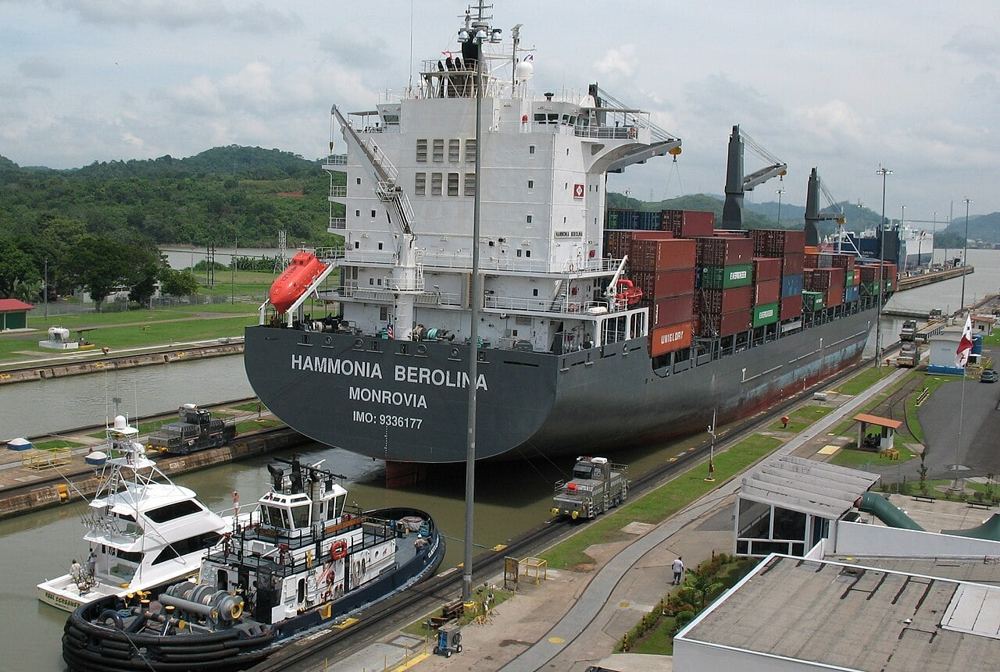
The canal runs on rainwater stored in lakes that refill each wet season. Rain in its watershed has been 34 percent below average this hydrological year, the Panama Canal Authority said in August.