Venezuela Coffee Growers Plan Protests, Say Roasters Pay Up to US$80 Less
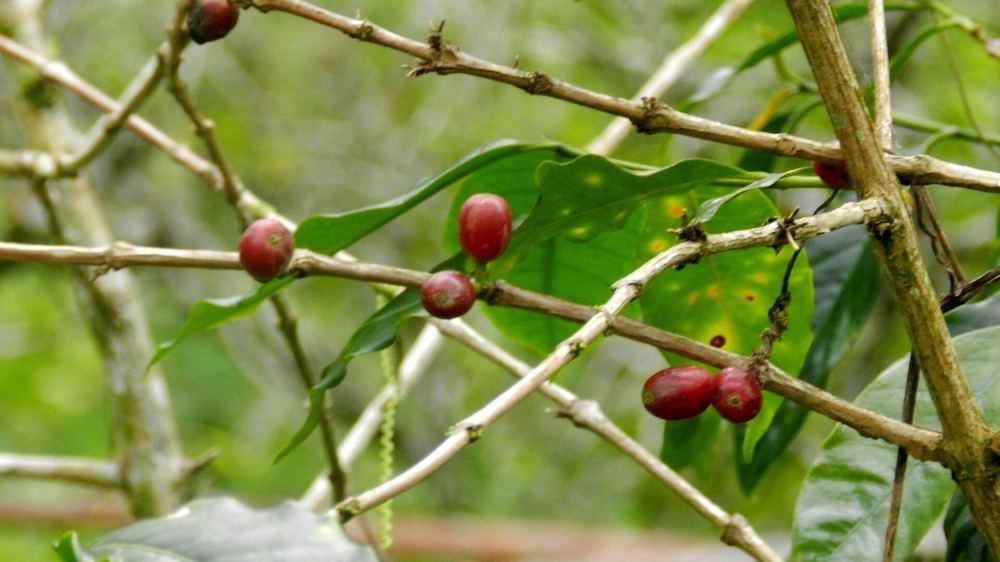
Venezuela coffee growers in Portuguesa and Lara say roasting companies pay up to US$80 a sack less than the prices agreed with the authorities in August, and below their production costs. They met in Araure on 1 October to plan a mobilisation. The post Venezuela Coffee Growers Plan Protests, Say Roasters Pay Up to US$80 Less appeared first on The Rio Times .
Venezuela coffee growers in Portuguesa and Lara states have announced a mobilisation over prices. They say roasting companies pay far less than the rates agreed with the authorities in August.
Growers met in the town of Araure on Thursday 1 October to plan their next steps. They say they are paid US$220 to US$280 a quintal, against agreed prices of US$295 to US$310 and below their costs.
In August, prices of US$295 to US$310 a quintal were set by grade, growers told the news site El Pitazo. Roasters now pay US$220 to US$230, and US$280 at most, they said.
“They are robbing the country’s coffee growers of 70 or 80 dollars a sack,” said Hingi Colmenárez, a grower from Araure. He asked the national government to enforce the agreements signed with the sector.
One grower at the meeting named the roasters Amanecer and Grupo Botalón, among others. “We want the agreed prices to be honoured,” he said.
By the growers’ own cost calculations, a fair price would be US$320 to US$360 a quintal, depending on the type of coffee. Even the August prices fall short of that.
Félix Saavedra, a leader of the sector, put production costs at about US$340 to US$360, or roughly US$350 on average. “We are working at a loss,” he said.
Saavedra also said roasters limit how much they buy. A farmer with 10 or 15 sacks to sell may be told the company can take only two, he said.
The growers say the problem returns with every harvest. A shortfall of US$80 on an agreed US$310 is about a quarter of the price.
The assembly came two days after Rodríguez visited El Cafetal, a commune-owned company in Ospino, Portuguesa. The presidential press office said she met more than 9,000 local coffee producers there.
Rodríguez announced a first export of coffee grown by communes to Europe and the United States, El Pitazo reported. Communes are community organisations that the government promotes to drive production.
She was joined by Agriculture Minister Vladimir Padrino López, a former defence minister, and Portuguesa’s governor, Primitivo Cedeño. The growers say exports do not solve their problem, which is the price paid at the roaster’s door.
Growers from Portuguesa, Lara, Trujillo and other states are weighing new actions against the roasters, Colmenárez said. They called on farmers in the highland areas to join the mobilisation.
No date has been announced, though the regional site Portuguesa Reporta said the growers plan to take their complaint to Caracas. The country’s interior has already seen weeks of night protests over power cuts .
A mobilisation call is not a strike, and the farmers have not said they will stop delivering coffee. Nor has the government said whether it will enforce the August prices.
A quintal is the traditional sack used to sell coffee in Venezuela , weighing about 46 kilograms. Coffee prices between farmers and roasters are quoted per quintal, in US dollars.
Venezuela’s economy has become largely dollarised after years of very high inflation, so many farm prices and contracts are set in US dollars rather than bolívars.
The growers say the prices were agreed with the authorities in August and are meant to bind the roasting companies. They are asking the government to enforce them.
Sources: El Pitazo, coffee growers’ assembly in Araure, 1 October 2026 , Presidential press office, assembly with coffee growers in Ospino (press release), 29 September 2026 , Portuguesa Reporta, coffee growers’ assembly in Araure, 1 October 2026 . All retrieved 2 October 2026.