How NDDC 2026 PSD Conference may turn dialogue into Niger Delta deliverables
Most persons in the oil region had lost interest in dialogues and conferences especially ones organized by the Niger Delta read more How NDDC 2026 PSD Conference may turn dialogue into Niger Delta deliverables
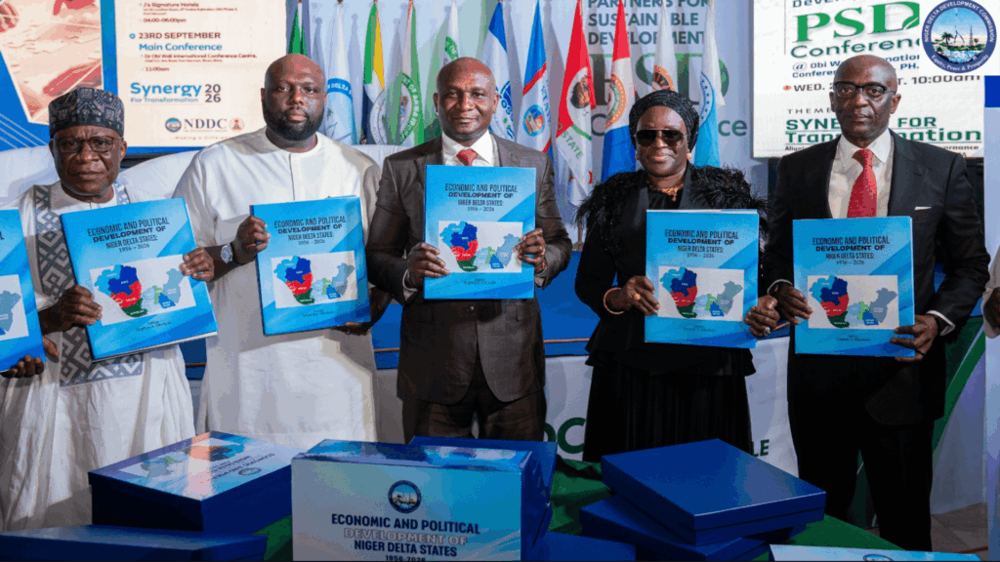
Most persons in the oil region had lost interest in dialogues and conferences especially ones organized by the Niger Delta Development Commission (NDDC) until the coming of the Samuel Ogbuku team. Now, conferences seem to attract much attention and hope. The latest conference is one of them. Thus, inside the air-conditioned hall of the Obi Wali International Conference Centre, Niger Delta stakeholders tried to redefine the pathway to sustainable development in Nigeria’s oil-rich region. A blunt and uncomfortable question hung in the air: After 26 years since the Niger NDDC was established, why does development still feel scattered? That question set the tone for the 2026 Partners for Sustainable Development (PSD) Conference, which was held last week in Port Harcourt. For a day, segments of the Niger Delta people paused to look at itself. The theme hung above them like a challenge: Synergy for Transformation: Aligning Regional Development, Local Governance and Sustainable Partnerships. Ogbuku, the NDDC Managing Director who has made stakeholder engagement his mantra, was direct. “Progress recorded by the Commission is collective. But so are the failures,” he told the hall. “Stakeholders must actively participate and offer ideas that will improve our operations and service delivery,” he added. Then he did something different for an NDDC chief executive. He presented not a new project, but a rule book. A Rule Book, Not Just a Road. The centrepiece of this year’s PSD is a Stakeholder Document, a governance framework that will guide how NDDC plans, awards, monitors and accounts for projects. Attached to it is a Community Monitoring Committee, made up of people from the communities themselves. It is a quiet revolution. For years, communities complained that they only see contractors, not the Commission. This time, the Commission is saying, “You will monitor us.” Asuquo Ekpenyong, Chairman of the Senate Committee on NDDC, understood the weight. He told the stakeholders that the National Assembly would consider amending the NDDC Act of 2002 to embed the master plan and governance framework into law, so it survives beyond any board. Read also: NDDC stresses need for sustainable partnerships to develop Niger Delta The most powerful intervention came from Abubakar Momoh, Minister of Regional Development. No single institution can address the complex challenges of the Niger Delta alone,” Momoh said. His ministry, he revealed, is now drafting a National Policy on Regional Development that will harmonise the master plans of all development commissions, NDDC, North East, South East, South West and others, into one national compass. Theophilus Allagoa, NDDC Director of Community and Rural Development, put it in practical terms: overlapping mandates mean one agency builds a health centre where another just built one, while the next village has no water. The PSD must end that waste. Ogbuku also laid bare how NDDC shares its resources: 50 per cent equality among the nine states, 50 per cent based on oil production ratio. In a region where equity is often contested, the openness was deliberate. Chinyere Ekomaru, deputy governor of Imo State, who represented Gov Hope Uzodinma, called on all nine oil-producing states to partner more sincerely with NDDC. “Renewed Hope must reach the creeks,” she said. And then the symbolic moment: Ogbuku announced that the 1.2km Kaa-Ataba Bridge, a critical link between Khana and Andoni LGAs in Rivers State, cutting hours of travel through the mangroves, will be named after President Bola Ahmed Tinubu. Chiedu Ebie, Chairman of the NDDC board, said the Commission adopted a new Standard Operating Procedure (SOP) and the Governance Advisory Policies, as approved by the Commission’s board. He said both policy instruments shall constitute the Commission’s Rule Book and strictly guide all processes and operations within the Commission. Outside the hall, traders sold roasted corn and bottled water. A youth leader from Bayelsa summed up the mood. “We have heard about synergy before but this time, they gave us a document to hold them accountable. That is new.” The expectation was if the promises of the conference would be realized: whether the community monitoring committees are inaugurated, whether the harmonised master plan becomes law, and whether budget allocations follow the joint priorities. The big picture: Harmonising the Master Plan Momoh delivered the federal government’s clearest policy signal yet. No single institution can fix the Niger Delta alone, he said, and no more scattered projects. The Ministry is now working on a National Policy on Regional Development to harmonise the master plans of all regional development commissions into a single national compass. He urged all commissions to emulate the NDDC in producing comprehensive master plans, noting that a shared view of priorities, supported by reliable data, would help avoid duplicating projects while other communities remain unattended. What changes? For years, PSD conferences were talk-shops. The 2026 edition is trying to be different. Momoh challenged participants to move beyond ceremonial declarations to measurable outcomes, with clearly defined programmes, responsibilities, timelines, and assessment mechanisms. From agriculture and agro-processing to renewable energy, digital services, transport and rural economies, the Minister listed sectors where coordinated investment must flow. The message from Port Harcourt is clear: The Niger Delta does not lack plans; it lacks synergy. The 2026 PSD Conference is betting on a shared governance framework and a harmonised master plan to finally turn partnership into transformation. The major gains: One is a Governance Framework for Accountability. For the first time, the NDDC presented a Stakeholder Document to serve as a governance framework for its operations. Presented by the NDDC CEO, the document institutionalises ethics, corporate governance, and community monitoring. Ogbuku said building trust with all partners was crucial to secure their buy-in and confidence. “In this respect, we have established processes to ensure that a new institutional culture, anchored in sound ethics and good corporate governance, is in place,” he said. He pointed out that the NDDC had a duty to harness resources from stakeholders, saying: “We have gathered at this conference to hear from the stakeholders to interact with them and rub minds because we realise that we cannot be planning programmes for the region without involving them at the foundational level. Ogbuku stated: “KPMG, a reputable global business consultancy, has reviewed our processes to strengthen our corporate governance system. We now have a robust Corporate Governance structure that fosters accountability and transparency, backed by a clear and measurable set of Key Performance Indicators (KPIs) to track progress toward goals.” The NDDC boss said the emphasis on collaboration aligns with the policies of President Bola Ahmed Tinubu’s administration, which he said prioritises carrying stakeholders along in the development process, and that President Tinubu was interested in seeing legacy projects in the Niger Delta. In essence, the 2026 PSD Conference marks a shift from NDDC as a contract-awarding agency to NDDC as a partnership coordinator. As Minister Momoh put it: “No single institution can address the region’s complex infrastructure, economic, and environmental challenges alone.” For now, the 2026 PSD Conference has done what many before it failed to do: it shifted the conversation from who builds the project to how we all own the development. Share
Thus, inside the air-conditioned hall of the Obi Wali International Conference Centre, Niger Delta stakeholders tried to redefine the pathway to sustainable development in Nigeria’s oil-rich region. A blunt and uncomfortable question hung in the air: After 26 years since the Niger NDDC was established, why does development still feel scattered? That question set the tone for the 2026 Partners for Sustainable Development (PSD) Conference, which was held last week in Port Harcourt. For a day, segments of the Niger Delta people paused to look at itself. The theme hung above them like a challenge: Synergy for Transformation: Aligning Regional Development, Local Governance and Sustainable Partnerships. Ogbuku, the NDDC Managing Director who has made stakeholder engagement his mantra, was direct. “Progress recorded by the Commission is collective. But so are the failures,” he told the hall. “Stakeholders must actively participate and offer ideas that will improve our operations and service delivery,” he added. Then he did something different for an NDDC chief executive. He presented not a new project, but a rule book. A Rule Book, Not Just a Road. The centrepiece of this year’s PSD is a Stakeholder Document, a governance framework that will guide how NDDC plans, awards, monitors and accounts for projects. Attached to it is a Community Monitoring Committee, made up of people from the communities themselves. It is a quiet revolution. For years, communities complained that they only see contractors, not the Commission. This time, the Commission is saying, “You will monitor us.” Asuquo Ekpenyong, Chairman of the Senate Committee on NDDC, understood the weight. He told the stakeholders that the National Assembly would consider amending the NDDC Act of 2002 to embed the master plan and governance framework into law, so it survives beyond any board. Read also: NDDC stresses need for sustainable partnerships to develop Niger Delta The most powerful intervention came from Abubakar Momoh, Minister of Regional Development. No single institution can address the complex challenges of the Niger Delta alone,” Momoh said. His ministry, he revealed, is now drafting a National Policy on Regional Development that will harmonise the master plans of all development commissions, NDDC, North East, South East, South West and others, into one national compass. Theophilus Allagoa, NDDC Director of Community and Rural Development, put it in practical terms: overlapping mandates mean one agency builds a health centre where another just built one, while the next village has no water. The PSD must end that waste. Ogbuku also laid bare how NDDC shares its resources: 50 per cent equality among the nine states, 50 per cent based on oil production ratio. In a region where equity is often contested, the openness was deliberate. Chinyere Ekomaru, deputy governor of Imo State, who represented Gov Hope Uzodinma, called on all nine oil-producing states to partner more sincerely with NDDC. “Renewed Hope must reach the creeks,” she said. And then the symbolic moment: Ogbuku announced that the 1.2km Kaa-Ataba Bridge, a critical link between Khana and Andoni LGAs in Rivers State, cutting hours of travel through the mangroves, will be named after President Bola Ahmed Tinubu. Chiedu Ebie, Chairman of the NDDC board, said the Commission adopted a new Standard Operating Procedure (SOP) and the Governance Advisory Policies, as approved by the Commission’s board. He said both policy instruments shall constitute the Commission’s Rule Book and strictly guide all processes and operations within the Commission. Outside the hall, traders sold roasted corn and bottled water. A youth leader from Bayelsa summed up the mood. “We have heard about synergy before but this time, they gave us a document to hold them accountable. That is new.” The expectation was if the promises of the conference would be realized: whether the community monitoring committees are inaugurated, whether the harmonised master plan becomes law, and whether budget allocations follow the joint priorities. The big picture: Harmonising the Master Plan Momoh delivered the federal government’s clearest policy signal yet. No single institution can fix the Niger Delta alone, he said, and no more scattered projects. The Ministry is now working on a National Policy on Regional Development to harmonise the master plans of all regional development commissions into a single national compass. He urged all commissions to emulate the NDDC in producing comprehensive master plans, noting that a shared view of priorities, supported by reliable data, would help avoid duplicating projects while other communities remain unattended. What changes? For years, PSD conferences were talk-shops. The 2026 edition is trying to be different. Momoh challenged participants to move beyond ceremonial declarations to measurable outcomes, with clearly defined programmes, responsibilities, timelines, and assessment mechanisms. From agriculture and agro-processing to renewable energy, digital services, transport and rural economies, the Minister listed sectors where coordinated investment must flow. The message from Port Harcourt is clear: The Niger Delta does not lack plans; it lacks synergy. The 2026 PSD Conference is betting on a shared governance framework and a harmonised master plan to finally turn partnership into transformation. The major gains: One is a Governance Framework for Accountability. For the first time, the NDDC presented a Stakeholder Document to serve as a governance framework for its operations. Presented by the NDDC CEO, the document institutionalises ethics, corporate governance, and community monitoring. Ogbuku said building trust with all partners was crucial to secure their buy-in and confidence. “In this respect, we have established processes to ensure that a new institutional culture, anchored in sound ethics and good corporate governance, is in place,” he said. He pointed out that the NDDC had a duty to harness resources from stakeholders, saying: “We have gathered at this conference to hear from the stakeholders to interact with them and rub minds because we realise that we cannot be planning programmes for the region without involving them at the foundational level. Ogbuku stated: “KPMG, a reputable global business consultancy, has reviewed our processes to strengthen our corporate governance system. We now have a robust Corporate Governance structure that fosters accountability and transparency, backed by a clear and measurable set of Key Performance Indicators (KPIs) to track progress toward goals.” The NDDC boss said the emphasis on collaboration aligns with the policies of President Bola Ahmed Tinubu’s administration, which he said prioritises carrying stakeholders along in the development process, and that President Tinubu was interested in seeing legacy projects in the Niger Delta. In essence, the 2026 PSD Conference marks a shift from NDDC as a contract-awarding agency to NDDC as a partnership coordinator. As Minister Momoh put it: “No single institution can address the region’s complex infrastructure, economic, and environmental challenges alone.” For now, the 2026 PSD Conference has done what many before it failed to do: it shifted the conversation from who builds the project to how we all own the development. Share
A blunt and uncomfortable question hung in the air: After 26 years since the Niger NDDC was established, why does development still feel scattered? That question set the tone for the 2026 Partners for Sustainable Development (PSD) Conference, which was held last week in Port Harcourt. For a day, segments of the Niger Delta people paused to look at itself. The theme hung above them like a challenge: Synergy for Transformation: Aligning Regional Development, Local Governance and Sustainable Partnerships. Ogbuku, the NDDC Managing Director who has made stakeholder engagement his mantra, was direct. “Progress recorded by the Commission is collective. But so are the failures,” he told the hall. “Stakeholders must actively participate and offer ideas that will improve our operations and service delivery,” he added. Then he did something different for an NDDC chief executive. He presented not a new project, but a rule book. A Rule Book, Not Just a Road. The centrepiece of this year’s PSD is a Stakeholder Document, a governance framework that will guide how NDDC plans, awards, monitors and accounts for projects. Attached to it is a Community Monitoring Committee, made up of people from the communities themselves. It is a quiet revolution. For years, communities complained that they only see contractors, not the Commission. This time, the Commission is saying, “You will monitor us.” Asuquo Ekpenyong, Chairman of the Senate Committee on NDDC, understood the weight. He told the stakeholders that the National Assembly would consider amending the NDDC Act of 2002 to embed the master plan and governance framework into law, so it survives beyond any board. Read also: NDDC stresses need for sustainable partnerships to develop Niger Delta The most powerful intervention came from Abubakar Momoh, Minister of Regional Development. No single institution can address the complex challenges of the Niger Delta alone,” Momoh said. His ministry, he revealed, is now drafting a National Policy on Regional Development that will harmonise the master plans of all development commissions, NDDC, North East, South East, South West and others, into one national compass. Theophilus Allagoa, NDDC Director of Community and Rural Development, put it in practical terms: overlapping mandates mean one agency builds a health centre where another just built one, while the next village has no water. The PSD must end that waste. Ogbuku also laid bare how NDDC shares its resources: 50 per cent equality among the nine states, 50 per cent based on oil production ratio. In a region where equity is often contested, the openness was deliberate. Chinyere Ekomaru, deputy governor of Imo State, who represented Gov Hope Uzodinma, called on all nine oil-producing states to partner more sincerely with NDDC. “Renewed Hope must reach the creeks,” she said. And then the symbolic moment: Ogbuku announced that the 1.2km Kaa-Ataba Bridge, a critical link between Khana and Andoni LGAs in Rivers State, cutting hours of travel through the mangroves, will be named after President Bola Ahmed Tinubu. Chiedu Ebie, Chairman of the NDDC board, said the Commission adopted a new Standard Operating Procedure (SOP) and the Governance Advisory Policies, as approved by the Commission’s board. He said both policy instruments shall constitute the Commission’s Rule Book and strictly guide all processes and operations within the Commission. Outside the hall, traders sold roasted corn and bottled water. A youth leader from Bayelsa summed up the mood. “We have heard about synergy before but this time, they gave us a document to hold them accountable. That is new.” The expectation was if the promises of the conference would be realized: whether the community monitoring committees are inaugurated, whether the harmonised master plan becomes law, and whether budget allocations follow the joint priorities. The big picture: Harmonising the Master Plan Momoh delivered the federal government’s clearest policy signal yet. No single institution can fix the Niger Delta alone, he said, and no more scattered projects. The Ministry is now working on a National Policy on Regional Development to harmonise the master plans of all regional development commissions into a single national compass. He urged all commissions to emulate the NDDC in producing comprehensive master plans, noting that a shared view of priorities, supported by reliable data, would help avoid duplicating projects while other communities remain unattended. What changes? For years, PSD conferences were talk-shops. The 2026 edition is trying to be different. Momoh challenged participants to move beyond ceremonial declarations to measurable outcomes, with clearly defined programmes, responsibilities, timelines, and assessment mechanisms. From agriculture and agro-processing to renewable energy, digital services, transport and rural economies, the Minister listed sectors where coordinated investment must flow. The message from Port Harcourt is clear: The Niger Delta does not lack plans; it lacks synergy. The 2026 PSD Conference is betting on a shared governance framework and a harmonised master plan to finally turn partnership into transformation. The major gains: One is a Governance Framework for Accountability. For the first time, the NDDC presented a Stakeholder Document to serve as a governance framework for its operations. Presented by the NDDC CEO, the document institutionalises ethics, corporate governance, and community monitoring. Ogbuku said building trust with all partners was crucial to secure their buy-in and confidence. “In this respect, we have established processes to ensure that a new institutional culture, anchored in sound ethics and good corporate governance, is in place,” he said. He pointed out that the NDDC had a duty to harness resources from stakeholders, saying: “We have gathered at this conference to hear from the stakeholders to interact with them and rub minds because we realise that we cannot be planning programmes for the region without involving them at the foundational level. Ogbuku stated: “KPMG, a reputable global business consultancy, has reviewed our processes to strengthen our corporate governance system. We now have a robust Corporate Governance structure that fosters accountability and transparency, backed by a clear and measurable set of Key Performance Indicators (KPIs) to track progress toward goals.” The NDDC boss said the emphasis on collaboration aligns with the policies of President Bola Ahmed Tinubu’s administration, which he said prioritises carrying stakeholders along in the development process, and that President Tinubu was interested in seeing legacy projects in the Niger Delta. In essence, the 2026 PSD Conference marks a shift from NDDC as a contract-awarding agency to NDDC as a partnership coordinator. As Minister Momoh put it: “No single institution can address the region’s complex infrastructure, economic, and environmental challenges alone.” For now, the 2026 PSD Conference has done what many before it failed to do: it shifted the conversation from who builds the project to how we all own the development. Share
That question set the tone for the 2026 Partners for Sustainable Development (PSD) Conference, which was held last week in Port Harcourt. For a day, segments of the Niger Delta people paused to look at itself. The theme hung above them like a challenge: Synergy for Transformation: Aligning Regional Development, Local Governance and Sustainable Partnerships. Ogbuku, the NDDC Managing Director who has made stakeholder engagement his mantra, was direct. “Progress recorded by the Commission is collective. But so are the failures,” he told the hall. “Stakeholders must actively participate and offer ideas that will improve our operations and service delivery,” he added. Then he did something different for an NDDC chief executive. He presented not a new project, but a rule book. A Rule Book, Not Just a Road. The centrepiece of this year’s PSD is a Stakeholder Document, a governance framework that will guide how NDDC plans, awards, monitors and accounts for projects. Attached to it is a Community Monitoring Committee, made up of people from the communities themselves. It is a quiet revolution. For years, communities complained that they only see contractors, not the Commission. This time, the Commission is saying, “You will monitor us.” Asuquo Ekpenyong, Chairman of the Senate Committee on NDDC, understood the weight. He told the stakeholders that the National Assembly would consider amending the NDDC Act of 2002 to embed the master plan and governance framework into law, so it survives beyond any board. Read also: NDDC stresses need for sustainable partnerships to develop Niger Delta The most powerful intervention came from Abubakar Momoh, Minister of Regional Development. No single institution can address the complex challenges of the Niger Delta alone,” Momoh said. His ministry, he revealed, is now drafting a National Policy on Regional Development that will harmonise the master plans of all development commissions, NDDC, North East, South East, South West and others, into one national compass. Theophilus Allagoa, NDDC Director of Community and Rural Development, put it in practical terms: overlapping mandates mean one agency builds a health centre where another just built one, while the next village has no water. The PSD must end that waste. Ogbuku also laid bare how NDDC shares its resources: 50 per cent equality among the nine states, 50 per cent based on oil production ratio. In a region where equity is often contested, the openness was deliberate. Chinyere Ekomaru, deputy governor of Imo State, who represented Gov Hope Uzodinma, called on all nine oil-producing states to partner more sincerely with NDDC. “Renewed Hope must reach the creeks,” she said. And then the symbolic moment: Ogbuku announced that the 1.2km Kaa-Ataba Bridge, a critical link between Khana and Andoni LGAs in Rivers State, cutting hours of travel through the mangroves, will be named after President Bola Ahmed Tinubu. Chiedu Ebie, Chairman of the NDDC board, said the Commission adopted a new Standard Operating Procedure (SOP) and the Governance Advisory Policies, as approved by the Commission’s board. He said both policy instruments shall constitute the Commission’s Rule Book and strictly guide all processes and operations within the Commission. Outside the hall, traders sold roasted corn and bottled water. A youth leader from Bayelsa summed up the mood. “We have heard about synergy before but this time, they gave us a document to hold them accountable. That is new.” The expectation was if the promises of the conference would be realized: whether the community monitoring committees are inaugurated, whether the harmonised master plan becomes law, and whether budget allocations follow the joint priorities. The big picture: Harmonising the Master Plan Momoh delivered the federal government’s clearest policy signal yet. No single institution can fix the Niger Delta alone, he said, and no more scattered projects. The Ministry is now working on a National Policy on Regional Development to harmonise the master plans of all regional development commissions into a single national compass. He urged all commissions to emulate the NDDC in producing comprehensive master plans, noting that a shared view of priorities, supported by reliable data, would help avoid duplicating projects while other communities remain unattended. What changes? For years, PSD conferences were talk-shops. The 2026 edition is trying to be different. Momoh challenged participants to move beyond ceremonial declarations to measurable outcomes, with clearly defined programmes, responsibilities, timelines, and assessment mechanisms. From agriculture and agro-processing to renewable energy, digital services, transport and rural economies, the Minister listed sectors where coordinated investment must flow. The message from Port Harcourt is clear: The Niger Delta does not lack plans; it lacks synergy. The 2026 PSD Conference is betting on a shared governance framework and a harmonised master plan to finally turn partnership into transformation. The major gains: One is a Governance Framework for Accountability. For the first time, the NDDC presented a Stakeholder Document to serve as a governance framework for its operations. Presented by the NDDC CEO, the document institutionalises ethics, corporate governance, and community monitoring. Ogbuku said building trust with all partners was crucial to secure their buy-in and confidence. “In this respect, we have established processes to ensure that a new institutional culture, anchored in sound ethics and good corporate governance, is in place,” he said. He pointed out that the NDDC had a duty to harness resources from stakeholders, saying: “We have gathered at this conference to hear from the stakeholders to interact with them and rub minds because we realise that we cannot be planning programmes for the region without involving them at the foundational level. Ogbuku stated: “KPMG, a reputable global business consultancy, has reviewed our processes to strengthen our corporate governance system. We now have a robust Corporate Governance structure that fosters accountability and transparency, backed by a clear and measurable set of Key Performance Indicators (KPIs) to track progress toward goals.” The NDDC boss said the emphasis on collaboration aligns with the policies of President Bola Ahmed Tinubu’s administration, which he said prioritises carrying stakeholders along in the development process, and that President Tinubu was interested in seeing legacy projects in the Niger Delta. In essence, the 2026 PSD Conference marks a shift from NDDC as a contract-awarding agency to NDDC as a partnership coordinator. As Minister Momoh put it: “No single institution can address the region’s complex infrastructure, economic, and environmental challenges alone.” For now, the 2026 PSD Conference has done what many before it failed to do: it shifted the conversation from who builds the project to how we all own the development. Share
For a day, segments of the Niger Delta people paused to look at itself. The theme hung above them like a challenge: Synergy for Transformation: Aligning Regional Development, Local Governance and Sustainable Partnerships. Ogbuku, the NDDC Managing Director who has made stakeholder engagement his mantra, was direct. “Progress recorded by the Commission is collective. But so are the failures,” he told the hall. “Stakeholders must actively participate and offer ideas that will improve our operations and service delivery,” he added. Then he did something different for an NDDC chief executive. He presented not a new project, but a rule book. A Rule Book, Not Just a Road. The centrepiece of this year’s PSD is a Stakeholder Document, a governance framework that will guide how NDDC plans, awards, monitors and accounts for projects. Attached to it is a Community Monitoring Committee, made up of people from the communities themselves. It is a quiet revolution. For years, communities complained that they only see contractors, not the Commission. This time, the Commission is saying, “You will monitor us.” Asuquo Ekpenyong, Chairman of the Senate Committee on NDDC, understood the weight. He told the stakeholders that the National Assembly would consider amending the NDDC Act of 2002 to embed the master plan and governance framework into law, so it survives beyond any board. Read also: NDDC stresses need for sustainable partnerships to develop Niger Delta The most powerful intervention came from Abubakar Momoh, Minister of Regional Development. No single institution can address the complex challenges of the Niger Delta alone,” Momoh said. His ministry, he revealed, is now drafting a National Policy on Regional Development that will harmonise the master plans of all development commissions, NDDC, North East, South East, South West and others, into one national compass. Theophilus Allagoa, NDDC Director of Community and Rural Development, put it in practical terms: overlapping mandates mean one agency builds a health centre where another just built one, while the next village has no water. The PSD must end that waste. Ogbuku also laid bare how NDDC shares its resources: 50 per cent equality among the nine states, 50 per cent based on oil production ratio. In a region where equity is often contested, the openness was deliberate. Chinyere Ekomaru, deputy governor of Imo State, who represented Gov Hope Uzodinma, called on all nine oil-producing states to partner more sincerely with NDDC. “Renewed Hope must reach the creeks,” she said. And then the symbolic moment: Ogbuku announced that the 1.2km Kaa-Ataba Bridge, a critical link between Khana and Andoni LGAs in Rivers State, cutting hours of travel through the mangroves, will be named after President Bola Ahmed Tinubu. Chiedu Ebie, Chairman of the NDDC board, said the Commission adopted a new Standard Operating Procedure (SOP) and the Governance Advisory Policies, as approved by the Commission’s board. He said both policy instruments shall constitute the Commission’s Rule Book and strictly guide all processes and operations within the Commission. Outside the hall, traders sold roasted corn and bottled water. A youth leader from Bayelsa summed up the mood. “We have heard about synergy before but this time, they gave us a document to hold them accountable. That is new.” The expectation was if the promises of the conference would be realized: whether the community monitoring committees are inaugurated, whether the harmonised master plan becomes law, and whether budget allocations follow the joint priorities. The big picture: Harmonising the Master Plan Momoh delivered the federal government’s clearest policy signal yet. No single institution can fix the Niger Delta alone, he said, and no more scattered projects. The Ministry is now working on a National Policy on Regional Development to harmonise the master plans of all regional development commissions into a single national compass. He urged all commissions to emulate the NDDC in producing comprehensive master plans, noting that a shared view of priorities, supported by reliable data, would help avoid duplicating projects while other communities remain unattended. What changes? For years, PSD conferences were talk-shops. The 2026 edition is trying to be different. Momoh challenged participants to move beyond ceremonial declarations to measurable outcomes, with clearly defined programmes, responsibilities, timelines, and assessment mechanisms. From agriculture and agro-processing to renewable energy, digital services, transport and rural economies, the Minister listed sectors where coordinated investment must flow. The message from Port Harcourt is clear: The Niger Delta does not lack plans; it lacks synergy. The 2026 PSD Conference is betting on a shared governance framework and a harmonised master plan to finally turn partnership into transformation. The major gains: One is a Governance Framework for Accountability. For the first time, the NDDC presented a Stakeholder Document to serve as a governance framework for its operations. Presented by the NDDC CEO, the document institutionalises ethics, corporate governance, and community monitoring. Ogbuku said building trust with all partners was crucial to secure their buy-in and confidence. “In this respect, we have established processes to ensure that a new institutional culture, anchored in sound ethics and good corporate governance, is in place,” he said. He pointed out that the NDDC had a duty to harness resources from stakeholders, saying: “We have gathered at this conference to hear from the stakeholders to interact with them and rub minds because we realise that we cannot be planning programmes for the region without involving them at the foundational level. Ogbuku stated: “KPMG, a reputable global business consultancy, has reviewed our processes to strengthen our corporate governance system. We now have a robust Corporate Governance structure that fosters accountability and transparency, backed by a clear and measurable set of Key Performance Indicators (KPIs) to track progress toward goals.” The NDDC boss said the emphasis on collaboration aligns with the policies of President Bola Ahmed Tinubu’s administration, which he said prioritises carrying stakeholders along in the development process, and that President Tinubu was interested in seeing legacy projects in the Niger Delta. In essence, the 2026 PSD Conference marks a shift from NDDC as a contract-awarding agency to NDDC as a partnership coordinator. As Minister Momoh put it: “No single institution can address the region’s complex infrastructure, economic, and environmental challenges alone.” For now, the 2026 PSD Conference has done what many before it failed to do: it shifted the conversation from who builds the project to how we all own the development. Share
Ogbuku, the NDDC Managing Director who has made stakeholder engagement his mantra, was direct. “Progress recorded by the Commission is collective. But so are the failures,” he told the hall. “Stakeholders must actively participate and offer ideas that will improve our operations and service delivery,” he added. Then he did something different for an NDDC chief executive. He presented not a new project, but a rule book. A Rule Book, Not Just a Road. The centrepiece of this year’s PSD is a Stakeholder Document, a governance framework that will guide how NDDC plans, awards, monitors and accounts for projects. Attached to it is a Community Monitoring Committee, made up of people from the communities themselves. It is a quiet revolution. For years, communities complained that they only see contractors, not the Commission. This time, the Commission is saying, “You will monitor us.” Asuquo Ekpenyong, Chairman of the Senate Committee on NDDC, understood the weight. He told the stakeholders that the National Assembly would consider amending the NDDC Act of 2002 to embed the master plan and governance framework into law, so it survives beyond any board. Read also: NDDC stresses need for sustainable partnerships to develop Niger Delta The most powerful intervention came from Abubakar Momoh, Minister of Regional Development. No single institution can address the complex challenges of the Niger Delta alone,” Momoh said. His ministry, he revealed, is now drafting a National Policy on Regional Development that will harmonise the master plans of all development commissions, NDDC, North East, South East, South West and others, into one national compass. Theophilus Allagoa, NDDC Director of Community and Rural Development, put it in practical terms: overlapping mandates mean one agency builds a health centre where another just built one, while the next village has no water. The PSD must end that waste. Ogbuku also laid bare how NDDC shares its resources: 50 per cent equality among the nine states, 50 per cent based on oil production ratio. In a region where equity is often contested, the openness was deliberate. Chinyere Ekomaru, deputy governor of Imo State, who represented Gov Hope Uzodinma, called on all nine oil-producing states to partner more sincerely with NDDC. “Renewed Hope must reach the creeks,” she said. And then the symbolic moment: Ogbuku announced that the 1.2km Kaa-Ataba Bridge, a critical link between Khana and Andoni LGAs in Rivers State, cutting hours of travel through the mangroves, will be named after President Bola Ahmed Tinubu. Chiedu Ebie, Chairman of the NDDC board, said the Commission adopted a new Standard Operating Procedure (SOP) and the Governance Advisory Policies, as approved by the Commission’s board. He said both policy instruments shall constitute the Commission’s Rule Book and strictly guide all processes and operations within the Commission. Outside the hall, traders sold roasted corn and bottled water. A youth leader from Bayelsa summed up the mood. “We have heard about synergy before but this time, they gave us a document to hold them accountable. That is new.” The expectation was if the promises of the conference would be realized: whether the community monitoring committees are inaugurated, whether the harmonised master plan becomes law, and whether budget allocations follow the joint priorities. The big picture: Harmonising the Master Plan Momoh delivered the federal government’s clearest policy signal yet. No single institution can fix the Niger Delta alone, he said, and no more scattered projects. The Ministry is now working on a National Policy on Regional Development to harmonise the master plans of all regional development commissions into a single national compass. He urged all commissions to emulate the NDDC in producing comprehensive master plans, noting that a shared view of priorities, supported by reliable data, would help avoid duplicating projects while other communities remain unattended. What changes? For years, PSD conferences were talk-shops. The 2026 edition is trying to be different. Momoh challenged participants to move beyond ceremonial declarations to measurable outcomes, with clearly defined programmes, responsibilities, timelines, and assessment mechanisms. From agriculture and agro-processing to renewable energy, digital services, transport and rural economies, the Minister listed sectors where coordinated investment must flow. The message from Port Harcourt is clear: The Niger Delta does not lack plans; it lacks synergy. The 2026 PSD Conference is betting on a shared governance framework and a harmonised master plan to finally turn partnership into transformation. The major gains: One is a Governance Framework for Accountability. For the first time, the NDDC presented a Stakeholder Document to serve as a governance framework for its operations. Presented by the NDDC CEO, the document institutionalises ethics, corporate governance, and community monitoring. Ogbuku said building trust with all partners was crucial to secure their buy-in and confidence. “In this respect, we have established processes to ensure that a new institutional culture, anchored in sound ethics and good corporate governance, is in place,” he said. He pointed out that the NDDC had a duty to harness resources from stakeholders, saying: “We have gathered at this conference to hear from the stakeholders to interact with them and rub minds because we realise that we cannot be planning programmes for the region without involving them at the foundational level. Ogbuku stated: “KPMG, a reputable global business consultancy, has reviewed our processes to strengthen our corporate governance system. We now have a robust Corporate Governance structure that fosters accountability and transparency, backed by a clear and measurable set of Key Performance Indicators (KPIs) to track progress toward goals.” The NDDC boss said the emphasis on collaboration aligns with the policies of President Bola Ahmed Tinubu’s administration, which he said prioritises carrying stakeholders along in the development process, and that President Tinubu was interested in seeing legacy projects in the Niger Delta. In essence, the 2026 PSD Conference marks a shift from NDDC as a contract-awarding agency to NDDC as a partnership coordinator. As Minister Momoh put it: “No single institution can address the region’s complex infrastructure, economic, and environmental challenges alone.” For now, the 2026 PSD Conference has done what many before it failed to do: it shifted the conversation from who builds the project to how we all own the development. Share
“Stakeholders must actively participate and offer ideas that will improve our operations and service delivery,” he added. Then he did something different for an NDDC chief executive. He presented not a new project, but a rule book. A Rule Book, Not Just a Road. The centrepiece of this year’s PSD is a Stakeholder Document, a governance framework that will guide how NDDC plans, awards, monitors and accounts for projects. Attached to it is a Community Monitoring Committee, made up of people from the communities themselves. It is a quiet revolution. For years, communities complained that they only see contractors, not the Commission. This time, the Commission is saying, “You will monitor us.” Asuquo Ekpenyong, Chairman of the Senate Committee on NDDC, understood the weight. He told the stakeholders that the National Assembly would consider amending the NDDC Act of 2002 to embed the master plan and governance framework into law, so it survives beyond any board. Read also: NDDC stresses need for sustainable partnerships to develop Niger Delta The most powerful intervention came from Abubakar Momoh, Minister of Regional Development. No single institution can address the complex challenges of the Niger Delta alone,” Momoh said. His ministry, he revealed, is now drafting a National Policy on Regional Development that will harmonise the master plans of all development commissions, NDDC, North East, South East, South West and others, into one national compass. Theophilus Allagoa, NDDC Director of Community and Rural Development, put it in practical terms: overlapping mandates mean one agency builds a health centre where another just built one, while the next village has no water. The PSD must end that waste. Ogbuku also laid bare how NDDC shares its resources: 50 per cent equality among the nine states, 50 per cent based on oil production ratio. In a region where equity is often contested, the openness was deliberate. Chinyere Ekomaru, deputy governor of Imo State, who represented Gov Hope Uzodinma, called on all nine oil-producing states to partner more sincerely with NDDC. “Renewed Hope must reach the creeks,” she said. And then the symbolic moment: Ogbuku announced that the 1.2km Kaa-Ataba Bridge, a critical link between Khana and Andoni LGAs in Rivers State, cutting hours of travel through the mangroves, will be named after President Bola Ahmed Tinubu. Chiedu Ebie, Chairman of the NDDC board, said the Commission adopted a new Standard Operating Procedure (SOP) and the Governance Advisory Policies, as approved by the Commission’s board. He said both policy instruments shall constitute the Commission’s Rule Book and strictly guide all processes and operations within the Commission. Outside the hall, traders sold roasted corn and bottled water. A youth leader from Bayelsa summed up the mood. “We have heard about synergy before but this time, they gave us a document to hold them accountable. That is new.” The expectation was if the promises of the conference would be realized: whether the community monitoring committees are inaugurated, whether the harmonised master plan becomes law, and whether budget allocations follow the joint priorities. The big picture: Harmonising the Master Plan Momoh delivered the federal government’s clearest policy signal yet. No single institution can fix the Niger Delta alone, he said, and no more scattered projects. The Ministry is now working on a National Policy on Regional Development to harmonise the master plans of all regional development commissions into a single national compass. He urged all commissions to emulate the NDDC in producing comprehensive master plans, noting that a shared view of priorities, supported by reliable data, would help avoid duplicating projects while other communities remain unattended. What changes? For years, PSD conferences were talk-shops. The 2026 edition is trying to be different. Momoh challenged participants to move beyond ceremonial declarations to measurable outcomes, with clearly defined programmes, responsibilities, timelines, and assessment mechanisms. From agriculture and agro-processing to renewable energy, digital services, transport and rural economies, the Minister listed sectors where coordinated investment must flow. The message from Port Harcourt is clear: The Niger Delta does not lack plans; it lacks synergy. The 2026 PSD Conference is betting on a shared governance framework and a harmonised master plan to finally turn partnership into transformation. The major gains: One is a Governance Framework for Accountability. For the first time, the NDDC presented a Stakeholder Document to serve as a governance framework for its operations. Presented by the NDDC CEO, the document institutionalises ethics, corporate governance, and community monitoring. Ogbuku said building trust with all partners was crucial to secure their buy-in and confidence. “In this respect, we have established processes to ensure that a new institutional culture, anchored in sound ethics and good corporate governance, is in place,” he said. He pointed out that the NDDC had a duty to harness resources from stakeholders, saying: “We have gathered at this conference to hear from the stakeholders to interact with them and rub minds because we realise that we cannot be planning programmes for the region without involving them at the foundational level. Ogbuku stated: “KPMG, a reputable global business consultancy, has reviewed our processes to strengthen our corporate governance system. We now have a robust Corporate Governance structure that fosters accountability and transparency, backed by a clear and measurable set of Key Performance Indicators (KPIs) to track progress toward goals.” The NDDC boss said the emphasis on collaboration aligns with the policies of President Bola Ahmed Tinubu’s administration, which he said prioritises carrying stakeholders along in the development process, and that President Tinubu was interested in seeing legacy projects in the Niger Delta. In essence, the 2026 PSD Conference marks a shift from NDDC as a contract-awarding agency to NDDC as a partnership coordinator. As Minister Momoh put it: “No single institution can address the region’s complex infrastructure, economic, and environmental challenges alone.” For now, the 2026 PSD Conference has done what many before it failed to do: it shifted the conversation from who builds the project to how we all own the development. Share
Then he did something different for an NDDC chief executive. He presented not a new project, but a rule book. A Rule Book, Not Just a Road. The centrepiece of this year’s PSD is a Stakeholder Document, a governance framework that will guide how NDDC plans, awards, monitors and accounts for projects. Attached to it is a Community Monitoring Committee, made up of people from the communities themselves. It is a quiet revolution. For years, communities complained that they only see contractors, not the Commission. This time, the Commission is saying, “You will monitor us.” Asuquo Ekpenyong, Chairman of the Senate Committee on NDDC, understood the weight. He told the stakeholders that the National Assembly would consider amending the NDDC Act of 2002 to embed the master plan and governance framework into law, so it survives beyond any board. Read also: NDDC stresses need for sustainable partnerships to develop Niger Delta The most powerful intervention came from Abubakar Momoh, Minister of Regional Development. No single institution can address the complex challenges of the Niger Delta alone,” Momoh said. His ministry, he revealed, is now drafting a National Policy on Regional Development that will harmonise the master plans of all development commissions, NDDC, North East, South East, South West and others, into one national compass. Theophilus Allagoa, NDDC Director of Community and Rural Development, put it in practical terms: overlapping mandates mean one agency builds a health centre where another just built one, while the next village has no water. The PSD must end that waste. Ogbuku also laid bare how NDDC shares its resources: 50 per cent equality among the nine states, 50 per cent based on oil production ratio. In a region where equity is often contested, the openness was deliberate. Chinyere Ekomaru, deputy governor of Imo State, who represented Gov Hope Uzodinma, called on all nine oil-producing states to partner more sincerely with NDDC. “Renewed Hope must reach the creeks,” she said. And then the symbolic moment: Ogbuku announced that the 1.2km Kaa-Ataba Bridge, a critical link between Khana and Andoni LGAs in Rivers State, cutting hours of travel through the mangroves, will be named after President Bola Ahmed Tinubu. Chiedu Ebie, Chairman of the NDDC board, said the Commission adopted a new Standard Operating Procedure (SOP) and the Governance Advisory Policies, as approved by the Commission’s board. He said both policy instruments shall constitute the Commission’s Rule Book and strictly guide all processes and operations within the Commission. Outside the hall, traders sold roasted corn and bottled water. A youth leader from Bayelsa summed up the mood. “We have heard about synergy before but this time, they gave us a document to hold them accountable. That is new.” The expectation was if the promises of the conference would be realized: whether the community monitoring committees are inaugurated, whether the harmonised master plan becomes law, and whether budget allocations follow the joint priorities. The big picture: Harmonising the Master Plan Momoh delivered the federal government’s clearest policy signal yet. No single institution can fix the Niger Delta alone, he said, and no more scattered projects. The Ministry is now working on a National Policy on Regional Development to harmonise the master plans of all regional development commissions into a single national compass. He urged all commissions to emulate the NDDC in producing comprehensive master plans, noting that a shared view of priorities, supported by reliable data, would help avoid duplicating projects while other communities remain unattended. What changes? For years, PSD conferences were talk-shops. The 2026 edition is trying to be different. Momoh challenged participants to move beyond ceremonial declarations to measurable outcomes, with clearly defined programmes, responsibilities, timelines, and assessment mechanisms. From agriculture and agro-processing to renewable energy, digital services, transport and rural economies, the Minister listed sectors where coordinated investment must flow. The message from Port Harcourt is clear: The Niger Delta does not lack plans; it lacks synergy. The 2026 PSD Conference is betting on a shared governance framework and a harmonised master plan to finally turn partnership into transformation. The major gains: One is a Governance Framework for Accountability. For the first time, the NDDC presented a Stakeholder Document to serve as a governance framework for its operations. Presented by the NDDC CEO, the document institutionalises ethics, corporate governance, and community monitoring. Ogbuku said building trust with all partners was crucial to secure their buy-in and confidence. “In this respect, we have established processes to ensure that a new institutional culture, anchored in sound ethics and good corporate governance, is in place,” he said. He pointed out that the NDDC had a duty to harness resources from stakeholders, saying: “We have gathered at this conference to hear from the stakeholders to interact with them and rub minds because we realise that we cannot be planning programmes for the region without involving them at the foundational level. Ogbuku stated: “KPMG, a reputable global business consultancy, has reviewed our processes to strengthen our corporate governance system. We now have a robust Corporate Governance structure that fosters accountability and transparency, backed by a clear and measurable set of Key Performance Indicators (KPIs) to track progress toward goals.” The NDDC boss said the emphasis on collaboration aligns with the policies of President Bola Ahmed Tinubu’s administration, which he said prioritises carrying stakeholders along in the development process, and that President Tinubu was interested in seeing legacy projects in the Niger Delta. In essence, the 2026 PSD Conference marks a shift from NDDC as a contract-awarding agency to NDDC as a partnership coordinator. As Minister Momoh put it: “No single institution can address the region’s complex infrastructure, economic, and environmental challenges alone.” For now, the 2026 PSD Conference has done what many before it failed to do: it shifted the conversation from who builds the project to how we all own the development. Share
Attached to it is a Community Monitoring Committee, made up of people from the communities themselves. It is a quiet revolution. For years, communities complained that they only see contractors, not the Commission. This time, the Commission is saying, “You will monitor us.” Asuquo Ekpenyong, Chairman of the Senate Committee on NDDC, understood the weight. He told the stakeholders that the National Assembly would consider amending the NDDC Act of 2002 to embed the master plan and governance framework into law, so it survives beyond any board. Read also: NDDC stresses need for sustainable partnerships to develop Niger Delta The most powerful intervention came from Abubakar Momoh, Minister of Regional Development. No single institution can address the complex challenges of the Niger Delta alone,” Momoh said. His ministry, he revealed, is now drafting a National Policy on Regional Development that will harmonise the master plans of all development commissions, NDDC, North East, South East, South West and others, into one national compass. Theophilus Allagoa, NDDC Director of Community and Rural Development, put it in practical terms: overlapping mandates mean one agency builds a health centre where another just built one, while the next village has no water. The PSD must end that waste. Ogbuku also laid bare how NDDC shares its resources: 50 per cent equality among the nine states, 50 per cent based on oil production ratio. In a region where equity is often contested, the openness was deliberate. Chinyere Ekomaru, deputy governor of Imo State, who represented Gov Hope Uzodinma, called on all nine oil-producing states to partner more sincerely with NDDC. “Renewed Hope must reach the creeks,” she said. And then the symbolic moment: Ogbuku announced that the 1.2km Kaa-Ataba Bridge, a critical link between Khana and Andoni LGAs in Rivers State, cutting hours of travel through the mangroves, will be named after President Bola Ahmed Tinubu. Chiedu Ebie, Chairman of the NDDC board, said the Commission adopted a new Standard Operating Procedure (SOP) and the Governance Advisory Policies, as approved by the Commission’s board. He said both policy instruments shall constitute the Commission’s Rule Book and strictly guide all processes and operations within the Commission. Outside the hall, traders sold roasted corn and bottled water. A youth leader from Bayelsa summed up the mood. “We have heard about synergy before but this time, they gave us a document to hold them accountable. That is new.” The expectation was if the promises of the conference would be realized: whether the community monitoring committees are inaugurated, whether the harmonised master plan becomes law, and whether budget allocations follow the joint priorities. The big picture: Harmonising the Master Plan Momoh delivered the federal government’s clearest policy signal yet. No single institution can fix the Niger Delta alone, he said, and no more scattered projects. The Ministry is now working on a National Policy on Regional Development to harmonise the master plans of all regional development commissions into a single national compass. He urged all commissions to emulate the NDDC in producing comprehensive master plans, noting that a shared view of priorities, supported by reliable data, would help avoid duplicating projects while other communities remain unattended. What changes? For years, PSD conferences were talk-shops. The 2026 edition is trying to be different. Momoh challenged participants to move beyond ceremonial declarations to measurable outcomes, with clearly defined programmes, responsibilities, timelines, and assessment mechanisms. From agriculture and agro-processing to renewable energy, digital services, transport and rural economies, the Minister listed sectors where coordinated investment must flow. The message from Port Harcourt is clear: The Niger Delta does not lack plans; it lacks synergy. The 2026 PSD Conference is betting on a shared governance framework and a harmonised master plan to finally turn partnership into transformation. The major gains: One is a Governance Framework for Accountability. For the first time, the NDDC presented a Stakeholder Document to serve as a governance framework for its operations. Presented by the NDDC CEO, the document institutionalises ethics, corporate governance, and community monitoring. Ogbuku said building trust with all partners was crucial to secure their buy-in and confidence. “In this respect, we have established processes to ensure that a new institutional culture, anchored in sound ethics and good corporate governance, is in place,” he said. He pointed out that the NDDC had a duty to harness resources from stakeholders, saying: “We have gathered at this conference to hear from the stakeholders to interact with them and rub minds because we realise that we cannot be planning programmes for the region without involving them at the foundational level. Ogbuku stated: “KPMG, a reputable global business consultancy, has reviewed our processes to strengthen our corporate governance system. We now have a robust Corporate Governance structure that fosters accountability and transparency, backed by a clear and measurable set of Key Performance Indicators (KPIs) to track progress toward goals.” The NDDC boss said the emphasis on collaboration aligns with the policies of President Bola Ahmed Tinubu’s administration, which he said prioritises carrying stakeholders along in the development process, and that President Tinubu was interested in seeing legacy projects in the Niger Delta. In essence, the 2026 PSD Conference marks a shift from NDDC as a contract-awarding agency to NDDC as a partnership coordinator. As Minister Momoh put it: “No single institution can address the region’s complex infrastructure, economic, and environmental challenges alone.” For now, the 2026 PSD Conference has done what many before it failed to do: it shifted the conversation from who builds the project to how we all own the development. Share
Asuquo Ekpenyong, Chairman of the Senate Committee on NDDC, understood the weight. He told the stakeholders that the National Assembly would consider amending the NDDC Act of 2002 to embed the master plan and governance framework into law, so it survives beyond any board. Read also: NDDC stresses need for sustainable partnerships to develop Niger Delta The most powerful intervention came from Abubakar Momoh, Minister of Regional Development. No single institution can address the complex challenges of the Niger Delta alone,” Momoh said. His ministry, he revealed, is now drafting a National Policy on Regional Development that will harmonise the master plans of all development commissions, NDDC, North East, South East, South West and others, into one national compass. Theophilus Allagoa, NDDC Director of Community and Rural Development, put it in practical terms: overlapping mandates mean one agency builds a health centre where another just built one, while the next village has no water. The PSD must end that waste. Ogbuku also laid bare how NDDC shares its resources: 50 per cent equality among the nine states, 50 per cent based on oil production ratio. In a region where equity is often contested, the openness was deliberate. Chinyere Ekomaru, deputy governor of Imo State, who represented Gov Hope Uzodinma, called on all nine oil-producing states to partner more sincerely with NDDC. “Renewed Hope must reach the creeks,” she said. And then the symbolic moment: Ogbuku announced that the 1.2km Kaa-Ataba Bridge, a critical link between Khana and Andoni LGAs in Rivers State, cutting hours of travel through the mangroves, will be named after President Bola Ahmed Tinubu. Chiedu Ebie, Chairman of the NDDC board, said the Commission adopted a new Standard Operating Procedure (SOP) and the Governance Advisory Policies, as approved by the Commission’s board. He said both policy instruments shall constitute the Commission’s Rule Book and strictly guide all processes and operations within the Commission. Outside the hall, traders sold roasted corn and bottled water. A youth leader from Bayelsa summed up the mood. “We have heard about synergy before but this time, they gave us a document to hold them accountable. That is new.” The expectation was if the promises of the conference would be realized: whether the community monitoring committees are inaugurated, whether the harmonised master plan becomes law, and whether budget allocations follow the joint priorities. The big picture: Harmonising the Master Plan Momoh delivered the federal government’s clearest policy signal yet. No single institution can fix the Niger Delta alone, he said, and no more scattered projects. The Ministry is now working on a National Policy on Regional Development to harmonise the master plans of all regional development commissions into a single national compass. He urged all commissions to emulate the NDDC in producing comprehensive master plans, noting that a shared view of priorities, supported by reliable data, would help avoid duplicating projects while other communities remain unattended. What changes? For years, PSD conferences were talk-shops. The 2026 edition is trying to be different. Momoh challenged participants to move beyond ceremonial declarations to measurable outcomes, with clearly defined programmes, responsibilities, timelines, and assessment mechanisms. From agriculture and agro-processing to renewable energy, digital services, transport and rural economies, the Minister listed sectors where coordinated investment must flow. The message from Port Harcourt is clear: The Niger Delta does not lack plans; it lacks synergy. The 2026 PSD Conference is betting on a shared governance framework and a harmonised master plan to finally turn partnership into transformation. The major gains: One is a Governance Framework for Accountability. For the first time, the NDDC presented a Stakeholder Document to serve as a governance framework for its operations. Presented by the NDDC CEO, the document institutionalises ethics, corporate governance, and community monitoring. Ogbuku said building trust with all partners was crucial to secure their buy-in and confidence. “In this respect, we have established processes to ensure that a new institutional culture, anchored in sound ethics and good corporate governance, is in place,” he said. He pointed out that the NDDC had a duty to harness resources from stakeholders, saying: “We have gathered at this conference to hear from the stakeholders to interact with them and rub minds because we realise that we cannot be planning programmes for the region without involving them at the foundational level. Ogbuku stated: “KPMG, a reputable global business consultancy, has reviewed our processes to strengthen our corporate governance system. We now have a robust Corporate Governance structure that fosters accountability and transparency, backed by a clear and measurable set of Key Performance Indicators (KPIs) to track progress toward goals.” The NDDC boss said the emphasis on collaboration aligns with the policies of President Bola Ahmed Tinubu’s administration, which he said prioritises carrying stakeholders along in the development process, and that President Tinubu was interested in seeing legacy projects in the Niger Delta. In essence, the 2026 PSD Conference marks a shift from NDDC as a contract-awarding agency to NDDC as a partnership coordinator. As Minister Momoh put it: “No single institution can address the region’s complex infrastructure, economic, and environmental challenges alone.” For now, the 2026 PSD Conference has done what many before it failed to do: it shifted the conversation from who builds the project to how we all own the development. Share
Read also: NDDC stresses need for sustainable partnerships to develop Niger Delta The most powerful intervention came from Abubakar Momoh, Minister of Regional Development. No single institution can address the complex challenges of the Niger Delta alone,” Momoh said. His ministry, he revealed, is now drafting a National Policy on Regional Development that will harmonise the master plans of all development commissions, NDDC, North East, South East, South West and others, into one national compass. Theophilus Allagoa, NDDC Director of Community and Rural Development, put it in practical terms: overlapping mandates mean one agency builds a health centre where another just built one, while the next village has no water. The PSD must end that waste. Ogbuku also laid bare how NDDC shares its resources: 50 per cent equality among the nine states, 50 per cent based on oil production ratio. In a region where equity is often contested, the openness was deliberate. Chinyere Ekomaru, deputy governor of Imo State, who represented Gov Hope Uzodinma, called on all nine oil-producing states to partner more sincerely with NDDC. “Renewed Hope must reach the creeks,” she said. And then the symbolic moment: Ogbuku announced that the 1.2km Kaa-Ataba Bridge, a critical link between Khana and Andoni LGAs in Rivers State, cutting hours of travel through the mangroves, will be named after President Bola Ahmed Tinubu. Chiedu Ebie, Chairman of the NDDC board, said the Commission adopted a new Standard Operating Procedure (SOP) and the Governance Advisory Policies, as approved by the Commission’s board. He said both policy instruments shall constitute the Commission’s Rule Book and strictly guide all processes and operations within the Commission. Outside the hall, traders sold roasted corn and bottled water. A youth leader from Bayelsa summed up the mood. “We have heard about synergy before but this time, they gave us a document to hold them accountable. That is new.” The expectation was if the promises of the conference would be realized: whether the community monitoring committees are inaugurated, whether the harmonised master plan becomes law, and whether budget allocations follow the joint priorities. The big picture: Harmonising the Master Plan Momoh delivered the federal government’s clearest policy signal yet. No single institution can fix the Niger Delta alone, he said, and no more scattered projects. The Ministry is now working on a National Policy on Regional Development to harmonise the master plans of all regional development commissions into a single national compass. He urged all commissions to emulate the NDDC in producing comprehensive master plans, noting that a shared view of priorities, supported by reliable data, would help avoid duplicating projects while other communities remain unattended. What changes? For years, PSD conferences were talk-shops. The 2026 edition is trying to be different. Momoh challenged participants to move beyond ceremonial declarations to measurable outcomes, with clearly defined programmes, responsibilities, timelines, and assessment mechanisms. From agriculture and agro-processing to renewable energy, digital services, transport and rural economies, the Minister listed sectors where coordinated investment must flow. The message from Port Harcourt is clear: The Niger Delta does not lack plans; it lacks synergy. The 2026 PSD Conference is betting on a shared governance framework and a harmonised master plan to finally turn partnership into transformation. The major gains: One is a Governance Framework for Accountability. For the first time, the NDDC presented a Stakeholder Document to serve as a governance framework for its operations. Presented by the NDDC CEO, the document institutionalises ethics, corporate governance, and community monitoring. Ogbuku said building trust with all partners was crucial to secure their buy-in and confidence. “In this respect, we have established processes to ensure that a new institutional culture, anchored in sound ethics and good corporate governance, is in place,” he said. He pointed out that the NDDC had a duty to harness resources from stakeholders, saying: “We have gathered at this conference to hear from the stakeholders to interact with them and rub minds because we realise that we cannot be planning programmes for the region without involving them at the foundational level. Ogbuku stated: “KPMG, a reputable global business consultancy, has reviewed our processes to strengthen our corporate governance system. We now have a robust Corporate Governance structure that fosters accountability and transparency, backed by a clear and measurable set of Key Performance Indicators (KPIs) to track progress toward goals.” The NDDC boss said the emphasis on collaboration aligns with the policies of President Bola Ahmed Tinubu’s administration, which he said prioritises carrying stakeholders along in the development process, and that President Tinubu was interested in seeing legacy projects in the Niger Delta. In essence, the 2026 PSD Conference marks a shift from NDDC as a contract-awarding agency to NDDC as a partnership coordinator. As Minister Momoh put it: “No single institution can address the region’s complex infrastructure, economic, and environmental challenges alone.” For now, the 2026 PSD Conference has done what many before it failed to do: it shifted the conversation from who builds the project to how we all own the development. Share
The most powerful intervention came from Abubakar Momoh, Minister of Regional Development. No single institution can address the complex challenges of the Niger Delta alone,” Momoh said. His ministry, he revealed, is now drafting a National Policy on Regional Development that will harmonise the master plans of all development commissions, NDDC, North East, South East, South West and others, into one national compass. Theophilus Allagoa, NDDC Director of Community and Rural Development, put it in practical terms: overlapping mandates mean one agency builds a health centre where another just built one, while the next village has no water. The PSD must end that waste. Ogbuku also laid bare how NDDC shares its resources: 50 per cent equality among the nine states, 50 per cent based on oil production ratio. In a region where equity is often contested, the openness was deliberate. Chinyere Ekomaru, deputy governor of Imo State, who represented Gov Hope Uzodinma, called on all nine oil-producing states to partner more sincerely with NDDC. “Renewed Hope must reach the creeks,” she said. And then the symbolic moment: Ogbuku announced that the 1.2km Kaa-Ataba Bridge, a critical link between Khana and Andoni LGAs in Rivers State, cutting hours of travel through the mangroves, will be named after President Bola Ahmed Tinubu. Chiedu Ebie, Chairman of the NDDC board, said the Commission adopted a new Standard Operating Procedure (SOP) and the Governance Advisory Policies, as approved by the Commission’s board. He said both policy instruments shall constitute the Commission’s Rule Book and strictly guide all processes and operations within the Commission. Outside the hall, traders sold roasted corn and bottled water. A youth leader from Bayelsa summed up the mood. “We have heard about synergy before but this time, they gave us a document to hold them accountable. That is new.” The expectation was if the promises of the conference would be realized: whether the community monitoring committees are inaugurated, whether the harmonised master plan becomes law, and whether budget allocations follow the joint priorities. The big picture: Harmonising the Master Plan Momoh delivered the federal government’s clearest policy signal yet. No single institution can fix the Niger Delta alone, he said, and no more scattered projects. The Ministry is now working on a National Policy on Regional Development to harmonise the master plans of all regional development commissions into a single national compass. He urged all commissions to emulate the NDDC in producing comprehensive master plans, noting that a shared view of priorities, supported by reliable data, would help avoid duplicating projects while other communities remain unattended. What changes? For years, PSD conferences were talk-shops. The 2026 edition is trying to be different. Momoh challenged participants to move beyond ceremonial declarations to measurable outcomes, with clearly defined programmes, responsibilities, timelines, and assessment mechanisms. From agriculture and agro-processing to renewable energy, digital services, transport and rural economies, the Minister listed sectors where coordinated investment must flow. The message from Port Harcourt is clear: The Niger Delta does not lack plans; it lacks synergy. The 2026 PSD Conference is betting on a shared governance framework and a harmonised master plan to finally turn partnership into transformation. The major gains: One is a Governance Framework for Accountability. For the first time, the NDDC presented a Stakeholder Document to serve as a governance framework for its operations. Presented by the NDDC CEO, the document institutionalises ethics, corporate governance, and community monitoring. Ogbuku said building trust with all partners was crucial to secure their buy-in and confidence. “In this respect, we have established processes to ensure that a new institutional culture, anchored in sound ethics and good corporate governance, is in place,” he said. He pointed out that the NDDC had a duty to harness resources from stakeholders, saying: “We have gathered at this conference to hear from the stakeholders to interact with them and rub minds because we realise that we cannot be planning programmes for the region without involving them at the foundational level. Ogbuku stated: “KPMG, a reputable global business consultancy, has reviewed our processes to strengthen our corporate governance system. We now have a robust Corporate Governance structure that fosters accountability and transparency, backed by a clear and measurable set of Key Performance Indicators (KPIs) to track progress toward goals.” The NDDC boss said the emphasis on collaboration aligns with the policies of President Bola Ahmed Tinubu’s administration, which he said prioritises carrying stakeholders along in the development process, and that President Tinubu was interested in seeing legacy projects in the Niger Delta. In essence, the 2026 PSD Conference marks a shift from NDDC as a contract-awarding agency to NDDC as a partnership coordinator. As Minister Momoh put it: “No single institution can address the region’s complex infrastructure, economic, and environmental challenges alone.” For now, the 2026 PSD Conference has done what many before it failed to do: it shifted the conversation from who builds the project to how we all own the development. Share
Theophilus Allagoa, NDDC Director of Community and Rural Development, put it in practical terms: overlapping mandates mean one agency builds a health centre where another just built one, while the next village has no water. The PSD must end that waste. Ogbuku also laid bare how NDDC shares its resources: 50 per cent equality among the nine states, 50 per cent based on oil production ratio. In a region where equity is often contested, the openness was deliberate. Chinyere Ekomaru, deputy governor of Imo State, who represented Gov Hope Uzodinma, called on all nine oil-producing states to partner more sincerely with NDDC. “Renewed Hope must reach the creeks,” she said. And then the symbolic moment: Ogbuku announced that the 1.2km Kaa-Ataba Bridge, a critical link between Khana and Andoni LGAs in Rivers State, cutting hours of travel through the mangroves, will be named after President Bola Ahmed Tinubu. Chiedu Ebie, Chairman of the NDDC board, said the Commission adopted a new Standard Operating Procedure (SOP) and the Governance Advisory Policies, as approved by the Commission’s board. He said both policy instruments shall constitute the Commission’s Rule Book and strictly guide all processes and operations within the Commission. Outside the hall, traders sold roasted corn and bottled water. A youth leader from Bayelsa summed up the mood. “We have heard about synergy before but this time, they gave us a document to hold them accountable. That is new.” The expectation was if the promises of the conference would be realized: whether the community monitoring committees are inaugurated, whether the harmonised master plan becomes law, and whether budget allocations follow the joint priorities. The big picture: Harmonising the Master Plan Momoh delivered the federal government’s clearest policy signal yet. No single institution can fix the Niger Delta alone, he said, and no more scattered projects. The Ministry is now working on a National Policy on Regional Development to harmonise the master plans of all regional development commissions into a single national compass. He urged all commissions to emulate the NDDC in producing comprehensive master plans, noting that a shared view of priorities, supported by reliable data, would help avoid duplicating projects while other communities remain unattended. What changes? For years, PSD conferences were talk-shops. The 2026 edition is trying to be different. Momoh challenged participants to move beyond ceremonial declarations to measurable outcomes, with clearly defined programmes, responsibilities, timelines, and assessment mechanisms. From agriculture and agro-processing to renewable energy, digital services, transport and rural economies, the Minister listed sectors where coordinated investment must flow. The message from Port Harcourt is clear: The Niger Delta does not lack plans; it lacks synergy. The 2026 PSD Conference is betting on a shared governance framework and a harmonised master plan to finally turn partnership into transformation. The major gains: One is a Governance Framework for Accountability. For the first time, the NDDC presented a Stakeholder Document to serve as a governance framework for its operations. Presented by the NDDC CEO, the document institutionalises ethics, corporate governance, and community monitoring. Ogbuku said building trust with all partners was crucial to secure their buy-in and confidence. “In this respect, we have established processes to ensure that a new institutional culture, anchored in sound ethics and good corporate governance, is in place,” he said. He pointed out that the NDDC had a duty to harness resources from stakeholders, saying: “We have gathered at this conference to hear from the stakeholders to interact with them and rub minds because we realise that we cannot be planning programmes for the region without involving them at the foundational level. Ogbuku stated: “KPMG, a reputable global business consultancy, has reviewed our processes to strengthen our corporate governance system. We now have a robust Corporate Governance structure that fosters accountability and transparency, backed by a clear and measurable set of Key Performance Indicators (KPIs) to track progress toward goals.” The NDDC boss said the emphasis on collaboration aligns with the policies of President Bola Ahmed Tinubu’s administration, which he said prioritises carrying stakeholders along in the development process, and that President Tinubu was interested in seeing legacy projects in the Niger Delta. In essence, the 2026 PSD Conference marks a shift from NDDC as a contract-awarding agency to NDDC as a partnership coordinator. As Minister Momoh put it: “No single institution can address the region’s complex infrastructure, economic, and environmental challenges alone.” For now, the 2026 PSD Conference has done what many before it failed to do: it shifted the conversation from who builds the project to how we all own the development. Share
Ogbuku also laid bare how NDDC shares its resources: 50 per cent equality among the nine states, 50 per cent based on oil production ratio. In a region where equity is often contested, the openness was deliberate. Chinyere Ekomaru, deputy governor of Imo State, who represented Gov Hope Uzodinma, called on all nine oil-producing states to partner more sincerely with NDDC. “Renewed Hope must reach the creeks,” she said. And then the symbolic moment: Ogbuku announced that the 1.2km Kaa-Ataba Bridge, a critical link between Khana and Andoni LGAs in Rivers State, cutting hours of travel through the mangroves, will be named after President Bola Ahmed Tinubu. Chiedu Ebie, Chairman of the NDDC board, said the Commission adopted a new Standard Operating Procedure (SOP) and the Governance Advisory Policies, as approved by the Commission’s board. He said both policy instruments shall constitute the Commission’s Rule Book and strictly guide all processes and operations within the Commission. Outside the hall, traders sold roasted corn and bottled water. A youth leader from Bayelsa summed up the mood. “We have heard about synergy before but this time, they gave us a document to hold them accountable. That is new.” The expectation was if the promises of the conference would be realized: whether the community monitoring committees are inaugurated, whether the harmonised master plan becomes law, and whether budget allocations follow the joint priorities. The big picture: Harmonising the Master Plan Momoh delivered the federal government’s clearest policy signal yet. No single institution can fix the Niger Delta alone, he said, and no more scattered projects. The Ministry is now working on a National Policy on Regional Development to harmonise the master plans of all regional development commissions into a single national compass. He urged all commissions to emulate the NDDC in producing comprehensive master plans, noting that a shared view of priorities, supported by reliable data, would help avoid duplicating projects while other communities remain unattended. What changes? For years, PSD conferences were talk-shops. The 2026 edition is trying to be different. Momoh challenged participants to move beyond ceremonial declarations to measurable outcomes, with clearly defined programmes, responsibilities, timelines, and assessment mechanisms. From agriculture and agro-processing to renewable energy, digital services, transport and rural economies, the Minister listed sectors where coordinated investment must flow. The message from Port Harcourt is clear: The Niger Delta does not lack plans; it lacks synergy. The 2026 PSD Conference is betting on a shared governance framework and a harmonised master plan to finally turn partnership into transformation. The major gains: One is a Governance Framework for Accountability. For the first time, the NDDC presented a Stakeholder Document to serve as a governance framework for its operations. Presented by the NDDC CEO, the document institutionalises ethics, corporate governance, and community monitoring. Ogbuku said building trust with all partners was crucial to secure their buy-in and confidence. “In this respect, we have established processes to ensure that a new institutional culture, anchored in sound ethics and good corporate governance, is in place,” he said. He pointed out that the NDDC had a duty to harness resources from stakeholders, saying: “We have gathered at this conference to hear from the stakeholders to interact with them and rub minds because we realise that we cannot be planning programmes for the region without involving them at the foundational level. Ogbuku stated: “KPMG, a reputable global business consultancy, has reviewed our processes to strengthen our corporate governance system. We now have a robust Corporate Governance structure that fosters accountability and transparency, backed by a clear and measurable set of Key Performance Indicators (KPIs) to track progress toward goals.” The NDDC boss said the emphasis on collaboration aligns with the policies of President Bola Ahmed Tinubu’s administration, which he said prioritises carrying stakeholders along in the development process, and that President Tinubu was interested in seeing legacy projects in the Niger Delta. In essence, the 2026 PSD Conference marks a shift from NDDC as a contract-awarding agency to NDDC as a partnership coordinator. As Minister Momoh put it: “No single institution can address the region’s complex infrastructure, economic, and environmental challenges alone.” For now, the 2026 PSD Conference has done what many before it failed to do: it shifted the conversation from who builds the project to how we all own the development. Share
Chinyere Ekomaru, deputy governor of Imo State, who represented Gov Hope Uzodinma, called on all nine oil-producing states to partner more sincerely with NDDC. “Renewed Hope must reach the creeks,” she said. And then the symbolic moment: Ogbuku announced that the 1.2km Kaa-Ataba Bridge, a critical link between Khana and Andoni LGAs in Rivers State, cutting hours of travel through the mangroves, will be named after President Bola Ahmed Tinubu. Chiedu Ebie, Chairman of the NDDC board, said the Commission adopted a new Standard Operating Procedure (SOP) and the Governance Advisory Policies, as approved by the Commission’s board. He said both policy instruments shall constitute the Commission’s Rule Book and strictly guide all processes and operations within the Commission. Outside the hall, traders sold roasted corn and bottled water. A youth leader from Bayelsa summed up the mood. “We have heard about synergy before but this time, they gave us a document to hold them accountable. That is new.” The expectation was if the promises of the conference would be realized: whether the community monitoring committees are inaugurated, whether the harmonised master plan becomes law, and whether budget allocations follow the joint priorities. The big picture: Harmonising the Master Plan Momoh delivered the federal government’s clearest policy signal yet. No single institution can fix the Niger Delta alone, he said, and no more scattered projects. The Ministry is now working on a National Policy on Regional Development to harmonise the master plans of all regional development commissions into a single national compass. He urged all commissions to emulate the NDDC in producing comprehensive master plans, noting that a shared view of priorities, supported by reliable data, would help avoid duplicating projects while other communities remain unattended. What changes? For years, PSD conferences were talk-shops. The 2026 edition is trying to be different. Momoh challenged participants to move beyond ceremonial declarations to measurable outcomes, with clearly defined programmes, responsibilities, timelines, and assessment mechanisms. From agriculture and agro-processing to renewable energy, digital services, transport and rural economies, the Minister listed sectors where coordinated investment must flow. The message from Port Harcourt is clear: The Niger Delta does not lack plans; it lacks synergy. The 2026 PSD Conference is betting on a shared governance framework and a harmonised master plan to finally turn partnership into transformation. The major gains: One is a Governance Framework for Accountability. For the first time, the NDDC presented a Stakeholder Document to serve as a governance framework for its operations. Presented by the NDDC CEO, the document institutionalises ethics, corporate governance, and community monitoring. Ogbuku said building trust with all partners was crucial to secure their buy-in and confidence. “In this respect, we have established processes to ensure that a new institutional culture, anchored in sound ethics and good corporate governance, is in place,” he said. He pointed out that the NDDC had a duty to harness resources from stakeholders, saying: “We have gathered at this conference to hear from the stakeholders to interact with them and rub minds because we realise that we cannot be planning programmes for the region without involving them at the foundational level. Ogbuku stated: “KPMG, a reputable global business consultancy, has reviewed our processes to strengthen our corporate governance system. We now have a robust Corporate Governance structure that fosters accountability and transparency, backed by a clear and measurable set of Key Performance Indicators (KPIs) to track progress toward goals.” The NDDC boss said the emphasis on collaboration aligns with the policies of President Bola Ahmed Tinubu’s administration, which he said prioritises carrying stakeholders along in the development process, and that President Tinubu was interested in seeing legacy projects in the Niger Delta. In essence, the 2026 PSD Conference marks a shift from NDDC as a contract-awarding agency to NDDC as a partnership coordinator. As Minister Momoh put it: “No single institution can address the region’s complex infrastructure, economic, and environmental challenges alone.” For now, the 2026 PSD Conference has done what many before it failed to do: it shifted the conversation from who builds the project to how we all own the development. Share
And then the symbolic moment: Ogbuku announced that the 1.2km Kaa-Ataba Bridge, a critical link between Khana and Andoni LGAs in Rivers State, cutting hours of travel through the mangroves, will be named after President Bola Ahmed Tinubu. Chiedu Ebie, Chairman of the NDDC board, said the Commission adopted a new Standard Operating Procedure (SOP) and the Governance Advisory Policies, as approved by the Commission’s board. He said both policy instruments shall constitute the Commission’s Rule Book and strictly guide all processes and operations within the Commission. Outside the hall, traders sold roasted corn and bottled water. A youth leader from Bayelsa summed up the mood. “We have heard about synergy before but this time, they gave us a document to hold them accountable. That is new.” The expectation was if the promises of the conference would be realized: whether the community monitoring committees are inaugurated, whether the harmonised master plan becomes law, and whether budget allocations follow the joint priorities. The big picture: Harmonising the Master Plan Momoh delivered the federal government’s clearest policy signal yet. No single institution can fix the Niger Delta alone, he said, and no more scattered projects. The Ministry is now working on a National Policy on Regional Development to harmonise the master plans of all regional development commissions into a single national compass. He urged all commissions to emulate the NDDC in producing comprehensive master plans, noting that a shared view of priorities, supported by reliable data, would help avoid duplicating projects while other communities remain unattended. What changes? For years, PSD conferences were talk-shops. The 2026 edition is trying to be different. Momoh challenged participants to move beyond ceremonial declarations to measurable outcomes, with clearly defined programmes, responsibilities, timelines, and assessment mechanisms. From agriculture and agro-processing to renewable energy, digital services, transport and rural economies, the Minister listed sectors where coordinated investment must flow. The message from Port Harcourt is clear: The Niger Delta does not lack plans; it lacks synergy. The 2026 PSD Conference is betting on a shared governance framework and a harmonised master plan to finally turn partnership into transformation. The major gains: One is a Governance Framework for Accountability. For the first time, the NDDC presented a Stakeholder Document to serve as a governance framework for its operations. Presented by the NDDC CEO, the document institutionalises ethics, corporate governance, and community monitoring. Ogbuku said building trust with all partners was crucial to secure their buy-in and confidence. “In this respect, we have established processes to ensure that a new institutional culture, anchored in sound ethics and good corporate governance, is in place,” he said. He pointed out that the NDDC had a duty to harness resources from stakeholders, saying: “We have gathered at this conference to hear from the stakeholders to interact with them and rub minds because we realise that we cannot be planning programmes for the region without involving them at the foundational level. Ogbuku stated: “KPMG, a reputable global business consultancy, has reviewed our processes to strengthen our corporate governance system. We now have a robust Corporate Governance structure that fosters accountability and transparency, backed by a clear and measurable set of Key Performance Indicators (KPIs) to track progress toward goals.” The NDDC boss said the emphasis on collaboration aligns with the policies of President Bola Ahmed Tinubu’s administration, which he said prioritises carrying stakeholders along in the development process, and that President Tinubu was interested in seeing legacy projects in the Niger Delta. In essence, the 2026 PSD Conference marks a shift from NDDC as a contract-awarding agency to NDDC as a partnership coordinator. As Minister Momoh put it: “No single institution can address the region’s complex infrastructure, economic, and environmental challenges alone.” For now, the 2026 PSD Conference has done what many before it failed to do: it shifted the conversation from who builds the project to how we all own the development. Share
Chiedu Ebie, Chairman of the NDDC board, said the Commission adopted a new Standard Operating Procedure (SOP) and the Governance Advisory Policies, as approved by the Commission’s board. He said both policy instruments shall constitute the Commission’s Rule Book and strictly guide all processes and operations within the Commission. Outside the hall, traders sold roasted corn and bottled water. A youth leader from Bayelsa summed up the mood. “We have heard about synergy before but this time, they gave us a document to hold them accountable. That is new.” The expectation was if the promises of the conference would be realized: whether the community monitoring committees are inaugurated, whether the harmonised master plan becomes law, and whether budget allocations follow the joint priorities. The big picture: Harmonising the Master Plan Momoh delivered the federal government’s clearest policy signal yet. No single institution can fix the Niger Delta alone, he said, and no more scattered projects. The Ministry is now working on a National Policy on Regional Development to harmonise the master plans of all regional development commissions into a single national compass. He urged all commissions to emulate the NDDC in producing comprehensive master plans, noting that a shared view of priorities, supported by reliable data, would help avoid duplicating projects while other communities remain unattended. What changes? For years, PSD conferences were talk-shops. The 2026 edition is trying to be different. Momoh challenged participants to move beyond ceremonial declarations to measurable outcomes, with clearly defined programmes, responsibilities, timelines, and assessment mechanisms. From agriculture and agro-processing to renewable energy, digital services, transport and rural economies, the Minister listed sectors where coordinated investment must flow. The message from Port Harcourt is clear: The Niger Delta does not lack plans; it lacks synergy. The 2026 PSD Conference is betting on a shared governance framework and a harmonised master plan to finally turn partnership into transformation. The major gains: One is a Governance Framework for Accountability. For the first time, the NDDC presented a Stakeholder Document to serve as a governance framework for its operations. Presented by the NDDC CEO, the document institutionalises ethics, corporate governance, and community monitoring. Ogbuku said building trust with all partners was crucial to secure their buy-in and confidence. “In this respect, we have established processes to ensure that a new institutional culture, anchored in sound ethics and good corporate governance, is in place,” he said. He pointed out that the NDDC had a duty to harness resources from stakeholders, saying: “We have gathered at this conference to hear from the stakeholders to interact with them and rub minds because we realise that we cannot be planning programmes for the region without involving them at the foundational level. Ogbuku stated: “KPMG, a reputable global business consultancy, has reviewed our processes to strengthen our corporate governance system. We now have a robust Corporate Governance structure that fosters accountability and transparency, backed by a clear and measurable set of Key Performance Indicators (KPIs) to track progress toward goals.” The NDDC boss said the emphasis on collaboration aligns with the policies of President Bola Ahmed Tinubu’s administration, which he said prioritises carrying stakeholders along in the development process, and that President Tinubu was interested in seeing legacy projects in the Niger Delta. In essence, the 2026 PSD Conference marks a shift from NDDC as a contract-awarding agency to NDDC as a partnership coordinator. As Minister Momoh put it: “No single institution can address the region’s complex infrastructure, economic, and environmental challenges alone.” For now, the 2026 PSD Conference has done what many before it failed to do: it shifted the conversation from who builds the project to how we all own the development. Share
He said both policy instruments shall constitute the Commission’s Rule Book and strictly guide all processes and operations within the Commission. Outside the hall, traders sold roasted corn and bottled water. A youth leader from Bayelsa summed up the mood. “We have heard about synergy before but this time, they gave us a document to hold them accountable. That is new.” The expectation was if the promises of the conference would be realized: whether the community monitoring committees are inaugurated, whether the harmonised master plan becomes law, and whether budget allocations follow the joint priorities. The big picture: Harmonising the Master Plan Momoh delivered the federal government’s clearest policy signal yet. No single institution can fix the Niger Delta alone, he said, and no more scattered projects. The Ministry is now working on a National Policy on Regional Development to harmonise the master plans of all regional development commissions into a single national compass. He urged all commissions to emulate the NDDC in producing comprehensive master plans, noting that a shared view of priorities, supported by reliable data, would help avoid duplicating projects while other communities remain unattended. What changes? For years, PSD conferences were talk-shops. The 2026 edition is trying to be different. Momoh challenged participants to move beyond ceremonial declarations to measurable outcomes, with clearly defined programmes, responsibilities, timelines, and assessment mechanisms. From agriculture and agro-processing to renewable energy, digital services, transport and rural economies, the Minister listed sectors where coordinated investment must flow. The message from Port Harcourt is clear: The Niger Delta does not lack plans; it lacks synergy. The 2026 PSD Conference is betting on a shared governance framework and a harmonised master plan to finally turn partnership into transformation. The major gains: One is a Governance Framework for Accountability. For the first time, the NDDC presented a Stakeholder Document to serve as a governance framework for its operations. Presented by the NDDC CEO, the document institutionalises ethics, corporate governance, and community monitoring. Ogbuku said building trust with all partners was crucial to secure their buy-in and confidence. “In this respect, we have established processes to ensure that a new institutional culture, anchored in sound ethics and good corporate governance, is in place,” he said. He pointed out that the NDDC had a duty to harness resources from stakeholders, saying: “We have gathered at this conference to hear from the stakeholders to interact with them and rub minds because we realise that we cannot be planning programmes for the region without involving them at the foundational level. Ogbuku stated: “KPMG, a reputable global business consultancy, has reviewed our processes to strengthen our corporate governance system. We now have a robust Corporate Governance structure that fosters accountability and transparency, backed by a clear and measurable set of Key Performance Indicators (KPIs) to track progress toward goals.” The NDDC boss said the emphasis on collaboration aligns with the policies of President Bola Ahmed Tinubu’s administration, which he said prioritises carrying stakeholders along in the development process, and that President Tinubu was interested in seeing legacy projects in the Niger Delta. In essence, the 2026 PSD Conference marks a shift from NDDC as a contract-awarding agency to NDDC as a partnership coordinator. As Minister Momoh put it: “No single institution can address the region’s complex infrastructure, economic, and environmental challenges alone.” For now, the 2026 PSD Conference has done what many before it failed to do: it shifted the conversation from who builds the project to how we all own the development. Share
Outside the hall, traders sold roasted corn and bottled water. A youth leader from Bayelsa summed up the mood. “We have heard about synergy before but this time, they gave us a document to hold them accountable. That is new.” The expectation was if the promises of the conference would be realized: whether the community monitoring committees are inaugurated, whether the harmonised master plan becomes law, and whether budget allocations follow the joint priorities. The big picture: Harmonising the Master Plan Momoh delivered the federal government’s clearest policy signal yet. No single institution can fix the Niger Delta alone, he said, and no more scattered projects. The Ministry is now working on a National Policy on Regional Development to harmonise the master plans of all regional development commissions into a single national compass. He urged all commissions to emulate the NDDC in producing comprehensive master plans, noting that a shared view of priorities, supported by reliable data, would help avoid duplicating projects while other communities remain unattended. What changes? For years, PSD conferences were talk-shops. The 2026 edition is trying to be different. Momoh challenged participants to move beyond ceremonial declarations to measurable outcomes, with clearly defined programmes, responsibilities, timelines, and assessment mechanisms. From agriculture and agro-processing to renewable energy, digital services, transport and rural economies, the Minister listed sectors where coordinated investment must flow. The message from Port Harcourt is clear: The Niger Delta does not lack plans; it lacks synergy. The 2026 PSD Conference is betting on a shared governance framework and a harmonised master plan to finally turn partnership into transformation. The major gains: One is a Governance Framework for Accountability. For the first time, the NDDC presented a Stakeholder Document to serve as a governance framework for its operations. Presented by the NDDC CEO, the document institutionalises ethics, corporate governance, and community monitoring. Ogbuku said building trust with all partners was crucial to secure their buy-in and confidence. “In this respect, we have established processes to ensure that a new institutional culture, anchored in sound ethics and good corporate governance, is in place,” he said. He pointed out that the NDDC had a duty to harness resources from stakeholders, saying: “We have gathered at this conference to hear from the stakeholders to interact with them and rub minds because we realise that we cannot be planning programmes for the region without involving them at the foundational level. Ogbuku stated: “KPMG, a reputable global business consultancy, has reviewed our processes to strengthen our corporate governance system. We now have a robust Corporate Governance structure that fosters accountability and transparency, backed by a clear and measurable set of Key Performance Indicators (KPIs) to track progress toward goals.” The NDDC boss said the emphasis on collaboration aligns with the policies of President Bola Ahmed Tinubu’s administration, which he said prioritises carrying stakeholders along in the development process, and that President Tinubu was interested in seeing legacy projects in the Niger Delta. In essence, the 2026 PSD Conference marks a shift from NDDC as a contract-awarding agency to NDDC as a partnership coordinator. As Minister Momoh put it: “No single institution can address the region’s complex infrastructure, economic, and environmental challenges alone.” For now, the 2026 PSD Conference has done what many before it failed to do: it shifted the conversation from who builds the project to how we all own the development. Share
The expectation was if the promises of the conference would be realized: whether the community monitoring committees are inaugurated, whether the harmonised master plan becomes law, and whether budget allocations follow the joint priorities. The big picture: Harmonising the Master Plan Momoh delivered the federal government’s clearest policy signal yet. No single institution can fix the Niger Delta alone, he said, and no more scattered projects. The Ministry is now working on a National Policy on Regional Development to harmonise the master plans of all regional development commissions into a single national compass. He urged all commissions to emulate the NDDC in producing comprehensive master plans, noting that a shared view of priorities, supported by reliable data, would help avoid duplicating projects while other communities remain unattended. What changes? For years, PSD conferences were talk-shops. The 2026 edition is trying to be different. Momoh challenged participants to move beyond ceremonial declarations to measurable outcomes, with clearly defined programmes, responsibilities, timelines, and assessment mechanisms. From agriculture and agro-processing to renewable energy, digital services, transport and rural economies, the Minister listed sectors where coordinated investment must flow. The message from Port Harcourt is clear: The Niger Delta does not lack plans; it lacks synergy. The 2026 PSD Conference is betting on a shared governance framework and a harmonised master plan to finally turn partnership into transformation. The major gains: One is a Governance Framework for Accountability. For the first time, the NDDC presented a Stakeholder Document to serve as a governance framework for its operations. Presented by the NDDC CEO, the document institutionalises ethics, corporate governance, and community monitoring. Ogbuku said building trust with all partners was crucial to secure their buy-in and confidence. “In this respect, we have established processes to ensure that a new institutional culture, anchored in sound ethics and good corporate governance, is in place,” he said. He pointed out that the NDDC had a duty to harness resources from stakeholders, saying: “We have gathered at this conference to hear from the stakeholders to interact with them and rub minds because we realise that we cannot be planning programmes for the region without involving them at the foundational level. Ogbuku stated: “KPMG, a reputable global business consultancy, has reviewed our processes to strengthen our corporate governance system. We now have a robust Corporate Governance structure that fosters accountability and transparency, backed by a clear and measurable set of Key Performance Indicators (KPIs) to track progress toward goals.” The NDDC boss said the emphasis on collaboration aligns with the policies of President Bola Ahmed Tinubu’s administration, which he said prioritises carrying stakeholders along in the development process, and that President Tinubu was interested in seeing legacy projects in the Niger Delta. In essence, the 2026 PSD Conference marks a shift from NDDC as a contract-awarding agency to NDDC as a partnership coordinator. As Minister Momoh put it: “No single institution can address the region’s complex infrastructure, economic, and environmental challenges alone.” For now, the 2026 PSD Conference has done what many before it failed to do: it shifted the conversation from who builds the project to how we all own the development. Share
The big picture: Harmonising the Master Plan Momoh delivered the federal government’s clearest policy signal yet. No single institution can fix the Niger Delta alone, he said, and no more scattered projects. The Ministry is now working on a National Policy on Regional Development to harmonise the master plans of all regional development commissions into a single national compass. He urged all commissions to emulate the NDDC in producing comprehensive master plans, noting that a shared view of priorities, supported by reliable data, would help avoid duplicating projects while other communities remain unattended. What changes? For years, PSD conferences were talk-shops. The 2026 edition is trying to be different. Momoh challenged participants to move beyond ceremonial declarations to measurable outcomes, with clearly defined programmes, responsibilities, timelines, and assessment mechanisms. From agriculture and agro-processing to renewable energy, digital services, transport and rural economies, the Minister listed sectors where coordinated investment must flow. The message from Port Harcourt is clear: The Niger Delta does not lack plans; it lacks synergy. The 2026 PSD Conference is betting on a shared governance framework and a harmonised master plan to finally turn partnership into transformation. The major gains: One is a Governance Framework for Accountability. For the first time, the NDDC presented a Stakeholder Document to serve as a governance framework for its operations. Presented by the NDDC CEO, the document institutionalises ethics, corporate governance, and community monitoring. Ogbuku said building trust with all partners was crucial to secure their buy-in and confidence. “In this respect, we have established processes to ensure that a new institutional culture, anchored in sound ethics and good corporate governance, is in place,” he said. He pointed out that the NDDC had a duty to harness resources from stakeholders, saying: “We have gathered at this conference to hear from the stakeholders to interact with them and rub minds because we realise that we cannot be planning programmes for the region without involving them at the foundational level. Ogbuku stated: “KPMG, a reputable global business consultancy, has reviewed our processes to strengthen our corporate governance system. We now have a robust Corporate Governance structure that fosters accountability and transparency, backed by a clear and measurable set of Key Performance Indicators (KPIs) to track progress toward goals.” The NDDC boss said the emphasis on collaboration aligns with the policies of President Bola Ahmed Tinubu’s administration, which he said prioritises carrying stakeholders along in the development process, and that President Tinubu was interested in seeing legacy projects in the Niger Delta. In essence, the 2026 PSD Conference marks a shift from NDDC as a contract-awarding agency to NDDC as a partnership coordinator. As Minister Momoh put it: “No single institution can address the region’s complex infrastructure, economic, and environmental challenges alone.” For now, the 2026 PSD Conference has done what many before it failed to do: it shifted the conversation from who builds the project to how we all own the development. Share
Momoh delivered the federal government’s clearest policy signal yet. No single institution can fix the Niger Delta alone, he said, and no more scattered projects. The Ministry is now working on a National Policy on Regional Development to harmonise the master plans of all regional development commissions into a single national compass. He urged all commissions to emulate the NDDC in producing comprehensive master plans, noting that a shared view of priorities, supported by reliable data, would help avoid duplicating projects while other communities remain unattended. What changes? For years, PSD conferences were talk-shops. The 2026 edition is trying to be different. Momoh challenged participants to move beyond ceremonial declarations to measurable outcomes, with clearly defined programmes, responsibilities, timelines, and assessment mechanisms. From agriculture and agro-processing to renewable energy, digital services, transport and rural economies, the Minister listed sectors where coordinated investment must flow. The message from Port Harcourt is clear: The Niger Delta does not lack plans; it lacks synergy. The 2026 PSD Conference is betting on a shared governance framework and a harmonised master plan to finally turn partnership into transformation. The major gains: One is a Governance Framework for Accountability. For the first time, the NDDC presented a Stakeholder Document to serve as a governance framework for its operations. Presented by the NDDC CEO, the document institutionalises ethics, corporate governance, and community monitoring. Ogbuku said building trust with all partners was crucial to secure their buy-in and confidence. “In this respect, we have established processes to ensure that a new institutional culture, anchored in sound ethics and good corporate governance, is in place,” he said. He pointed out that the NDDC had a duty to harness resources from stakeholders, saying: “We have gathered at this conference to hear from the stakeholders to interact with them and rub minds because we realise that we cannot be planning programmes for the region without involving them at the foundational level. Ogbuku stated: “KPMG, a reputable global business consultancy, has reviewed our processes to strengthen our corporate governance system. We now have a robust Corporate Governance structure that fosters accountability and transparency, backed by a clear and measurable set of Key Performance Indicators (KPIs) to track progress toward goals.” The NDDC boss said the emphasis on collaboration aligns with the policies of President Bola Ahmed Tinubu’s administration, which he said prioritises carrying stakeholders along in the development process, and that President Tinubu was interested in seeing legacy projects in the Niger Delta. In essence, the 2026 PSD Conference marks a shift from NDDC as a contract-awarding agency to NDDC as a partnership coordinator. As Minister Momoh put it: “No single institution can address the region’s complex infrastructure, economic, and environmental challenges alone.” For now, the 2026 PSD Conference has done what many before it failed to do: it shifted the conversation from who builds the project to how we all own the development. Share
He urged all commissions to emulate the NDDC in producing comprehensive master plans, noting that a shared view of priorities, supported by reliable data, would help avoid duplicating projects while other communities remain unattended. What changes? For years, PSD conferences were talk-shops. The 2026 edition is trying to be different. Momoh challenged participants to move beyond ceremonial declarations to measurable outcomes, with clearly defined programmes, responsibilities, timelines, and assessment mechanisms. From agriculture and agro-processing to renewable energy, digital services, transport and rural economies, the Minister listed sectors where coordinated investment must flow. The message from Port Harcourt is clear: The Niger Delta does not lack plans; it lacks synergy. The 2026 PSD Conference is betting on a shared governance framework and a harmonised master plan to finally turn partnership into transformation. The major gains: One is a Governance Framework for Accountability. For the first time, the NDDC presented a Stakeholder Document to serve as a governance framework for its operations. Presented by the NDDC CEO, the document institutionalises ethics, corporate governance, and community monitoring. Ogbuku said building trust with all partners was crucial to secure their buy-in and confidence. “In this respect, we have established processes to ensure that a new institutional culture, anchored in sound ethics and good corporate governance, is in place,” he said. He pointed out that the NDDC had a duty to harness resources from stakeholders, saying: “We have gathered at this conference to hear from the stakeholders to interact with them and rub minds because we realise that we cannot be planning programmes for the region without involving them at the foundational level. Ogbuku stated: “KPMG, a reputable global business consultancy, has reviewed our processes to strengthen our corporate governance system. We now have a robust Corporate Governance structure that fosters accountability and transparency, backed by a clear and measurable set of Key Performance Indicators (KPIs) to track progress toward goals.” The NDDC boss said the emphasis on collaboration aligns with the policies of President Bola Ahmed Tinubu’s administration, which he said prioritises carrying stakeholders along in the development process, and that President Tinubu was interested in seeing legacy projects in the Niger Delta. In essence, the 2026 PSD Conference marks a shift from NDDC as a contract-awarding agency to NDDC as a partnership coordinator. As Minister Momoh put it: “No single institution can address the region’s complex infrastructure, economic, and environmental challenges alone.” For now, the 2026 PSD Conference has done what many before it failed to do: it shifted the conversation from who builds the project to how we all own the development. Share
What changes? For years, PSD conferences were talk-shops. The 2026 edition is trying to be different. Momoh challenged participants to move beyond ceremonial declarations to measurable outcomes, with clearly defined programmes, responsibilities, timelines, and assessment mechanisms. From agriculture and agro-processing to renewable energy, digital services, transport and rural economies, the Minister listed sectors where coordinated investment must flow. The message from Port Harcourt is clear: The Niger Delta does not lack plans; it lacks synergy. The 2026 PSD Conference is betting on a shared governance framework and a harmonised master plan to finally turn partnership into transformation. The major gains: One is a Governance Framework for Accountability. For the first time, the NDDC presented a Stakeholder Document to serve as a governance framework for its operations. Presented by the NDDC CEO, the document institutionalises ethics, corporate governance, and community monitoring. Ogbuku said building trust with all partners was crucial to secure their buy-in and confidence. “In this respect, we have established processes to ensure that a new institutional culture, anchored in sound ethics and good corporate governance, is in place,” he said. He pointed out that the NDDC had a duty to harness resources from stakeholders, saying: “We have gathered at this conference to hear from the stakeholders to interact with them and rub minds because we realise that we cannot be planning programmes for the region without involving them at the foundational level. Ogbuku stated: “KPMG, a reputable global business consultancy, has reviewed our processes to strengthen our corporate governance system. We now have a robust Corporate Governance structure that fosters accountability and transparency, backed by a clear and measurable set of Key Performance Indicators (KPIs) to track progress toward goals.” The NDDC boss said the emphasis on collaboration aligns with the policies of President Bola Ahmed Tinubu’s administration, which he said prioritises carrying stakeholders along in the development process, and that President Tinubu was interested in seeing legacy projects in the Niger Delta. In essence, the 2026 PSD Conference marks a shift from NDDC as a contract-awarding agency to NDDC as a partnership coordinator. As Minister Momoh put it: “No single institution can address the region’s complex infrastructure, economic, and environmental challenges alone.” For now, the 2026 PSD Conference has done what many before it failed to do: it shifted the conversation from who builds the project to how we all own the development. Share
For years, PSD conferences were talk-shops. The 2026 edition is trying to be different. Momoh challenged participants to move beyond ceremonial declarations to measurable outcomes, with clearly defined programmes, responsibilities, timelines, and assessment mechanisms. From agriculture and agro-processing to renewable energy, digital services, transport and rural economies, the Minister listed sectors where coordinated investment must flow. The message from Port Harcourt is clear: The Niger Delta does not lack plans; it lacks synergy. The 2026 PSD Conference is betting on a shared governance framework and a harmonised master plan to finally turn partnership into transformation. The major gains: One is a Governance Framework for Accountability. For the first time, the NDDC presented a Stakeholder Document to serve as a governance framework for its operations. Presented by the NDDC CEO, the document institutionalises ethics, corporate governance, and community monitoring. Ogbuku said building trust with all partners was crucial to secure their buy-in and confidence. “In this respect, we have established processes to ensure that a new institutional culture, anchored in sound ethics and good corporate governance, is in place,” he said. He pointed out that the NDDC had a duty to harness resources from stakeholders, saying: “We have gathered at this conference to hear from the stakeholders to interact with them and rub minds because we realise that we cannot be planning programmes for the region without involving them at the foundational level. Ogbuku stated: “KPMG, a reputable global business consultancy, has reviewed our processes to strengthen our corporate governance system. We now have a robust Corporate Governance structure that fosters accountability and transparency, backed by a clear and measurable set of Key Performance Indicators (KPIs) to track progress toward goals.” The NDDC boss said the emphasis on collaboration aligns with the policies of President Bola Ahmed Tinubu’s administration, which he said prioritises carrying stakeholders along in the development process, and that President Tinubu was interested in seeing legacy projects in the Niger Delta. In essence, the 2026 PSD Conference marks a shift from NDDC as a contract-awarding agency to NDDC as a partnership coordinator. As Minister Momoh put it: “No single institution can address the region’s complex infrastructure, economic, and environmental challenges alone.” For now, the 2026 PSD Conference has done what many before it failed to do: it shifted the conversation from who builds the project to how we all own the development. Share
From agriculture and agro-processing to renewable energy, digital services, transport and rural economies, the Minister listed sectors where coordinated investment must flow. The message from Port Harcourt is clear: The Niger Delta does not lack plans; it lacks synergy. The 2026 PSD Conference is betting on a shared governance framework and a harmonised master plan to finally turn partnership into transformation. The major gains: One is a Governance Framework for Accountability. For the first time, the NDDC presented a Stakeholder Document to serve as a governance framework for its operations. Presented by the NDDC CEO, the document institutionalises ethics, corporate governance, and community monitoring. Ogbuku said building trust with all partners was crucial to secure their buy-in and confidence. “In this respect, we have established processes to ensure that a new institutional culture, anchored in sound ethics and good corporate governance, is in place,” he said. He pointed out that the NDDC had a duty to harness resources from stakeholders, saying: “We have gathered at this conference to hear from the stakeholders to interact with them and rub minds because we realise that we cannot be planning programmes for the region without involving them at the foundational level. Ogbuku stated: “KPMG, a reputable global business consultancy, has reviewed our processes to strengthen our corporate governance system. We now have a robust Corporate Governance structure that fosters accountability and transparency, backed by a clear and measurable set of Key Performance Indicators (KPIs) to track progress toward goals.” The NDDC boss said the emphasis on collaboration aligns with the policies of President Bola Ahmed Tinubu’s administration, which he said prioritises carrying stakeholders along in the development process, and that President Tinubu was interested in seeing legacy projects in the Niger Delta. In essence, the 2026 PSD Conference marks a shift from NDDC as a contract-awarding agency to NDDC as a partnership coordinator. As Minister Momoh put it: “No single institution can address the region’s complex infrastructure, economic, and environmental challenges alone.” For now, the 2026 PSD Conference has done what many before it failed to do: it shifted the conversation from who builds the project to how we all own the development. Share
The message from Port Harcourt is clear: The Niger Delta does not lack plans; it lacks synergy. The 2026 PSD Conference is betting on a shared governance framework and a harmonised master plan to finally turn partnership into transformation. The major gains: One is a Governance Framework for Accountability. For the first time, the NDDC presented a Stakeholder Document to serve as a governance framework for its operations. Presented by the NDDC CEO, the document institutionalises ethics, corporate governance, and community monitoring. Ogbuku said building trust with all partners was crucial to secure their buy-in and confidence. “In this respect, we have established processes to ensure that a new institutional culture, anchored in sound ethics and good corporate governance, is in place,” he said. He pointed out that the NDDC had a duty to harness resources from stakeholders, saying: “We have gathered at this conference to hear from the stakeholders to interact with them and rub minds because we realise that we cannot be planning programmes for the region without involving them at the foundational level. Ogbuku stated: “KPMG, a reputable global business consultancy, has reviewed our processes to strengthen our corporate governance system. We now have a robust Corporate Governance structure that fosters accountability and transparency, backed by a clear and measurable set of Key Performance Indicators (KPIs) to track progress toward goals.” The NDDC boss said the emphasis on collaboration aligns with the policies of President Bola Ahmed Tinubu’s administration, which he said prioritises carrying stakeholders along in the development process, and that President Tinubu was interested in seeing legacy projects in the Niger Delta. In essence, the 2026 PSD Conference marks a shift from NDDC as a contract-awarding agency to NDDC as a partnership coordinator. As Minister Momoh put it: “No single institution can address the region’s complex infrastructure, economic, and environmental challenges alone.” For now, the 2026 PSD Conference has done what many before it failed to do: it shifted the conversation from who builds the project to how we all own the development. Share
The major gains: One is a Governance Framework for Accountability. For the first time, the NDDC presented a Stakeholder Document to serve as a governance framework for its operations. Presented by the NDDC CEO, the document institutionalises ethics, corporate governance, and community monitoring. Ogbuku said building trust with all partners was crucial to secure their buy-in and confidence. “In this respect, we have established processes to ensure that a new institutional culture, anchored in sound ethics and good corporate governance, is in place,” he said. He pointed out that the NDDC had a duty to harness resources from stakeholders, saying: “We have gathered at this conference to hear from the stakeholders to interact with them and rub minds because we realise that we cannot be planning programmes for the region without involving them at the foundational level. Ogbuku stated: “KPMG, a reputable global business consultancy, has reviewed our processes to strengthen our corporate governance system. We now have a robust Corporate Governance structure that fosters accountability and transparency, backed by a clear and measurable set of Key Performance Indicators (KPIs) to track progress toward goals.” The NDDC boss said the emphasis on collaboration aligns with the policies of President Bola Ahmed Tinubu’s administration, which he said prioritises carrying stakeholders along in the development process, and that President Tinubu was interested in seeing legacy projects in the Niger Delta. In essence, the 2026 PSD Conference marks a shift from NDDC as a contract-awarding agency to NDDC as a partnership coordinator. As Minister Momoh put it: “No single institution can address the region’s complex infrastructure, economic, and environmental challenges alone.” For now, the 2026 PSD Conference has done what many before it failed to do: it shifted the conversation from who builds the project to how we all own the development. Share
One is a Governance Framework for Accountability. For the first time, the NDDC presented a Stakeholder Document to serve as a governance framework for its operations. Presented by the NDDC CEO, the document institutionalises ethics, corporate governance, and community monitoring. Ogbuku said building trust with all partners was crucial to secure their buy-in and confidence. “In this respect, we have established processes to ensure that a new institutional culture, anchored in sound ethics and good corporate governance, is in place,” he said. He pointed out that the NDDC had a duty to harness resources from stakeholders, saying: “We have gathered at this conference to hear from the stakeholders to interact with them and rub minds because we realise that we cannot be planning programmes for the region without involving them at the foundational level. Ogbuku stated: “KPMG, a reputable global business consultancy, has reviewed our processes to strengthen our corporate governance system. We now have a robust Corporate Governance structure that fosters accountability and transparency, backed by a clear and measurable set of Key Performance Indicators (KPIs) to track progress toward goals.” The NDDC boss said the emphasis on collaboration aligns with the policies of President Bola Ahmed Tinubu’s administration, which he said prioritises carrying stakeholders along in the development process, and that President Tinubu was interested in seeing legacy projects in the Niger Delta. In essence, the 2026 PSD Conference marks a shift from NDDC as a contract-awarding agency to NDDC as a partnership coordinator. As Minister Momoh put it: “No single institution can address the region’s complex infrastructure, economic, and environmental challenges alone.” For now, the 2026 PSD Conference has done what many before it failed to do: it shifted the conversation from who builds the project to how we all own the development. Share
Presented by the NDDC CEO, the document institutionalises ethics, corporate governance, and community monitoring. Ogbuku said building trust with all partners was crucial to secure their buy-in and confidence. “In this respect, we have established processes to ensure that a new institutional culture, anchored in sound ethics and good corporate governance, is in place,” he said. He pointed out that the NDDC had a duty to harness resources from stakeholders, saying: “We have gathered at this conference to hear from the stakeholders to interact with them and rub minds because we realise that we cannot be planning programmes for the region without involving them at the foundational level. Ogbuku stated: “KPMG, a reputable global business consultancy, has reviewed our processes to strengthen our corporate governance system. We now have a robust Corporate Governance structure that fosters accountability and transparency, backed by a clear and measurable set of Key Performance Indicators (KPIs) to track progress toward goals.” The NDDC boss said the emphasis on collaboration aligns with the policies of President Bola Ahmed Tinubu’s administration, which he said prioritises carrying stakeholders along in the development process, and that President Tinubu was interested in seeing legacy projects in the Niger Delta. In essence, the 2026 PSD Conference marks a shift from NDDC as a contract-awarding agency to NDDC as a partnership coordinator. As Minister Momoh put it: “No single institution can address the region’s complex infrastructure, economic, and environmental challenges alone.” For now, the 2026 PSD Conference has done what many before it failed to do: it shifted the conversation from who builds the project to how we all own the development. Share
Ogbuku said building trust with all partners was crucial to secure their buy-in and confidence. “In this respect, we have established processes to ensure that a new institutional culture, anchored in sound ethics and good corporate governance, is in place,” he said. He pointed out that the NDDC had a duty to harness resources from stakeholders, saying: “We have gathered at this conference to hear from the stakeholders to interact with them and rub minds because we realise that we cannot be planning programmes for the region without involving them at the foundational level. Ogbuku stated: “KPMG, a reputable global business consultancy, has reviewed our processes to strengthen our corporate governance system. We now have a robust Corporate Governance structure that fosters accountability and transparency, backed by a clear and measurable set of Key Performance Indicators (KPIs) to track progress toward goals.” The NDDC boss said the emphasis on collaboration aligns with the policies of President Bola Ahmed Tinubu’s administration, which he said prioritises carrying stakeholders along in the development process, and that President Tinubu was interested in seeing legacy projects in the Niger Delta. In essence, the 2026 PSD Conference marks a shift from NDDC as a contract-awarding agency to NDDC as a partnership coordinator. As Minister Momoh put it: “No single institution can address the region’s complex infrastructure, economic, and environmental challenges alone.” For now, the 2026 PSD Conference has done what many before it failed to do: it shifted the conversation from who builds the project to how we all own the development. Share
He pointed out that the NDDC had a duty to harness resources from stakeholders, saying: “We have gathered at this conference to hear from the stakeholders to interact with them and rub minds because we realise that we cannot be planning programmes for the region without involving them at the foundational level. Ogbuku stated: “KPMG, a reputable global business consultancy, has reviewed our processes to strengthen our corporate governance system. We now have a robust Corporate Governance structure that fosters accountability and transparency, backed by a clear and measurable set of Key Performance Indicators (KPIs) to track progress toward goals.” The NDDC boss said the emphasis on collaboration aligns with the policies of President Bola Ahmed Tinubu’s administration, which he said prioritises carrying stakeholders along in the development process, and that President Tinubu was interested in seeing legacy projects in the Niger Delta. In essence, the 2026 PSD Conference marks a shift from NDDC as a contract-awarding agency to NDDC as a partnership coordinator. As Minister Momoh put it: “No single institution can address the region’s complex infrastructure, economic, and environmental challenges alone.” For now, the 2026 PSD Conference has done what many before it failed to do: it shifted the conversation from who builds the project to how we all own the development. Share
Ogbuku stated: “KPMG, a reputable global business consultancy, has reviewed our processes to strengthen our corporate governance system. We now have a robust Corporate Governance structure that fosters accountability and transparency, backed by a clear and measurable set of Key Performance Indicators (KPIs) to track progress toward goals.” The NDDC boss said the emphasis on collaboration aligns with the policies of President Bola Ahmed Tinubu’s administration, which he said prioritises carrying stakeholders along in the development process, and that President Tinubu was interested in seeing legacy projects in the Niger Delta. In essence, the 2026 PSD Conference marks a shift from NDDC as a contract-awarding agency to NDDC as a partnership coordinator. As Minister Momoh put it: “No single institution can address the region’s complex infrastructure, economic, and environmental challenges alone.” For now, the 2026 PSD Conference has done what many before it failed to do: it shifted the conversation from who builds the project to how we all own the development. Share
The NDDC boss said the emphasis on collaboration aligns with the policies of President Bola Ahmed Tinubu’s administration, which he said prioritises carrying stakeholders along in the development process, and that President Tinubu was interested in seeing legacy projects in the Niger Delta. In essence, the 2026 PSD Conference marks a shift from NDDC as a contract-awarding agency to NDDC as a partnership coordinator. As Minister Momoh put it: “No single institution can address the region’s complex infrastructure, economic, and environmental challenges alone.” For now, the 2026 PSD Conference has done what many before it failed to do: it shifted the conversation from who builds the project to how we all own the development. Share
In essence, the 2026 PSD Conference marks a shift from NDDC as a contract-awarding agency to NDDC as a partnership coordinator. As Minister Momoh put it: “No single institution can address the region’s complex infrastructure, economic, and environmental challenges alone.” For now, the 2026 PSD Conference has done what many before it failed to do: it shifted the conversation from who builds the project to how we all own the development. Share
For now, the 2026 PSD Conference has done what many before it failed to do: it shifted the conversation from who builds the project to how we all own the development. Share