WRS to build US’ first critical materials recovery facility for retired solar panels in Texas
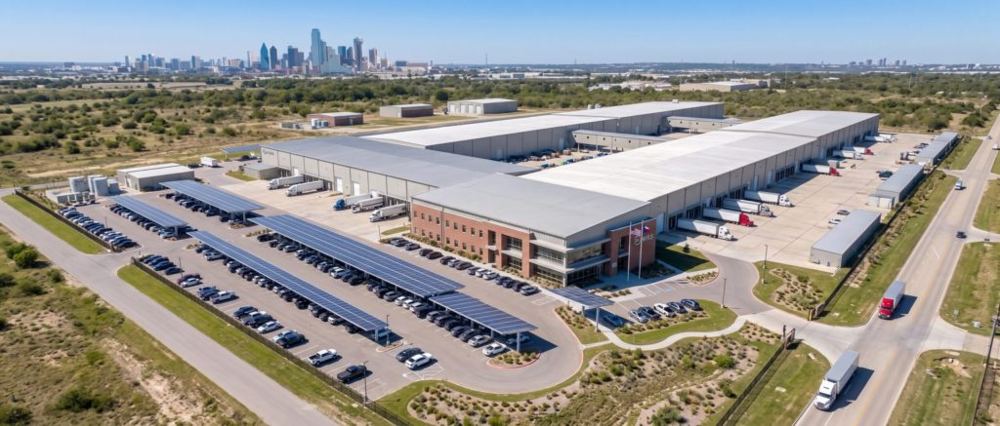
Within the next four years, We Recycle Solar said it plans to invest about $100M to develop four additional locations across the US.
We Recycle Solar (WRS) has announced plans for the US’ first end-to-end critical materials recovery facility for retired solar panels in Texas.
The Arizona-based company said the commercial-scale plant, scheduled to launch Q3 2027, will recover up to 96% of the silver, copper, silicon, aluminum, and glass contained in end-of-life solar panels, and produce clean, market-ready critical materials for direct resale through a fully-domestic process, with zero offshore processing, WRS said.
Set on a 10-acre company campus outside Dallas, the new commercial-scale WRS plant will mark the first in the company’s planned network of high-efficiency critical material recovery facilities.
Within the next four years, WRS said it plans to invest an estimated $100 million to develop four additional locations across the United States, building a distributed network of domestic processing centers designed to reduce logistics costs and better serve commercial and utility-scale asset owners nationwide.
While conventional recycling methods may send semi processed solar panel materials offshore for further recovery, WRS said its facility will process and recover valuable panel materials entirely within the U.S., at a scale never before achieved domestically.
The plant will utilize a proprietary high-efficiency end-to-end critical mineral extraction process to achieve a throughput of one panel per minute, while bypassing the need for downstream smelting at overseas facilities, WRS said.
The launch of next-generation capabilities marks an important turning point towards strengthening domestic critical material supply chains essential to major U.S. industrial sectors.
Silver, critical to solar energy, AI infrastructure, defense systems, electronics, and the power grid, is entering its sixth consecutive year of structural global deficits as industrial demand continues to outpace global supply, according to data from the Silver Institute and Metals Focus.
New export-licensing requirements introduced in January by China, which controls an estimated 60-70% of the global refined silver supply, have added further uncertainty to global silver markets, heightening concerns about critical material supply chain resilience and security.
In the US, where solar is now the fastest-growing electricity source, retired solar panels represent a significant untapped source of critical materials, WRS said.
By 2050, the US is projected to hold the world’s largest stockpile of end-of-life solar panels behind China, worth more than $80 billion in recyclable materials, but currently, an estimated 90% of America’s old solar panels go to landfill or shipped to offshore processing centers, predominantly in Asia, where a significant share of the critical materials they contain are recovered, and removed from the American supply chain entirely.
“Solar panels contain the exact critical materials the U.S. supply chain desperately needs, but until now, no American company has been able to recover their full resources at such scale or efficiency,” WRS CEO Adam Saghei said in a news release.
“Through our advanced process, we are achieving true, comprehensive material recovery entirely on U.S. soil, and retaining these critical materials, and the value currently being lost to Asian processing, within our domestic supply chain.”
The company said the new facilities will build on WRS’s existing model of onsite decommissioning, recycling, and resale and expand the company’s recovery capabilities to include silicon, silver, copper, aluminum, and glass at commercial scale, all processed domestically and in compliance with all applicable federal, state, and local permitting requirements.
The Ivanhoe Mines founder says technology developed by his private company, I-Pulse, could use up to 80% less energy.