EU-backed health programme reaches 35,796 as Kwara raises funding
The European Union (EU) has announced progress in strengthening health systems in Kwara State, stating that its interventions have reached read more EU-backed health programme reaches 35,796 as Kwara raises funding
The European Union (EU) has announced progress in strengthening health systems in Kwara State, stating that its interventions have reached 35,796 people,as the state increases its health allocation to 15% of its 2026 budget
The EU said the interventions also generated 12,264 referrals and helped about 10,000 people access healthcare services free of charge.
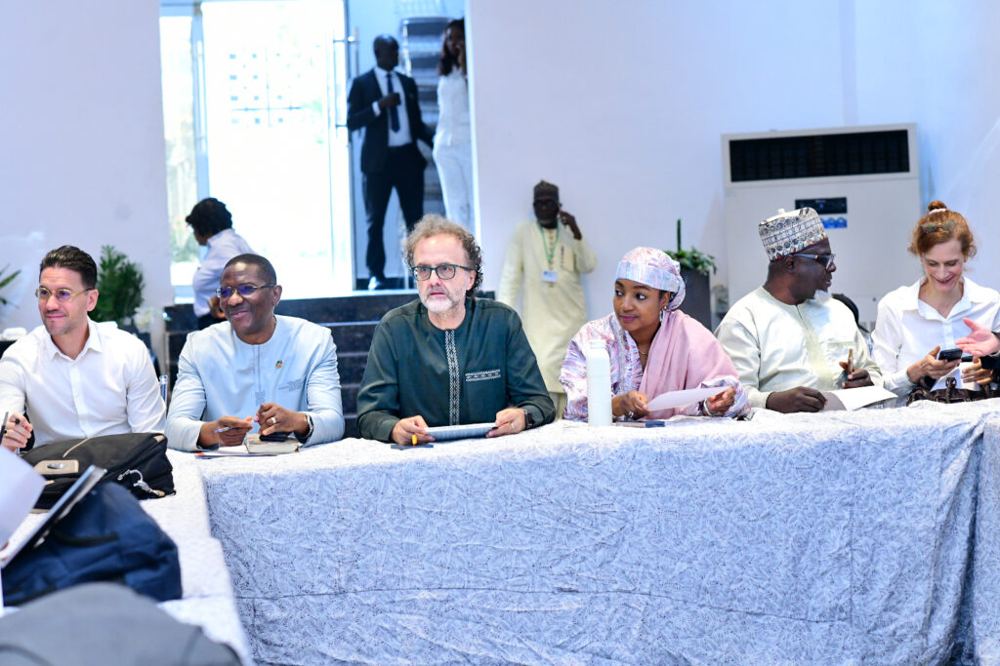
The results were presented during a review of the EU-SARAH partnership in Kwara, where discussions focused on sustaining progress through stronger state ownership, financing and coordination.
Speaking at the meeting, the Head of Partnerships at the EU Delegation to Nigeria and ECOWAS, Massimo De Luca, said the visit provided an opportunity to assess progress and better understand how the EU’s wider cooperation with Kwara could respond to the state’s priorities.
“Part of the objectives of this visit is to understand how we work on the broader partnership between the European Union and Kwara,” De Luca said.
He noted that EU and EU Member State engagement in Kwara extends beyond health to areas including energy, skills, agriculture, civil society, peace and security. A key focus of the discussion was sustainability, including the level of state financing for health and the release of budgeted funds.
Amina Ahmed El-Imam, Kwara State Commissioner for Health, said the proportion of the state’s budget allocated to health had risen from about 4 per cent to 15 per cent in 2026. “Kwara has made consistent progress from about 4 % of the budget and, in 2026, it’s 15% of the budget,” she said.
While acknowledging that budget releases were not always 100 %, the Commissioner said releases had increased year-on-year over the past seven years. She stressed that the state was working towards partnerships based on mutual contribution rather than long-term dependence on external support.
Responding, De Luca described the state’s approach as encouraging and emphasised the importance of strong systems, accountability and local ownership in sustaining development gains.
“Thank you so much for this very encouraging vision and account of what you have done,” he said.
Oluwatosin Fakayode, Director of Public Health at the Kwara State Ministry of Health, said Kwara was increasingly using health data to guide decision-making, including identifying Ilorin and Moro local government areas for particular attention based on their contribution to maternal mortality.
He added that state has also developed a roadmap for transitioning from paper-based to digital health systems.
Fauziyyah Alaaya, representative of adolescents in Kwara and Speaker of the State’s Children’s Parliament, welcomed the inclusion of adolescents and young people in health interventions.