Opening a Bank Account in Nicaragua as a Foreigner 2026: Banks, Documents and the Limits
A foreigner's guide to opening a bank account in Nicaragua in 2026: which banks hold the deposits, what documents and fees to expect, how far the US$12,000 deposit guarantee goes, and how sanctions and the 2024 financial laws limit what a local account can do. The post Opening a Bank Account in Nicaragua as a Foreigner 2026: Banks, Documents and the Limits appeared first on The Rio Times .
Opening a bank account in Nicaragua is still routine for legal residents. Sanctions, new state powers and a modest deposit guarantee shape the risks.
A bank account in Nicaragua gives a foreigner a local debit card, cheap domestic transfers and a place to hold US dollars. The paperwork is light. The political and legal setting around the banks is not.
Nicaragua’s banks are supervised by the Superintendency of Banks and Other Financial Institutions, known by its Spanish initials SIBOIF.
Eight banks and one finance company appear in the SIBOIF’s comparative balance sheet for 31 August 2025. Together they held assets of 376.4 billion córdobas (about US$10.3 billion).
That is less than half of Nicaragua’s annual economic output, about US$22 billion in 2025 on World Bank data.
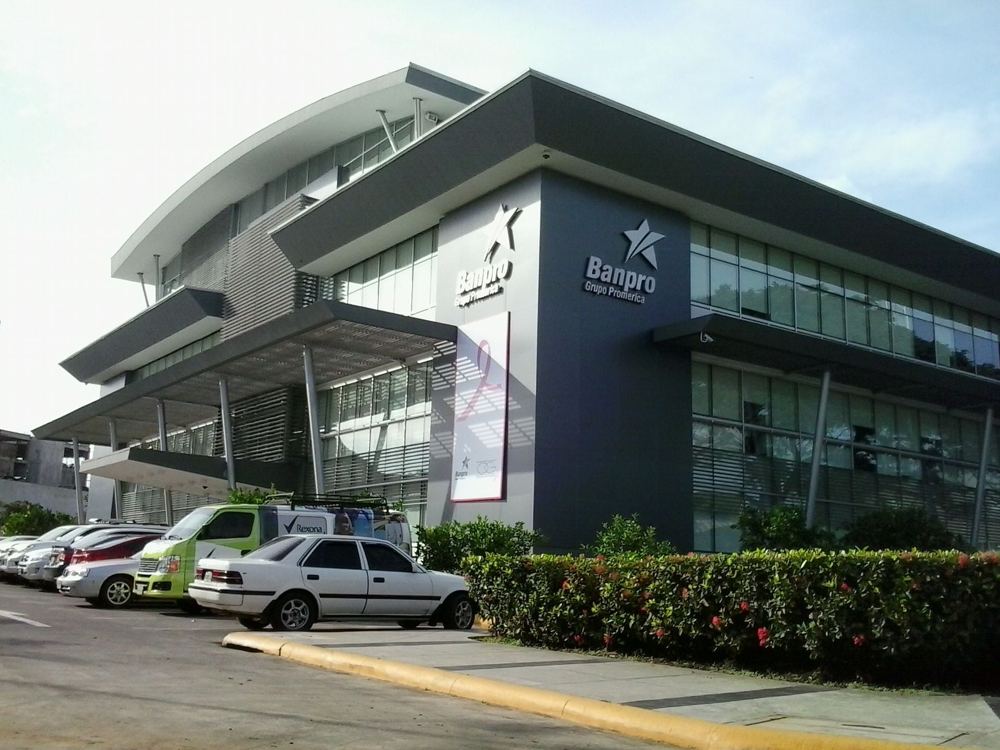
Three banks dominate. BANPRO, part of the regional Grupo Promerica, held 29.2 percent of deposits from the public at that date. Banco LAFISE Bancentro held 27.9 percent and BAC held 25.3 percent.
Together those three held about 82 percent of deposits. Banco Ficohsa followed with 7.2 percent, BDF (Banco de Finanzas) with 6.4 percent and Banco Avanz with 3.6 percent.
Banco Atlántida held 0.3 percent. Banco Produzcamos reported no public deposits in the same SIBOIF table.
BANPRO was also the largest by assets, at 106.3 billion córdobas (about US$2.9 billion). LAFISE and BAC each held about 94 billion córdobas (about US$2.6 billion).
Every bank that takes deposits under a SIBOIF licence must belong to the deposit-guarantee system described below. That includes branches of foreign banks.
Nicaragua’s currency is the córdoba. For years the Banco Central de Nicaragua (BCN) let it weaken in small, pre-announced daily steps, a system known as the crawl.
The BCN cut the crawl to zero from 1 January 2024. On 20 October 2025 it kept it at zero for 2026. That fixed the official rate at 36.6243 córdobas per dollar for the whole year.
Market quotes track that level closely. On 25 September 2026 the open.er-api.com reference rate was 36.83 córdobas per dollar, about 0.6 percent weaker. Conversions in this guide use the official rate.
Dollars dominate the banks anyway, according to the International Monetary Fund (IMF). In September 2025, 66.6 percent of deposits and 87.4 percent of loans were in dollars.
Savers earn little. At the end of 2025, savings accounts paid about 1.0 percent in córdobas and 0.9 percent in dollars, according to BCN data.
Term deposits paid about 5.7 percent in córdobas and 4.9 percent in dollars. Inflation was 2.7 percent in 2025, according to the BCN.
For anyone whose income or savings are in US dollars, a dollar account removes córdoba risk. The IMF has said the crawl could be recalibrated in a downside scenario, which a córdoba balance would feel first.
BANPRO publishes the clearest list. Foreign residents need a valid passport and a valid cédula de residencia, the residency card issued by Nicaragua’s migration authority.
Non-residents can apply with a passport showing a valid entry visa, in the bank’s wording. They also need a second government photo ID, such as a driving licence or social security card.
Both groups fill in a client profile form, the perfil del cliente. BANPRO also asks for two references, which can be bank, commercial or, failing those, personal.
BANPRO’s published list does not mention a utility bill or other proof of address. Banco Atlántida says it may request extra documents depending on the client’s profile. Bringing a recent bill or lease avoids a second visit.
Expect questions about where your money comes from. Banks must apply customer due diligence under Law 977, the anti-money-laundering law, and a SIBOIF rule updated in December 2024.
BAC lets customers request an account online only if they already hold a BAC product. The account must then be formalised at a branch, the bank’s help page says.
BANPRO’s ordinary savings account opens with 1,000 córdobas (about US$27) or US$100. The same amounts are the minimum average monthly balance.
Below that monthly average, the bank charges 375 córdobas (about US$10) or US$15. A personal checking account requires 2,500 córdobas (about US$68) or US$500.
The residency card is usually the slower step, and it decides which list of documents applies. The residency guides linked below cover the routes and timelines.
International wires are the main cost. BANPRO charges 0.5 percent to send an international SWIFT transfer, with a minimum of US$40 and a maximum of US$500.
Receiving a SWIFT transfer at BANPRO costs 0.25 percent, with a minimum of US$20 and a maximum of US$250. So US$500 arriving costs 4 percent, while US$8,000 costs the same US$20.
LAFISE charges US$15 to receive up to US$1,000, rising in bands to US$175 for the largest sums. Sending from a branch costs 0.5 percent, with a US$50 minimum.
LAFISE adds a correspondent fee of US$25 for transfers to the United States and US$40 elsewhere, its fee schedule shows. Online sends cost 0.3 percent, with a US$35 minimum.
Domestic transfers are cheap. BANPRO charges US$2 for an online transfer to another Nicaraguan bank through the ACH clearing system, or US$15 at a branch.
Fees may change. Law 1237 of February 2025 lets the SIBOIF set limits on interest rates, commissions and charges for prudential reasons.
Remittances show how much of the system runs on money from abroad. Inflows reached a record US$5.24 billion in 2024, equal to 26.6 percent of GDP.
The IMF says that is the highest ratio in the region, and that over 84 percent comes from the United States.
The Inter-American Development Bank (IDB) estimated growth of 18.2 percent in 2025, which implies about US$6.2 billion. That is roughly US$880 for every person in the country.
Growth slowed to 7.5 percent in the first quarter of 2026, according to the IDB. The BCN’s 2025 annual report did not publish a remittance total, Confidencial noted in April 2026.
US persons, including citizens, must report foreign accounts to FinCEN, a US Treasury bureau. The rule applies once their combined value tops US$10,000 at any time in a year.
The SIBOIF licenses and inspects banks, and can intervene in or seek the liquidation of a failing one. Its head is elected by the National Assembly for six years.
Law 1232, passed unanimously in late December 2024 and published on 30 December, rewrote the system’s governance. It placed the BCN and the SIBOIF under one board.
The BCN president chairs that board and the superintendent is its vice-president, the law says. The finance minister also sits on it.