Hong Kong property market cools after five-year high
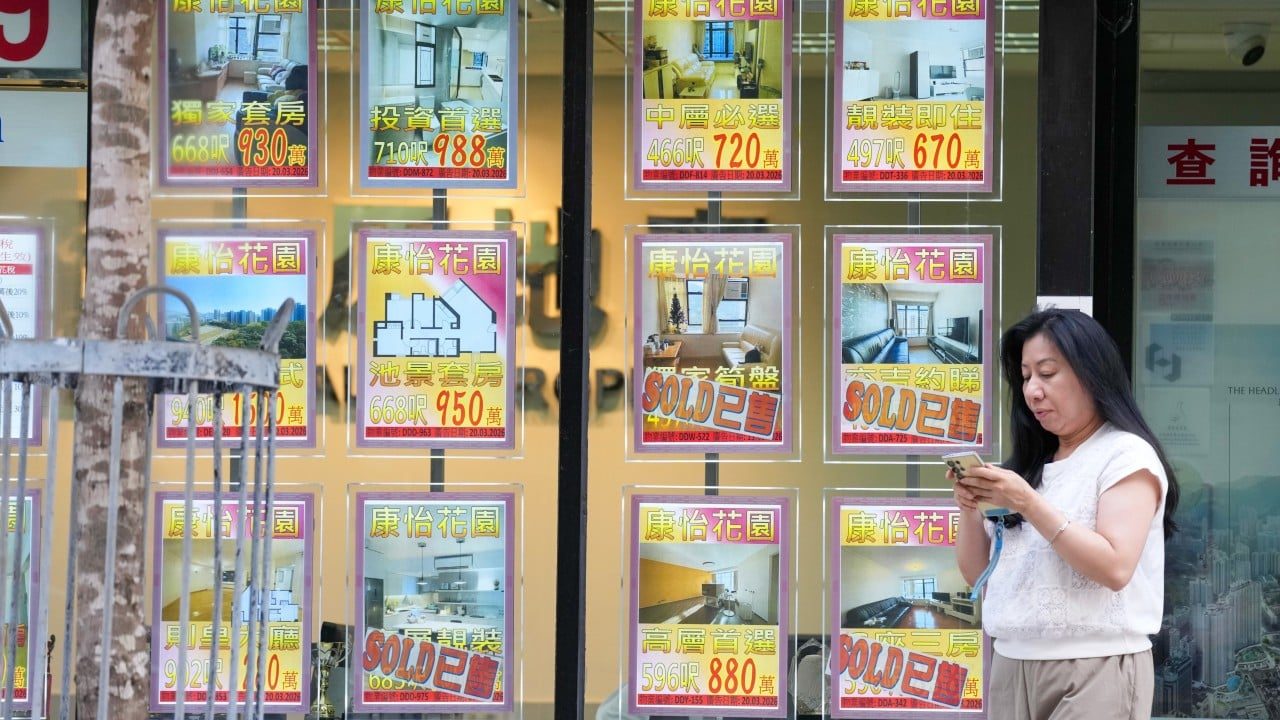
Hong Kong's secondary residential market is losing momentum after a five-year peak as Beijing's capital outflow restrictions dampen buyer sentiment and compress pricing power.
Hong Kong’s secondary residential market is shifting lower after a strong first half that posted five-year highs in both transaction volume and total value. Real property agents across various districts in Hong Kong now report a sudden slowdown in transactions as the second half began. The primary catalyst for this cooling sentiment is a crackdown on capital outflows by Beijing.
The first half of the year saw 26,813 secondary market transactions worth a total of HK$212.24 billion (US$27.07 billion), according to data from Centaline Property. Compared to the second half of last year, transaction volume grew by 25.5 per cent while total value jumped 34.1 per cent. The Centa-City Leading Index, a benchmark provided by Centaline Property that tracks general price trends in the secondary residential market, climbed 15 points to close the half at 160.77.
That momentum has now stalled, marking a sharp reversal in market dynamics. The sudden deceleration signals that the pricing power sellers enjoyed in the first half is rapidly evaporating. For institutional investors and portfolio managers, the pivot underscores how closely Hong Kong real estate remains tethered to mainland liquidity cycles and Beijing's regulatory posture. Any expectation of a sustained recovery in property prices must now account for these capital flow constraints.
Emerging price dislocations are already visible at the individual transaction level. A buyer, surnamed Fok, recently targeted a 1,431 sq ft unit at Provident Centre in North Point. Although the owner was keen to sell and set an asking price of HK$19.5 million, Fok took a cautious approach and insisted on offering no more than HK$18.5 million. This gap reflects a broader shift toward a buyer's market, where participants are actively pricing in tighter cross-border capital flows.
The transition from a five-year peak to an immediate slowdown raises questions about the sustainability of Hong Kong's real estate recovery. Market professionals will be closely monitoring whether this is a temporary pause or the beginning of a deeper correction. If Beijing maintains its strict stance on capital leaving the mainland, the secondary market faces the risk of prolonged price compression through the remainder of the year.