Dangote says ambitious timeline for mega-refinery on track
Aliko Dangote, president of Dangote Group, is on course to hit his ambitious three-year target to double the capacity of read more Dangote says ambitious timeline for mega-refinery on track
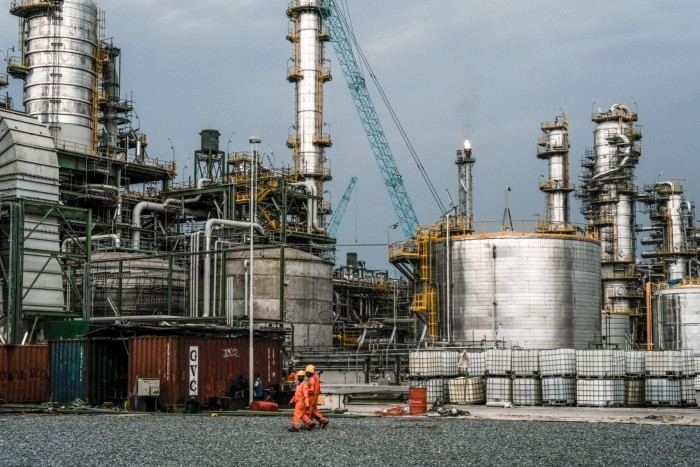
Aliko Dangote, president of Dangote Group, is on course to hit his ambitious three-year target to double the capacity of his mega-refinery, positioning the complex to become one of the world’s largest fuel hubs at a time when a global supply crunch is lifting refining margins.
Dangote Petroleum Refinery and Petrochemicals FZE is replicating the design and contractors used for its original Lekki plant to build a second facility on the same site, targeting completion by 2029. The company launched an Initial Public Offering (IPO) this month to help fund the $14.3 billion project, which would push the complex’s total capacity to the joint-highest in the world and open up fresh export and trading opportunities.
“That’s why we’re just trying to help people understand, because it does sound crazy,” David Bird, Chief Executive Officer and Managing Director (MD) at Dangote Refinery, said of the fast-tracked timeline in an interview with Bloomberg.
He said staying on schedule would mean the new plant is operational before the original facility is due for major maintenance in 2030.
The existing refinery, Africa’s largest and among the biggest globally, posted $1.8 billion in profit in the first half of 2026, with the wars in Iran and Ukraine further boosting earnings as fuel producers benefit from a global shortage of oil products.
Read also: After the memes, will Dangote’s new shareholders stay in the market?
While confident about the construction schedule, Bird acknowledged that freight market volatility poses cost and logistics challenges, while managing traffic across the sprawling site remains an operational concern.
The Lagos expansion is part of a wider push by the Dangote Group, which also plans a similarly sized refinery in Lamu, Kenya, a move that would place Dangote among the world’s top 10 refiners.
“He’s going to become the Henry Ford of refining,” Bird said of his boss, adding that the company is also considering expanding its trading operations and moving into shipping, potentially including vessel ownership.
Dangote is among the biggest beneficiaries of the supply crunch triggered by the US-Iran conflict, with crude prices surging past $100 a barrel and fuel prices hitting record highs amid constrained global refining capacity.
According to Bird, the refinery’s ability to process a wide range of crude grades, currently 50, with new ones added monthly, gives it added flexibility as tight global fuel markets continue to support earnings.
“With where we are: 700,000 barrels a day, diesel and jet at record highs, gasoline very strong going into this period when it traditionally drops off, I think you can do the numbers,” said Bruce Tanner, Chief Financial Officer of Dangote Refinery. “It’s going to be significant.”
The company is also weighing plans to scale up its trading desk once the Nigerian and Kenyan expansions are completed.
“Right now it’s been very much a marketing and procurement exercise and less fully trading around the system, but that opportunity is definitely there when you’re multi-site, multi-country,” Bird said.