Mato Grosso Farm Output Hit US$32 Billion in 2025, IBGE Crop Data Show
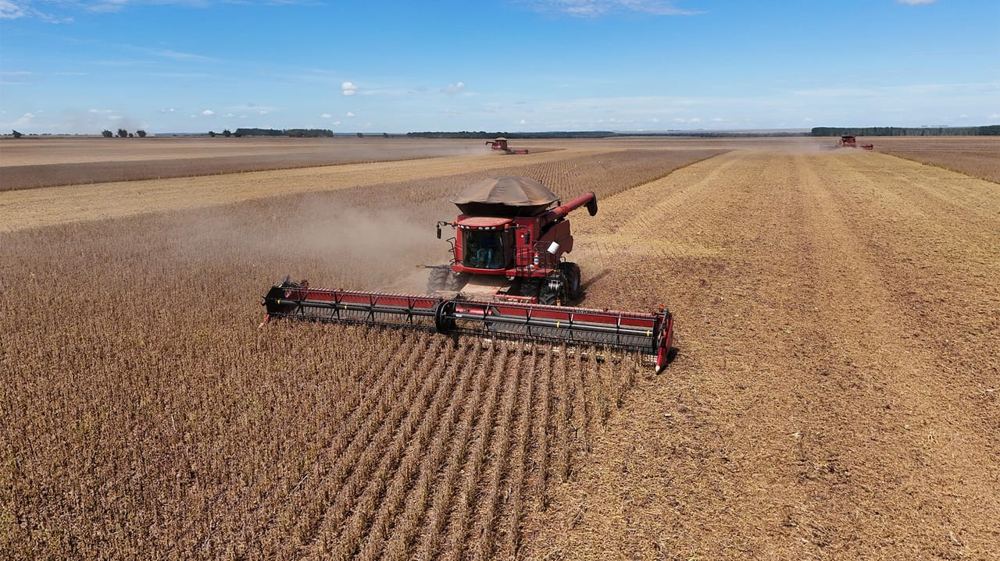
Mato Grosso farm output reached a record in 2025, worth about US$32.2 billion, IBGE data show, led by soybeans, maize and cotton. The post Mato Grosso Farm Output Hit US$32 Billion in 2025, IBGE Crop Data Show appeared first on The Rio Times .
Mato Grosso farm output set a record in 2025, with crops alone worth about US$32.2 billion on figures from Brazil’s statistics agency. Its growers say costs are rising faster than the crop pays.
Mato Grosso farm output was worth 165.6 billion reais in 2025, or about US$32.2 billion. It was the largest crop total of any Brazilian state.
The figure comes from IBGE, Brazil’s national statistics agency, which published it on 17 September 2026. It counts crops only, at the prices growers actually received.
That matters well beyond Brazil. This one state grew about as many soybeans in 2025 as the whole of Argentina.
Mato Grosso is Brazil’s third-largest state by area, bigger than France. It has no coastline, and its crops reach a port only after 1,000 to 2,000 km by road.
The survey behind it is called Produção Agrícola Municipal, or municipal crop production. It tracks 70 crops in every Brazilian municipality, year by year.
The values are at current prices, so inflation is not stripped out. Livestock is excluded, which leaves the state’s large cattle herd outside the total.
Nor is this the size of the state’s economy. IBGE put Mato Grosso’s gross domestic product at 273.0 billion reais (about US$53.1 billion) in 2023, the latest year published.
It is not export earnings either. Conversions here use a rate of 5.1414 to the US dollar.
That is the closing PTAX rate published by Banco Central do Brasil, the central bank, for 23 September 2026.
Soybeans, maize and cotton together made up 95.9% of the state’s crop value. Soybeans alone were worth 90.3 billion reais (about US$17.6 billion).
Maize brought 38.7 billion reais (about US$7.5 billion) and cotton 29.9 billion reais (about US$5.8 billion). Mato Grosso supplied 17.9% of Brazil’s crop value.
By volume the concentration is starker. In 2025 the state grew 30.4% of Brazil’s soybeans, 38.5% of its maize and 72.3% of its cotton.
One municipality, Sapezal, earned more from crops than any other in Brazil, at 8.6 billion reais (about US$1.7 billion). Five of the national top ten sit in Mato Grosso.
The 2025 value was 37.1% above 2024. Volume explains part of that, as the state’s soybean harvest rose 30.7% and its maize crop 14.5%.
Prices explain much of the rest. IBGE said the 2024 crop had been hurt by El Niño, and that maize, cotton and soybean prices firmed during 2025.
The agency also pointed to the tariff dispute between the United States and China. Chinese buyers turned to Brazilian soybeans, which held domestic prices steady late in the year.
Mato Grosso harvested 50.2 million tonnes of soybeans in calendar 2025, on IBGE’s count. That is close to the entire crop of Argentina, the world’s third-largest producer.
The United States Department of Agriculture put Argentina at 51.1 million tonnes for 2024/25 and 49.5 million for 2025/26. Those estimates are from its September 2026 world production report.
Maize tells the same story. The state’s 54.3 million tonnes in 2025 exceeded the combined 2025/26 crops of Ukraine and South Africa.
The same American agency puts those two at 30.9 million and 18.1 million tonnes.
Record value has not meant record profit. A cost study was presented to farmers in Brasnorte, in the north-west of the state, on 9 September 2026.
It is run by Senar-MT, the Mato Grosso arm of Brazil’s rural training service, and IMEA, the state’s farm economics institute. It projects total soybean cost at 8,171.41 reais a hectare (about US$1,589), up 16.69%.
The same study projects earnings before interest, tax, depreciation and amortisation down 35.05% a hectare. Yields are expected to slip 5.43%, to 62.44 sacks a hectare.
Maize looks worse on the same numbers. For the high-technology second-crop system that profit measure falls 88.16%, to 122.26 reais a hectare (about US$24).
Milena Habeck, an IMEA production-cost analyst, said gross revenue does not cover total cost. That measure includes the opportunity cost of a grower’s own capital, she added.
Aprosoja-MT, the state’s soybean and maize growers’ association, presses the same case. Its press office issued these remarks by its administrative director, Diego Bertuol, on 17 September 2026.
“We are coming off four years of pressured margins, high interest rates, inputs at historic prices and commodities without matching gains.”
Distance is the permanent tax on all of this. Trucking soybeans 1,961 km from Sorriso to the port of Santos cost 500 reais a tonne (about US$97) in July 2026.
Those rates come from Conab, Brazil’s national food supply agency, in its August 2026 logistics bulletin. The shorter northern run to the river port of Miritituba cost 290 reais a tonne (about US$56).
The same agency’s July 2026 bulletin put Mato Grosso at 74% of Brazil’s maize exports in the period it covers.
Most of that load leaves on the BR-163, the federal highway running north from Mato Grosso into Pará. Its concessionaire, Nova Rota do Oeste, is widening the state stretch.
It had 230 km open as dual carriageway by late June 2026, with 96 km left. It aims to finish those by December 2026.
That northern route is why the Ferrogrão railway matters. The planned 933 km line would run from Sinop in Mato Grosso to Miritituba in Pará.
Brazil’s Supreme Federal Court cleared a legal obstacle on Thursday 21 May 2026. It upheld the 2017 law that cut protected land from the Jamanxim National Park in Pará.
The case, ADI 6553, was brought by the left-wing Socialism and Liberty Party, known as PSOL. The majority followed Justice Alexandre de Moraes and held that the line still needs every licence the law requires.
The court’s president, Justice Edson Fachin, was the only member to uphold the challenge.
ANTT, the land transport regulator, approved updated studies and a new concession model on 11 September 2026. The papers went to the federal audit court, the TCU, for review.
CenárioMT, a Mato Grosso news site, put the investment in the line at 33.3 billion reais (about US$6.5 billion). It reported that the auction is projected for 2027.
The 2025 record shows how much of the world’s animal feed now leans on one Brazilian state. The cost figures show how thin the margin behind it has become.