Markets News, Sep. 17, 2026: Tech Stocks Rise, Lead Major U.S. Indexes Higher; Bond Yields, Oil Prices Drop
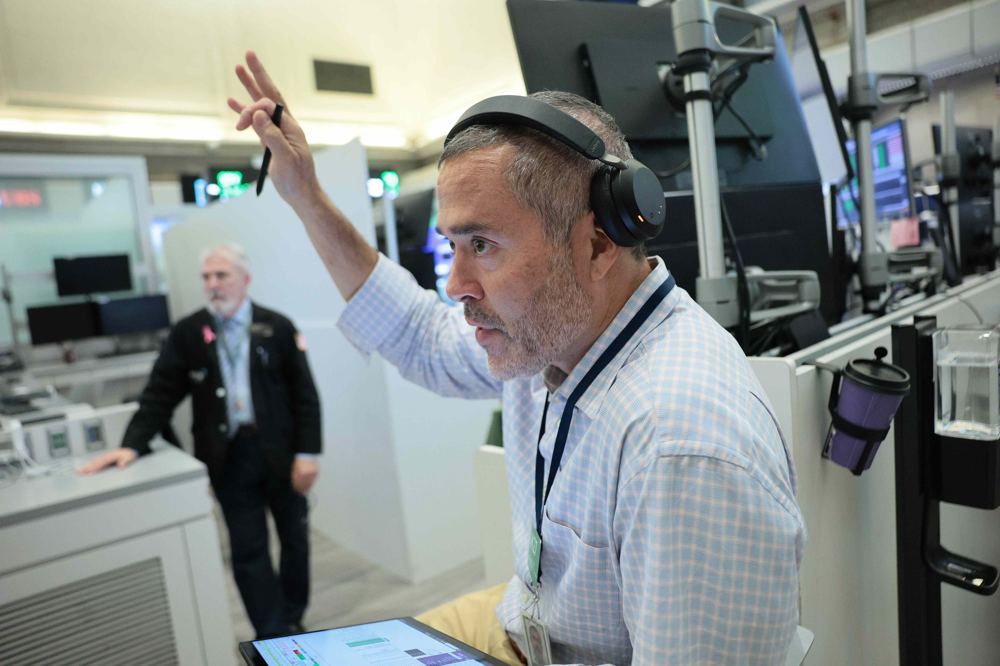
Technology stocks powered major indexes to sharp gains Thursday a day after the Federal Reserve raised interest rates for the first time in three years.
The tech-focused Nasdaq Composite, benchmark S&P 500, and blue-chip Dow Jones Industrial Average finished up 1.7%, 1.1%, and 0.6%, respectively. Information Technology was the top-performing sector in the S&P 500, rising more than 2%.
The three indexes closed yesterday lower for the seventh time in eight sessions, with the Dow shedding more than 600 points, after the Fed unanimously raised interest rates by a quarter of a percentage point and Chair Kevin Warsh told reporters that inflation has been "too high ... for too long."
The 10-year Treasury yield , which serves as a benchmark for a wide range of interest rates, including those for mortgages , corporate bonds, and other loans, was around 4.94% in late-afternoon trading, down more than eight basis points from Wednesday's close.
Investor attention has now turned to the likely path forward for rates. Per the CME FedWatch tool, traders see a 53% likelihood that the Fed will raise interest rates a quarter-percentage point above its new range of 3.75% to 4% at its late-October meeting, and an 87% likelihood of lifting them by the same amount in December after the U.S. midterm elections.
Oil prices extended recent declines Thursday on optimism that supply disruptions because of a closed Saudi Arabian pipeline would be short-lived. U.S. benchmark West Texas Intermediate prices were down 1.2% to $101.25 a barrel around 4 p.m. ET. Brent crude futures, the international benchmark, declined 1.7% to just above $104.
Tech stocks powered gains Thursday, with the Roundhill Memory ETF (DRAM) and broader iShares Semiconductor ETF (SOXX) closing up about 4.5% and 3.5%, respectively. Super Micro Computer (SMCI), Intel (INTC), Marvell Technology (MRVL), Micron Technology (MU), Sandisk (SNDK), Advanced Micro Devices (AMD), and Arm Holdings (ARM) all were up by roughly 5% or more.
Shares of Generac Holdings (GNRC) soared 19% on news of a deal worth up to $8 billion to sell backup power generators to Amazon (AMZN) for data centers. Amazon advanced more than 2%, as did its Magnificent Seven brethren; the Roundhill Magnificent Seven ETF (MAGS) closed nearly 2%.
Bitcoin was trading around $76,500, modestly higher over the past 24 hours. The U.S. dollar index , which tracks the value of the greenback against a basket of foreign currencies, ticked 0.1% lower to 100.20. Gold futures edged 0.1% lower to $4,385 an ounce.
The housing market was already stalling. Now borrowing costs have jumped to their highest in more than a year.
The average rate on a 30-year fixed mortgage rose to 6.95% from 6.76% a week ago, Freddie Mac said Thursday. That's the highest since late January 2025 and the biggest one-week jump since April 2025.
The surge in borrowing costs came after the yield on the 10-year Treasury climbed Tuesday to its highest since 2007. Mortgage rates largely track Treasury yields, which rise when investors are concerned about inflation. Yields rose over 5% as fighting in the Middle East pushed up oil prices and sent diesel to record prices.
Rising rates since the Iran war began in late February have already added hundreds of dollars to the typical mortgage payment on a newly purchased home, pushing buyers out of the market and slowing sales.
Yeti Holdings Stock Rises After Company Unveils Fiscal 2030 Targets
Yeti Holdings shareholders seem to be responding positively to the cooler maker's long-term financial framework.
Yeti (YETI) shares are rising 4% heading into the close after the company announced ahead of its investor day that it sees "low-double-digit to high-teens" annual adjusted earnings per share growth through 2030, as well as "mid-single-digit to high-single-digit" annual net sales growth.
"As we enter our next decade, we are focused on four priorities: creating the next billion dollars of sales, building our next billion-dollar product platform, generating a billion dollars of sales outside the United States and delivering more than a billion dollars of cumulative free cash flow," Yeti CEO Matt Reintjes said. "These priorities are underpinned by a clear operating plan and disciplined capital allocation framework, which we believe will drive durable growth and attractive long-term shareholder returns."
Austin, Texas-based Yeti also affirmed its fiscal 2026 guidance, including sales growth of 7% to 8% and adjusted EPS of $2.94 to $3.00.
Despite today's gains, Yeti shares are about 5% lower this year.
Bond Markets Like What They Heard From Fed Chair Kevin Warsh
If bond markets gave report cards, Federal Reserve Chair Kevin Warsh would get high marks for Wednesday's meeting, where the Fed raised rates for the first time since 2023.
It wasn't a smooth path to get there. Bond investors have been lukewarm on Warsh in the early days of his tenure, a worry that ultimately costs households and businesses by raising mortgage rates and other borrowing costs.
Bond investors see inflation as an enemy, since rising prices eat at the fixed interest payments they collect on bonds. And they've had trouble taking Warsh at his word that he, too, dislikes inflation enough to raise rates and return it to 2%, the latest reading pegged it at an annual rate of 3.4%.
Warsh quelled those doubts on Wednesday. He gave a "confident, pound-the-podium press conference argument that the FOMC would achieve the 2% inflation target," wrote James Egelhof, chief U.S. economist at BNP Paribas.
Arm's CEO Says the Chip Designer Is Even More Confident in Hitting $2B AI Chip Sales Target. The Stock Is Rallying
Bullish comments from Arm Holdings' chief executive last night are helping its stock rank among the Nasdaq's top gainers today.
Arm's (ARM) U.S.-listed shares are up 8% as tech stocks rally Thursday, a day after CEO Rene Haas told CNBC's Jim Cramer that the firm is even "more confident today" it can meet the $2 billion sales target for its debut AI chip than it was when it announced the goal on its May earnings call.
Haas said demand for Arm's products has "never been stronger," and said the main constraint on its ability to grow revenue will be its ability to secure supply in the crowded AI chip market.
Arm has long made most of its money from designing chips used in smartphones and for other tech companies, including Nvidia (NVDA) and Alphabet (GOOGL). Amid a weakening smartphone market , the company announced plans back in March to start selling its own AI chip . At the time, the company said the new chip could drive $15 billion in sales by 2031.
With Thursday's rally, Arm's U.S.-listed shares have gained 140% this year. Still, they are down more than 40% since hitting an all-time high of $452.70 on June 18, as worries about the sustainability of spending on artificial intelligence have weighed on AI-tied stocks.
The SEC Steps In to Ease Crypto's Path After Big Legislative Loss
Federal agencies are stepping up their support for digital assets after a major disappointment for the cryptocurrency industry in Congress earlier this week.
The Securities and Exchange Commission on Thursday handed the industry what is effectively a hall pass, in the form of a five-year conditional exemption of existing securities laws, that facilitates trading of tokenized stocks, or digital representations of public companies' shares that can move on blockchains. Versions of this exist today, via Robinhood and others , though the vast majority are synthetic or derivative-based investment products and are circulated outside of the U.S.
The federal agency's signal that it's working to clear the regulatory path for crypto arrived swiftly, just 48 hours after the Clarity Act, a broad framework for digital assets, suffered a near-death blow to passage on Tuesday when the bill failed to garner enough votes to pass through Senate's cloture vote , a procedural motion that could've moved it to a floor vote.
The Trump administration's commitment to keep crypto moving forward in the absence of a clear legislative path for industry-specific rules appears to be keeping spirits up. Bitcoin got a small boost following the SEC's move, leaving it around where it was prior to the cloture vote. Crypto-linked stocks including Coinbase (COIN), Robinhood (HOOD), and Circle (CRCL) were up at least 3% in recent trading.
SEC Chair Paul Atkins said in a video message published today that the agency is using "its statutory authority" in the wake of Congress' inability to advance the Clarity Act "to ensure progress continues."
The exemption, albeit temporary, allows venues where tokenized securities trade to operate without fear of punishment so long as they abide by certain conditions. For example, before a trading venue can allow a tokenized stock to trade, it has to give the issuing company 30 days notice and the "ability to object."
Tech shares are helping give the S&P 500 a nice boost Thursday.
The S&P 500 Information Technology Sector is up 2.1% to pace the 11 industries tracked by the benchmark index.
Intel (INTC) and Super Micro Computer (SMCI) are leading the sector with advances of more than 9%.