Nigerian stocks defy pre-election curse with 47.4% H1 rally
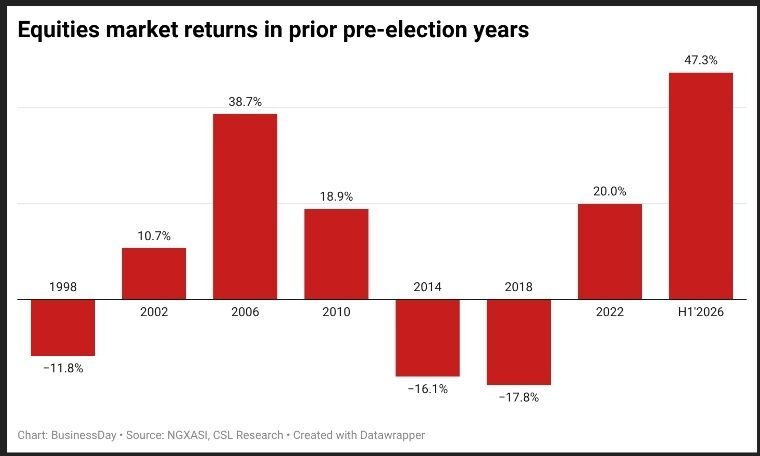
Nigeria’s stock market has posted its strongest pre-election half-year return in three decades, driven by structural reforms and bank recapitalisations that are reshaping how investors price political risk ahead of the 2027 vote.
The Nigerian Exchange Group closed the first half of 2026 with a 47.4 percent return, shattering a decades-old pattern of pre-election slumps. Historically, the build-up to presidential polls triggered sharp losses, including a 17.8 percent drop in 2018 and a 16.1 percent fall in 2014. This year’s rally marks a decisive break from that cycle, driven by fundamental macroeconomic shifts rather than speculative trading.
Regulators attribute the resilience to structural policy changes rather than temporary factors. “Elections themselves do not necessarily undermine market performance, as investors are more concerned about policy uncertainty than the political calendar,” said SEC director-general Emomotimi Agama. He pointed to exchange rate stability, the successful recapitalisation of banks, and returning foreign portfolio inflows as the core drivers of the rally.
However, market participants warn that the easiest gains have already been made. “The easy repricing has largely taken place. Going forward, earnings growth, sound corporate governance, and financial performance will determine which companies continue to outperform,” Agama said. Analysts also note that election-related government spending could inject unwelcome liquidity, potentially fuelling inflation and forcing the Central Bank of Nigeria to hike interest rates.
Electoral scenarios shape H2 outlook
As the 2027 race takes shape, sell-side researchers are mapping market reactions to three distinct political outcomes. A victory for the ruling All Progressives Congress is widely viewed as the lowest-disruption scenario, promising continuity in exchange-rate liberalisation. An opposition Nigeria Democratic Congress win could trigger initial volatility, while an African Democratic Congress victory would likely draw a cautious, wait-and-see response dependent on the incoming economic team.
The broader second-half trajectory will ultimately depend on macroeconomic data and central bank actions. Headline inflation cooled to 15.91 percent in June, extending a disinflation trend that had previously fuelled expectations of imminent rate cuts before geopolitical tensions intervened. Investors are now looking to third-quarter corporate earnings, currency stability, and potential mega-listings from Dangote Refinery and the Nigerian National Petroleum Company to sustain the market's momentum.