CNA Explains: Saudi Arabia's East-West pipeline is down. Why its oil 'insurance policy' matters
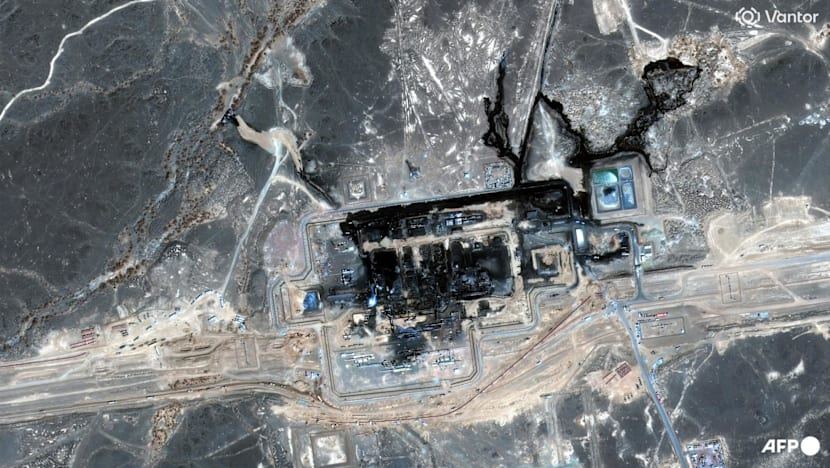
Built in the 1980s to bypass the Strait of Hormuz, the East-West pipeline has become a crucial route for Saudi oil exports. With the pipeline now out of action after drone attacks, a prolonged outage could hit buyers, including those in Asia, hard.
Built in the 1980s to bypass the Strait of Hormuz, the East-West pipeline has become a crucial route for Saudi oil exports. With the pipeline now out of action after drone attacks, a prolonged outage could hit buyers, including those in Asia, hard.
SINGAPORE: With conflict in the Middle East disrupting oil flows through the Strait of Hormuz, Saudi Arabia's East-West pipeline has become a crucial alternative for getting the kingdom's oil to global markets.
But the pipeline was shut down on Sep 11, a day after drone attacks, removing one of Saudi Arabia's main alternatives for bypassing the strait.
While Riyadh has described the shutdown as a "precautionary measure", the extent of the damage and how long repairs will take remain unclear. Estimates have ranged from several days to five or six weeks.
With the Red Sea route also facing growing threat from Yemen's Houthis , the disruption has raised questions about what happens if Saudi Arabia's main alternative to Hormuz remains unavailable, and what that could mean for global oil markets, particularly in Asia.
CNA Games Guess Word Crack the word, one row at a time Buzzword Create words using the given letters Mini Sudoku Tiny puzzle, mighty brain teaser Mini Crossword Small grid, big challenge Word Search Spot as many words as you can Show More Show Less Built in the 1980s, the 1,200km East-West pipeline - also known as Petroline - carries crude from Saudi Arabia's oil fields in the east across the kingdom to the Red Sea port of Yanbu. It has a maximum capacity of about 7 million barrels per day (bpd), allowing Saudi Arabia to move oil to the Red Sea without sending it through the Strait of Hormuz. That function has become particularly important since the conflict in the Middle East disrupted shipping through the strait. Saudi Arabia had increased the amount of crude sent west through the pipeline to about 4 million bpd, from roughly 973,000 bpd a year earlier, according to figures cited by industry sources. That accounts for about 4 per cent of the global supply. The pipeline has therefore served as a crucial buffer, allowing the world's major oil exporter to maintain some exports even as its traditional routes through the Gulf have come under pressure. But with the pipeline offline, that buffer is under strain. Saudi Arabia has been drawing on crude stored at Yanbu and other facilities to keep exports moving. The longer the shutdown lasts, the harder it becomes for Saudi Arabia to maintain those flows without finding alternative routes or cutting exports. The International Energy Agency reported last week that Saudi oil supply had already fallen to a more than three-decade low in August on reduced flows via Hormuz and the Red Sea.
Built in the 1980s, the 1,200km East-West pipeline - also known as Petroline - carries crude from Saudi Arabia's oil fields in the east across the kingdom to the Red Sea port of Yanbu.
It has a maximum capacity of about 7 million barrels per day (bpd), allowing Saudi Arabia to move oil to the Red Sea without sending it through the Strait of Hormuz.
That function has become particularly important since the conflict in the Middle East disrupted shipping through the strait.
Saudi Arabia had increased the amount of crude sent west through the pipeline to about 4 million bpd, from roughly 973,000 bpd a year earlier, according to figures cited by industry sources. That accounts for about 4 per cent of the global supply.
The pipeline has therefore served as a crucial buffer, allowing the world's major oil exporter to maintain some exports even as its traditional routes through the Gulf have come under pressure.
Saudi Arabia has been drawing on crude stored at Yanbu and other facilities to keep exports moving.
The longer the shutdown lasts, the harder it becomes for Saudi Arabia to maintain those flows without finding alternative routes or cutting exports.
The International Energy Agency reported last week that Saudi oil supply had already fallen to a more than three-decade low in August on reduced flows via Hormuz and the Red Sea.
The most obvious route is the Strait of Hormuz, through which Saudi Arabia normally ships large volumes of crude. But oil flows through the strait have been severely disrupted by the conflict.
Another option is the Red Sea, via the Bab el-Mandeb Strait, which links the Red Sea with the Gulf of Aden.
But that route has also become increasingly difficult to use after the Houthis seized control of Yemen's entire Red Sea coast, capturing three strategic islands and the port of Mokha.
"The route being used for rerouting is also vulnerable now," Priyanka Sachdeva, senior market analyst at Philip Nova, previously told CNA.
Saudi crude reaching Yanbu can be loaded onto tankers and shipped north through the Suez Canal or south through Bab el-Mandeb towards Asia.
But if those routes become too risky, ships may have to bypass the Red Sea entirely and sail around Africa via the Cape of Good Hope.
That can add weeks to voyages and significantly increase fuel, insurance and freight costs.
As Ms Sachdeva previously put it, there is "no such thing as a free detour in shipping".
The problem is not simply that Saudi Arabia has lost one pipeline. It has lost a route that was specifically designed to provide an alternative to Hormuz.
Loadings at Yanbu had been a "rescue option" because Saudi Arabia had been relying on the Red Sea route as an alternative to Hormuz, Janiv Shah, vice president of oil commodity markets at Rystad Energy, told CNA on Wednesday (Sep 16).
If anything happens to the East-West pipeline, it would severely constrain Saudi export volumes, he said.
There are no other Saudi pipelines with comparable scale and capacity, he added.
Saudi Arabia is now looking at other ways of moving crude. Reuters reported that Saudi Aramco had offered additional crude cargoes to Asian refiners using ship-to-ship transfers off Oman's Sohar port, suggesting the kingdom is already looking for ways to work around its disrupted export routes.
Riyadh could also try to send more oil through Hormuz, including through so-called "dark shipments" in which vessels switch off their tracking systems.
But Mr Shah said that would be challenging given the security situation in the strait.
"So Saudi, what it's trying to do now is trying to export or push more volumes through Hormuz, but again, this is gonna be very challenging considering the state of play and the effective closure, although barrels are still flowing through the strait," he said.
Professor Mark Goh from the National University of Singapore Business School's Department of Analytics and Operations shared a similar view, saying that Saudi Arabia has "few true substitutes" for the East-West pipeline.
He noted that the country could tap its overseas stockpiles or redirect crude to domestic refining.
However, those options are constrained by logistics and infrastructure, and would not provide a long-term replacement for the pipeline.
"The harsh reality is that the East-West pipeline is Saudi's key insurance policy against the Strait of Hormuz risk," Prof Goh said.
"Without the East-West pipeline, Saudi Arabia loses its main land bridge from eastern oil fields to the Red Sea."
The impact will depend heavily on how long the pipeline remains offline.
A decline in Saudi oil flow would push already elevated oil prices to potential record highs, with Yanbu reportedly now having stocks to maintain exports for just five to seven days.
It would worsen the global supply crunch, which has spurred worldwide inflation and sent US bond yields to the highest levels since the 2008 financial crisis.
Trade sources told Reuters on Tuesday that Saudi Arabia has already cut some oil shipments to Europe.
Oil prices rose US$3 (S$3.80) higher on Tuesday over such concerns, with Brent crude settling up 2.9 per cent at US$108.75 a barrel and WTI gaining 4.4 per cent to US$105.83. Both contracts closed at their highest since May 19.